Coin Community Family of Web Sites Join Thousands of Coin, Bullion, & Money Collectors
Specializing in Modern Numismatics 300,000 items to help build your collection! Vancouvers #1 Coin and Paper Money Dealer Coin, Banknote and Medal Collectors's Online Mall Join Thousands of Coin, Bullion, & Money Collectors Royal Estate Auctions - $1 Coin AuctionsRoyal Canadian Mint products, Canadian, Polish, American, and world coins and banknotes.


Username:
Password:
Save Password
Forgot your Password?


This page may contain links that result in small commissions to keep this free site up and running.

Welcome Guest! Registering and/or logging in will remove the anchor (bottom) ads. It's Free!

What Is The History Of Canadian Proofs?

To participate in the forum you must log in or register.
Author Previous TopicReplies: 12 / Views: 2,287Next Topic  
Valued Member
mike9999999's Avatar
Canada
224 Posts
 Posted 11/23/2016  10:08 pm Show Profile   Bookmark this topic Add mike9999999 to your friends list Get a Link to this Message Number of Subscribers
So from my understanding Canadian Proof sets and other coins not intended for circulation began somewhere in the 60's?
-When were the first proofs struck.
-What is the history of the composition of proofs.
-Additional tips and info would be nice.
Pillar of the Community
Learn More...
Pacificoin's Avatar
Canada
5394 Posts
 Posted 11/23/2016  10:34 pm  Show Profile   Check Pacificoin's eBay Listings Bookmark this reply Add Pacificoin to your friends list Get a Link to this Reply
The first TRUE Proof Canadian Coins are the 1973 dated 5 and 10 dollar Sterling Silver Montreal Olympic Games coins for the Summer Olympics held in Montreal PQ and Kingston ON in 1976 . Before this Canadian Prooflike or Specimen Coins were the only other finishes other than regular circulation strikes.
There was no capability to strike true PROOF coinage before this time period at the Ottawa Mint.
Valued Member
mike9999999's Avatar
Canada
224 Posts
 Posted 11/23/2016  10:57 pm  Show Profile   Bookmark this reply Add mike9999999 to your friends list Get a Link to this Reply
so there's no way of identifying early-strikes from mint-sets from intended for circs?
Pillar of the Community
Learn More...
Pacificoin's Avatar
Canada
5394 Posts
 Posted 11/23/2016  11:28 pm  Show Profile   Check Pacificoin's eBay Listings Bookmark this reply Add Pacificoin to your friends list Get a Link to this Reply
Sure there is . The coins from PL sets for Collectors are easy to discern from coins made for Circulation.
Pillar of the Community
Canada
1463 Posts
 Posted 11/24/2016  12:56 am  Show Profile   Bookmark this reply Add Alan to your friends list Get a Link to this Reply
They started striking proofs of circulating coinage designs in 1981
Bedrock of the Community
sel_69l's Avatar
Australia
21788 Posts
 Posted 11/24/2016  05:46 am  Show Profile   Bookmark this reply Add sel_69l to your friends list Get a Link to this Reply
Proof coins were orginally intended to be the best possible examples of coins struck off new dies, to be kept as a record.
AS such, I would suspect that the earliest Canadian proof coins go back to the beginning of homeland struck Canadian coinage, like every other country that has a history of national coin production.

The modern examples of such coins struck for the collector market would be known as 'specimen strikes'.

It was realised that such rare coins have great numismatic significance, and when they come up for auction, could command very handsome prices.

Modern proof coins are very different.
They are far more common than the proof coins of past times, that were struck for record purposes only.
They are made in much larger numbers for commercial reasons, to be sold to the collector market. They are made from specially prepared polished blanks, and struck from specially prepared dies, with the fields polished and the raised details cameoed to a frosted appeareance.

The frosted details are usually obtained by laser etching. The work in the past was done by preferentially sandblasting the details or preferential acid etching.
Unfortunately, some of the very fine detail has to be lost to obtain the cameo effect no matter what method is used.
I have seen some considersble loss of detail in the cameo areas of some modern proof coins. Laser etching seem to be the least deleterious.

The DMPL effdect seen on the best examples of Morgan dollars is the result of the first strikes off fresh new dies. For this reason these coins, if they have never circulated, are also very rare, and also command very big prices at auction.
These coins are NOT made from polished blanks, struck from specially prepared dies.


Modern NCLT proof coins are usually made in as large as numbers as possible according to an artificilly selected issue price, to maximise profit vs the number issued into the collector market.
The artwork and packaging is usually of a very high standard to appeal to the collector.

Proof issues of 100 years ago did not look like modern proofs, and did not have the advantage of specialized artwork or attractive packaging, because that was never intended. They were never intended to be sold in commercial quanties for a profit. As such, they are very rare.

Edited by sel_69l
11/24/2016 06:07 am
Pillar of the Community
trout1105's Avatar
Australia
7096 Posts
 Posted 11/24/2016  08:49 am  Show Profile   Bookmark this reply Add trout1105 to your friends list Get a Link to this Reply
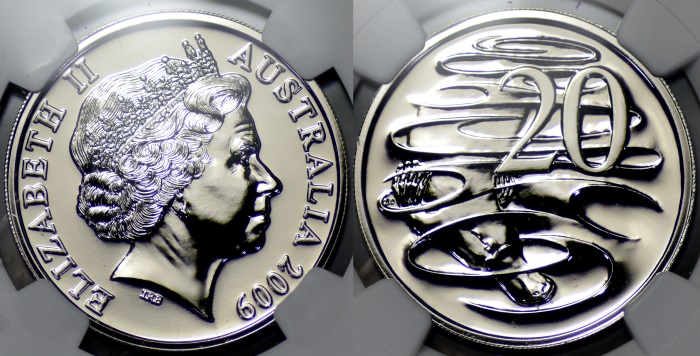
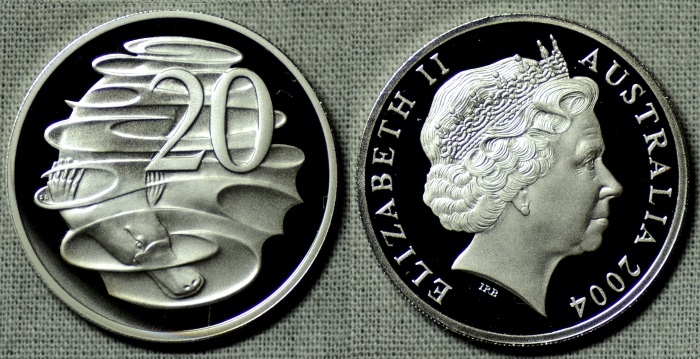
This is the standard that the earlier Australian proof coins were struck at.
Perfectly smooth and mirror finish on the fields and perfectly struck with a sharp crisp design.
The modern Frosted proofs loose much of the fine detail in the design But still have the exquisite fields.

Non Frosted coin
What-Is-The-History-Of-Canadian-Proofs?

Frosted coin
What-Is-The-History-Of-Canadian-Proofs?
Bedrock of the Community
GR58's Avatar
United States
11951 Posts
 Posted 11/24/2016  08:54 am  Show Profile   Bookmark this reply Add GR58 to your friends list Get a Link to this Reply
I have been wondering this same thing ...

Thanks for making this post.

What about prooflike coins ..

Were there prooflike sets ... or was it just luck that the coins would
be prooflike when a set was purchased?
Valued Member
mike9999999's Avatar
Canada
224 Posts
 Posted 11/24/2016  10:28 pm  Show Profile   Bookmark this reply Add mike9999999 to your friends list Get a Link to this Reply
Another thing I want to know is when sterling proof coins were minted. I know they were in the 90s, but before that?
Pillar of the Community
Learn More...
Pacificoin's Avatar
Canada
5394 Posts
 Posted 11/25/2016  12:03 am  Show Profile   Check Pacificoin's eBay Listings Bookmark this reply Add Pacificoin to your friends list Get a Link to this Reply
Reread my above post
Valued Member
mike9999999's Avatar
Canada
224 Posts
 Posted 11/25/2016  12:50 am  Show Profile   Bookmark this reply Add mike9999999 to your friends list Get a Link to this Reply
Did they make sterling proofs as soon as they stopped minting silver in '68?
Bedrock of the Community
GR58's Avatar
United States
11951 Posts
 Posted 11/25/2016  07:28 am  Show Profile   Bookmark this reply Add GR58 to your friends list Get a Link to this Reply
I am wondering if the OP is asking when the dollars went
to the higher silver.

My books are packed .. so I can't look it up.

Trying to remember ... in the 1970's they were .500 fine silver, then around the early 1990's they started minting
higher silver ... maybe .925.

What-Is-The-History-Of-Canadian-Proofs?
Edited by GR58
11/25/2016 07:34 am
CCF Master Historian of USA Commemoratives
Learn More...
commems's Avatar
United States
12278 Posts
 Posted 11/25/2016  09:33 am  Show Profile   Bookmark this reply Add commems to your friends list Get a Link to this Reply
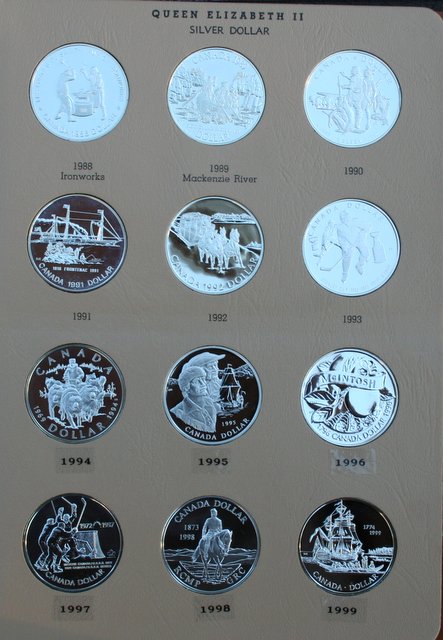
As noted by Pacificoin, the first proof coins struck by the RCM were the $5, $10 and $100 coins produced to held fund the 1976 Montreal Olympics; the $5 and $10 were sterling silver (0.925 silver / 0.075 copper), the $100 was 22K (0.917 gold / 0.083 copper). The RCM installed two new 400-ton presses specifically to strike the proof coins to support collector demand.

The RCM continued to strike proof gold $100 coins in 1977 and has continued striking them up to the present (though the composition has changed over the years); it has also since added multiple other proof gold coins to its roster of annual and one-off releases.

The first base metal coins struck in proof for collectors came about in 1981 with the release of the RCM's first true proof set. The set contained an example of the commemorative silver dollar (struck in a composition of 0.500 silver / 0.500 copper) along with an example of each of Canada's circulating coins (the one-cent coin through the nickel dollar) in their base metal circulating composition. Side note, these sets are often referred to as "Double Dollar" sets because they contain the silver "collector" dollar and the circulating nickel dollar.

1981 also saw the start of the RCM offering two versions of its annual commemorative silver dollar - a brilliant uncirculated version and a proof version.

In 1992, the RCM struck a series of sterling silver 25-cent coins to mark the 125th anniversary of the Canadian Confederation; these were the first coins of a traditional circulating denomination to be struck in sterling silver. SS versions of Canada's other circulating denominations were introduced at various times during the 1990s. I would suggest picking up a copy of the Charlton Standard Catalogue of Canadians Coins: Volume 2 for the details.

In 1996, the RCM's annual proof set switched to including sterling silver versions of the ten cent, twenty-five cent and fifty cent coins; in 1997 a sterling silver version of the two dollar coin was added.

In recent years, the Mint has produced a fine silver (0.999 fine silver) proof set in addition to a base metal proof set. A quick visit to the RCM web site will yield the specifications on the composition of the coins included in each.

Hope that helps.

Collecting history one coin or medal at a time! (c) commems. All rights reserved.
  Previous TopicReplies: 12 / Views: 2,287Next Topic  

To participate in the forum you must log in or register.


Disclaimer: While a tremendous amount of effort goes into ensuring the accuracy of the information contained in this site, Coin Community assumes no liability for errors. Copyright 2005 - 2026 Coin Community Family- all rights reserved worldwide. Use of any images or content on this website without prior written permission of Coin Community or the original lender is strictly prohibited.
Contact Us  |  Advertise Here  |  Privacy Policy / Terms of Use

Coin Community Forum © 2005 - 2026 Coin Community Forums
It took 0.4 seconds to rattle this change. Forums