| Author |
 Replies: 13 / Views: 2,899 Replies: 13 / Views: 2,899 |
|
|
Pillar of the Community
United States
3360 Posts |
It seems to me that these spots should detract from and reduce the overall grade of a coin. However, I have not found them mentioned in grading standards (perhaps I just missed it?). Perhaps they would be included in the category of "eye appeal"? I am looking for a little help on this question. If these spots reduce the grade - by how much in a case like in the following photo? 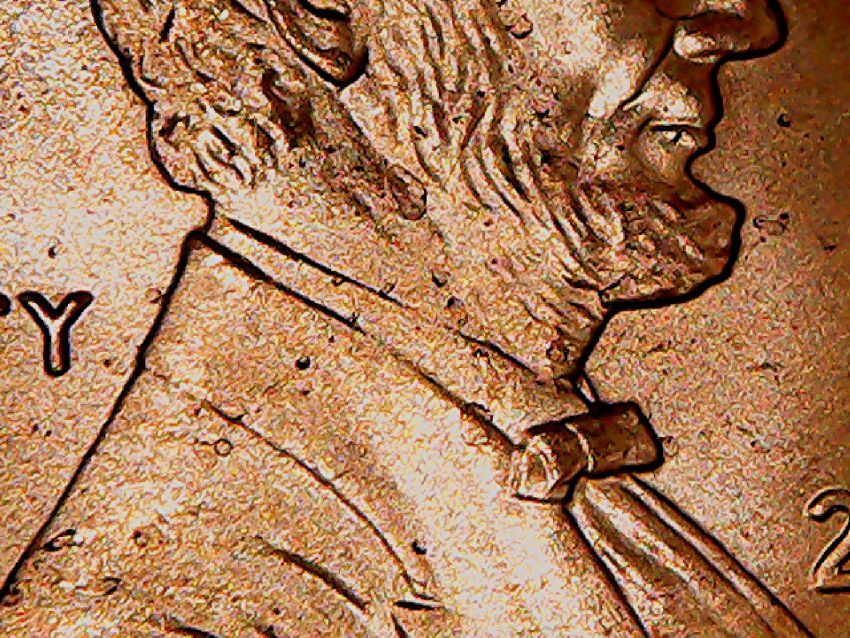 Edited by Pete2226
12/05/2016 09:50 am
|
|
|
|
Moderator
 United States
56855 Posts |
I am no pro but I consider milk spot or spots of any kind to be part of the eye appeal. IMHO they reduce the eye appeal. I consider grade as a technical thing,the strong-ness of the strike. MS60 being less strong of a strike then a MS70.I don't know if the professional graders add or subtract eye appeal before the final grade. John1  |
|
Pillar of the Community
Australia
7096 Posts |
Milk spots, carbon spots or any other blemish WILL affect the grade given unfortunately. Milk spots are particularly troublesome as they can appear on a 70 graded coin AFTER they have been graded and encapsulated.  |
|
Bedrock of the Community
United States
37163 Posts |
Nothing you can do about them.
|
|
Bedrock of the Community
United States
20049 Posts |
These are not "milk spots", those are unique to silver, these are carbon spots.
Yes, they affect the grade. The more distracting they are, the more they will lower the grade.
Lincoln Cent Lover!VERDI-CARE™ INVENTOR https://verdi.care/
|
|
Rest in Peace
United States
17900 Posts |
The milk spot, most commonly found on TPG'ed ASE, often did occur because of the type of slab that was used by both NGC and PCGS, although they no longer use that encapsulating method. The technical grade is very precise. For uncirculated coins the most influential part of determining the grade is the number of marks, bag marks, or other hits to the surface of the coin and it's rim. For circulated coins, the amount of wear from handling is the key to determining a numeric grade. Either of those two areas of grading may be affected by problems that cause them to be labeled "details" coins. Or coins that have a significant enough problem or problems to eliminate them from a numeric grade. Most commonly cleaning, bad rim dings, larger scratches, any type of reworking such as hole filling or metal movement and a number of other problems would cause a coin to be listed as details. So instead of it receiving a VF-25 grade, as an example, it might be holderd as VF, Details, Environmental Damage. In the case of carbon spots, which is a form of degradation from oxidation, rather from chemical changes found to produce the milk spots, you can have top surface spots that do not do damage (or very limited damage) to the surface below, all the way to corrosion which does affect the coins surface and is considered environmental damage. For very minor carbon spots that do not cause a details grade, those spots will most certainly be considered as negative for eye appeal by almost everyone. Above all, remember that the grade of a coin, even if slabbed by NGC or PCGS DOES NOT indicate the value of the coin. Just look at Heritage, which has the best kept records on sales of TPG'ed coins, and you will see instances of the "same" coin in the same TPG holdered near the same time that sell for hugely different prices. In other words, a 1909-S VDB cent might sell for 300% more or less than another example just because of a couple of those carbon spots, even though PCGS or NGC graded them both at MS-63 RB the eye appeal will make so much of a difference that its silly to think there is a price guide that will cover all those variables. |
|
Pillar of the Community
 United States
3360 Posts |
Thanks, everyone, for a most helpful discussion! Here is something I thought interesting. It discusses the misnomer of "carbon spots", although the term is used quite commonly. I don't know enough to critique the article, however! http://www.coinbooks.org/esylum_v07n16a16.html |
|
Bedrock of the Community
United States
94367 Posts |
Thanks, Pete, most interesting. The use of the apparent misnomer "carbon spots" is so ingrained in the hobby that I doubt it could ever be replaced by a more correct term.
|
|
Rest in Peace
United States
4078 Posts |
Thanks Pete, interesting.
|
|
Bedrock of the Community
United States
20049 Posts |
Quote:
Thanks, everyone, for a most helpful discussion! Here is something I thought interesting. It discusses the misnomer of "carbon spots", although the term is used quite commonly. I don't know enough to critique the article, however! I do and he's partially correct. The carbon spots on Lincolns are indeed mostly carbon based. I've looked at them on an electron microscope years ago but I forgot the exact composition....as I recall there were some other trace elements. The author's idea of putting a sulfur containing material (rubberband) and a carbon material in contact with a copper coin is plain old dumb. The carbon spots typically on Lincolns are due to a Mint process and the more volatile components have long evaporated away forming a very strongly bonded carbon-based material behind. The spots SHOULD be referred to as "carbon spots" because carbon is the primary component. They cannot be removed by chemical means without permanently damaging the coin. If you have a nice, carbon spotted Lincoln you don't mind ruining....try this, I've done it. Hold it under a torch and the spots will vaporize pretty rapidly. Further proof the spots are mainly carbon based. Edited by BadThad
12/06/2016 3:16 pm
|
|
Pillar of the Community
United States
3360 Posts |
Thanks Bad Thad - I am sure you must have tried to find an optimum distance for the torch to be from thee coin and still vaporize the carbon spot and not damage the coin? I assume that was impossible?
|
|
Rest in Peace
United States
4078 Posts |
BadThad,so, a carbon spot can happen on any coin correct?
Milk spots happen during the minting and can appear latter. Is this only to newer coins from the U.S. Mint?
|
|
Valued Member
United States
441 Posts |
Quote:
BadThad:
The carbon spots typically on Lincolns are due to a Mint process... I thought I had read that somewhere; I think I read in the same place that the carbon spots resulting from the mint do not detract from the grade, since an experienced eye could tell the difference. A dealer I spoke to recently insisted, however, that carbon spots are true corrosion. There must be a way to clear things up, because I think there are carbon spots that do corrode, and those that do not.. due to important differences in basic chemistry.. |
|
Pillar of the Community
United States
3360 Posts |
Quote:
I think I read in the same place that the carbon spots resulting from the mint do not detract from the grade, since an experienced eye could tell the difference I do hope you will suddenly remember where you read that! Let us know if you do! Just knowing that the information might be out there means I will start looking for it! Thanks! |
| |
Replies: 13 / Views: 2,899 |
|








 Posted 12/05/2016 10:00 am


