It has been a while since I've written much about a coin in my collection, so I thought that I would try to remedy this situation with a Denier from the French Commune of Meaux. It looks to me like no one has posted a coin from this location here yet, although back in the early days of CCF a mystery coin (that, unfortunately, is no longer visible) was tentatively attributed to this city by @sap.
Meaux (pronounced "moe", like the bartender) is located in Northern France and according to Wikipedia was named after the Gaulic tribe the Meldi. In the Roman era, it was known as Lantinum, but then later became known as Meaux.
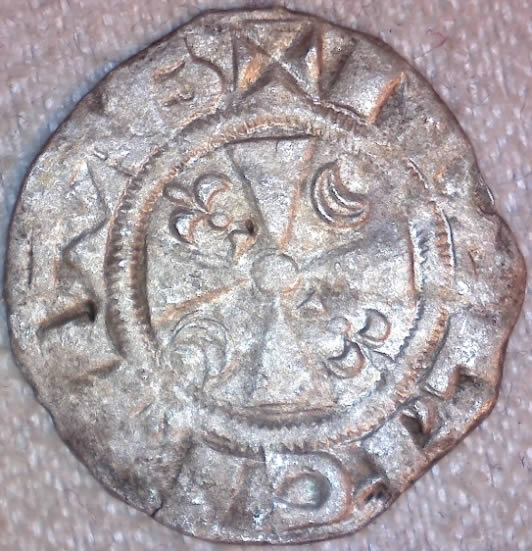
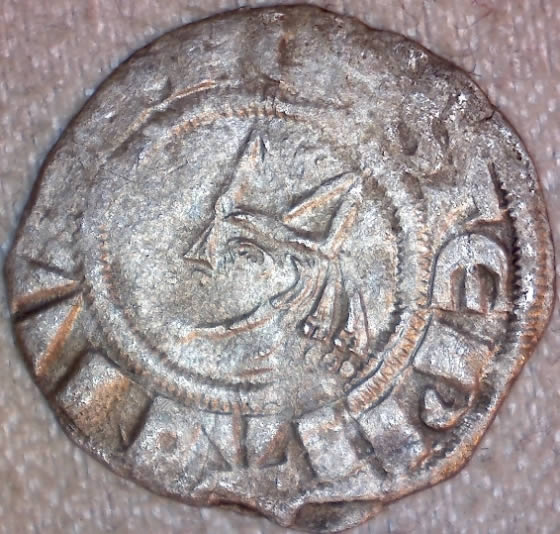
My denier dates from 1158 to 1161 AD. The obv inscription is MELt CIVITAS while the rev inscription is STEPHANVS ER CO. The attribution is Roberts 4981. They aren't super-rare, with a couple for sale on vcoins right now.
Coins from the bishopric at Meaux are also known, and these have the typical bishop's crozier symbology. These were minted under the authority of the Bishop Renaud, which makes me wonder why my coin has the name Stephen. The obvious answer is that the non-ecclesiastic ruler of this area was named Stephen, although I cannot find evidence of this in a quick search of the interwebs. One other possibility is that the inscription was frozen from around the time of 1100 AD, when Count Stephen ruled over the counties of Chartres, Blois, Meaux, and Chateaudun. For those of you Crusader history buffs, this is the same Stephen Henry, about whom Fulcher of Chartres wrote. This chronicle plus a couple letters that he wrote home to his wife provide the only first-hand accounts of the First Crusade. According to John Pryor's Stephen of Blois: Sensitive New-Age Crusader or Victim of History?, Stephen is
"an especially interesting Crusader because he left the armies at Antioch on 2 June 1098 (the day before the city was taken) and returned home, an act which ever since has seen him characterised as a coward and a deserter. In 1100, after the news of the conquest of Jerusalem reached the West and a new Crusade was launched, Stephen left for the East again, where he met a martyr's death in 1102. He was a man who can be shown to have been a typical human being, with strengths and weaknesses. Furthermore, there is a compelling case to be addressed that he has been unjustly vilified by History."
I'd be interested in others' thoughts on this matter.









 Posted 02/08/2017 9:49 pm


 David, thanks for the history behind the coin. Its always a treat!


