| Author |
 Replies: 23 / Views: 3,138 Replies: 23 / Views: 3,138 |
|
Valued Member
Korea, Republic Of
489 Posts |
Hello all~ Just got a big lot of Chinese stuff and need help identifying the variant of this Tang Dynasty coin. I am not even sure if its real due to how odd the last character looks. Let me know what you think. There is no back to the coin. 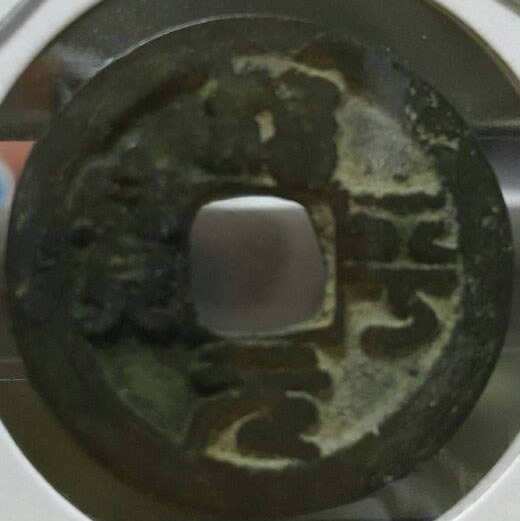 *** Moved by Staff to a more appropriate forum. *** *** Moved by Staff to a more appropriate forum. *** |
|
|
|
Pillar of the Community
United States
6130 Posts |
|
|
Valued Member
 Korea, Republic Of
489 Posts |
Good call! This is a Ying Tsung coin from the Northern Song Dynasty (1065-1067). Thanks Finn!
|
|
Pillar of the Community
United States
6370 Posts |
Zhi Ping Tong Bao in Seal Script.
The above attributions are correct.
|
|
New Member
Hong Kong
10 Posts |
Im no expert but... look at all that fake sand added to the coin, metal is so intact and even for a coin of that age, I would never buy a coin looking like that.
|
|
Valued Member
Korea, Republic Of
489 Posts |
Its not sand. Its probably dirt from it being found in a dig. Also the metal of these coins was pretty strong and holds for a long time. I have coins from the 600s that are in similar shape. Lastly, the characters and entire coin show the correct wear and rubbing of characters for a coin this age. The characters in the coin match this variant of the coin exactly. I don't buy fakes and they are very easy to pick out; even by the smell. I am glad you wouldn't buy this coin, so that I could :P
Its funny you said that being from Hong Kong, one of the cores of manufacturing fake coins.
Edited by Lembafc
02/11/2017 11:31 pm
|
|
New Member
Hong Kong
10 Posts |
I dug hundreds of ancient coins and never found that kind of loose "dirt" on them, as I told you it only fouls someone that never actually saw what happens to a coin after being on the ground for that time and how it comes out and the dirt attached to it.
The wear on the characters is so even that is so obvious, normally theres one side that had more pressure on it depending of the position it was sitting in the ground, while the rest of the coin has no visible wear, if it was in mud or sand the pressure is much less and have almost no wear.
Like I said I'm no expert in identifying variants but I have experience on the condition they are after being found in the ground, but your right, I see several of coins with this kind of "dirt" by street sellers here in Hong Kong.
Enjoy your "authentic" coins :P
|
|
Valued Member
Korea, Republic Of
489 Posts |
The flat wear from these coins doesn't come from it being in the ground. It comes from constant rubbing when they are roped together. Either way, I'll take your thoughts into consideration, but if you are not an expert, please don't weigh in like one.
|
|
Pillar of the Community
United States
7067 Posts |
Always interesting to see an honest difference of opinion about a coin posted here. I'd be curious to know what Thomas' (TypeCoin971793) or Mika's (AnYangMan) opinions are on the matter...
|
|
Moderator
 United States
34562 Posts |
Quote:
I'd be curious to know what Thomas' (TypeCoin971793) or Mika's (AnYangMan) opinions are on the matter... I agree Bob, especially since I have proven myself incompetent at separating real ancient Chinese coins from fakes. I would add, though, that my own Northern Song coins generally have about this level of wear on the characters. "If you climb a good tree, you get a push."
-----Ghanaian proverb
"The danger we all now face is distinguishing between what is authentic and what is performed."
-----King Adz
|
|
New Member
Hong Kong
10 Posts |
Let me show you guys an example of what I'm talking of, see the diferences of how uneven and natural the colours on this coin, and specially on the back you can see how the dirt attaches to the metal and how the rim gets wear for a coin that was more or less 350 years under the dirt and then compare to the above that is supposed to have been 1000 years in the ground.  |
|
Valued Member
Korea, Republic Of
489 Posts |
To be honest the white color on my coin may not even be dirt. It could just as easily be paint or something else. I am just saying, you cannot base "AHH ITS A FAKE" off of what you think is fake dirt. The wear of the coin is fine. And while there are variants of Chinese coins I am sure, here is a prime example of the reverse of a Board of Revenue Kang Hsi that you have (So you can compare yours to a confirmed one): 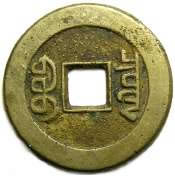 We could both have authentic coins and be throwing rocks at each other; who knows? |
|
Valued Member
Korea, Republic Of
489 Posts |
|
|
New Member
Hong Kong
10 Posts |
Well I'm trying to help... once again as a metal detectorist I can tell you immediately that your coin is fake and presented facts, this is not my coin vs. yours, come on...
I don't need to confirm my coin, I didn't bought it, I dug it from a place with a lot of history in it along with several other old objects.
I don't know if you know who David Hartill is, but he is the author of the most popular catalogue for Chinese coins that everyone follows to id coins, it was found that in his private collection he had several fake coins...
I guess that tell us a lot about the market of Chinese coins worldwide...
|
|
New Member
Hong Kong
10 Posts |
"And lastly, if you check this Ancient China website, http://grifterrec.rasmir.com/China/.tChina6.html you can see that many of the other coins share the "fake dirt/sand" that you are talking about. They can't all be fake can they?" I could not see any coins on that link, but if they have the same "dirt" as yours at least the patina is fake yes, that "dirt" doesn't exist in the nature, you can see it applied on roman coins with the orange bright colour or other ancient coins, theres 2 or 3 Topics in here that I already saw of people complaining about that. |
|
Valued Member
Korea, Republic Of
489 Posts |
I don't think "facts" means what you think it means. I am still trying to find the facts you provided. The metal of coins can in fact stay this intact for so long. The characters match perfectly with the exact coin from that time period. The wear on the coin is from it being roped together with the rest of the coins used for currency. These coins have been faked for a thousand years, so if your the foundation of your "facts" is based off you finding it in the ground, you may be wrong from the beginning. That "dirt", as I said could also be paint. People during that time painted and even sometimes put extra holes in them to add flair and style. They did it here in Korea as well. Lastly, I am not putting my coin vs yours. I was showing you that even your coins mint mark is not the same as the online catalog's.  Searching for your facts I am really hoping that one of the experts will chime in here and prove us both wrong. |
| |
Replies: 23 / Views: 3,138 |






 Posted 02/10/2017 7:02 pm





