| Author |
 Replies: 6 / Views: 3,528 Replies: 6 / Views: 3,528 |
|
|
Moderator
 Australia
17005 Posts |
I purchased this before Easter, but only now have I just got around to scanning it. It's my first mediaeval English groat, and while it's far from top grade, it's still impressive. 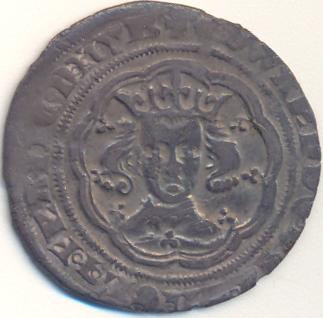 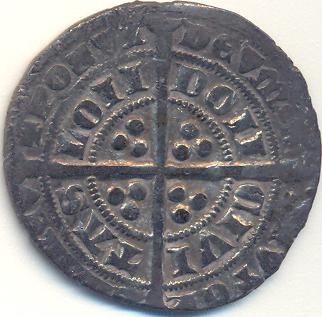 England, groat (4 pence) of Edward III, Series E (attributed to 1354/5 AD), "pre-treaty". The "Treaty" refers to the Treaty of Bretigny, in which Edward renounced his formal claim to be the rightful king of France. This claim is visible on this coin, on the obverse from 8 o'clock to 10 o'clock: "&:FRANC". Don't say "infinitely" when you mean "very"; otherwise, you'll have no word left when you want to talk about something really infinite. - C. S. Lewis
|
|
|
|
Pillar of the Community
United States
1841 Posts |
Groat coin...er great coin! I've steered clear of medieval coins thus far and I may not be able to hold off much longer. What exactly is the derivation of the term "groat"?
|
|
Forum Mom
United States
5877 Posts |
Fabulous detail! I love old English hammered coinage. There is just so much history there! Thanks so much for posting this.  |
|
Moderator
 Australia
17005 Posts |
You're welcome.  quote:
snowman asked:
What exactly is the derivation of the term "groat"?
As the similar sound and spelling may imply, groat is an Old English variation of the word "great", meaning large. From Latin grossus, via the German groschen, French gros and Dutch groot. Don't say "infinitely" when you mean "very"; otherwise, you'll have no word left when you want to talk about something really infinite. - C. S. Lewis
|
|
Pillar of the Community
Australia
2830 Posts |
quote: "... The "Treaty" refers to the Treaty of Bretigny, in which Edward renounced his formal claim to be the rightful king of France. ..."
Live & learn: some George III coins assert a claim over France. I thought that it was Victoria that ultimately renounced all claims to the French mainland.
Peter
|
|
Moderator
Australia
17005 Posts |
As you can read in the Wikipedia article linked above, the Treaty only lasted for nine years, then all bets were off again as the Hundred Years War resumed. Edward III's groats come "pre-treaty" (includes France in titles), "Treaty" (no mention of France) and "post-treaty" (claims to France are back again). It was actually the French Revolution that saw the final removal of British claims to the French throne. French republicans understandably objected to the British king claiming to be their king, too, and made formal renouncing of the claim part of their conditions for peace. Don't say "infinitely" when you mean "very"; otherwise, you'll have no word left when you want to talk about something really infinite. - C. S. Lewis
|
|
Valued Member
Ireland
215 Posts |
A Good reference to all GB coins is http://www.tclayton.demon.co.uk/fourd.htmlfound this definition of "GROAT" The name groat was given in the Middle Ages to all thick silver coins, as opposed to thin silver coins such as deniers or pennies. Enno van Gelder in his book "De Nederlandse Munten" notes that the first pieces larger than a penny ("sterling") in the 13th century were the Venetian grosso (meaning "large" or "thick"), followed by the French gros tournois, tariffed at 12 deniers tournois. This piece circulated in Holland, where it was known as the groot (also, conveniently, Dutch for "great" or "large"). There may be a Dutch intermediary between the French and the English use of the word. The OED (the big one) notes that the mediaeval Latin word grossus and old French word gros are recorded before the Teutonic forms and suggests that the adoption of the Dutch form into English is a sign that the coins from the Low Countries circulated in Britain before the home types were struck. |
| |
Replies: 6 / Views: 3,528 |
|






 Posted 04/01/2008 2:20 pm





