



Coin Community Family of Web Sites Join Thousands of Coin, Bullion, & Money Collectors
Royal Canadian Mint products, Canadian, Polish, American, and world coins and banknotes. 300,000 items to help build your collection! Coin, Banknote and Medal Collectors's Online Mall Join Thousands of Coin, Bullion, & Money Collectors Royal Estate Auctions - $1 Coin AuctionsSpecializing in Modern Numismatics Vancouvers #1 Coin and Paper Money Dealer


Username:
Password:
Save Password
Forgot your Password?


This page may contain links that result in small commissions to keep this free site up and running.

Welcome Guest! Registering and/or logging in will remove the anchor (bottom) ads. It's Free!

Greek Coin - Porosity...

To participate in the forum you must log in or register.
Author Previous TopicReplies: 8 / Views: 2,681Next Topic  
Valued Member
prsferreira's Avatar
Brazil
146 Posts
 Posted 03/06/2017  4:30 pm Show Profile   Bookmark this topic Add prsferreira to your friends list Get a Link to this Message Number of Subscribers
Friends
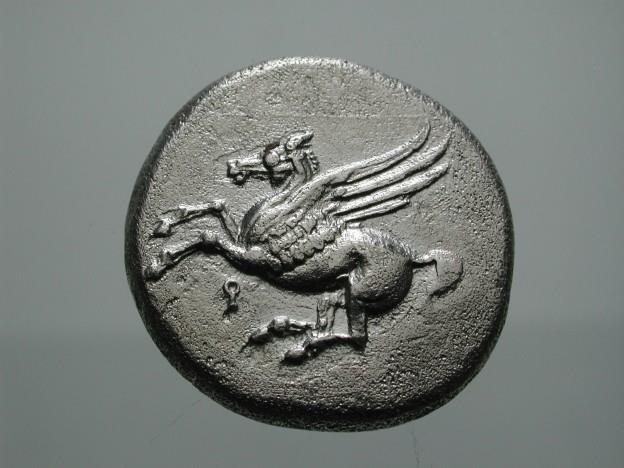
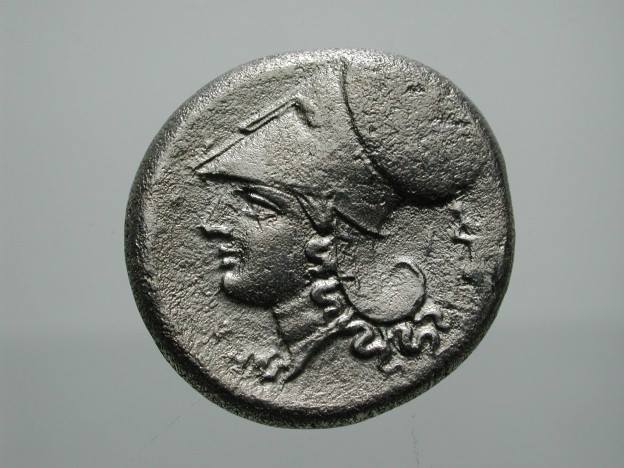
What do you think to piece this piece?
I found this porosity strange ..
Thank you !!

Greek-Coin---Porosity...

Greek-Coin---Porosity...
Moderator
Learn More...
echizento's Avatar
United States
23731 Posts
 Posted 03/06/2017  5:04 pm  Show Profile   Bookmark this reply Add echizento to your friends list Get a Link to this Reply
Even though it is porous, it isn't bad enough to have caused any damage to to design. I think this is a genuine coin.
Bedrock of the Community
sel_69l's Avatar
Australia
21788 Posts
 Posted 03/06/2017  5:51 pm  Show Profile   Bookmark this reply Add sel_69l to your friends list Get a Link to this Reply
Sometimes, it is hard to tell the difference between porosity (genuine), and casting bubbles (fake) on a computer screen.

You need to examine the indents with a high powered loupe, to determine the shape of the indents. Casting bubbles tend to be much more regular and round, and corrosion (one of the reasons for porosity) tend to be highly irregular in shape.

Style and fabric as seen on the screen, suggest that this coin is genuine.
Rest in Peace
moxking's Avatar
United States
17900 Posts
 Posted 03/06/2017  6:34 pm  Show Profile   Bookmark this reply Add moxking to your friends list Get a Link to this Reply
Very very old cleaning now completely Retoned and looks perfectly authentic.
Valued Member
prsferreira's Avatar
Brazil
146 Posts
 Posted 03/06/2017  7:45 pm  Show Profile   Bookmark this reply Add prsferreira to your friends list Get a Link to this Reply
Hello!
I was curious about the causes of porosity. Could it be seawater?
Thank you very much, dear friends.
I always learn a lot from you!
Moderator
Learn More...
echizento's Avatar
United States
23731 Posts
 Posted 03/06/2017  8:02 pm  Show Profile   Bookmark this reply Add echizento to your friends list Get a Link to this Reply
I would think seawater would cause more damage to the surface.
Pillar of the Community
DavidUK's Avatar
United Kingdom
2624 Posts
 Posted 03/08/2017  09:54 am  Show Profile   Bookmark this reply Add DavidUK to your friends list Get a Link to this Reply
Porosity occurs when the temprature is wrong when the silver is cast resulting in airbubbles within the material. This is why its often seen on counterfeit cast coins.

Pressumably even in struck coins the silver would have been melted to produce the blank so its not imposible to have porosity even on a struck coin.

When a coin is buried for a long period there can be a particle exchange like electrolisis between the coin and the soil resulting in pitting on the coin... easily mistaken for porosity.
Edited by DavidUK
03/08/2017 09:55 am
Valued Member
prsferreira's Avatar
Brazil
146 Posts
 Posted 03/08/2017  10:25 am  Show Profile   Bookmark this reply Add prsferreira to your friends list Get a Link to this Reply

Insightful, my friend.
Thank you!
Bedrock of the Community
sel_69l's Avatar
Australia
21788 Posts
 Posted 03/09/2017  05:00 am  Show Profile   Bookmark this reply Add sel_69l to your friends list Get a Link to this Reply
Porosity can be natural corrosion to a genuine coin, and porosity can be evidence of casting bubbles.

What is important is to closely examine under high power magnification, the pattern and shape of the indvididual porosity holes.
  Previous TopicReplies: 8 / Views: 2,681Next Topic  

To participate in the forum you must log in or register.


Disclaimer: While a tremendous amount of effort goes into ensuring the accuracy of the information contained in this site, Coin Community assumes no liability for errors. Copyright 2005 - 2026 Coin Community Family- all rights reserved worldwide. Use of any images or content on this website without prior written permission of Coin Community or the original lender is strictly prohibited.
Contact Us  |  Advertise Here  |  Privacy Policy / Terms of Use

Coin Community Forum © 2005 - 2026 Coin Community Forums
It took 0.24 seconds to rattle this change. Forums