| Author |
 Replies: 9 / Views: 1,273 Replies: 9 / Views: 1,273 |
|
|
Pillar of the Community
United States
838 Posts |
|
|
|
|
Bedrock of the Community
United States
11980 Posts |
XF details, smoothed. The first picture shows most clearly that liberty in the obverse has been smoothed with a rotary polishing tool. The metal has moved and it is bumpy unlike what you would find in undisturbed mint luster. Would have been a nice coin if it had been left undisturbed. See metal surface in face, neck and chest in detail below: 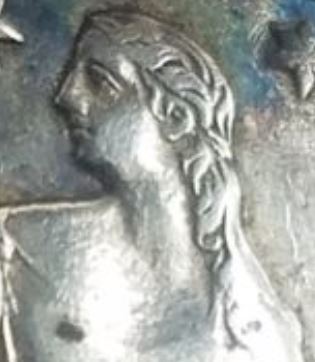 IN NECESSARIIS UNITAS - IN DUBIIS LIBERTAS - IN OMNIBUS CARITAS THE MAN IN THE ARENA, Theodore Roosevelt at the Sorbonne Paris on April 23, 1910: " It is not the critic who counts; not the man who points out how the strong man stumbles or where the doer of deeds could have done better. The credit belongs to the man who is actually in the arena, whose face is marred by dust and sweat and blood, who strives valiantly, who errs and comes up short again and again, because there is no effort without error or shortcoming, but who knows the great enthusiasms, the great devotions, who spends himself in a worthy cause; who, at the best, knows, in the end, the triumph of high achievement, and who, at the worst, if he fails, at least he fails while daring greatly, so that his place shall never be with those cold and timid souls who knew neither victory nor defeat." My coin website: https://fairfaxcoins.com |
|
Pillar of the Community
United States
6447 Posts |
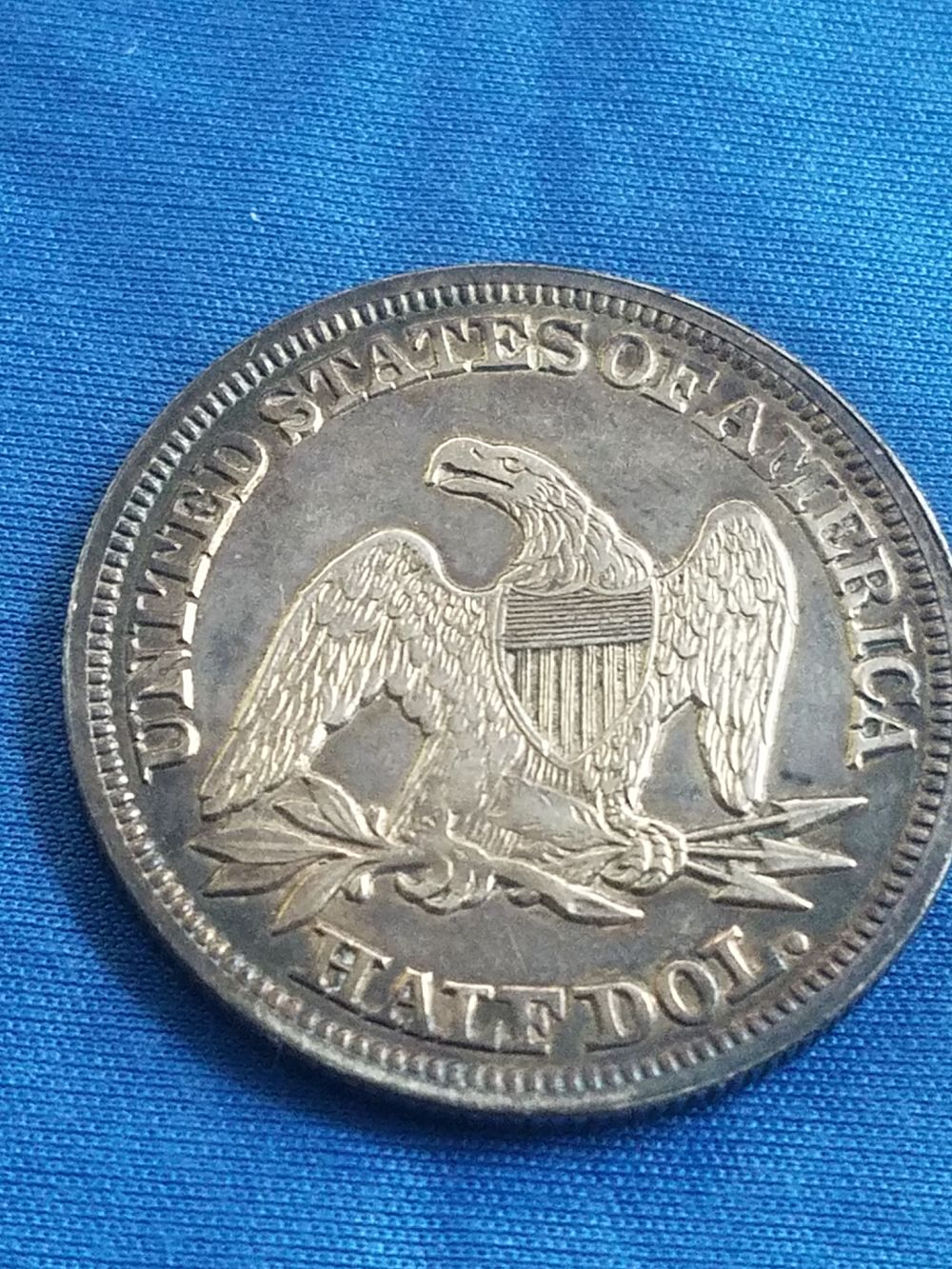
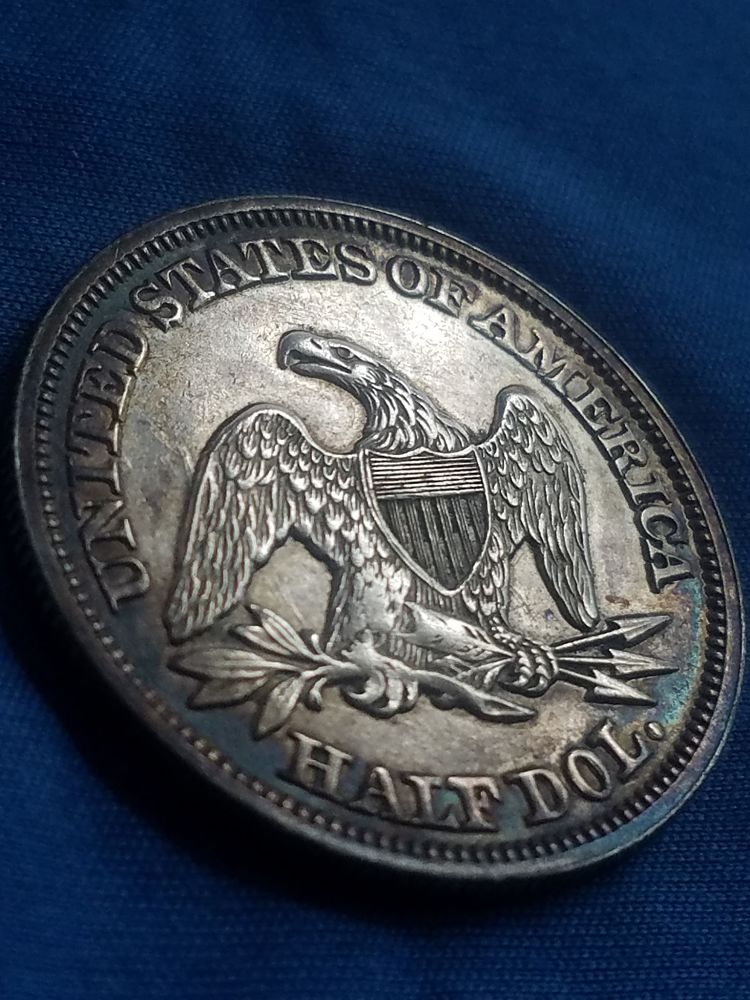
The mark in the field is a die clash mark from the eagle wing, commonly seen on Seated coins. I agree this is a "details" coin, with altered surfaces. Details grade is EF-40 or so but the coin should be valued significantly less than an original piece in that grade. |
|
Pillar of the Community
 United States
838 Posts |
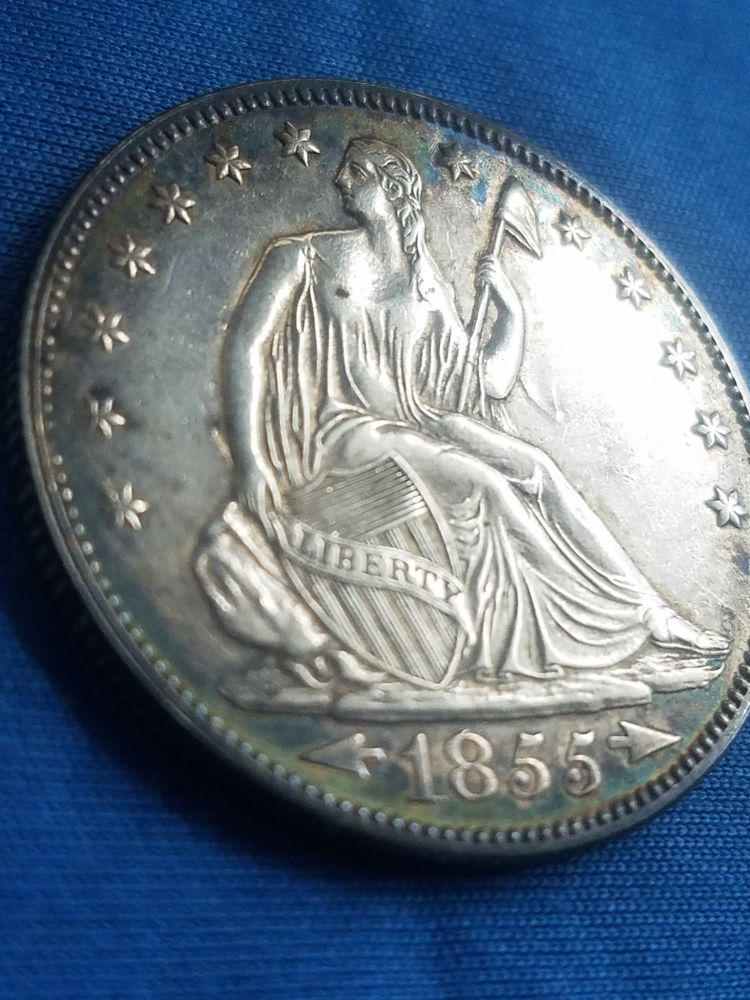
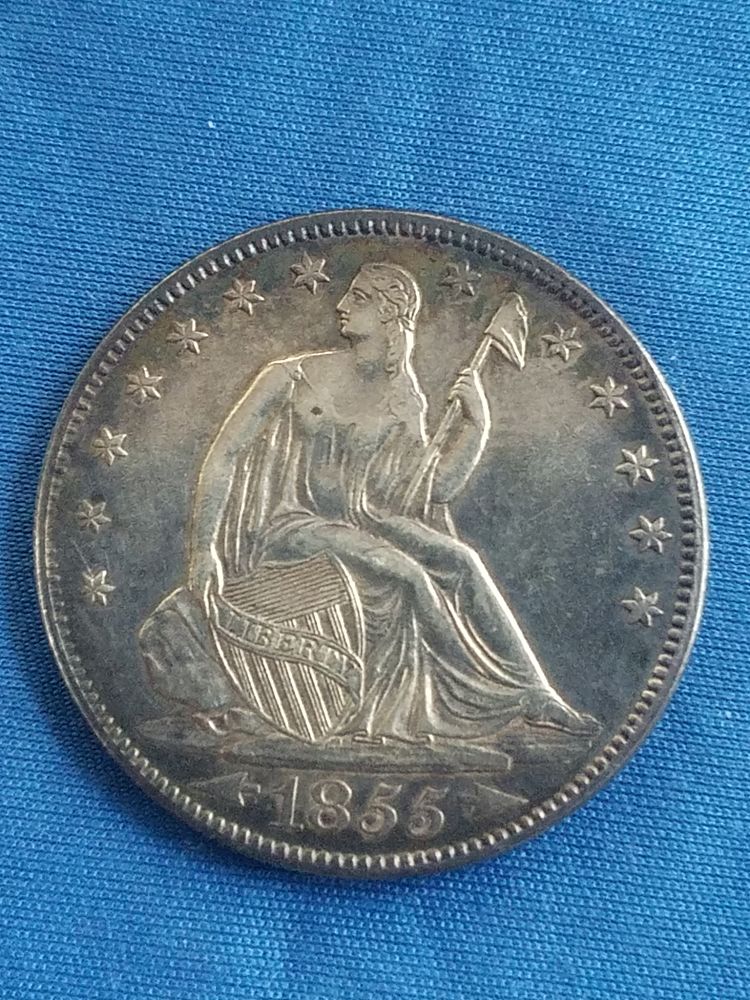
Thank you both and yes it would have been a very nice coin if not polished. Another question I have since I am still learning about these coins. How can you tell if a coin of this date was a proof and not ms? or is it only a proof if it is still unaltered? I hope I am explaining correctly.
|
|
Bedrock of the Community
United States
94367 Posts |
I'm certainly no expert on smoothing. What I do see is some striking weakness on an EF-45+ coin.
|
|
Pillar of the Community
United States
4409 Posts |
Quote:
Another question I have since I am still learning about these coins. How can you tell if a coin of this date was a proof and not ms? or is it only a proof if it is still unaltered? I hope I am explaining correctly. Proof coins prior to 1858 had tiny mintages in many cases and once acquired were most often handled with great care. Here is a link showing a proof 1855 half dollar http://www.PCGScoinfacts.com/Coin/Detail/6408Notice on that coin the details: lady Liberty and the eagle are razor sharp and well defined. It has a distinct "look" that can't be imitated on a circulated coin. Proof coins can be mishandled and/or circulated however they are still proof coins since it is a method of manufacturing not a grade. Hope this helps answer a question or two. If not, post a follow up or someone else may chime in with a better explanation. |
|
Pillar of the Community
United States
838 Posts |
MeadowviewCollector, thank you for this information. That does make sense but on proof coins that have been mishandled and/or circulated how does one tell? I have always thought of a proof coin as having a mirror like look in the field of the coin, this coin kind of has that but I also believe that it has been cleaned/smoothed like numismatic_student mentions above. The pictures are not the best in showing what I explained about the mirror in the field. How can someone tell?
|
|
Bedrock of the Community
United States
11980 Posts |
Lots of impaired or mishandled coins will have hairline or other scratches. Other times they show wear from circulation. Worn proofs may be difficult to id as proofs because they have lost some or all of their proof striking characteristics. There are many impaired proof Gobrecht dollars, which are easily identified from their dates, and the fact that only proof specimens were struck. Basically recognizing these nuances comes from knowledge of the series through study and experience examining coins for salient characteristics. That is what numismatic study is. Hope you enjoy your numismatic learning journey. IN NECESSARIIS UNITAS - IN DUBIIS LIBERTAS - IN OMNIBUS CARITAS THE MAN IN THE ARENA, Theodore Roosevelt at the Sorbonne Paris on April 23, 1910: " It is not the critic who counts; not the man who points out how the strong man stumbles or where the doer of deeds could have done better. The credit belongs to the man who is actually in the arena, whose face is marred by dust and sweat and blood, who strives valiantly, who errs and comes up short again and again, because there is no effort without error or shortcoming, but who knows the great enthusiasms, the great devotions, who spends himself in a worthy cause; who, at the best, knows, in the end, the triumph of high achievement, and who, at the worst, if he fails, at least he fails while daring greatly, so that his place shall never be with those cold and timid souls who knew neither victory nor defeat." My coin website: https://fairfaxcoins.com |
|
Pillar of the Community
United States
2125 Posts |
XF-40 cleaned. Cool coin notwithstanding.
|
|
Pillar of the Community
United States
838 Posts |
Could this coin be a proof? I know that a mint state coin is only one strike on a planchard and a proof is hit with multiple strikes thus having sharper detail. Here is a close up image of the die clash mark (previously mentioned) that shows multiple strikes? Is there any fool proof way of determining a proof coin from a ms that has been cleaned/polished? I would love any and all feedback. Thanks! 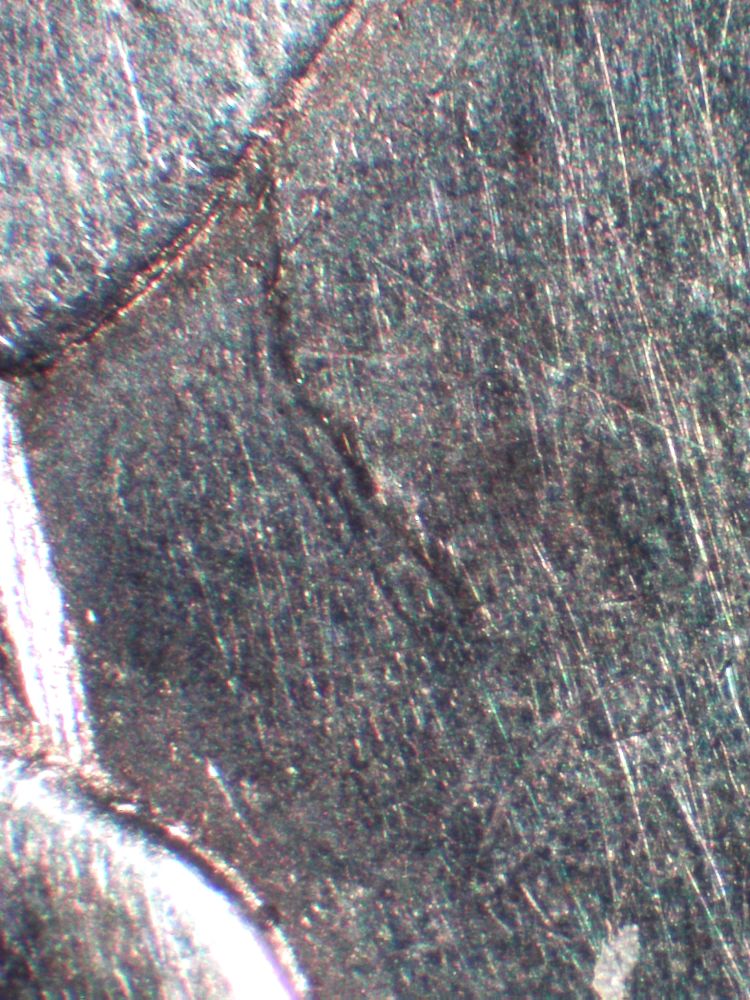 |
| |
Replies: 9 / Views: 1,273 |
|












 Posted 04/24/2017 02:21 am


