









 Posted 06/08/2017 01:52 am


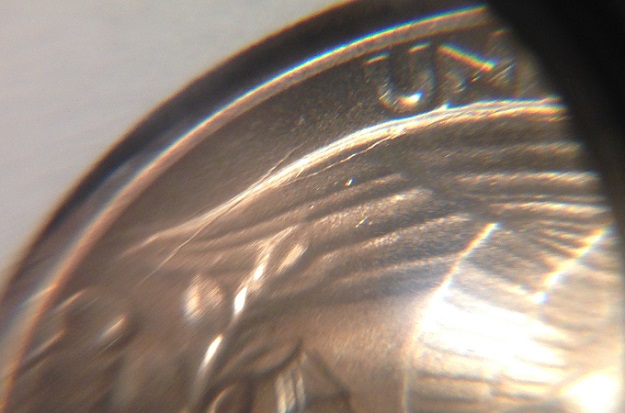
Correct, die cracks.
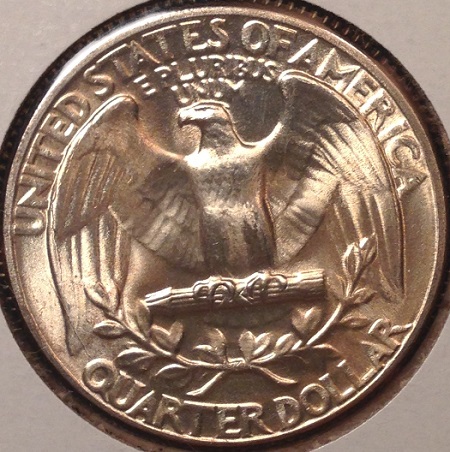
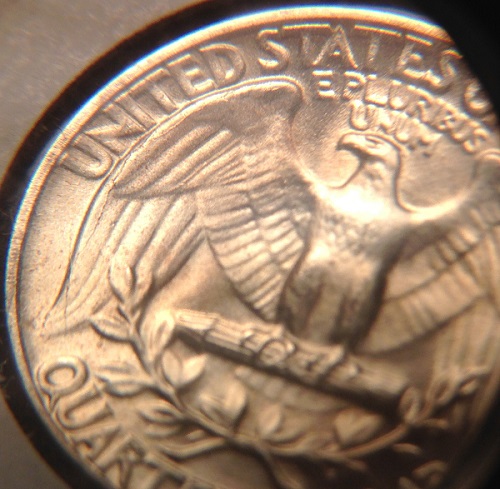
On Silver Washington quarters, the cracks usually develop at the base of the bust, downward from both the left and right lower wing tips, upward along the edges of the wing from the lower wing tips (as seen in your example) and also upward from the left and right upper wing tips where they can pass through E PLURIBUS and sometimes out to the rim. Once in awhile, you'll find one with a crack running directly north from the eagle's head up to the rim, as well.
More scarce, but still occasionally seen, are a crack that runs from the hair curl behind the head and then spreads to the left, creating a "cracked skull" above the ear, and a similar crack which runs along the top curve of the head.
In almost all cases the cracks develop at the high relief points, i.e. the places wherein the most strike pressure is exerted against the dies, which is why those areas are the most likely places to find the cracks. You don't often see other usual die defects such as die chips/retained Cuds, die subsidence, or field displacement.
A true very late or terminal die state Silver Washington quarter with major die cracks, heavy flowlining and letter trails is quite a rare sight to behold, if not necessarily a pretty one.
On Silver Washington quarters, the cracks usually develop at the base of the bust, downward from both the left and right lower wing tips, upward along the edges of the wing from the lower wing tips (as seen in your example) and also upward from the left and right upper wing tips where they can pass through E PLURIBUS and sometimes out to the rim. Once in awhile, you'll find one with a crack running directly north from the eagle's head up to the rim, as well.
More scarce, but still occasionally seen, are a crack that runs from the hair curl behind the head and then spreads to the left, creating a "cracked skull" above the ear, and a similar crack which runs along the top curve of the head.
In almost all cases the cracks develop at the high relief points, i.e. the places wherein the most strike pressure is exerted against the dies, which is why those areas are the most likely places to find the cracks. You don't often see other usual die defects such as die chips/retained Cuds, die subsidence, or field displacement.
A true very late or terminal die state Silver Washington quarter with major die cracks, heavy flowlining and letter trails is quite a rare sight to behold, if not necessarily a pretty one.
Member ANA - EAC - TNA - SSDC - CCT #890
"Most of the things worth doing in the world had been declared impossible before they were done." -- Louis D. Brandeis
"Most of the things worth doing in the world had been declared impossible before they were done." -- Louis D. Brandeis


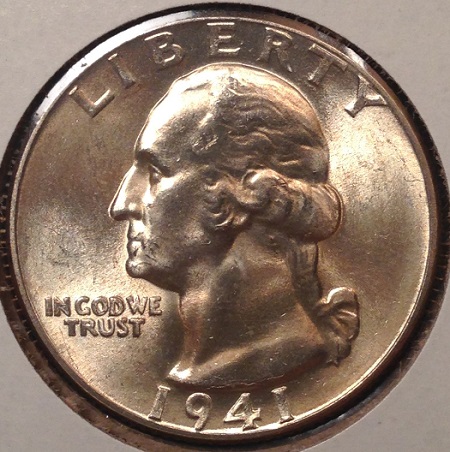
 Any thoughts on the grade?


