Doogie309
Quote:
There is a rare error for 1942 pennies struck on wrong planchette. Accidentally struck on planchette for pennies that were also being made for Ecquador? (Can't remember country). They look and measure exactly the same...same thickness too. But,they are heavier. And it is valuable. I have one too. It took forever to figure out what the deal was.
I responded then retracted cause my mind interpreting the data I use was going in two direction. Think you're onto something and thanks for pointing it out.
Philly mint was busy with lots of foreign coinage with similar compositions this year. Will update after going through the material again. Thanks, Doug.
Follow up:
Quote:
Accidentally struck on planchette for pennies that were also being made for Ecquador? (Can't remember country). They look and measure exactly the same...same thickness too. But, they are heavier.
If I read the reference I use most often correctly, it shows the following -
Philadelphia produced coinage for -
Ecuador
Year: 1942
Denomination: 10 Centavos
Composition: 80% copper, 20% zinc
Weight 3.00grams
Diameter 19.00mm
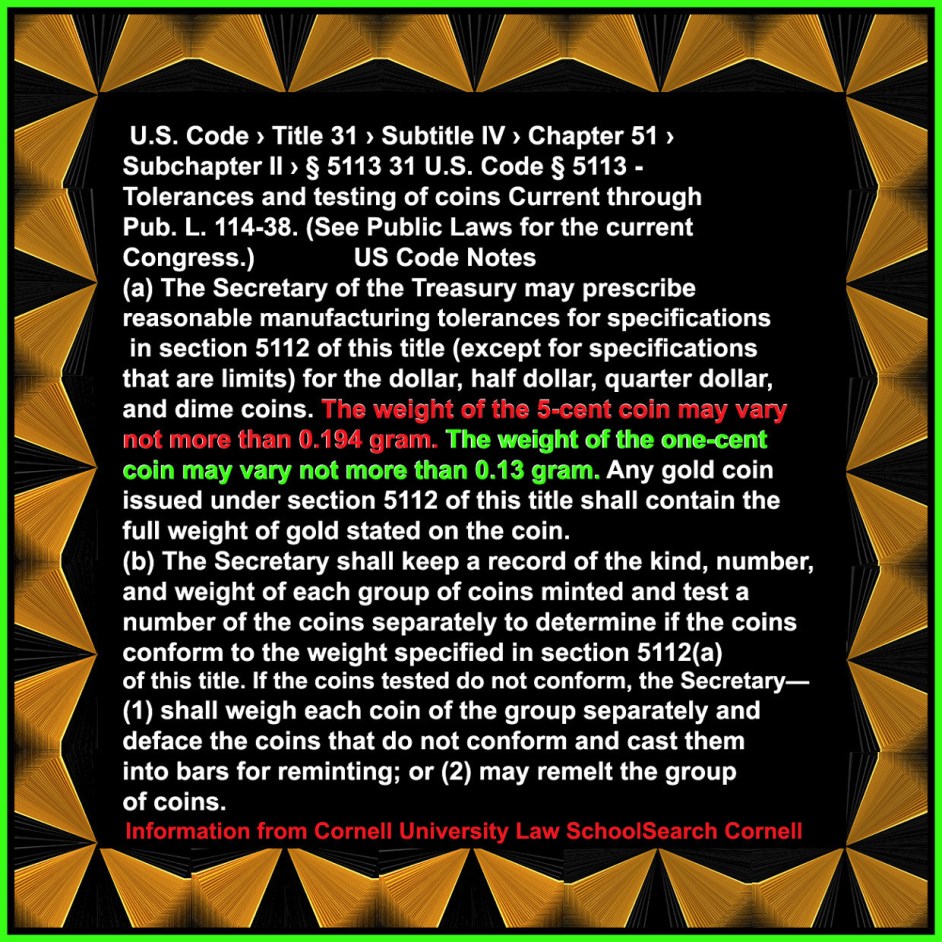
Note: the similarities to the U.S.Cent would not account for extra weight.
Philadelphia produced coinage for -
Ecuador
Year: 1942
Denomination: 20 Centavos
Composition: 80% copper, 20% zinc
Weight 4.00grams
Diameter 21.00mm
Note: the similarities to the U.S.Cent, but 21.00mm diameter will not fit the collar for a U.S. cent.
More food for thought,
Philadelphia produced coinage for -
Peru
Year: 1942
Denomination: 5 Centavos
Composition: 70% copper, 30%zinc
Weight 3.00grams
Diameter: 17.00mm
Note: again the weight and diameter. I'm thinking at this point the potential for blanking U.S. Cents from the wrong or foreign stock is a more likely possibility than struck on an actual foreign planchet. I'll let someone else do the math. Pending if the math does or does not compute, then as mentioned rolled thick stock is a likely suspect. Thanks, Doug.





 First Page


 Posted 06/17/2017 7:46 pm