By Doug Andrews, World Coin News
Celebration of the centennial of the
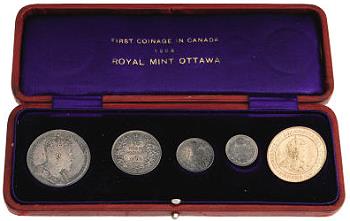
Royal Canadian Mint in the summer of 2008 may cause numismatists to reflect on the years of diplomatic wrangling and political infighting that surrounded its establishment. Now one of the most successful and modern mints in the world, its founding in 1908 was the culmination of nearly two decades of argument among Canadian parliamentarians, and negotiations between officials in Canada and the United Kingdom.
As early as 1890 members of the Canadian Senate from British Columbia began lobbying the Conservative and later, the Liberal, governments in Ottawa for opening a mint in Vancouver. Gold recently had been discovered in the nearby Fraser River Valley, and a tiny group of politicians led by Senator Thomas McInnes tried to persuade the cabinet to fund construction of a mint to assay and refine gold, produce ingots and strike gold into coins. In March, McInnes boldly introduced the following motion to the Senate, "Resolved as to the opinion of this House that it is both desirable and expedient that the government should immediately pass a coinage act and establish a mint."
Gold miners and speculators in British Columbia saw the opening of a mint as an opportunity to increase their profits by reducing the costs of exporting gold to the United States for refining. However, the Conservative Prime Minister, Sir John A. Macdonald, opposed the measure championed by McInnes, a Liberal, and it went down to defeat. Macdonald, then in declining health, had focused this agenda on protectionism rather than foreign trade, and a mint to increase profits from exportation of gold did not fit into his plans.
Read Full Story 









 Posted 04/23/2008 11:51 am


