| Author |
 Replies: 15 / Views: 1,269 Replies: 15 / Views: 1,269 |
|
|
New Member
United States
43 Posts |
Hello, First post of this nature, so please forgive any faux pas I might make. I found this in a roll yesterday. Doesn't appear to be damage. Penny is in more or less uncirculated state so...2006 Lincoln Cent... The nose is really caved in noticeably. What might cause that? Other than someone hitting it with a hammer ;) Just curious what your thoughts might be. Really stands out next to the thousands of other pennies I've searched...Hope the photos dont suck too bad... Probably nothing but worth asking I figure. Thanks! Jason -- NJ, USA 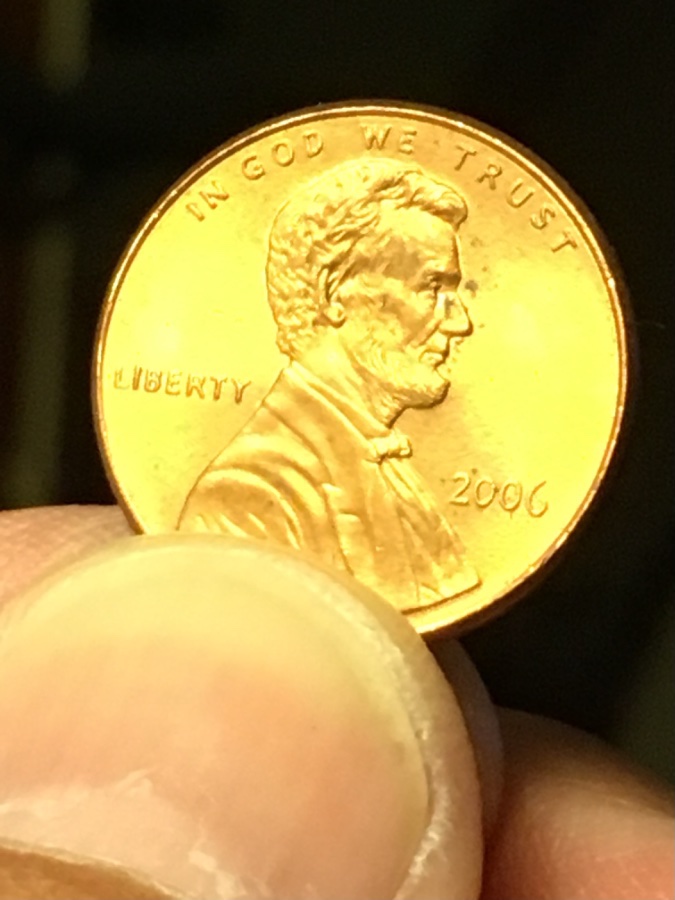 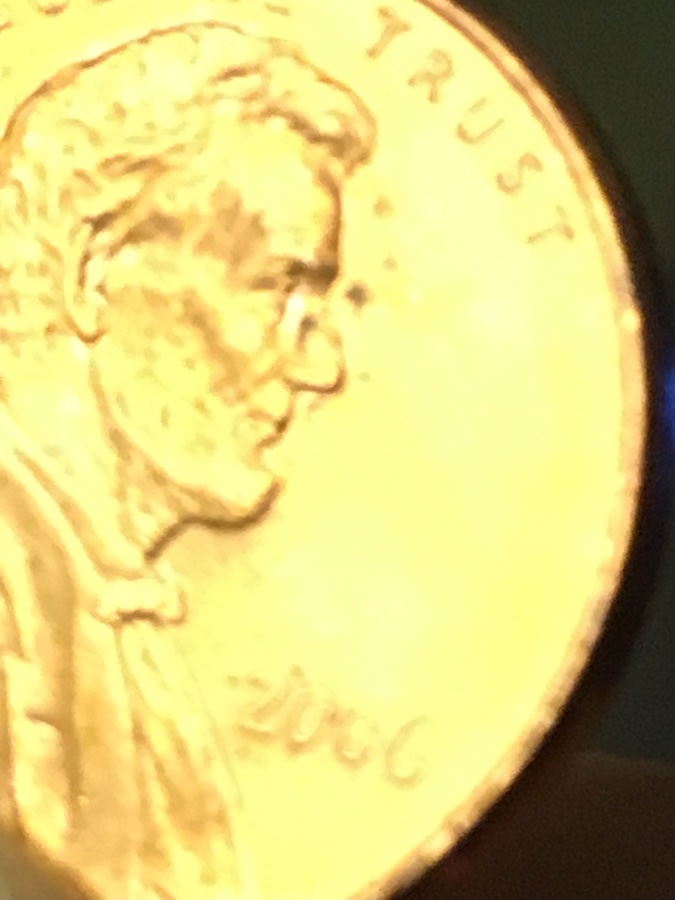 |
|
|
|
Pillar of the Community
United States
6130 Posts |
 Most likely a "struck through" error... something (grease, dirt etc) caked onto the die in that region, causing a part of the coin to not be fully struck. This usually affects lettering or dates, but can in theory happen anywhere on the coin. Nice find and good eye! |
|
New Member
 United States
43 Posts |
Hey thanks so much for taking a look. Really appreciate :)
|
|
Moderator
 United States
56855 Posts |
to CCF. Maybe a caved in gas bubble? John1  |
|
New Member
United States
43 Posts |
Yeah? Is that a thing? Gasses trapped in planchet? I'm researching the whole "strike through" thing and I could see that doing this. Something on the die that pushed the nose in...Fun learning experience! Thanks for guidance!
|
|
New Member
United States
43 Posts |
Or would it be something filling in the die preventing the nose from getting fully formed? I think it's that, right?
|
|
New Member
United States
8 Posts |
Could of happen during the plating process. Debris or like was mentioned already trapped gasses from chemical breakdown.
|
|
Rest in Peace
10197 Posts |
Mrjason, That was a collapsed plating bubble indeed! Because of the thin copper plating, when the coin is struck, the plating stretches minutely. If any gasses or material was trapped inside during planchet stock manufacture, then chemical reactions occur making those bubbles/lines. Because the nose is a high point, when stacked in rolls, pushes the corrosion/gas around.  |
|
New Member
United States
43 Posts |
Wow that's amazing :) I guess I came to the right place. Thanks for the replies and for sharing your knowledge!
|
|
Pillar of the Community
United States
2775 Posts |
I'm not convinced on plating issues yet. Struck through debris or PSD seems likely as well. The current images are not sufficient to call either or. Gets too grainy when enlarged. I believe plating bubbles and zinc rot occur sometime after strike. This specimen has had eleven years to percolate. If the collapse was due to zinc rot or void in the planchet, I don't see it showing. Clear close up of the obverse area and whole reverse may shed more light. Thanks, Doug. |
|
New Member
United States
43 Posts |
Ok I will get some more images together tonight. I used the photo optimizer. Not sure if that diminished the quality. I took with iPhone and when I zoom it does start breaking up. I'll take some with a real camera and post later. Thanks again!
|
|
Pillar of the Community
United States
2775 Posts |
Thought I'd follow-up the obverse side of coin shows a nice luster (with a few spots) and shows little circulation for it's age. Finger prints can easily transfer onto the field. Might handle by the edge when possible. Thanks, Doug.
Edited by Halo1st
07/19/2017 2:41 pm
|
|
New Member
United States
43 Posts |
Thank you. I get lazy with that and try and handle on Lincolns body...bad move me posting pic of me mishandling coin on here :) Rookie mistake! It's in nice shape...hopefully I keep it that way :)
|
|
Rest in Peace
10197 Posts |
Halo1st: You just may be right about a strike thru, altho I doubt seriously if it is grease, looks more like a chunk of loose metal was imbedded in die if that be the case. I do see evidence of "bubbling" (red circles) and I'm not sure what I'm pointing to...Cheek looks more raised than normal such as displacement. What I'd like to see is a closeup high res of the shape in the nose...is it sharp edged at bottom...is it level of field...any sign of split plating? Lot of questions, my jury's still out! Also, as to plating issues...read somewhere that in the manufacture of the plating of planchets, that to dry off (Quicker)after the wash, they use compressed air. Just like our computer dusters, just where do you think that "dust" and metal splinters, chips, dirt will land? think that's why so much disparity between coins each year. 1993 & 1998 for example, seem to be a lot in circ in excellent shape, look at the poor quality of shield cents and the 1986-89 years.  Edited by Crazyb0
07/19/2017 3:35 pm
|
|
New Member
United States
43 Posts |
I'm about to try and get some better pics with an actual camera (as opposed to iPhone). I'm assuming that will be better since it's got more megapixels--not sure that's a correct assumption...
My first novice impression when I saw it was that there must've been a die that was carved(?) a little too much or not enough...Because it looks like it is supposed to be this way. At least to the naked eye. It looks intentional--just like any other detail of the coin. It doesn't look "out of place" except that it looks unlike all other Lincoln noses...
Enough novice conjecture. Let me try and get better pics. I can't believe how hard that is to do! I need like some special light source because no matter where I shoot from I am blocking the light!
Thanks again for all your consideration! Really making me feel at home ;)
Jason
|
|
Pillar of the Community
United States
2775 Posts |
Pending the camera, check for macro option or sometimes indicated with a flower symbol. Thanks, Doug.
|
| |
Replies: 15 / Views: 1,269 |
|







 Posted 07/19/2017 10:44 am





