| Author |
 Replies: 11 / Views: 1,012 Replies: 11 / Views: 1,012 |
|
|
Pillar of the Community
United States
4113 Posts |
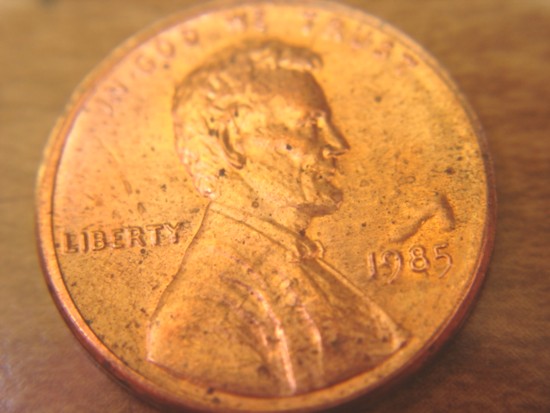
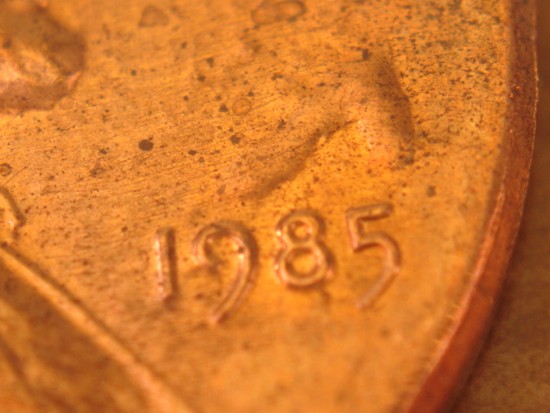
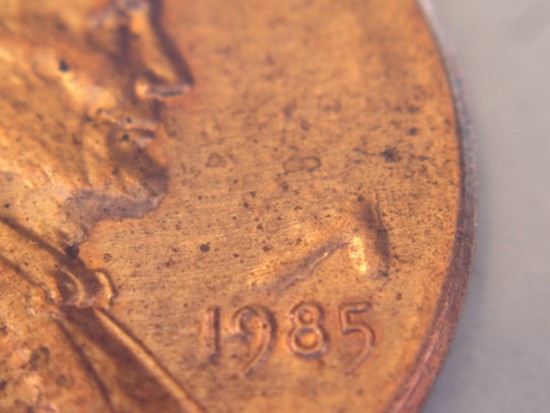
Found this earlier tonight going through bank rolls of Lincolns. Nice junk of metal over the date 1985. Image:  1985LMCjpeg1.jpg 1985LMCjpeg1.jpg49.02 KB Image: 1985LMCjpeg2.jpg52.84 KB
|
|
|
|
Pillar of the Community
United States
527 Posts |
This is neither a chip or a Cud. I'm pretty sure that what you have is a bubble. This looks like the start of zinc corrosion which is making the copper bubble up. You just have to hate those post 1982 cents. |
|
Pillar of the Community
United States
3507 Posts |
NGiles is 100% correct. It's a bubble under the plating.
Thanks,
Bill
|
|
Pillar of the Community
 United States
4113 Posts |
What indicates that this is "BUBBLING" and not a die chip etc?
I re-examined the bubble and it is very high up off the surface of the coin
Is that one way how you can tell the difference- its too high to be metal?
|
|
Pillar of the Community
United States
4113 Posts |
*Too high to be a die chip or cud- its still metal.*
|
|
Pillar of the Community
United States
7629 Posts |
Die chips and breaks have sharp edges around them. They are broken metal, nothing soft about it. Their edges are just like die cracks...hard, chiseled, and jagged.
Errant gas bubbles usually have bulbous appearance and are softer in appearance. They are usually accompanied by others either on the obverse or reverse - some very small others large.
There is no "etc" because nothing else would cause a raised area on the coin.
|
|
Pillar of the Community
United States
4113 Posts |
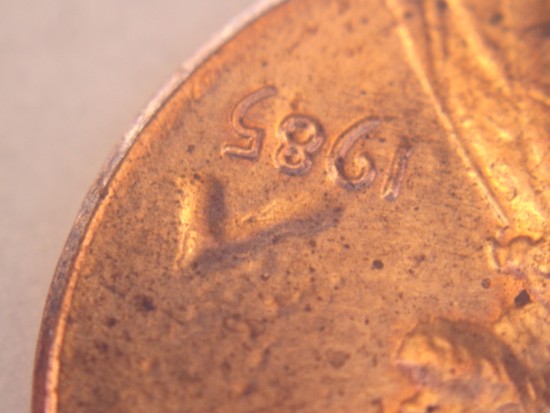
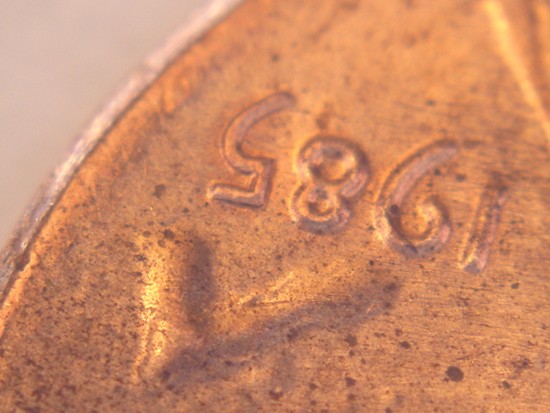
Thanks CC for the explanation on the differences. Please re-look at the pictures. There is a metal outline going around the entire section mentioned. is this where the oxidation is starting if it is a bubble, or can this still possibly be a die chip or Cud.? I'm not at home right now but i'll send better pics later tonight to high-light the metal outline- its definitely there going around the entire raised area. |
|
Pillar of the Community
United States
4113 Posts |
|
|
Pillar of the Community
United States
7629 Posts |
It's bulbous - it's not a hard-line outline. It looks like air was blown into the plating from inside the coin. The bubble you're showing developed on the coin from inside the planchet. The die was completely flat and normal. If it were something IN the die, the outline would be sharp, straight-lined, and crisp...if it were a broken piece from a die, the outline would be very sharp and jagged, like a bolt of lightning. They would also normally be tied to a device on the coin - 99% of all die breaks happen around devices, not in the middle of the field. For information sake, if this were the result of a broken die, it could not be a Cud. Cuds are ONLY at the edge of the design. They are the result of a piece of the die breaking off the edge. |
|
Pillar of the Community
United States
4113 Posts |
Thanks again- I re-examined it closer and it's not straight lines just as you stated. "BUBBLES!!" back into circulation it goes. (LOL) Question- regarding CUDS- I read on one of the coin info sites that only pure numismatists insist that a Cud "MUST" be at the edge of the design- others claim a Cud "CAN" be on any part of the coin. What is the REAL take on this- MUST or CAN. Thanks. |
|
Pillar of the Community
United States
7629 Posts |
It must be on the edge of the design...otherwise it simply is not a Cud. |
|
Pillar of the Community
United States
1952 Posts |
|
| |
Replies: 11 / Views: 1,012 |
|







 1985LMCjpeg1.jpg
 1985LMCjpeg2.jpg


 Posted 04/28/2008 11:25 pm




 1985lmcjpeg3.jpg
 1985lmcjpeg4.jpg
 1985lmcjpeg5.jpg


