

Coin Community Family of Web Sites Join Thousands of Coin, Bullion, & Money Collectors
Specializing in Modern Numismatics Royal Canadian Mint products, Canadian, Polish, American, and world coins and banknotes. Vancouvers #1 Coin and Paper Money Dealer Coin, Banknote and Medal Collectors's Online Mall Shop for APMEX Bullion on eBay!Join Thousands of Coin, Bullion, & Money Collectors 300,000 items to help build your collection!


Username:
Password:
Save Password
Forgot your Password?


This page may contain links that result in small commissions to keep this free site up and running.

Welcome Guest! Registering and/or logging in will remove the anchor (bottom) ads. It's Free!

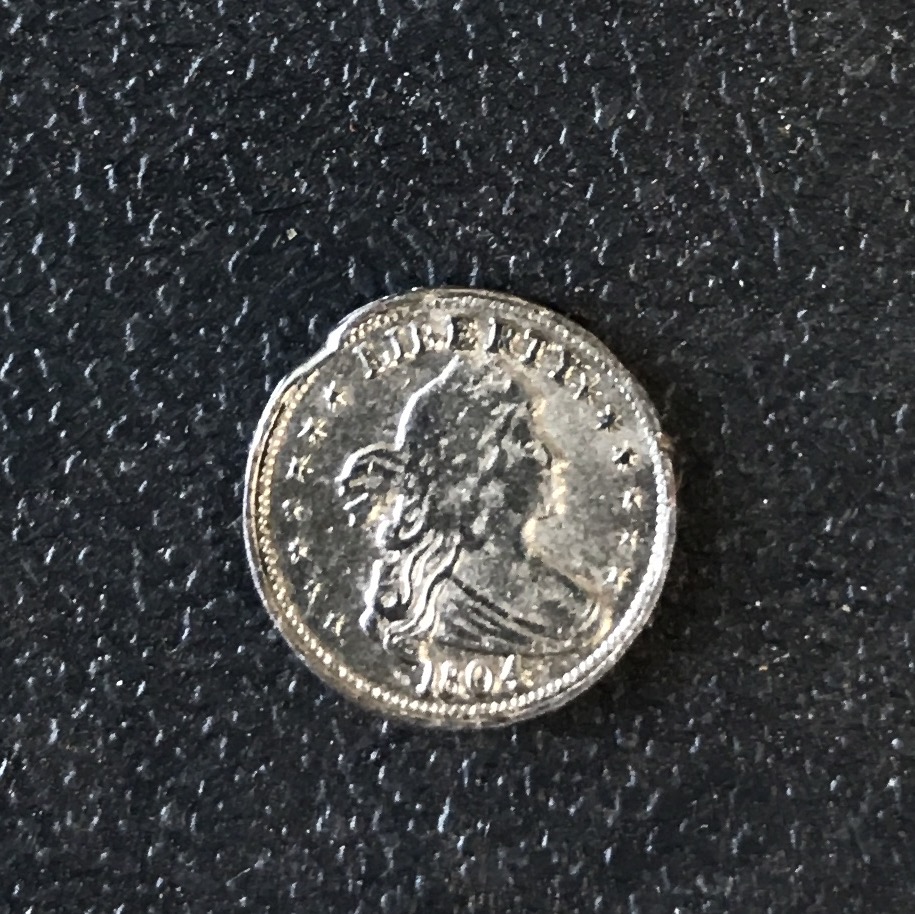
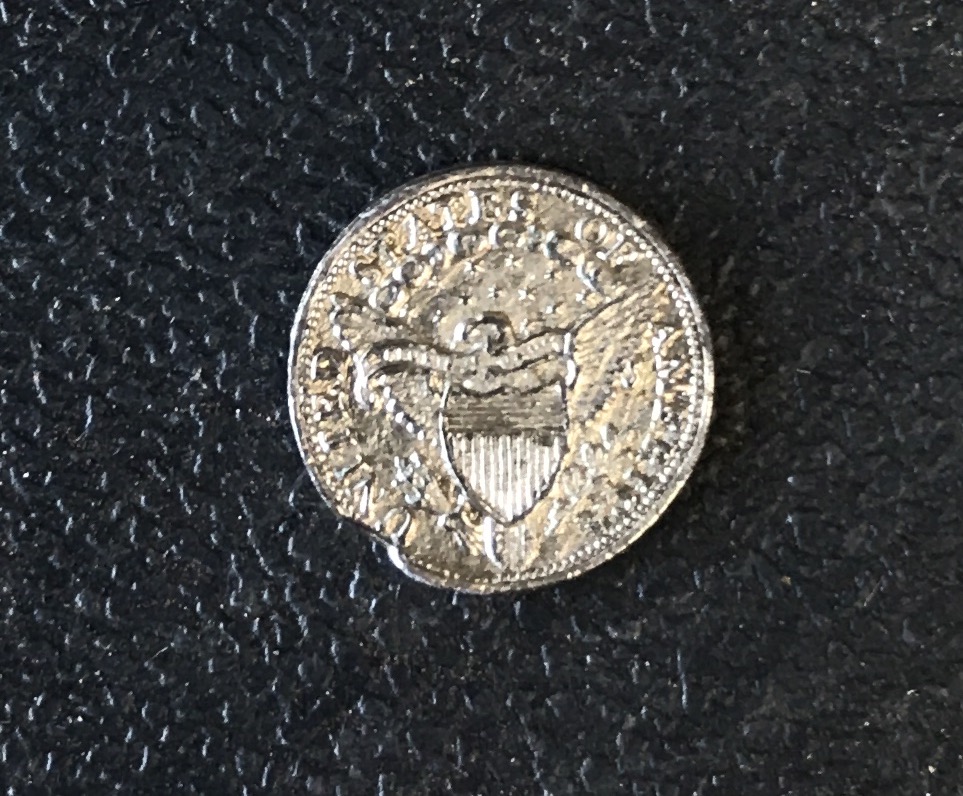
Tiny 1805 Dollar Coin

To participate in the forum you must log in or register.
Author Previous TopicReplies: 9 / Views: 1,442Next Topic  
New Member

United States
0 Posts
 Posted 08/13/2017  11:42 pm Show Profile   Bookmark this topic Add Dayton808 to your friends list Get a Link to this Message Number of Subscribers
I was looking through my Auntys coin collection and found a really tiny 1804 dollar coin not to sure what to think of it, any feed back would be helpful thank you! I also found a penny the same size
Tiny-1805-Dollar-Coin
Edited by Dayton808
08/14/2017 12:12 am
Pillar of the Community
Learn More...
coinlover1899's Avatar
United States
3058 Posts
 Posted 08/14/2017  12:34 am  Show Profile   Bookmark this reply Add coinlover1899 to your friends list Get a Link to this Reply

Novelty Coin.
Moderator
Learn More...
Fuzzy317's Avatar
United States
14463 Posts
 Posted 08/14/2017  05:39 am  Show Profile   Bookmark this reply Add Fuzzy317 to your friends list Get a Link to this Reply
novelty coin. Those type coins were stopped being produced in 1804 and a 1804 coin would be over 1.5 inches wide.
Rest in Peace
moxking's Avatar
United States
17900 Posts
 Posted 08/14/2017  07:46 am  Show Profile   Bookmark this reply Add moxking to your friends list Get a Link to this Reply
but I can understand why you asked. Keep searching. We have folks report neat finds almost every day.
Pillar of the Community
Learn More...
BStrauss3's Avatar
United States
4589 Posts
 Posted 08/14/2017  08:18 am  Show Profile   Bookmark this reply Add BStrauss3 to your friends list Get a Link to this Reply
to CCF!

Replicas were often used in bracelets. The damage is probably where a ring used to attach it broke off. It may be 14kt or just gold plated. The edge at the damaged part might show underlying base metal. A density measurement would also differentiate.
-----Burton
50+ year / Life / Emeritus ANA member (joined 12/1/1973)
Life member: Numismatics International, CONECA
Member: TNA, FtWCC, NETCC, EveryCountry (online) coin club
Owned by three cats and a wife of 40+ years (joined 1983)

Author: 3rd Edition of the Sample Slabs book, https://www.sampleslabs.info/
Pillar of the Community
Redifin's Avatar
United States
505 Posts
 Posted 08/14/2017  09:13 am  Show Profile   Bookmark this reply Add Redifin to your friends list Get a Link to this Reply

Quote:
A density measurement would also differentiate.


I agree, I would test it to see if it might be gold! You never know, worth a shot. The density measurement poster above me mentioned, here's how to do it:

Measure the mass of the gold object on the scale. Record the mass in grams (g).

Pour water into a graduated cylinder until the cylinder is approximately half full. Record the water level in cubic centimeters (cc), being careful to read the bottom of the meniscus (the curved shape of the surface of the water). Let this water level measurement be referred to as the initial volume, or "Vi." Note that 1 milliliter (ml), which is a common volume unit used on the graduated cylinder, is equivalent to 1 cc.

Record the water level in the cylinder with the gold object submerged. Let this volume reading (measured in cc) be referred to as the final volume, or "Vf."

Calculate the difference in water levels before and after submerging the object. For example, the difference = Vf - Vi.

Divide the mass of the object by its volume to yield the density of the object. For example, the object density = mass / (Vf - Vi). Compare the measured density to that of pure gold (19.3 g/cc) to determine whether the object is made of pure gold.

WARNING: different purities of gold have different densities. Pure gold is 19.3 g/ml while 14k is approximately 13 g/ml.

***Or you can get a nitric acid test, aka a 'gold test kit'
Pillar of the Community
Chase007's Avatar
United States
7509 Posts
 Posted 08/14/2017  09:19 am  Show Profile   Bookmark this reply Add Chase007 to your friends list Get a Link to this Reply
to the forum.
Moderator
Learn More...
jbuck's Avatar
United States
188052 Posts
Bedrock of the Community
Dorado's Avatar
Canada
24885 Posts
 Posted 08/14/2017  5:18 pm  Show Profile   Bookmark this reply Add Dorado to your friends list Get a Link to this Reply
To the Forum.
Pillar of the Community
United States
5205 Posts
 Posted 08/23/2017  11:02 pm  Show Profile   Bookmark this reply Add jack jeckel to your friends list Get a Link to this Reply
  Previous TopicReplies: 9 / Views: 1,442Next Topic  

To participate in the forum you must log in or register.


Disclaimer: While a tremendous amount of effort goes into ensuring the accuracy of the information contained in this site, Coin Community assumes no liability for errors. Copyright 2005 - 2026 Coin Community Family- all rights reserved worldwide. Use of any images or content on this website without prior written permission of Coin Community or the original lender is strictly prohibited.
Contact Us  |  Advertise Here  |  Privacy Policy / Terms of Use

Coin Community Forum © 2005 - 2026 Coin Community Forums
It took 0.33 seconds to rattle this change. Forums
