| Author |
 Replies: 15 / Views: 1,722 Replies: 15 / Views: 1,722 |
|
|
Pillar of the Community
United States
3499 Posts |
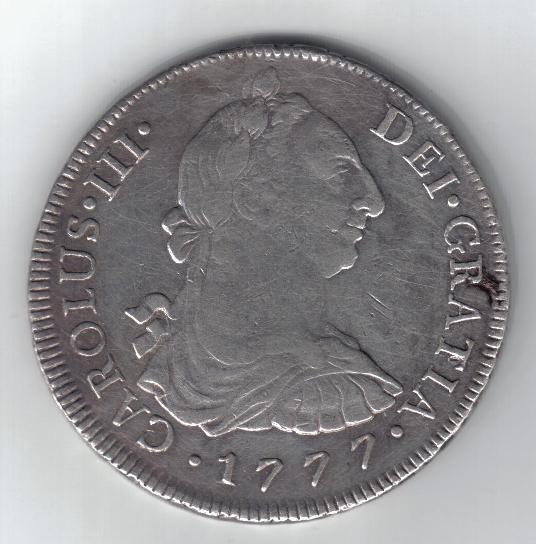
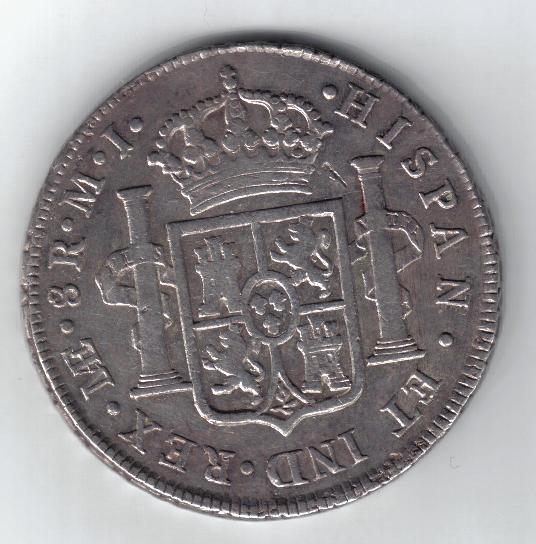
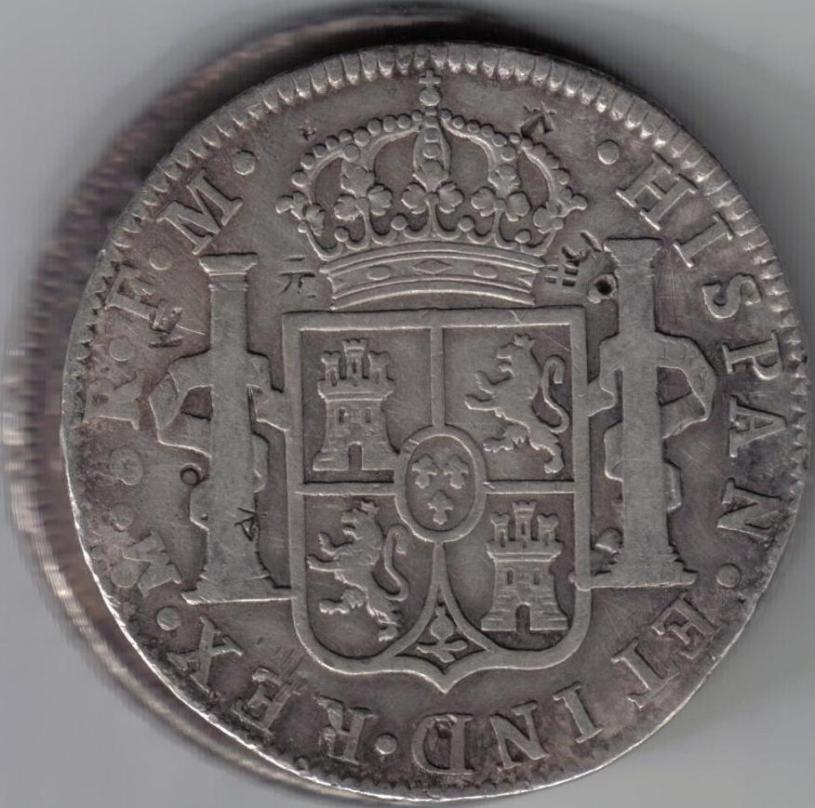
hey everyone.(I really need your help here Swamperbob!) I bought this Peruvian 8R a few years back from a very reputable dealer, and in recent time I've been concerned about its authenticity. Though it has obviously been harshly cleaned by a previous owner, something really just does not seem right about it. Though I know that Peruvian 8Rs were often a bit irregular, the detail on the reverse seems odd. The Dot between HISPAN and ET seems too high above the base of the pillar (on all of my other coins of this type it is usually level with the base, The crown (especially the right side) seems way too high off the shield, The forward thrusting leg of the lions in the coat of arms seem really short and oddly formed, the cross on the top of the crown seems too far from the toothed boarder, and the edge rectangle & circle pattern seems to almost be raised off of the edge (you can see it on the left side of the coin). Thanks! Image:  1777peru8obv.jpg 1777peru8obv.jpg44.61 KB Image: 1777peru8rev.jpg52.75 KB |
|
|
|
Pillar of the Community
Norway
510 Posts |
What does the edge of the coin look like? I am sure swamperbob would appreciate the extra information and/or pictures. As I understand things, the edge is the first place to look if you want to determine authenticity.
|
|
Pillar of the Community
 United States
3499 Posts |
Sorry about the quality of the scan. For now I do not have access to my digital cam, but I'll try to get a decent pic soon of the edge. The edge looks rather normal in that the pattern looks fine, but it seems almost elevated and thick. It is as if the edge, rather than simply meeting the boarder of the coin, it almost juts out from the coin. You can still sort of see this at approximately the 3 o' Clock position of the scans I already posted.
|
|
Pillar of the Community
United States
3499 Posts |
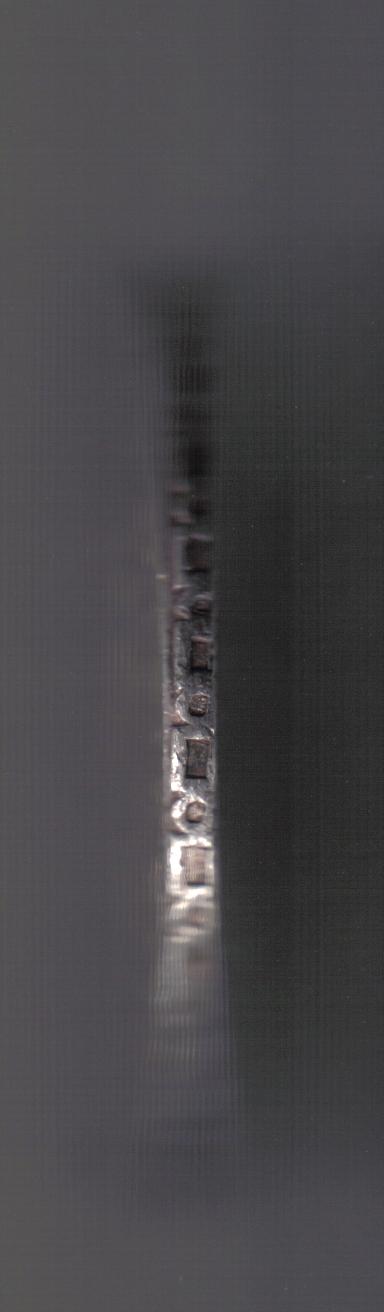
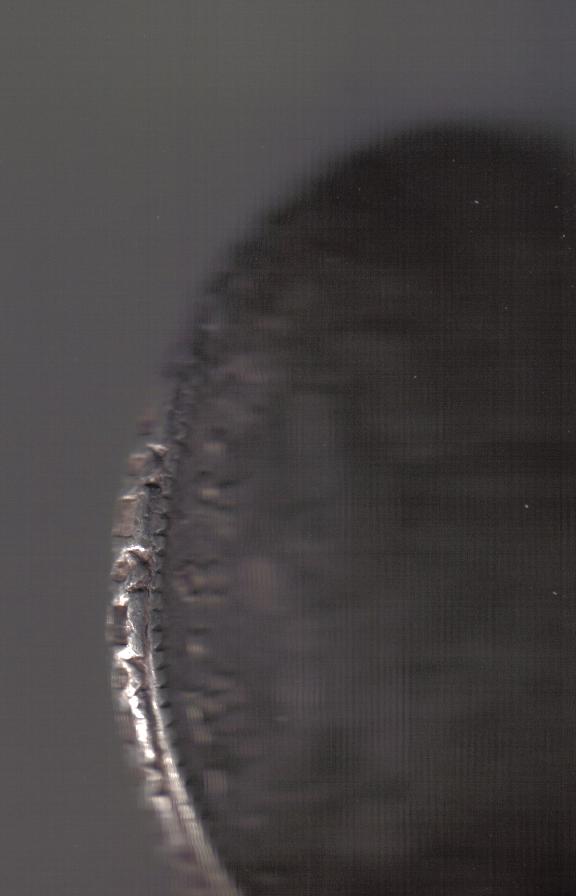
Here are some pics of the edges of the coin (in actuality some creative scanning.) I believe that these scans do reveal how the edge pattern seems to not be well centered on parts of the edge. Image: 1777edge1.jpg27.71 KB Image: 1777edge2.jpg28 KB |
|
Pillar of the Community
United States
5362 Posts |
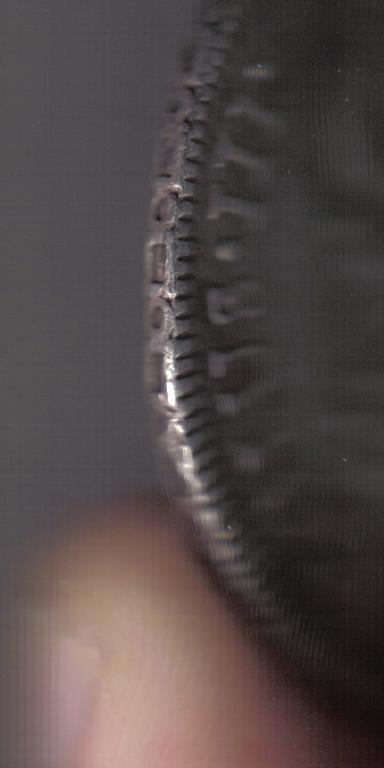
Archraz - From what I see it is a bit hard to be positive. The obverse and reverse of the coin look fine. The coin has been cleaned as you noted and some of the punches show wear. The central elements on both sides are weak a combination of strike and damage. The variations in the small details - things like the positions of the letters and dots are not enough to make me question authenticity. You need to recall that each die was hand made with elemental punches so positions do vary. The die sinkers followed an "official matrix" but these variations are within acceptable standard limits.
It is a bit of a different story with the edge design. The first edge picture looks healthy but a bit eccentric and it appears that the design is heading off the side. Does it continue that way or does the design wobble back closer to center? The machine used to edge the planchets BEFORE the strike applies the design on opposite sides of the blank at the SAME time. So the wobble on one side should have some effect on the opposite side. Do you see one?
Look closely at the edge design - can you find the two overlaps? There have to be 2 exactly 180 degrees opposite one another. They also have to be the same length. A coin with one overlap is a FAKE. A coin with overlaps of different lengths is a FAKE.
Does the pattern vary as you work your way around the perimeter? Are any of the circles actually square in the center?
One rectangle seems to have a bar inside it (second picture) - that could be a lap or an edger defect - make sure it does not occur more than one time.
Now, the second edge shot shows "damage" in the form of "squares" and small vertical line segments as if something were driven into the edge OVER the completed edge pattern. Does that happen on HALF the edge or is the dmage uniform around the whole edge?
Do you have an accurate weight to 1/10th gram?
Anyone who has read any of my numerous posts on the 1890s forgeries will by now see where I am heading.
The question is - Was the coin edged properly? Is it a possible "Boston" style forgery from the 1890s?
After I reviewed the edge I looked again at the obverse and reverse. (By the way, you are using a US standard for naming obverse and reverse. Spanish standards call the side of the coin with the name of the country the Obverse, so in this case technically the "heads side is the Reverse). Anyhow, looking at the reverse picture you posted in the area of the LIMAE monogram and the 8R - I seem to see the edge design and there is a line marking the edge of the die (terminating the dentils). This is odd because in another post tonight the smae incorrect feature appears on another coin (1838 Argentinian 8R).
The 8Rs were all made in two die screw presses - NO COLLAR DIES. The dentils have to run to the edge of the planchet and they can not be distorted by the edge application (since the edge went on first).
I am suspicious that the die that made this coin lacked complete dentils in the area near the monogram and denomination and that it may have been edged AFTER the strike.
It may in fact be a forgery but I can not yet be certain. Longer shots of more of the edge would help greatly.
Let us know what you see when you examine the coin.
|
|
Pillar of the Community
United States
3499 Posts |
Swamperbob- The edge design does in fact wobble back to the center.I do see two overlaps though, which are about 180 degrees apart. The issue of the bar that goes through one of the rectangles is of great concern since there is another rectangle (the one just beneath the circle beneath the bar on the scan). The edge design is even and regular (except at the overlaps) and the centers of the circles are not square. I do not have access to a scale at the moment, but the issue of weight does lead to another issue of the coin: it is VERY wide. In fact it is 40mm in diameter, whereas all of my other 8s are about 37. Here is a scan of another 8 beneath the peruvian 8 under scrutiny: Image: 8Rdiameters.jpg86.38 KB Upon further viewing it does not really appear that there is a line through the dentals that marks the edge of the die. But the dentals do not cover the edge design. Indeed, the edge design seems to jut out past the dentals by nearly a mm. So, it is almost as though the edge design is raised past the dentals when one looks at the coin from the coat of arms side rather than from straight above the edge. I am sorry that I cannot get you better pics. The pics my camera has taken of the edge are nothing more than greyish blurrs, so the scans are the best I can do for now. |
|
Pillar of the Community
United States
5362 Posts |
The diameter is not that great a problem for PERU. That mint along with Bolivia (Potosi) produces the largest of the 8Rs. The largest original I have seen so far is 40mm. Mexico City produced thicker coins with a smaller diameter. A 40mm coin from Mexico City would almost certainly be a forgery.
That said, I have many 40-42mm diameter counterfeits in my collection. Increasing the diameter and or the thickness is one way a forger can increase the weight of an off metal counterfeit so that it reaches 27 grams. This inclination to increase the dimensions of the coin is one reason that Specific Gravity is critical. None of the Third Party Graders does SG testing as part of their examination. They also DO NOT CHECK the edge of the coin. That may be hard to believe, but I have talked to the head of grading for foreign coins at ANACS and got the reply that they don't look at the edges. He said he would look into the subject however.
The fact that you have two overlaps opposite one another and of the same length makes the coin less suspect, but I am still concerned that it may have been edged post strike.
If you ever get better pictures send them along.
|
|
Pillar of the Community
United States
3499 Posts |
|
|
Pillar of the Community
United States
1674 Posts |
Isn't it a little strange for the edge to be so bold and sharp while the rest of the coin has moderate wear? If anything, I usually see them with more wear on the edge than the obv/rev.
|
|
Pillar of the Community
United States
3499 Posts |
Numismat- yeah, there is something really kind of odd about how bold the edge is and how it sort of juts out past the dentals on the reverse. But the coin does appear to be silver, and though I have not properly weighed it yet, it seems to feel about the right weight.
|
|
Pillar of the Community
United States
5362 Posts |
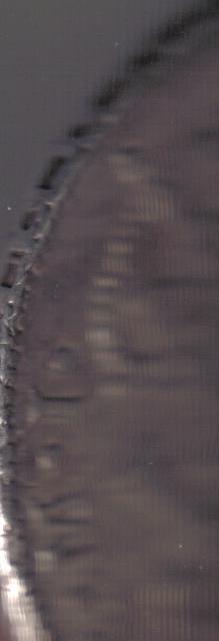
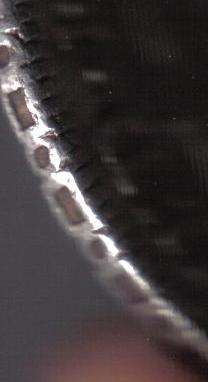
Well, the new pictures are better but still not 100% conclusive. I am now a little more sure the coin is pre-strike edged. In the case of an eccentrically edged coin the dentils would run up the sides of the edge detail on ONE side only. Here is a sketch of what I mean. The edge view with the dentils is straightened out (because I can't draw on a curve). Image Insert: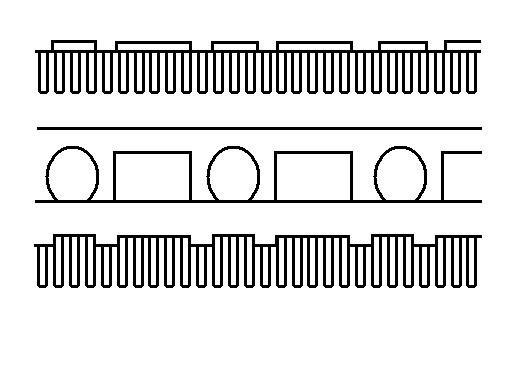 Actually - that is what I think I see on your coin. The wear is not a killer problem when the edge is as high as this one is. But is the coin real? That can not be determined with certainty - yet. The remaining problems are the wobble of the edge and the extra bar inside the rectangle. These are serious problems because I am aware of several counterfeit edge dies with extra bars inside the rectangles and because most (but not all) edger mills had a retaining lip on the top of BOTH edge dies that held the blank in place for edging. Without the lip, the blanks would be constantly popping out of the edger. This was identified as a problem rather early on so by 1777 I would think all branches had adopted this technology. |
|
Pillar of the Community
United States
3499 Posts |
The bars through the rectangles only appear twice, as is seen in this pic: Image: 1777edge9.jpg7.82 KB But there is also some sort of line through the circle between the rectangles with bars. When it comes to the eccentricity of the edge detail, the wobble is not that pronounced except for a small area, which I showed in one of my previous pics. The wobble is actually only noticeable for part of one half of the coin, and the wobble is corrected after the overlap. In essence, only one of the two edger dies was not centered. |
|
Pillar of the Community
United States
5362 Posts |
As we progress toward an answer sometimes new questions arise.
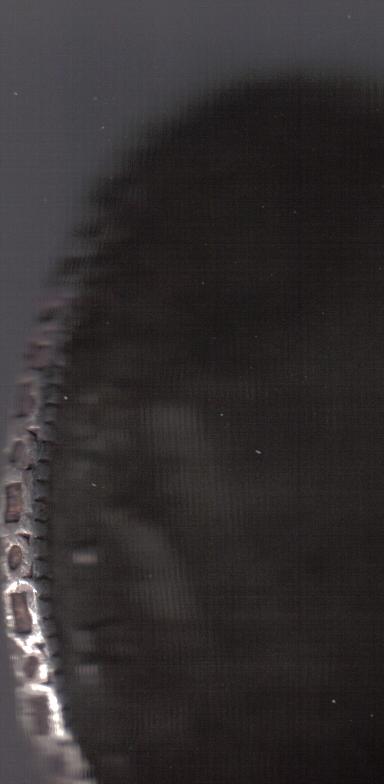
The last picture of the edge looks like an overlap that has worn a bit. The three consecutive figures two rectangles and a circle all have equally spaced second (lighter) impressions within them. Is that one of the two overlaps you were referring to? If not you may have three or four overlaps. That would likely make it a counterfeit.
These traces could also be an error in manufacture of the edge die. I am not aware of such an error but it is possible. It could be used to ID coins made with that same edge die.
The other new issue is that half of the edge is eccentric and the other half is not. There is almost no way to do that physically in a standard edger. This was a rigid flat surface with two flat bar dies mounted on top of it. If you place a flat circular disc between two flat bars under compression and center one side - the opposite side has to be centered as well.
That is unless the edges of the disc are sloped, but not so far that the disc pops out.
What you now appear to be describing is a coin edged in segments. This technique is a well know counterfeiting technique used both during the contemporary era (1770s - 1820s) and again in the Boston era (1890s - 1930). An edge die or dies were used several times to encircle the edge of the coin.
Sorry to be so picky, but when you are trying to explain a technical issue it happens.
|
|
Pillar of the Community
United States
3499 Posts |
oh well, I do believe this area with the three bars to be one of the overlaps. The other being exactly across from it. I did not mean that the other side did not wobble a bit. both sides are not perfectly centered. From where it reads "Rex" until where is reads "8R" (going clockwise) it is very much off, which was seen in pic "edge1."
|
|
Pillar of the Community
United States
5362 Posts |
Archraz - Based on those comments it sounds as if the coin could be real. If that overlap shown in the last edge picture (three segments) is one of two and if it matches the other side for length and pressure (depth of overlap) the coin was edged in a two die edger. The fact that both sides wobble is consistent with an oversized planchet - because the planchet will be slightly thin allowing a small amount of wobble because it was not a tight fit. The nature of the edge mill allows for easy diameter adjustment but thickness of the blank is fixed to a maximum limit and there is no way to adjust in that direction.
Wobble and pop outs can be a good sign of forgery (hand edged planchets) if they are dramatic. If the wobble goes side to side in 5 or 6 segments or leaves the blank entirely that means there was NO retaining lip. If the features observed on one side Do NOT match the opposite side (depth of design for example) then a single die edging process is likely. Those are the features that are unlikely on an original but common on a forgery.
Edges are a complex subject - one that I have been working on since about 1976. Back then I though it best not to disclose too much on this subject because the forgers could use the data. However, in the past 5 years the Chinese have corrected their processes to mimic the original so now it is appropriate to discuss this subject in detail.
|
|
Pillar of the Community
United States
3499 Posts |
Well, thank you very much, swamperbob! If I ever do get better pics of the edge, I'll add them, but for now I am glad to hear that that coin is probably real.
|
| |
Replies: 15 / Views: 1,722 |
|









 1777peru8obv.jpg
 1777peru8rev.jpg

 Posted 05/04/2008 03:07 am


 1777edge1.jpg
 1777edge2.jpg
 8Rdiameters.jpg
 1777edge3.jpg
 1777edge4.jpg
 1777edge5.jpg
 1777edge6.jpg
 1777edge7.jpg
 1777edge9.jpg


