












 Posted 09/10/2017 10:55 pm


I spent about 5 minutes looking at Gordian 111 antoninianii on Vcoins.
Easily findable examples over 5 grams are a bit scarce. The heaviest I found weighed 5.20 grams; I suppose that it would be possible to find them at perhaps a maximum of 0.1 or 0.2 grams over 5.11, or even a bit heavier than that.
I found quite a few examples less weighing 4.00 grams or less.
Based on the good research by Arnoldoe, it would appear that around 5% of the antoninanii of Gordian 111 weigh over 5.11 grams.
During the six year reign of Gordian 111, it would be entirely believable that the weight and fineness of the silver should have declined slightly, in accordance with the debasement of the Roman silver coinage system during this era of Roman history.
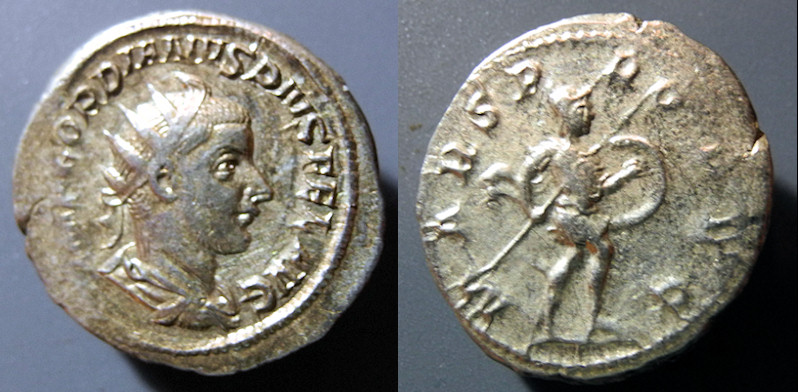
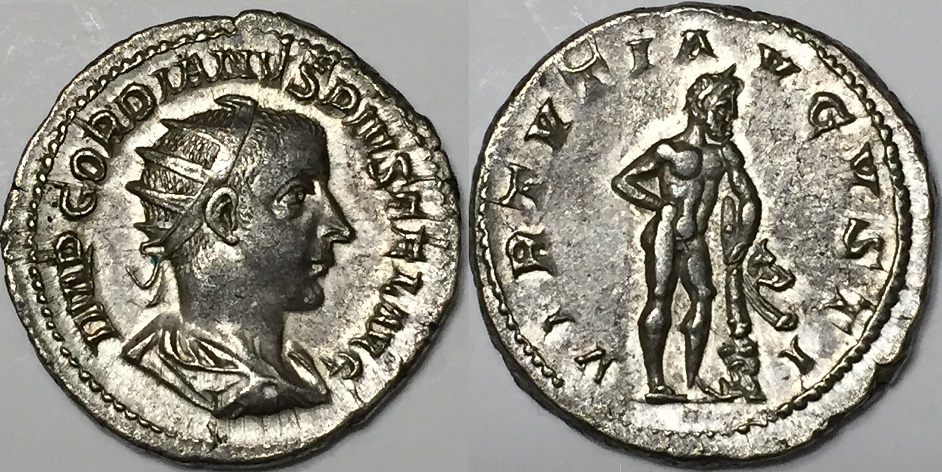
Fineness of the silver in the antoninianii of Gordian 111 is around 50%. Almost all coins that come onto the market appear to be whiter than 50% silver would indicate.
My reasoning is that after recovery from burial, the coins after a preliminary physical cleaning, have been washed in a weak acid by professional museum employees, thus enriching the silver in the surface layer of the coin. A rich gray silver patina would then take a a few decades to re form.
By inference, this coin was probably struck early in in the reign of Gordian 111.
------------------------------------------------------------------------------------------------------------------------------------------------------
A little later on in Roman numismatic history, Aureii were issued with a radiate head (not laureate) of the emperor, and were attempted to be tariffed at 2 aureii. All are heavier than laureate head gold coins of the same emperor. Nevertheless, I believe that they would have to be individually weighed to differentiate them from gold plated antoniniaii in attempted fraudulent transactions.
A genuine radiate head gold coin was known as a 'binio' (double aureus), to distinguish them from the radiate head aureii. Heavy aureii, double aureii, or binios, depending on whatever you choose to identify them as, are extremely rare.
David Sear in his book Roman Coins And Their Values, identifies these gold coins from the reign of Trebonius Gallus and later.
Refer to Google Images 'gold coin binio radiate head', to see a picture.
Easily findable examples over 5 grams are a bit scarce. The heaviest I found weighed 5.20 grams; I suppose that it would be possible to find them at perhaps a maximum of 0.1 or 0.2 grams over 5.11, or even a bit heavier than that.
I found quite a few examples less weighing 4.00 grams or less.
Based on the good research by Arnoldoe, it would appear that around 5% of the antoninanii of Gordian 111 weigh over 5.11 grams.
During the six year reign of Gordian 111, it would be entirely believable that the weight and fineness of the silver should have declined slightly, in accordance with the debasement of the Roman silver coinage system during this era of Roman history.
Fineness of the silver in the antoninianii of Gordian 111 is around 50%. Almost all coins that come onto the market appear to be whiter than 50% silver would indicate.
My reasoning is that after recovery from burial, the coins after a preliminary physical cleaning, have been washed in a weak acid by professional museum employees, thus enriching the silver in the surface layer of the coin. A rich gray silver patina would then take a a few decades to re form.
By inference, this coin was probably struck early in in the reign of Gordian 111.
------------------------------------------------------------------------------------------------------------------------------------------------------
A little later on in Roman numismatic history, Aureii were issued with a radiate head (not laureate) of the emperor, and were attempted to be tariffed at 2 aureii. All are heavier than laureate head gold coins of the same emperor. Nevertheless, I believe that they would have to be individually weighed to differentiate them from gold plated antoniniaii in attempted fraudulent transactions.
A genuine radiate head gold coin was known as a 'binio' (double aureus), to distinguish them from the radiate head aureii. Heavy aureii, double aureii, or binios, depending on whatever you choose to identify them as, are extremely rare.
David Sear in his book Roman Coins And Their Values, identifies these gold coins from the reign of Trebonius Gallus and later.
Refer to Google Images 'gold coin binio radiate head', to see a picture.
Edited by sel_69l
09/11/2017 03:04 am
09/11/2017 03:04 am


