

 Posted 09/28/2017 2:32 pm


Yeah, it has been a while since we have posted anything ;). Both Thomas and I are relatively busy with our studies. From the two of us, Thomas is the real expert on post-Zhou coinage, but since I highly doubt he'll find this topic, I'll give it a try.
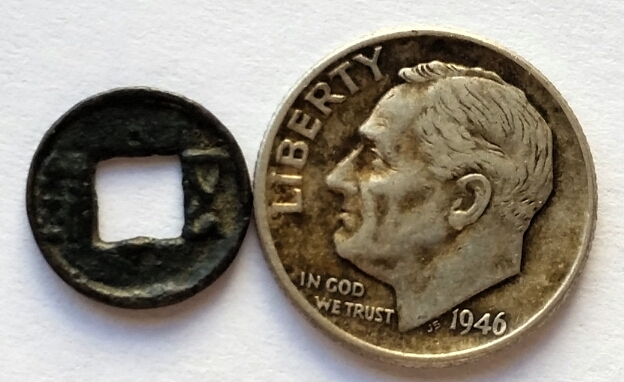
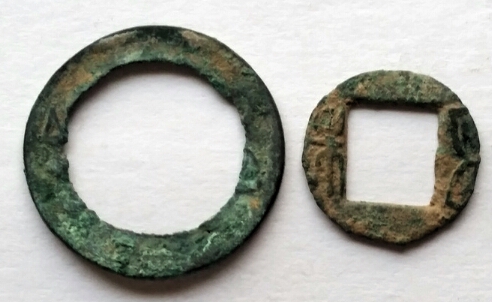
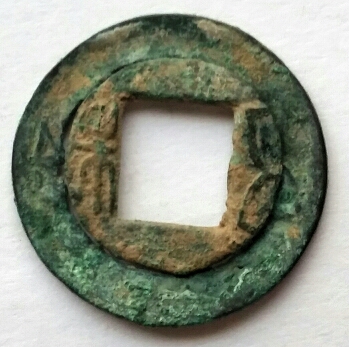
What you have here, are is a so called "Xianhuan" (Thread ring) Wu Zhu and a "Zaobian" (Chiselled Rim) Wu Zhu. You already explained what happened. Towards the end of the (eastern)-Han dynasty, some commodities, including Wu Zhu coins, were becoming relatively scarce, due to poor harvest, barbarian invasions, civil war, etc. The emperor spend 4.4 billion zhu to conquer the Western Qiang, and the state's finances were looking worse and worse. He eventually started selling Dukedoms and ministerial positions off (you could become a Duke for merely 10 million, a minister for 5 million Zhu), etc. just to prevent the state from going bankrupt. Several people advised to start minting large, good weight Wu Zhus again, as done in the Western Han, a period of economic stability. Nevertheless, his main adviser advised against, which indirectly could be a contributing factor to the eventual fall of the Han dynasty.
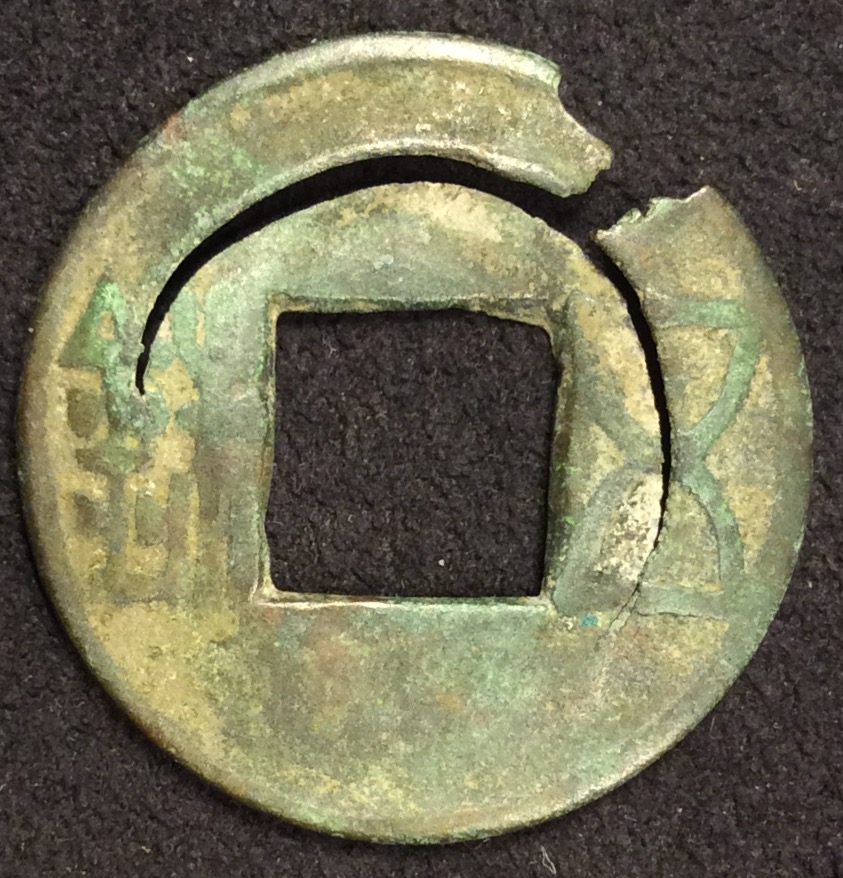
As another solution, old Wu Zhus, from the Western or early Eastern Han (which were of a better weight than the specimens cast at this time), had their middle cut out. Not stamped, seeing as there are actually specimens known that have marks of such cutting, and Thomas even has a specimen that was only half cut! I am sure he won't mind me borrowing his picture:
Both these pieces, now equalling the weight of the later Wu Zhu coins in circulation at the time of the clipping, were indeed circulated again, each for 5 (wu) zhu. I don't have the latest info on these (a new publication dedicated entirely to the Wu Zhu coinage has been published recently), but it is generally accepted that they start to appear around 147 AD (the original Wu Zhu from which they were clipped were of earlier date of course). After that, Under Dong Zhuo in the Henan province, a rare type of Wu zhu is known, that was cast with a chiselled-rim Wu Zhu as the mother coin. This resulted in coins that looking quite like these chiselled-rim Wu Zhu's, but have a casting sprue. These supposedly make a re-entrance somewhere in the Southern-Liang period. But looking at your coin, it is simply a cut coin, that was not cast like this.
There is some disagreement between scholars. Some state that it was the government itself that actually cut these Wu Zhu's into two (due to the uniformity in the way they were cut (you already mention that they fit almost perfectly!) and the relatively large amount of coins that were treated in such a way), but other maintain that this was done unofficially, by for example merchants that 'bought' high-quality, early Wu Zhu's for slightly more than 5 zhu, then cut these into two, and ended up with 10 zhu. There are fairly little sources about this, and again, I am not a specialist on these. I'd personally go for the option that these were unofficial, but who knows..
Later, after the fall of the Han-dynasty, the Wu Zhu was restored to its proper weight again, and many of the private and illicit casts from the end of the Han were recast into proper Wu Zhus again. And they were still used centuries later; I have personally fished a couple of Wu Zhus from a middle-Tang period hoard!
Congrats on the purchase; they sure tell an interesting story! The rim is generally a bit heavier than the inner coin by the way.
Mika
What you have here, are is a so called "Xianhuan" (Thread ring) Wu Zhu and a "Zaobian" (Chiselled Rim) Wu Zhu. You already explained what happened. Towards the end of the (eastern)-Han dynasty, some commodities, including Wu Zhu coins, were becoming relatively scarce, due to poor harvest, barbarian invasions, civil war, etc. The emperor spend 4.4 billion zhu to conquer the Western Qiang, and the state's finances were looking worse and worse. He eventually started selling Dukedoms and ministerial positions off (you could become a Duke for merely 10 million, a minister for 5 million Zhu), etc. just to prevent the state from going bankrupt. Several people advised to start minting large, good weight Wu Zhus again, as done in the Western Han, a period of economic stability. Nevertheless, his main adviser advised against, which indirectly could be a contributing factor to the eventual fall of the Han dynasty.
As another solution, old Wu Zhus, from the Western or early Eastern Han (which were of a better weight than the specimens cast at this time), had their middle cut out. Not stamped, seeing as there are actually specimens known that have marks of such cutting, and Thomas even has a specimen that was only half cut! I am sure he won't mind me borrowing his picture:
Both these pieces, now equalling the weight of the later Wu Zhu coins in circulation at the time of the clipping, were indeed circulated again, each for 5 (wu) zhu. I don't have the latest info on these (a new publication dedicated entirely to the Wu Zhu coinage has been published recently), but it is generally accepted that they start to appear around 147 AD (the original Wu Zhu from which they were clipped were of earlier date of course). After that, Under Dong Zhuo in the Henan province, a rare type of Wu zhu is known, that was cast with a chiselled-rim Wu Zhu as the mother coin. This resulted in coins that looking quite like these chiselled-rim Wu Zhu's, but have a casting sprue. These supposedly make a re-entrance somewhere in the Southern-Liang period. But looking at your coin, it is simply a cut coin, that was not cast like this.
There is some disagreement between scholars. Some state that it was the government itself that actually cut these Wu Zhu's into two (due to the uniformity in the way they were cut (you already mention that they fit almost perfectly!) and the relatively large amount of coins that were treated in such a way), but other maintain that this was done unofficially, by for example merchants that 'bought' high-quality, early Wu Zhu's for slightly more than 5 zhu, then cut these into two, and ended up with 10 zhu. There are fairly little sources about this, and again, I am not a specialist on these. I'd personally go for the option that these were unofficial, but who knows..
Later, after the fall of the Han-dynasty, the Wu Zhu was restored to its proper weight again, and many of the private and illicit casts from the end of the Han were recast into proper Wu Zhus again. And they were still used centuries later; I have personally fished a couple of Wu Zhus from a middle-Tang period hoard!
Congrats on the purchase; they sure tell an interesting story! The rim is generally a bit heavier than the inner coin by the way.
Mika
Edited by AnYangMan
09/28/2017 2:34 pm
09/28/2017 2:34 pm