From wikipedia:
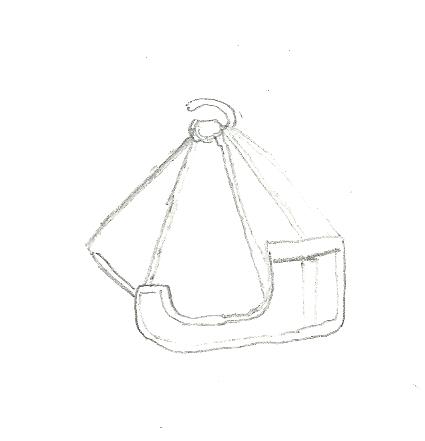
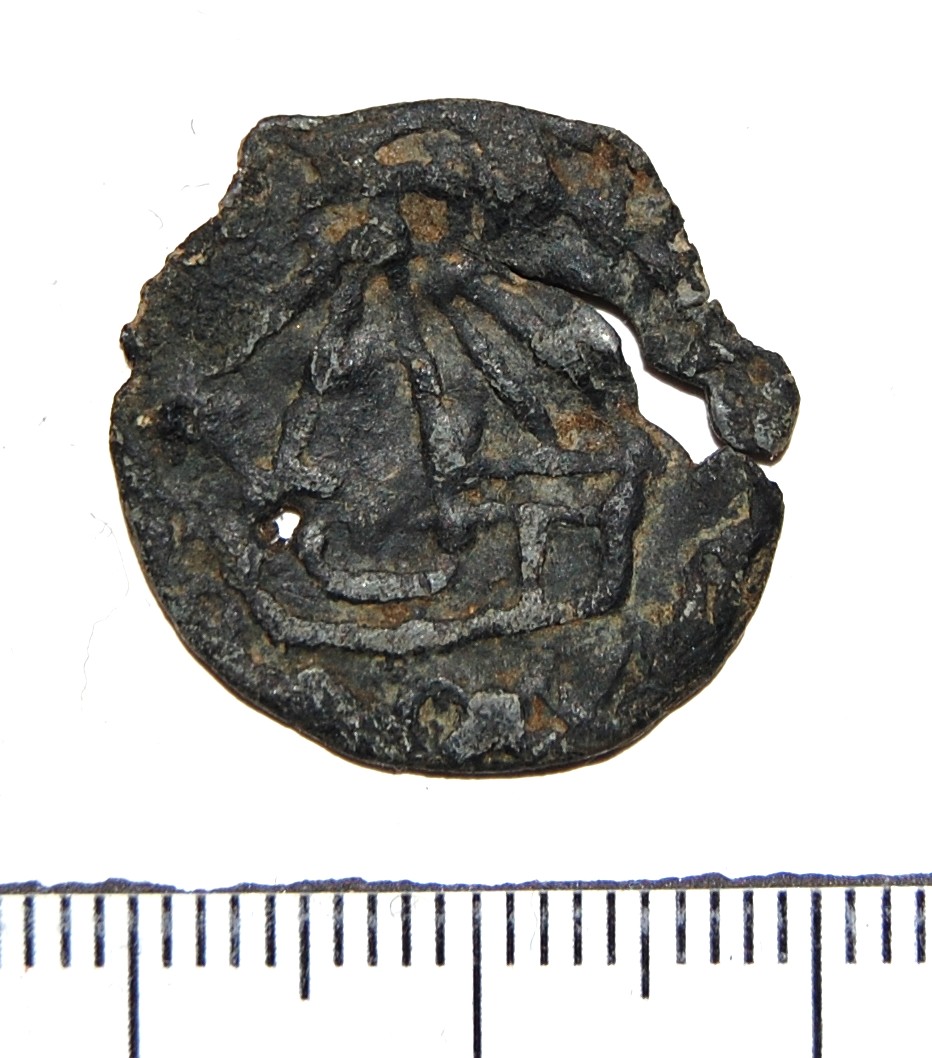
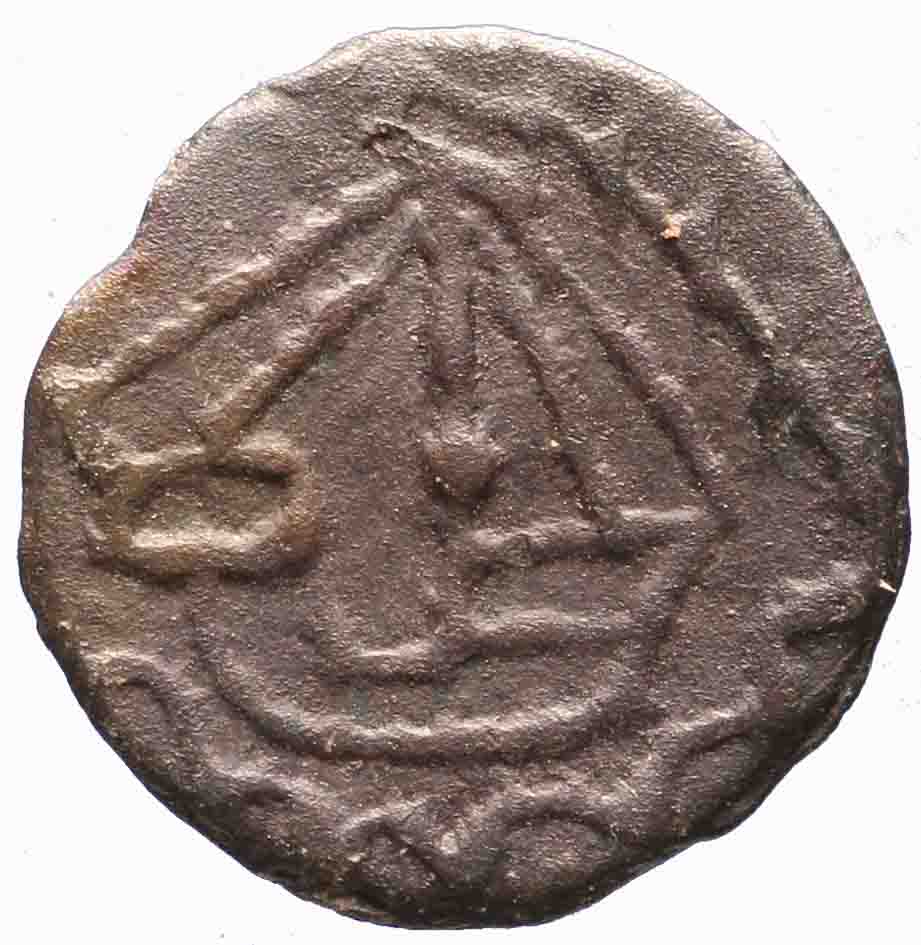
The obverse pictures cog, a medieval ship. A cog is a type of ship that first appeared in the 10th century, and was widely used from around the 12th century on. Cogs were clinker-built, generally of oak, which was an abundant timber in the Baltic region of Prussia. This vessel was fitted with a single mast and a square-rigged single sail. These vessels were mostly associated with seagoing trade in medieval Europe, especially the Hanseatic League, particularly in the Baltic Sea region. They ranged from about 15 to 25 meters (49 to 82 ft) in length with a beam of 5 to 8 meters (16 to 26 ft), and the largest cog ships could carry up to about 200 tons.
In 2012, a cog preserved from the keel up to the decks in the silt was discovered alongside two smaller vessels in the river IJssel in the city of Kampen, in the Netherlands. The ship, dating from the early 15th century, was suspected to have been deliberately sunk into the river to influence its current. Consequently, little was expected to be found in the wreck, but during excavation and recovery in February 2016 an intact brick dome oven and glazed tiles were found in the galley as well as a number of other artifacts about the vessel.
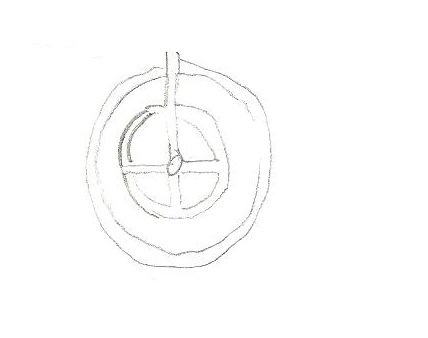
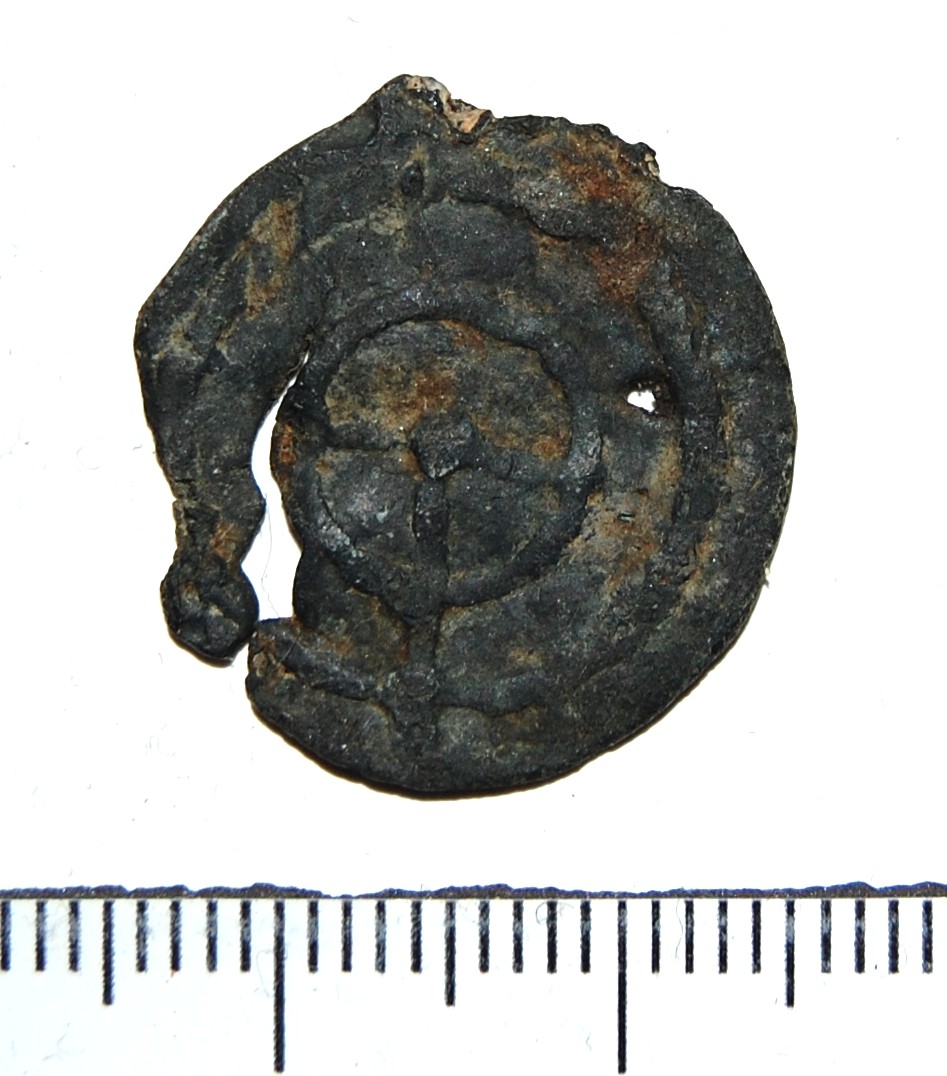
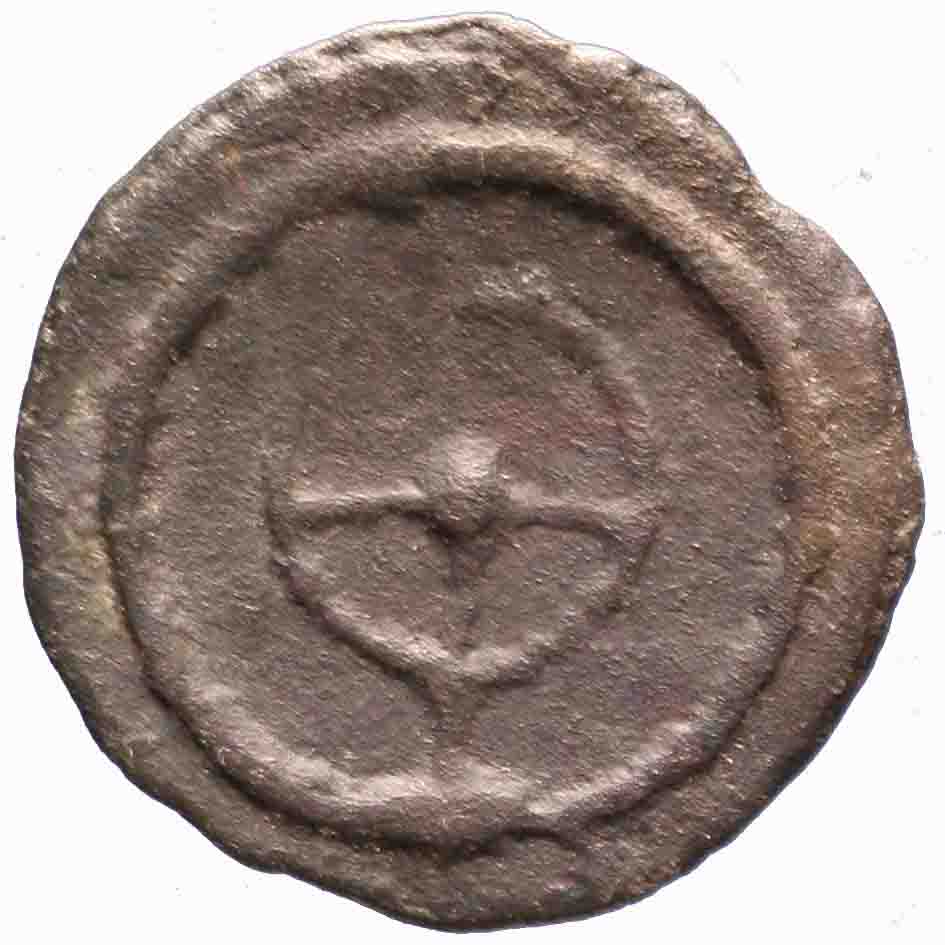
The reverse: The globus cruciger (Latin for "cross-bearing orb"), also known as the orb and cross, is an orb surmounted by a cross. It has been a Christian symbol of authority since the Middle Ages, used on coins, in iconography, and with a sceptre as royal regalia.
The cross represents Christ's dominion over the orb of the world, literally held in the hand of an earthly ruler (or sometimes it is held by an angel). In the iconography of Western art, when Christ himself holds the globe, he is called Salvator Mundi. The 16th Century Infant Jesus of Prague statue holds a globus cruciger in this manner.
Holding the world in one's hand, or more ominously, under one's foot, has been used as a symbol since antiquity. To citizens of the Roman Empire, the plain round globe held by Jupiter represented the world, or the universe, as the dominion held by the emperor. A 2nd-century coin from the reign of Emperor Hadrian shows the Roman goddess Salus with her foot upon a globus, and a 4th-century coin from the reign of Emperor Constantine I shows him with a globus in hand. The orbis terrarum was central to the iconography of the Tetrarchy, representing the Tetrarchs' restoration of security to the Roman world. Constantine I claimed to have had a vision of a cross above the sun, with the words "In this sign, you shall conquer" (Latin: In hoc signo vinces), at the Battle of Milvian Bridge in 312. His soldiers painted crosses upon their shields, and then defeated their foe, Maxentius.
With the growth of Christianity in the 5th century, the orb (in Latin scriptures orbis terrarum, the 'world of the lands', hence the word "orb") was topped with a cross (hence globus cruciger), symbolising the Christian God's dominion over the world. The emperor held the world in his hand, to show that he ruled it on God's behalf. To non-Christians already familiar with the pagan globe, the surmounting of a cross sent a message about the triumph of Christianity. In medieval iconography, an object's size, relative to that of nearby objects, indicated its relative importance; so the world was small and the one who held it was large, to emphasize the nature of their relationship. Although the globe symbolized the entire Earth, its use spread among many Christian rulers (some of them not even sovereign) who reigned over small parts of the earth.
The first known use was probably in the early 5th century, possibly as early as between 395 and 408 on the reverse side of the coins of Emperor Arcadius, but most certainly by 423 on the reverse side of the coins of Emperor Theodosius II.
The globus cruciger was associated with powerful rulers and celestial beings alike; it adorned portrayals of both emperors and kings, as well as archangels. It first appeared on coins in the early 5th century and remained popular throughout the Middle Ages in coins, iconography, and royal regalia. The papacy, in the Middle Ages once rivaling the Holy Roman Emperor for the supreme feudal status of liege lord of all other (Catholic) rulers, also maintained the symbol on top of the papal tiara ("triple crown"; there is no separate papal orb). The crowned orb was in general use as a finial on western royal crowns, whether actual objects or merely heraldic crowns, all over Europe, for example, in Denmark, Sweden, Belgium, the Netherlands, Italy, Spain, Portugal, Hungary, Romania, Yugoslavia, and Imperial Germany, among others. It may still be seen in the national arms of the surviving European monarchies. Even in the modern era in the United Kingdom, the Sovereign's Orb symbolises both the state and Church of England under the protection and domain of the royal crown.
Edited by Archeo1982
01/24/2018 5:06 pm









 Posted 10/18/2017 3:33 pm