First Page


 Posted 12/12/2017 5:21 pm


Because the dies are slightly concave (to promote faster ejection and less sticking, i.e., caps). Being slightly concave, the press produces a radial force from the centre of the planchet outward (which gives us cartwheel lustre). That radial force is equal in any and all directions (in the horizontal plane along the surface of the die) which is orders of magnitude less than the vertical force. Therefore if there is distortion across the face of the coin, it will be radial in fashion and distortion will be equal everywhere from the centre of the coin to the rim.
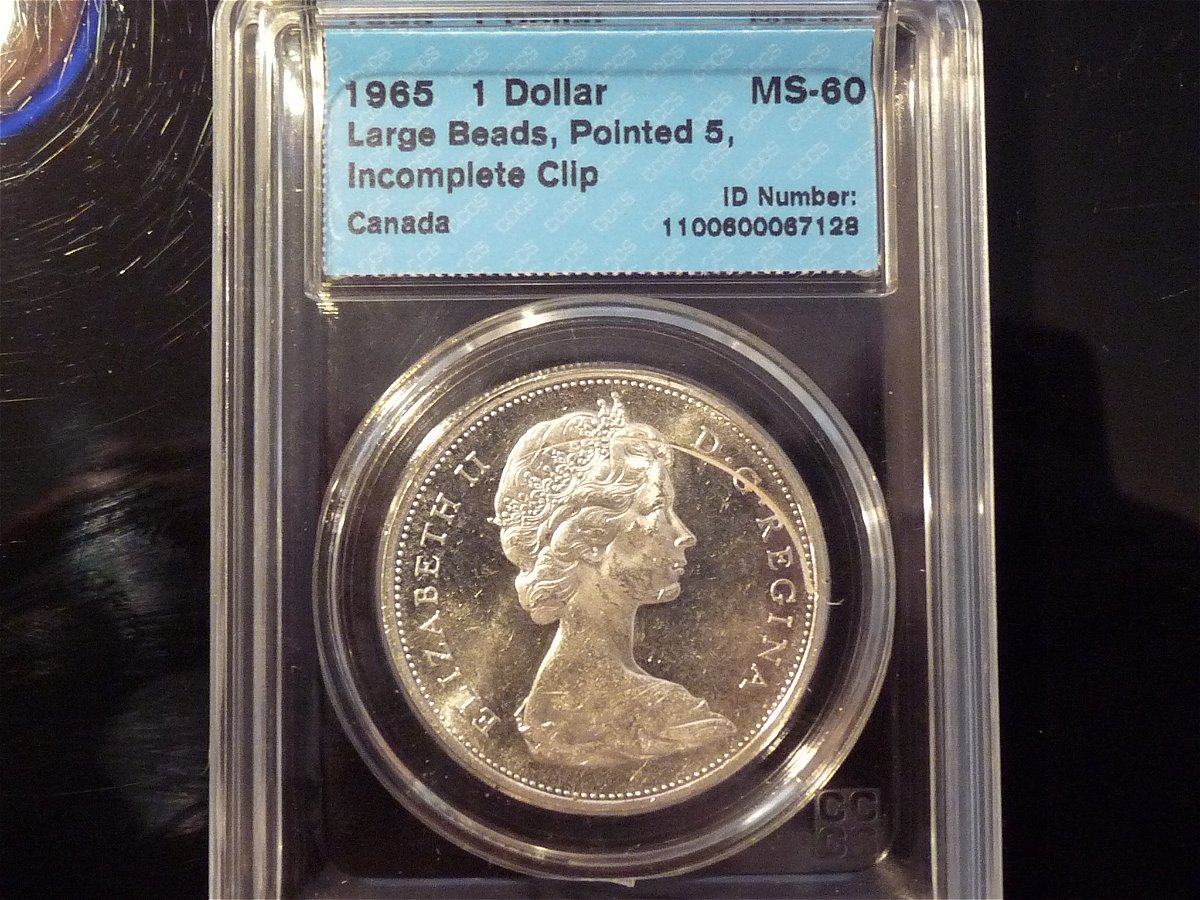
That deep cut was there, before the strike, on both sides of the coin. It survived the rimming phase (which, where they sometimes do separate and create "football clips"). The rimming phase does "pinch" the partial clip a bit, but when the dies struck the coin, there was not enough metal to pull into the devices (on both sides - equal and opposite forces at play here) but elsewhere, the metal did pull into the devices, more so on the anvil die. When you look at the devices where they intersect that cut with a 10x or stronger lens, you see that it is not a sharp, post-mint cut, but a short thinning. Sort of like how rims dovetail into a clipped coin.
The blanks are not cut entirely. If you examine the edge of a clipped coin or a Type I planchet, you see that the blank is partially cut, then the rest is removed from the rolled metal sheet by shearing. In these examples, the cut was made, but not sheared off the rolling stock. Someone then readjust the strip feed and the blanks were then punched, again, incorporating the partial cuts. Sometimes one side will be sharper (cutting side) than the other side (shearing side).
I took engineering in school too Bill, for almost three years... but I found it too boring, so I switched to geology!!
That deep cut was there, before the strike, on both sides of the coin. It survived the rimming phase (which, where they sometimes do separate and create "football clips"). The rimming phase does "pinch" the partial clip a bit, but when the dies struck the coin, there was not enough metal to pull into the devices (on both sides - equal and opposite forces at play here) but elsewhere, the metal did pull into the devices, more so on the anvil die. When you look at the devices where they intersect that cut with a 10x or stronger lens, you see that it is not a sharp, post-mint cut, but a short thinning. Sort of like how rims dovetail into a clipped coin.
The blanks are not cut entirely. If you examine the edge of a clipped coin or a Type I planchet, you see that the blank is partially cut, then the rest is removed from the rolled metal sheet by shearing. In these examples, the cut was made, but not sheared off the rolling stock. Someone then readjust the strip feed and the blanks were then punched, again, incorporating the partial cuts. Sometimes one side will be sharper (cutting side) than the other side (shearing side).
I took engineering in school too Bill, for almost three years... but I found it too boring, so I switched to geology!!
"Discovery follows discovery, each both raising and answering questions, each ending a long search, and each providing the new instruments for a new search." -- J. Robert Oppenheimer
Content of this post is licensed under a Creative Commons Attribution-NonCommercial 3.0 Unported License. See: http://creativecommons.org/licenses...0/deed.en_US
My eBay store
Content of this post is licensed under a Creative Commons Attribution-NonCommercial 3.0 Unported License. See: http://creativecommons.org/licenses...0/deed.en_US
My eBay store