| Author |
 Replies: 21 / Views: 3,660 Replies: 21 / Views: 3,660 |
|
Valued Member
United States
333 Posts |
In my quest to find ever unique and unusual things, I've taken to looking over trade tokens -- and anything similar to them. I've found all sorts of interesting things that simply do not show up in standard coinage. Because of this, I've been visiting Richard Greever's token catalog a lot lately. They recently hit half a million entries. The thing is, over 95% of those are American. That's fine and all but that leaves foreign tokens poorly documented, and from what I've seen there are some neat ones out there. Because it's difficult to come across them, I'd like to see if any of you can show me some. I've got a lot of different ones, I'll start with three to get the ball rolling and see if this takes off. Information, pictures, whatever is welcome. 1. Chile, mining tokens. About a century ago, mining operations in Chile issued a lot of different tokens. Many of them are made of vulcanite and are incredibly large. There are a handful out there made of metal. I recently lost out on one made of lead. As you can see in the picture, some are colored differently on their obverse and reverse. 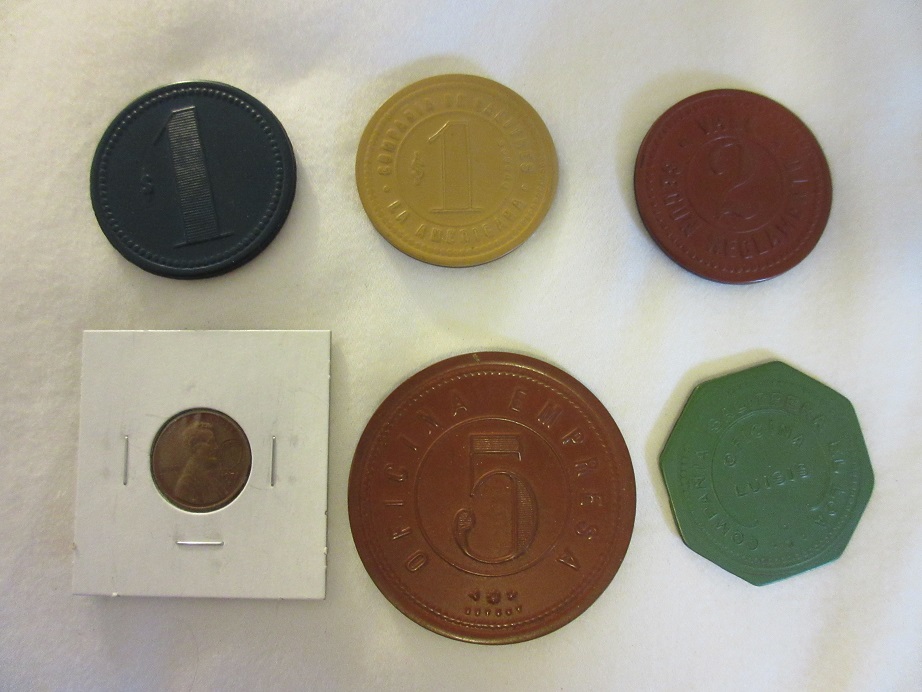 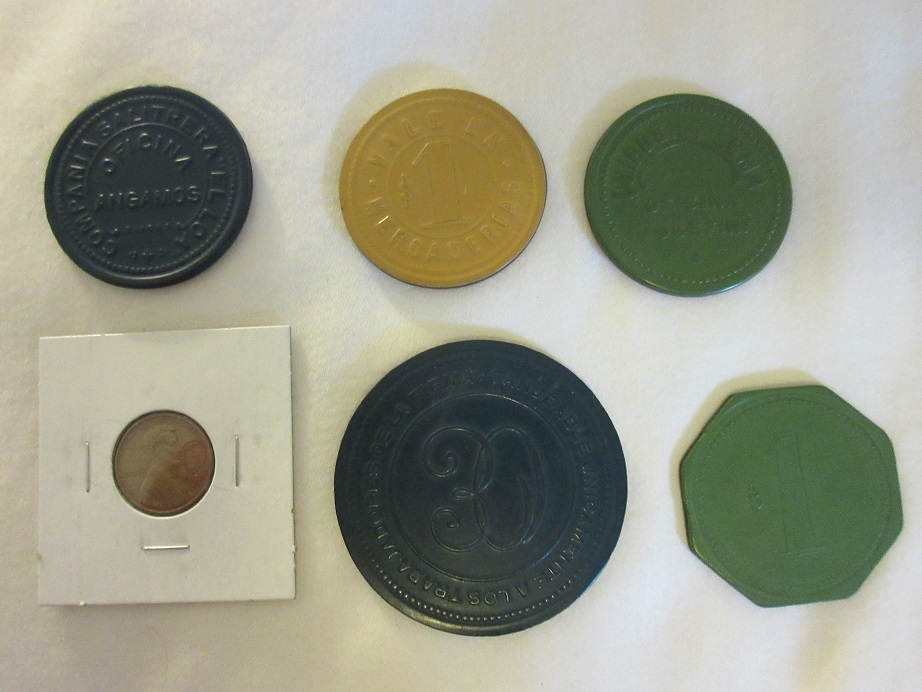 2. Welsh, Llantrisant Mint tokens. When Britain decimalized their coins, they moved The Royal Mint to Llantrisant, Wales. It seems really strange to me that a mint would issue tokens, but they apparently did. These are among the very few tokens out there of this style (laminated paper). 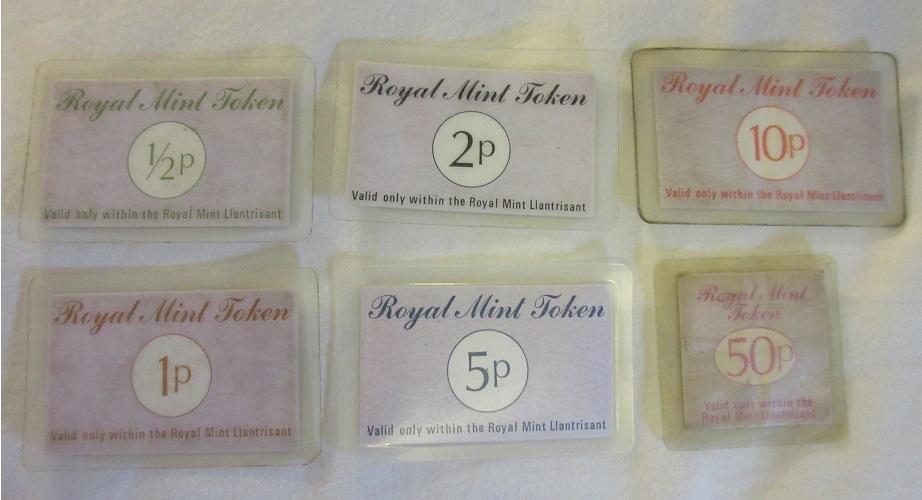 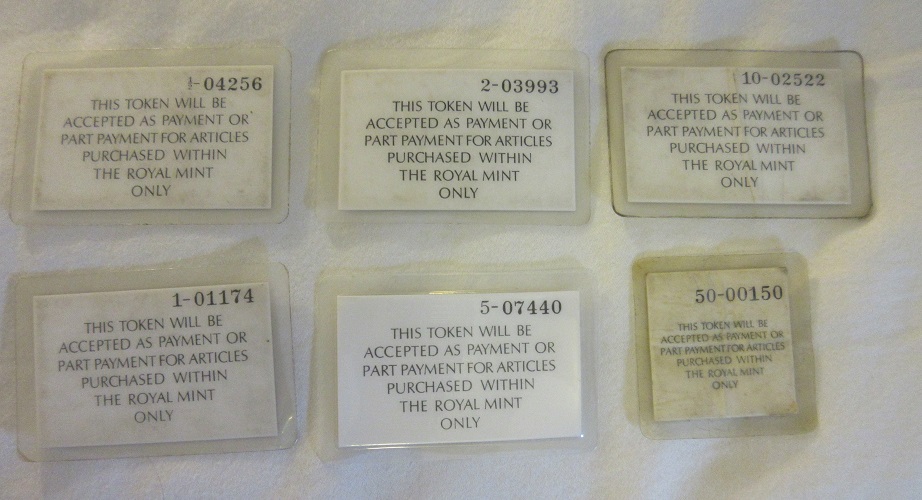 3. Israel, Sommerfin tokens. Sommerfin was an Israeli cruiser that was liquidated in the 1960s. They issued tokens to get around orthodox rules that money could not be spent on Saturdays. They came in six colors. The green ones seem to be incredibly common, the red/blue/yellow ones are common, and the dark blue/white ones are scarce. An info sheet from 1967 suggests a price of $2 for the common ones and $6 for the scarce. I've found that prices are much, much cheaper than that now especially when you adjust for inflation. (The reverses on these are blank.) 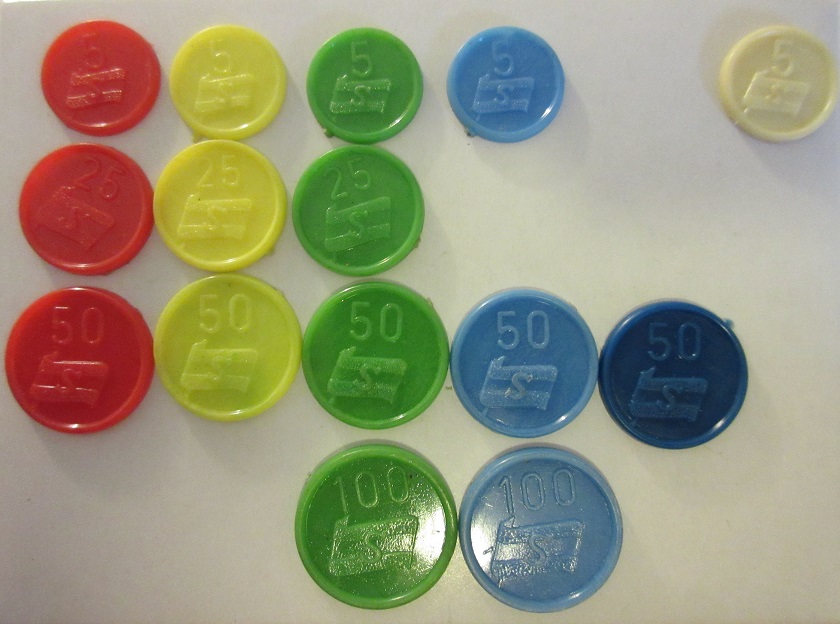 |
|
|
|
Moderator
 United States
196311 Posts |
Very interesting.  |
|
Bedrock of the Community
United Kingdom
18920 Posts |
Interesting post, nautilator! Quote:
It seems really strange to me that a mint would issue tokens, but they apparently did. To avoid the problem of coins being smuggled out of the Mint in people's pocket change, employees and visitors are not permitted to take coins into the Mint. That is presumably why they issue tokens for their canteen! Here's a token from an Amusement Arcade in the UK: 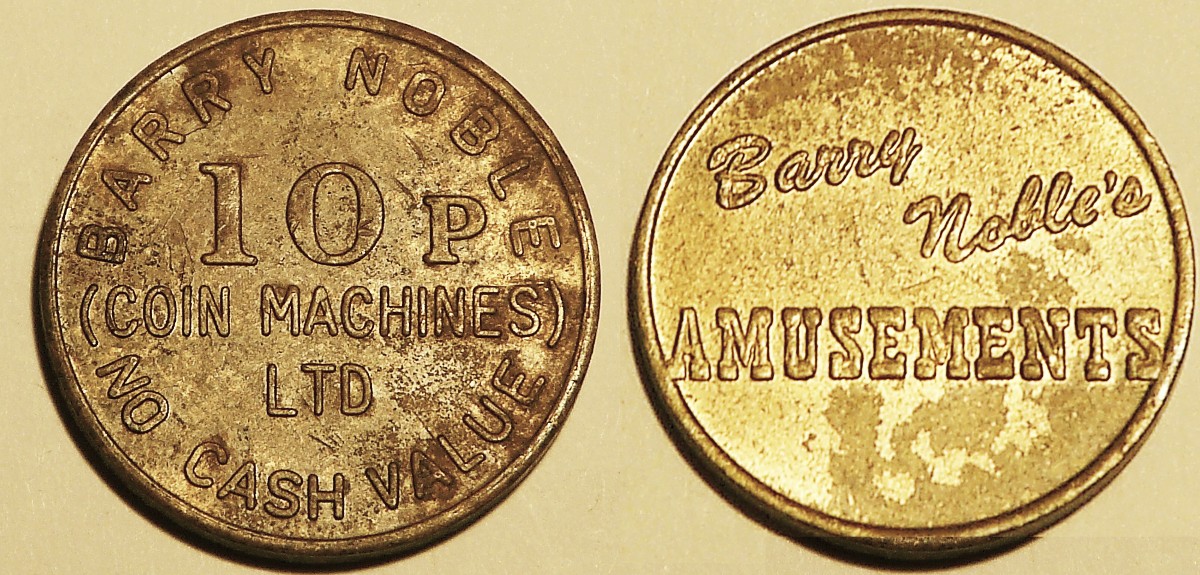 ... and a British 20p Transport Token: 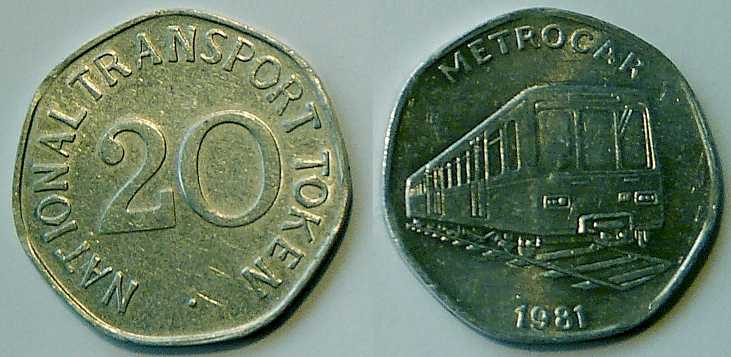 |
|
Pillar of the Community
United States
5029 Posts |
|
|
Pillar of the Community
United States
2643 Posts |
|
|
Moderator
United States
196311 Posts |
Quote:
Things go better with Coke. No Coke. Pepsi.  Pretty cool though. |
|
Pillar of the Community
United States
731 Posts |
Chile-Rimac copper or bronze 100 centavo nitrate mining token counterstamped "JG". 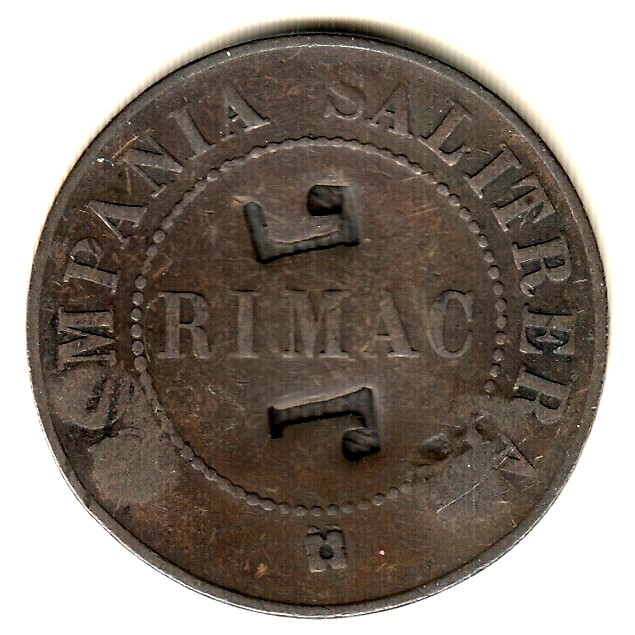 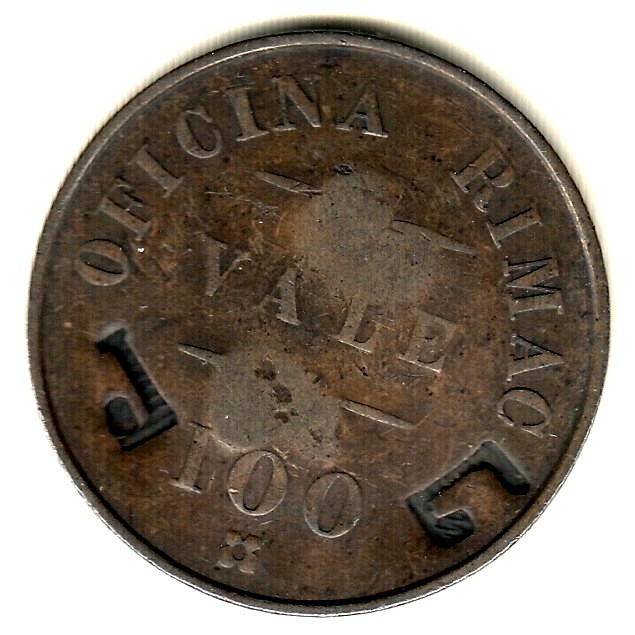 |
|
Moderator
United States
196311 Posts |
Quote:
Chile-Rimac copper or bronze 100 centavo nitrate mining token counterstamped "JG". Counterstamp is a bonus. Very nice! |
|
Rest in Peace
United States
2668 Posts |
The strangest 'money' in my collection is some play money with comic strip characters from the late-forties/early-fifties. Cut out of the Sunday paper. No chocolate coins, though. |
|
Valued Member
 United States
333 Posts |
British co-op tokens. It seems that this is what the British did for their 'local currencies'. When you spent money at a co-op, you were given a token indicating how much you spent. At the end of the year, depending on profits, your tokens could be redeemed for a certain percent of their face value. I like the bracteate ones and have a ton of those. All of those ones are galvanized steel. There was a great deal of variety among these though, and here are some of the nicer/more diverse ones I've gotten. 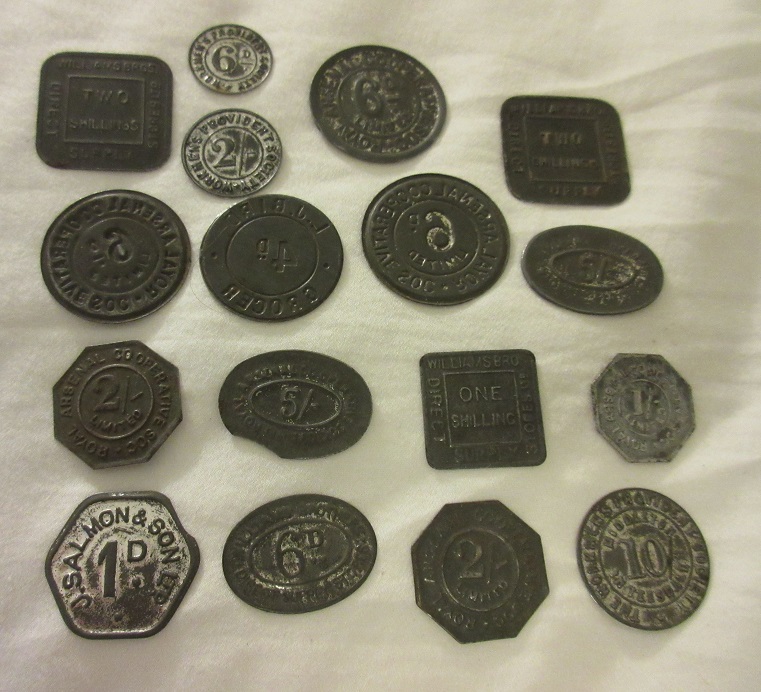 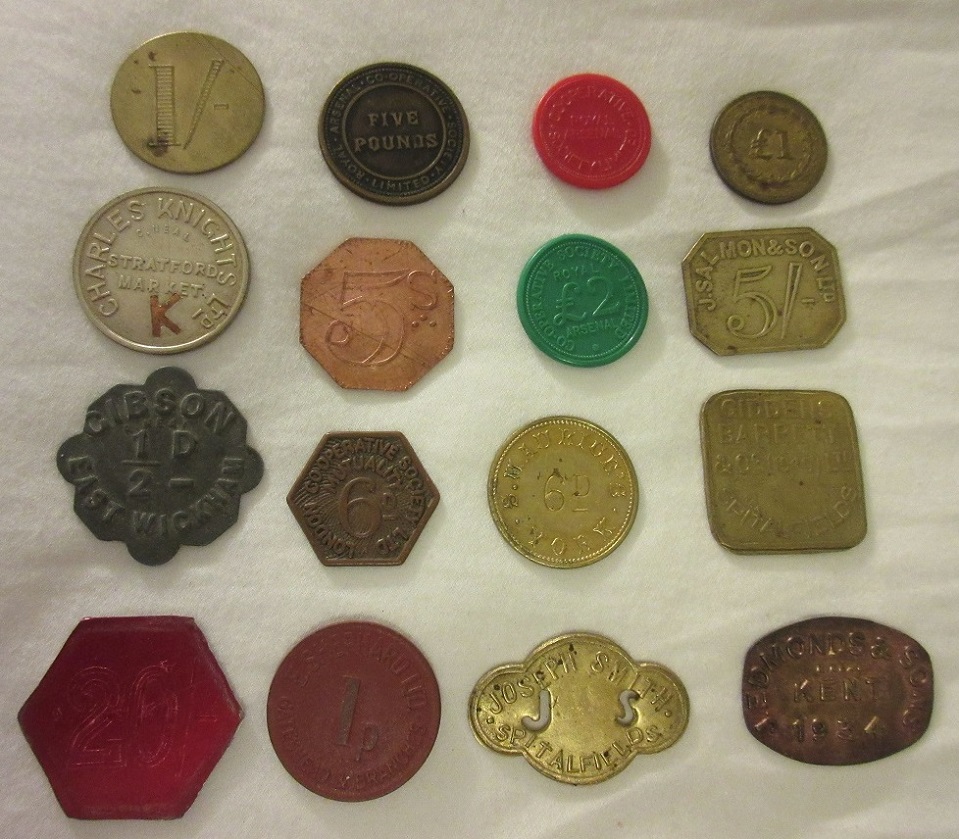 |
|
Moderator
United States
196311 Posts |
Very interesting, nautilator. Thank you for sharing the images and the information. |
|
Pillar of the Community
United Kingdom
709 Posts |
Some of the tokens in the 2nd picture are market tokens. Eg 2nd row right, 4th row 2nd from right.
These tokens were issued by food wholesalers to retailers at wholesale markets. If for example, you were a greengrocer on the high street, when you bought a crate of fruit you paid a deposit to the wholesaler on the crate, refundable on return. To stop unscrupulous people stealing your empty crates and trading them in, the wholesaler handed you tokens to the value of your deposit. When you presented your empty crates to collect your deposit, you also presented the tokens.
|
|
Bedrock of the Community
Canada
24885 Posts |
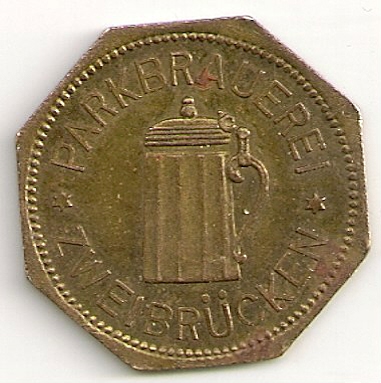
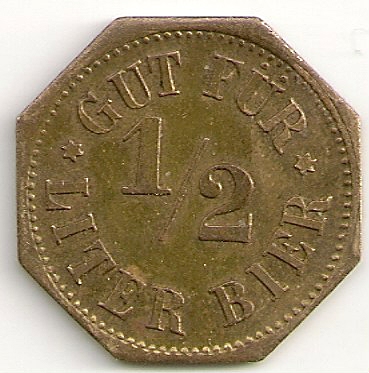
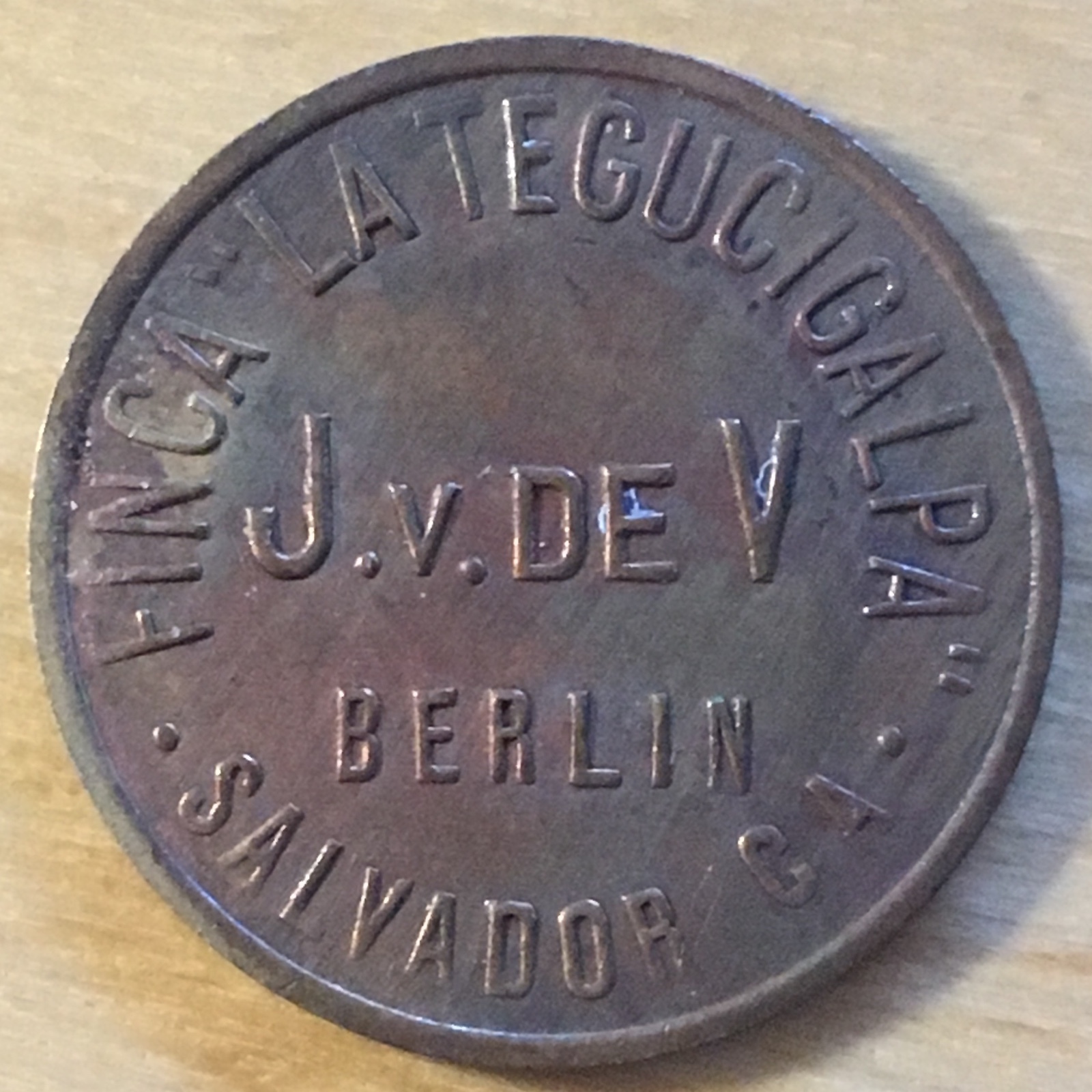
1979 Germany Posemuckel Hamburg 50 Pfennig German token. 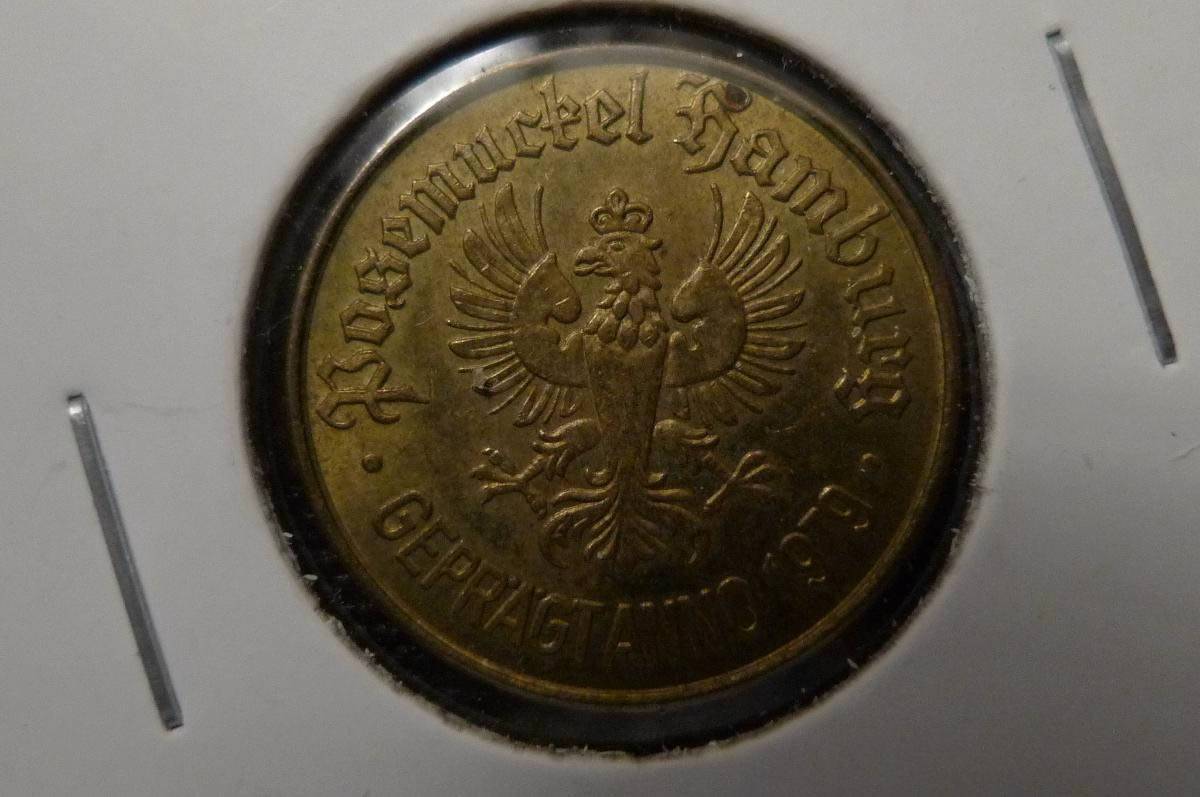 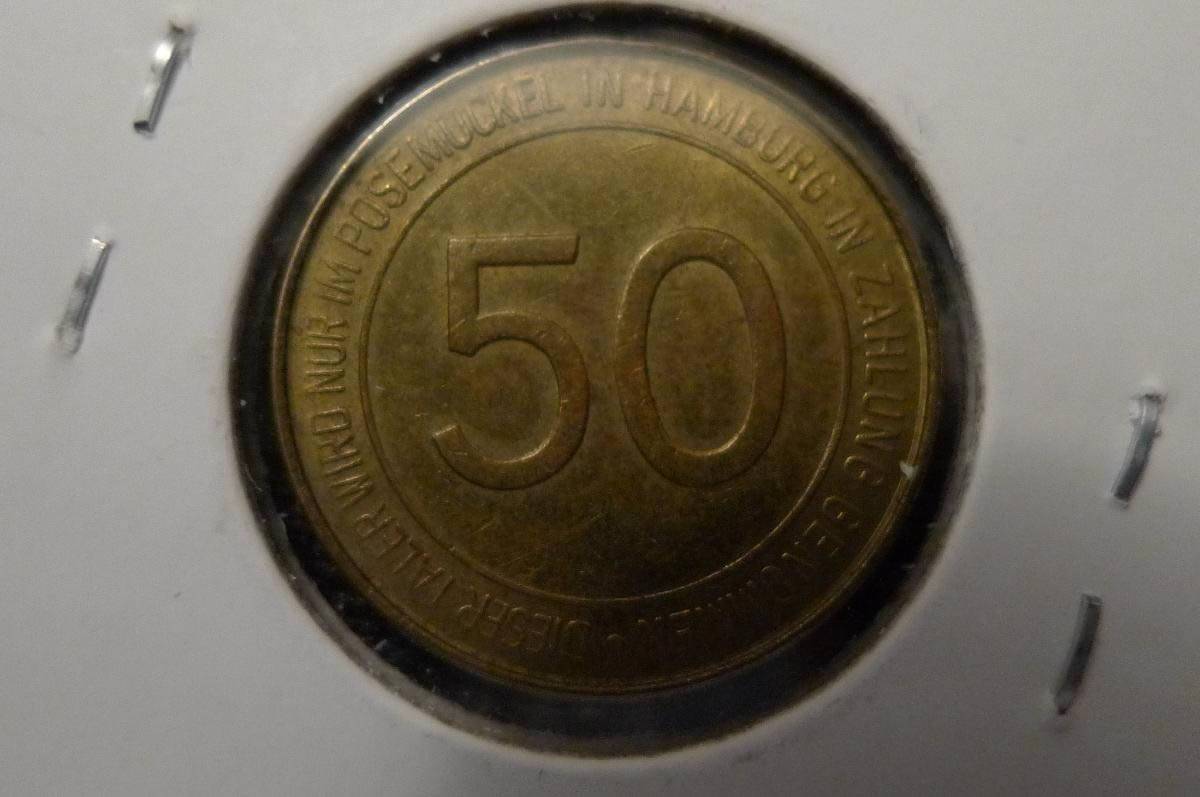 |
|
Valued Member
United States
333 Posts |
This took a while to get here. This was apparently issued by Club De La Union in Santiago and is the first trade token I've come across that is made of nacre. There is at least one other denomination of this, a 10. 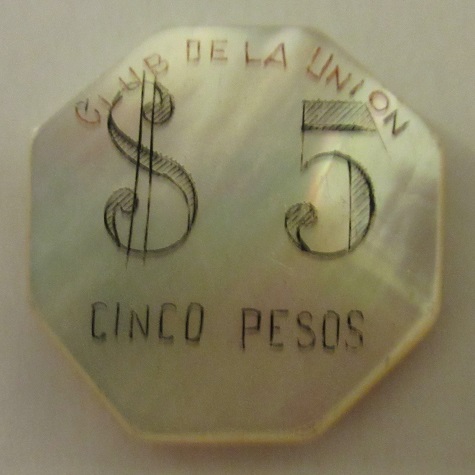 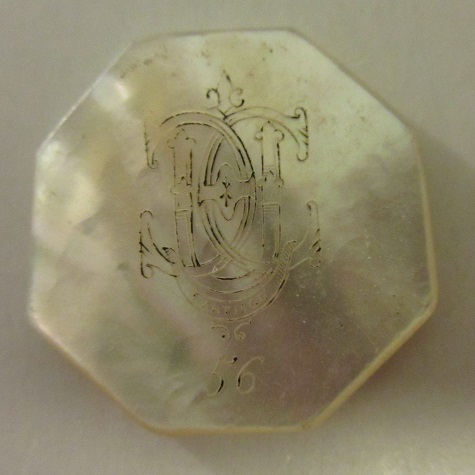 |
|
Moderator
United States
196311 Posts |
Very interesting. |
|
Valued Member
United States
110 Posts |
|
| |
Replies: 21 / Views: 3,660 |










 Posted 01/15/2018 2:54 pm