Coin Community Family of Web Sites Join Thousands of Coin, Bullion, & Money Collectors
Coin, Banknote and Medal Collectors's Online Mall Royal Canadian Mint products, Canadian, Polish, American, and world coins and banknotes. Specializing in Modern Numismatics 300,000 items to help build your collection! Join Thousands of Coin, Bullion, & Money Collectors Vancouvers #1 Coin and Paper Money Dealer Royal Estate Auctions - $1 Coin Auctions


Username:
Password:
Save Password
Forgot your Password?


This page may contain links that result in small commissions to keep this free site up and running.

Welcome Guest! Registering and/or logging in will remove the anchor (bottom) ads. It's Free!

And Now Something Completely Different: Pseudo Coin Brooches

To participate in the forum you must log in or register.
Author Previous TopicReplies: 4 / Views: 3,450Next Topic  
Pillar of the Community
Archeo1982's Avatar
Netherlands
521 Posts
 Posted 01/20/2018  7:21 pm Show Profile   Bookmark this topic Add Archeo1982 to your friends list Get a Link to this Message Number of Subscribers
I want to show something that was normal during all the ages of coin use. A coin was, certainly in ancient times, for example under Roman rule, a method of propaganda. On one side the family name of the two senators or in the imperial times, the emperor. On the reverse a message for the Roman people that showed the power or the prosperity of the state.
To keep the idea of unity or an idea of solidarity with the state close, people started using coins as brooches, necklaces or other kinds of jewelry. This practice is still applied today.

I already showed an example of a Roman coin key-chain, probably made during the 1st century AD, to keep Rome close to the outpost the maker was stationed.
Beside the practice to convert existing coins from the circulation into jewelry, there also was the practice to imitate the coins purely to make brooches out of them. In most cases the obverse of the host coin was imitated for decorating the brooch.

In the later early medieval period, The Netherlands were conquered by the Carolingian's. The Carolingian emperors: Charles the Great, Louis 1 and Charles the Bald were minting portrait coins on a small scale. On a very small scale gold coins were minted. Especially these coins were imitated by the medieval inhabitants of what is now the Netherlands.

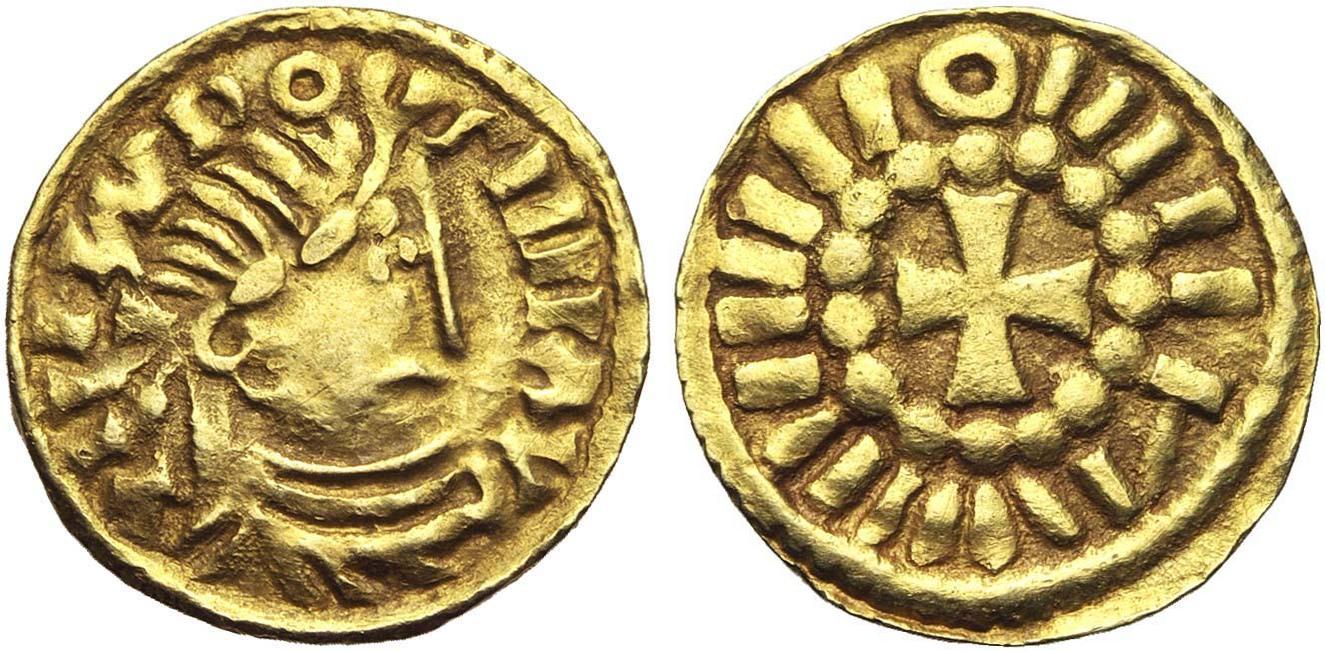
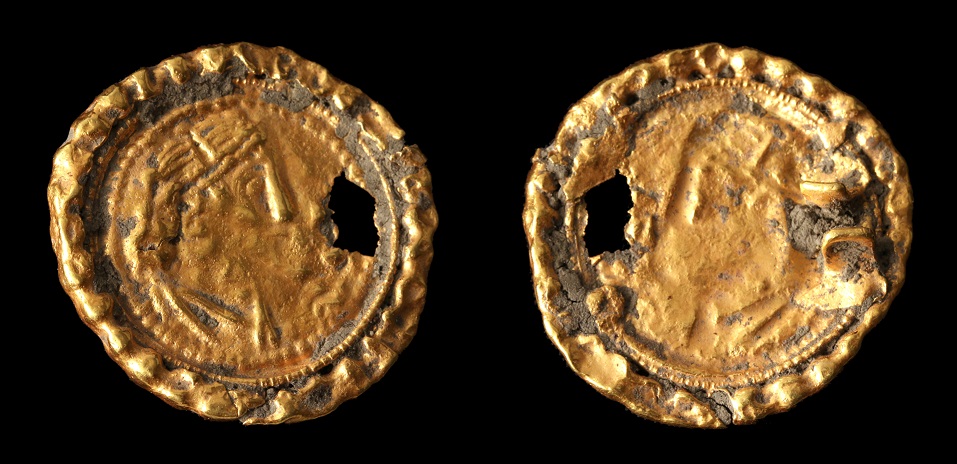
These coins were crudely imitated in gold by the Frisians, for several decades after the death of the emperor. For example; the youngest exemplar of a Louis the pious coin I've excavated was from the late 10th century. (see: the gold example)
The people imitating the coins probably couldn't read or write. The legend often read a series of I's and V's. As is seen on the example.

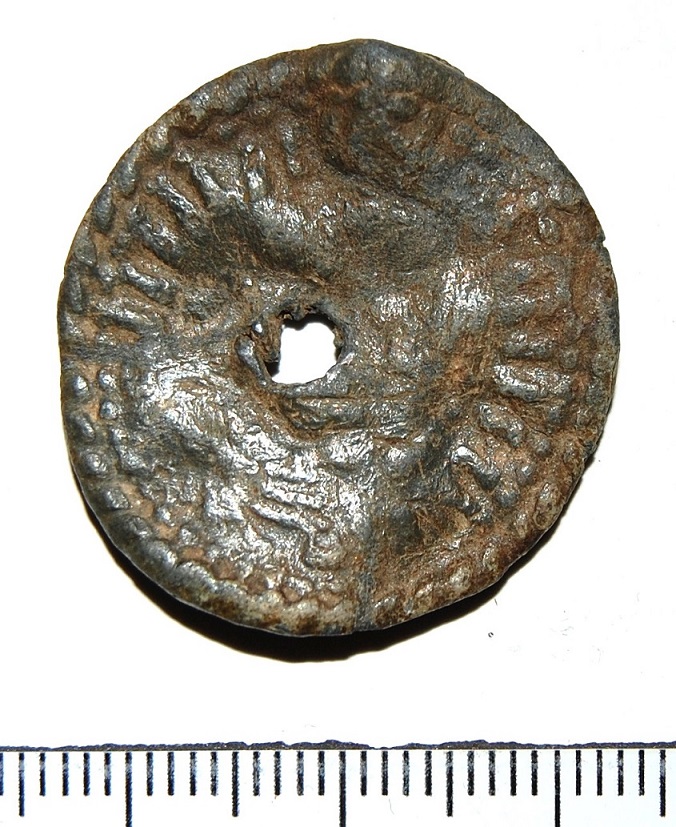
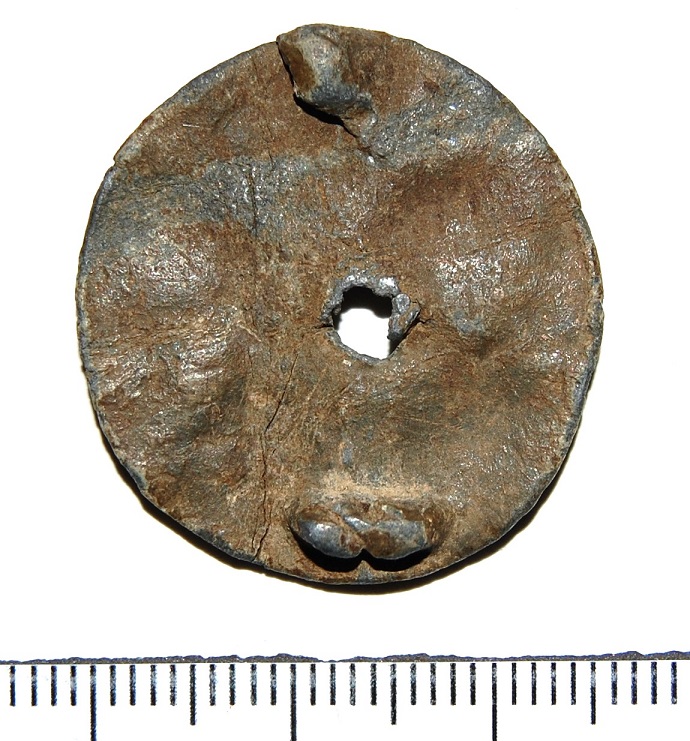
Next to gold exemplars, also silver coins were used. sometimes with a thin layer of gold. The poor people who wanted to decorate their clothes with a nice brooch used lead or pewter.

And-Now-Something-Completely-Different:-Pseudo-Coin-Brooches
Edited by Archeo1982
01/21/2018 06:42 am
Pillar of the Community
Archeo1982's Avatar
Netherlands
521 Posts
 Posted 01/20/2018  7:26 pm  Show Profile   Bookmark this reply Add Archeo1982 to your friends list Get a Link to this Reply
Both of these pseudo-coin brooches are after a solidus of Louis 1 (AD 814-840)
Rest in Peace
moxking's Avatar
United States
17900 Posts
 Posted 01/20/2018  8:15 pm  Show Profile   Bookmark this reply Add moxking to your friends list Get a Link to this Reply
Thank you for that researched educational information with the wonderful examples.

Wonderful to contemplate.
Moderator
Learn More...
echizento's Avatar
United States
23731 Posts
 Posted 01/20/2018  8:41 pm  Show Profile   Bookmark this reply Add echizento to your friends list Get a Link to this Reply
Very interesting to see how coin design were carried over into political jewelry.
Pillar of the Community
Archeo1982's Avatar
Netherlands
521 Posts
 Posted 01/21/2018  4:06 pm  Show Profile   Bookmark this reply Add Archeo1982 to your friends list Get a Link to this Reply
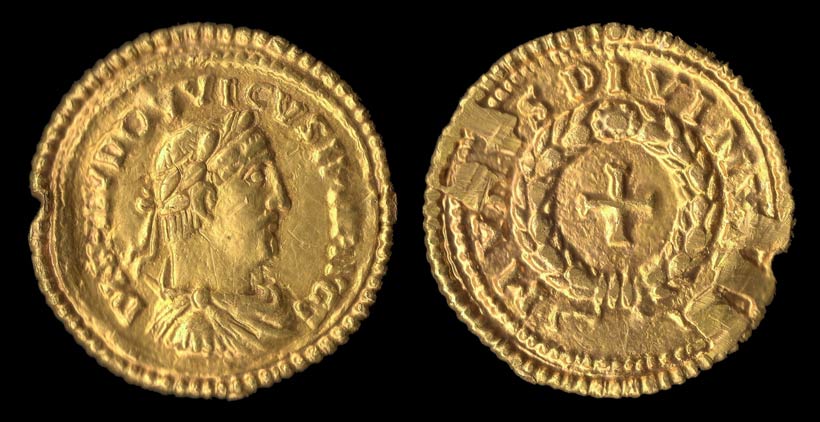
Most of the pseudo coin brooches of louis the pious were imitated after this gold solidus that was made during his first years as emperor. This solidus was turned into a brooch somewhere in history, the needle however was removed in modern times.
In the Frisian regions this coin was imitated on a huge scale. For example: nowadays a genuine solidus of Louis the Pious is extremely rare to find. Frisian imitations are found a lot more. Still rare to find but not that rare.
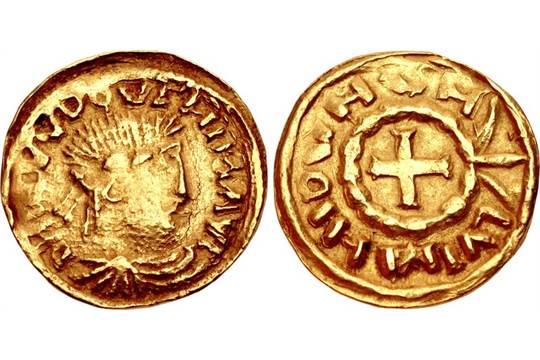
Photo 2 is probably a genuine solidus, the portrait may be a bit crude, but it's comparable with denari of that time from official German mints.
Photo 3 & 4 are Frisian imitations. Especially on 4, one can see the die cutter probably couldn't read or write.
And-Now-Something-Completely-Different:-Pseudo-Coin-Brooches
Edited by Archeo1982
01/21/2018 4:11 pm
  Previous TopicReplies: 4 / Views: 3,450Next Topic  

To participate in the forum you must log in or register.


Disclaimer: While a tremendous amount of effort goes into ensuring the accuracy of the information contained in this site, Coin Community assumes no liability for errors. Copyright 2005 - 2026 Coin Community Family- all rights reserved worldwide. Use of any images or content on this website without prior written permission of Coin Community or the original lender is strictly prohibited.
Contact Us  |  Advertise Here  |  Privacy Policy / Terms of Use

Coin Community Forum © 2005 - 2026 Coin Community Forums
It took 0.26 seconds to rattle this change. Forums