|
This page may contain links that result in small commissions to keep this free site up and running.

Welcome Guest! Registering and/or logging in will remove the anchor (bottom) ads and the security checks. It's Free!
To participate in the forum you must log in or register. | Author |
 Replies: 5 / Views: 1,265 Replies: 5 / Views: 1,265 |
|
|
New Member
Australia
49 Posts |
Would somebody, as I very much hope, be able to identify this very early possibly Dutch silver coin. Frank 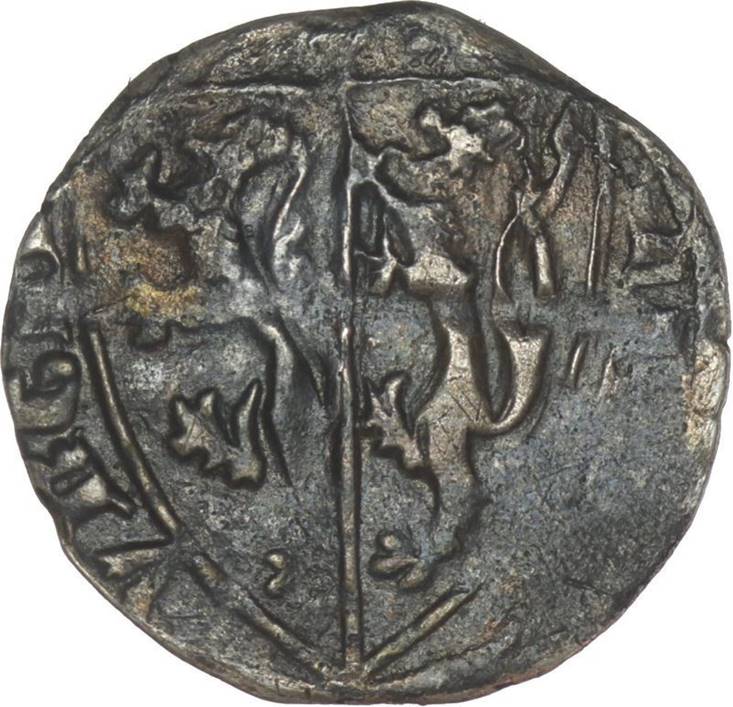 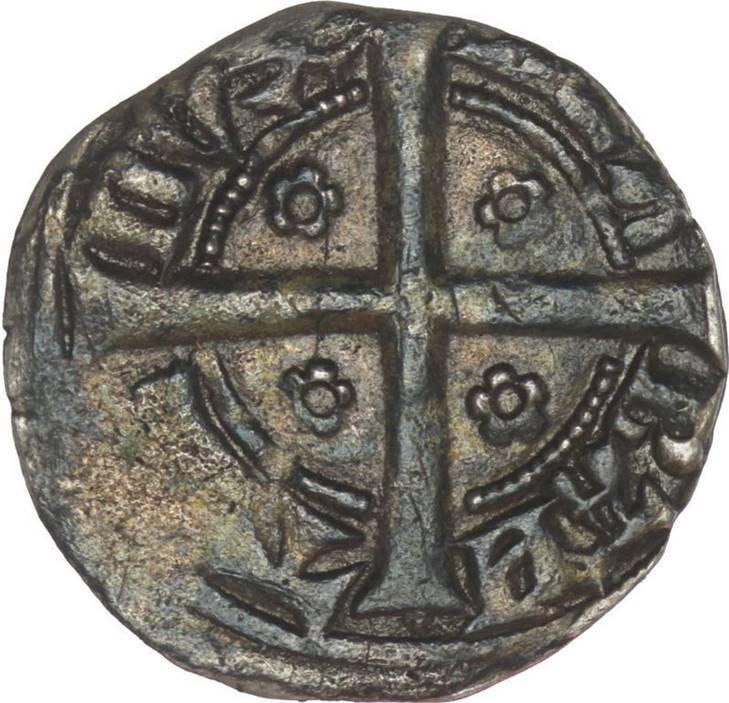 *** Moved by Staff to a more appropriate forum. *** *** Moved by Staff to a more appropriate forum. *** |
|
|
|
Rest in Peace
United States
2668 Posts |
Welcome, frank wasson! What's your main emphasis in coin collecting? I am subscribing to this thread. I'll definitely learn something.  |
|
Moderator
 United States
34564 Posts |
"If you climb a good tree, you get a push."
-----Ghanaian proverb
"The danger we all now face is distinguishing between what is authentic and what is performed."
-----King Adz
|
|
Valued Member
Netherlands
91 Posts |
Spence has hit the nail on the head! No king is named on the coin, instead we only see his titles. On the reverse DVX BRABANTIE can be seen, Duke of Brabant. The obverse shows something peculiar. While it isn't that readable on this coin here, a complete specimen will have DVX LIMBURGIE around the shield. This refers to a very interesting period in Dutch history. Initially the duchies of Limburg and Brabant (today they are also separate provinces within the Netherlands by the way) were separate and rivalling duchies. Jan I came to power in Brabant in 1267 and proved himself a very capable ruler (quite a relief from the bunch of mentally unstable dukes that had come before him), enlarging the territories of Brabant significantly. It has been said that he was loved amongst the people for his bravery, generosity and love of beer; today we still have a brand of beer named after him!
A great opportunity presented itself in 1283. The duke of Limburg had died four years prior and had left his dukedom to his daughter, who in term was married to the count of Gelria. But in 1283 his daughter also died and the war of Limburgian succession had begun. You see, both the brother of the deceased duke and the husband of the deceased daughter claimed they had the right to succeed to the Limburgian throne. The brother, having no army or economic force to claim the Duchy as his, instead sold his right of inheritance to another, who just so happened to be Jan I of the neighbouring Brabant. Gelria was not a minor duke however, but neither was the duke of Brabant, and a full on war, lasting five years, began between the two and their respective allies. On the fifth of June 1288 this would end in one of the bloodiest battles in medieval Dutch history: the battle of Woeringen. Around 4000 knights would battle for the entire day, of which more than a quarter was killed by nightfall. Jan of Brabant would eventually be victorious, and the duchy of Limburg was his, a turning point in medieval Dutch history, as the two duchies of Limburg and Brabant would remain unified under a single crowns until they fell to the Burgundians in 1406.
This is where this coin comes in. Both the titles of Duke of Limburg and Brabant can be seen on the coin, and it thus dates post-June fifth 1288. The obverse also shows a shield composed of two lions: the left one for the dukedom of Brabant, the one on the right for the dukedom of Limburg. The previous generation of scholars thought this type belonged to the successor and son of Jan I, Jan II, but recent scholarship has confirmed it is indeed a sterling from Jan I, minted between 1288 and his death in 1296 in Bonn (Spence already mentioned so!). There are two major reverse varieties, those with 'trees' in the four quadrants (this is probably not the correct terminiology, but come on. They sure look like little trees!) and those with rosettes in the four quadrants. Yours of course belonging to the latter, slightly more rare, category. Sweet coin! Medieval Dutch coins are so freakin awesome! (Said the Dutchman. ;))
|
|
Rest in Peace
United States
2668 Posts |
See? We all learned something. Quick attribution, Spence! Thank you for posting this memorable historic information, AnYangMan! Extra attaboys, What was the name of the mint and where was the silver mined?  |
|
New Member
 Australia
49 Posts |
Thank you very kindly for the comprehensive, in-depth responses received. They have indeed been very helpful and insightful.
|
| |
Replies: 5 / Views: 1,265 |
|
To participate in the forum you must log in or register.
Disclaimer: While a tremendous amount of effort goes into ensuring the accuracy of the information contained in this site, Coin Community assumes no liability for errors. Copyright 2005 - 2026 Coin Community Family- all rights reserved worldwide. Use of any images or content on this website without prior written permission of Coin Community or the original lender is strictly prohibited.
Contact Us | Advertise Here | Privacy Policy / Terms of Use
|
| Coin Community Forum |
© 2005 - 2026 Coin Community Forums |
| It took 0.22 seconds to rattle this change. |
 |
|
| |
| |







 Posted 01/20/2018 10:24 pm


