| Author |
 Replies: 11 / Views: 1,993 Replies: 11 / Views: 1,993 |
|
|
Pillar of the Community
United States
797 Posts |
*probably reproduction per user findings* Hey All. Found a coin I could not pass up this weekend. 1705-1723 Mexico City minted 8 reals with the assayer mark of J For what I can see of the bottom 3rd # is its 1710-1719. Unfortunately, the last digit is lost to history. Have not weighed it yet, but have had a dealer look at it and they were impressed. 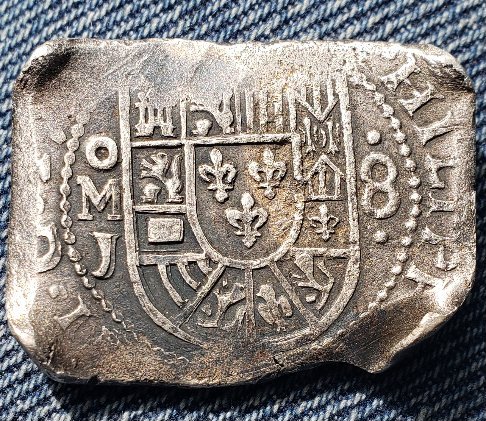 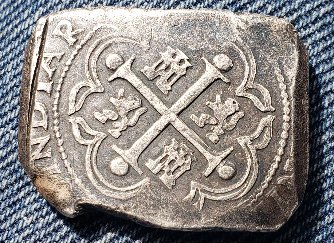 Edited by CGCoins
04/09/2018 5:21 pm
|
|
|
|
Rest in Peace
United States
17900 Posts |
That is a lovely example. Congratulations.
|
|
New Member
United States
37 Posts |
Edited by doges
04/08/2018 11:44 pm
|
|
Pillar of the Community
United States
1475 Posts |
From the site and it looks like it. Take it back if it was sold as authentic.  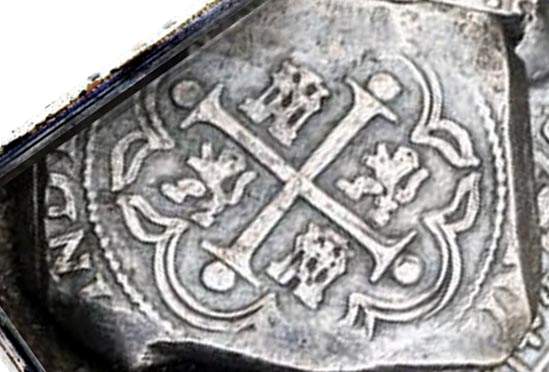 |
|
Pillar of the Community
 United States
797 Posts |
Sure looks like it guys, good eye! I did look all over the edge for anything that stated copy or did not look like it should be there, but did not find a thing. However it matches that piece too close to feel positive about.
Luckily, it was not expensive, and may just go as a cool silver piece in my pile.
|
|
Pillar of the Community
United States
3484 Posts |
If it's fake, how can you be sure it's silver?
|
|
Pillar of the Community
United States
797 Posts |
nfine - already tested as silver at the baseline of 92.5% silver and it passed. Plus if it came from the St. Augustine mint as it appears it did, they are .999 Silver.
|
|
New Member
United States
37 Posts |
It's still quite nice as a replica. It's very difficult to obtain a legitimate example of this series (KM# 47) with strong details. If you ever wanted an excuse to drill a hole into a coin, it'd make for a nice jewelry piece even.
Edited by doges
04/09/2018 8:22 pm
|
|
Bedrock of the Community
Australia
21789 Posts |
It is very rare? for cobs to be struck from perfectly even thickness piece of metal, to yield and even strike both sides.
From what I understand, the silver plate was hammered (not rolled), and cobs cut from it.
I must admit, I need more education on this subject.
I am by no means an expert on these, but it does raise doubt in my mind.
|
|
New Member
United States
37 Posts |
For most Spanish 8R cobs, part of a bar of silver would be would be cut to the proper weight (~27g) before then being hammered. Due to the irregularity in the shape of the cut silver it was indeed very uncommon for the entirety of the planchet to receive such a uniform and sharp strike, also why one can find many with cracks, soft strikes towards one side, ridiculous shapes, and other irregularities. If the coin was overweight after being hammered, only then would a portion would be cut off. The late klippe style cobs from Mexico (1732-33) were generally overweight to begin with, and made in a screw press, before then being cut off which is why so many of them are square-shaped. Of course, the St. Augustine Mint reproductions take more care in the process of producing each individual coin; but back in colonial times they were crudely done, the dies weren't the best either.
I'm not an expert with these either, just fascinated with them.
|
|
Pillar of the Community
Austria
566 Posts |
A pretty worthless newly made copy if you ask me.
|
|
Pillar of the Community
United States
1156 Posts |
|
| |
Replies: 11 / Views: 1,993 |
|










 Posted 04/08/2018 11:35 pm


