| Author |
 Replies: 8 / Views: 1,126 Replies: 8 / Views: 1,126 |
|
|
Pillar of the Community
United States
1415 Posts |
Edited by Sap
06/18/2008 10:13 am
|
|
|
|
Pillar of the Community
United States
5318 Posts |
Nice old hammered coin!
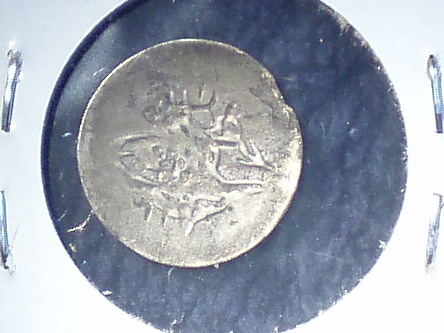
I can't ID, but I think the second pic is upside down.
|
|
Moderator
 Australia
16982 Posts |
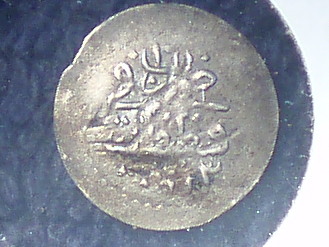
It looks Ottoman Turkish, but there's some kind of brockage effect happening there. The reverse design is partially appearing, backwards and incuse, on the obverse, partly obliterating the toughra.
Mot sure if it's a "mint error" or post-mint. Only way I can think of to make it a mint error is with very severely clashed dies.
Don't say "infinitely" when you mean "very"; otherwise, you'll have no word left when you want to talk about something really infinite. - C. S. Lewis
|
|
Pillar of the Community
United States
645 Posts |
Looks like 1223/16, Constantinople. Mahmud II, probably a Para(~13mm).
I suspect it's post mint damage, but a clashed die is possible.
|
|
Pillar of the Community
 United States
1415 Posts |
Looks like coin was struck twice. Once for each side.
You can see the date reversed and mirror image on one side.
|
|
Moderator
Australia
16982 Posts |
A double-striking won't impart a backwards-and-incuse design on a coin. There are three ways to get all or part of the design on a coin backwards-and-incuse: 1. A brockage. This is where a normally struck coin isn't removed from between the dies before the next blank is placed on top of it; the first coin then "becomes the die" for the second coin. The resulting coin has a normal, undistorted side and a backwards-and-incuse version of the same side on the other side. No trace of the "normal" second side is visible in the incused area, because the coin never saw that die. The top pic on this web page shows a nice example of a brockage. 2. A die clash. This is where the dies smash together without a blank in between them; if neither die actually breaks from the impact, then parts of the obverse design end up on the reverse die, and vice versa. Coins subsequently struck with those dies end up with "mixed sides": obverses with traces of reverse design, and/or vice versa. The fourth pic down on the above linked site shows a die clash. 3. Post mint damage, colloquially known as a "vise job". This is where two normal coins are squeezed tightly or hammered together, partially transferring their designs onto each other. Counterfeiters sometimes make a "vice sandwich" with two real coins squeezing a blank slug placed between them; such a coin will bear a superficial resemblance to a real coin, only everything will be backwards-and-incuse. To me, your coin looks most like #2. (Edited for mising leters.) Don't say "infinitely" when you mean "very"; otherwise, you'll have no word left when you want to talk about something really infinite. - C. S. Lewis
Edited by Sap
06/16/2008 05:07 am
|
|
Pillar of the Community
United States
1415 Posts |
THANX for the technical information. This has been more than helpful and I do appreciate you taking the time to inform me.
When I examine the coin and compare to your descriptions, you seem to be right in the events that created this coin.
Do you happen to know how common this practice was and how long would it go until the problem resolved?
|
|
Moderator
Australia
16982 Posts |
Not sure. The quality of coins produced by the Ottoman empire went up and down alongside the fortunes of the empire itself. Which generally wasn't too good for most of the 19th century, with ethnic troubles, provinces demanding autonomy or seceding, European wars and other interference, and such like. In difficult economic times, the primary concern would have been to churn as many coins out as possible, and who cares how pretty they are. "Mint errors" would be common in such times, to the extent that error-free coins are worth more than normal coins with errors. The reign of this ruler, Mahmud II, was just such a turbulent time. There were at least ten different series of coins during his thirty-year reign (1808-1839 AD). Don't say "infinitely" when you mean "very"; otherwise, you'll have no word left when you want to talk about something really infinite. - C. S. Lewis
|
|
Pillar of the Community
United States
1415 Posts |
It's amazing how coins follow the times so closely.
I think someone should create a curriculum that traces coinage versus history. I'm sure I would find that interesting.
Sap, THANX again for the info.
|
| |
Replies: 8 / Views: 1,126 |
|










 ArabicUnknown1_Obv.jpg
 ArabicUnknown1_Rev.jpg


 Posted 06/15/2008 9:05 pm


