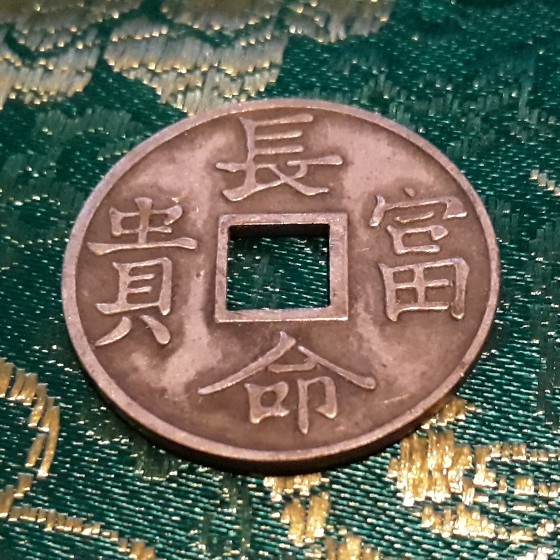
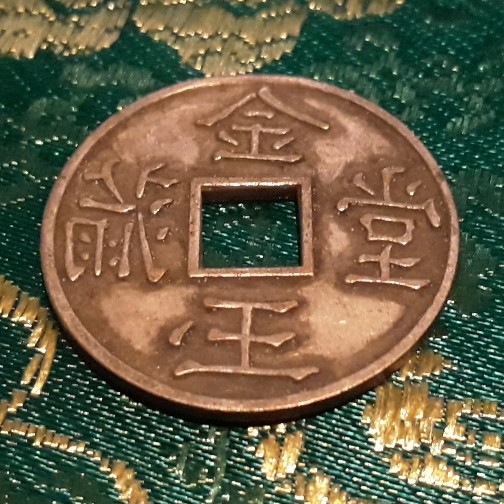
#1. This is not a coin, but a charm. No actual Chinese (or other oriental nation's) coin bore an inscription like that. I don't know enough Chinese to translate the inscription entirely, but I have found similar charms with matching inscriptions. The top pic says "
chang ming fu gui" (long life, fortune and honour). The bottom pic says "
jin yu man tang" (May your House be full of gold and jade).
this example on zeno.ru has the same inscription, but is a lot more decorative. These inscriptions have been used on charms for a thousand years, though this one is most likely of very modern manufacture.
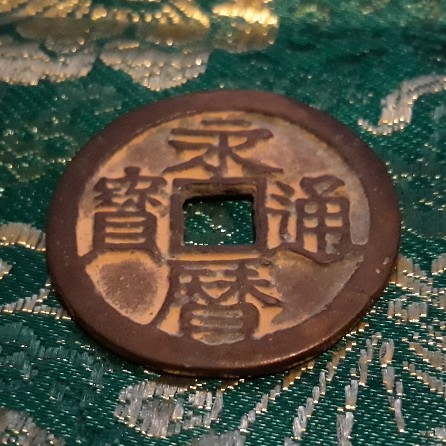
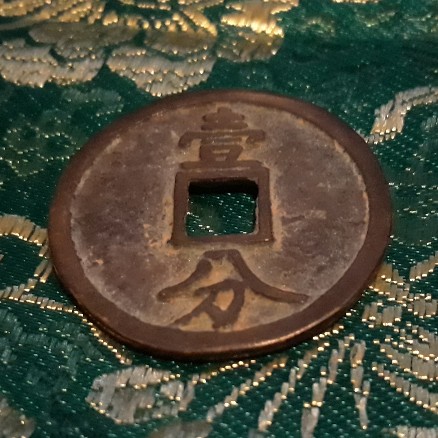
#2: This coin has the same inscription as a rather rare genuine coin, but the overall appearance makes me assume it is a replica. Top pic: "
yong li tong bao" (Eternal Calendar current coin). Bottom pic: "
yi fen" (one cent, or ten cash). "Yong Li" was the reign-name of one of the last emperors of the rebel remnant of the Ming Dynasty, the Southern Ming "Prince of Gui", who reigned from 1646 to 1662. His coins are not common; his large multiple-cash coins are even rarer.
Here's an example of a genuine coin of this type.
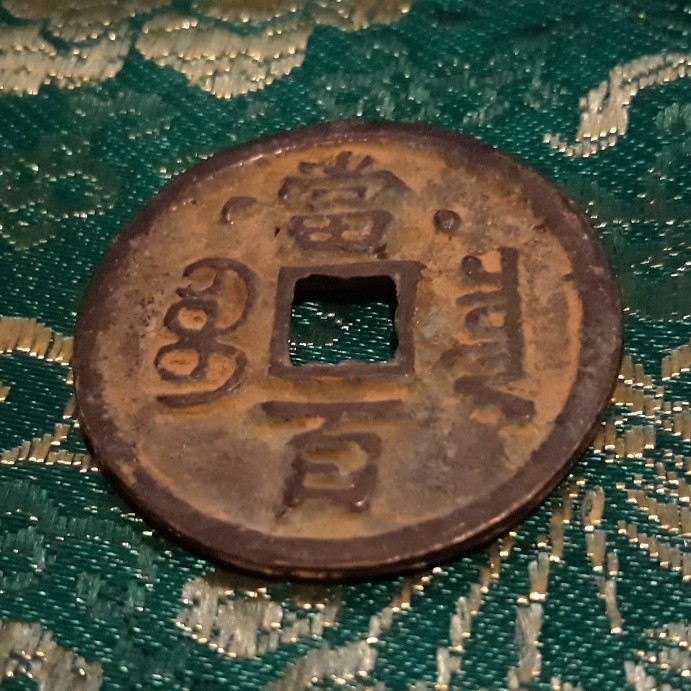
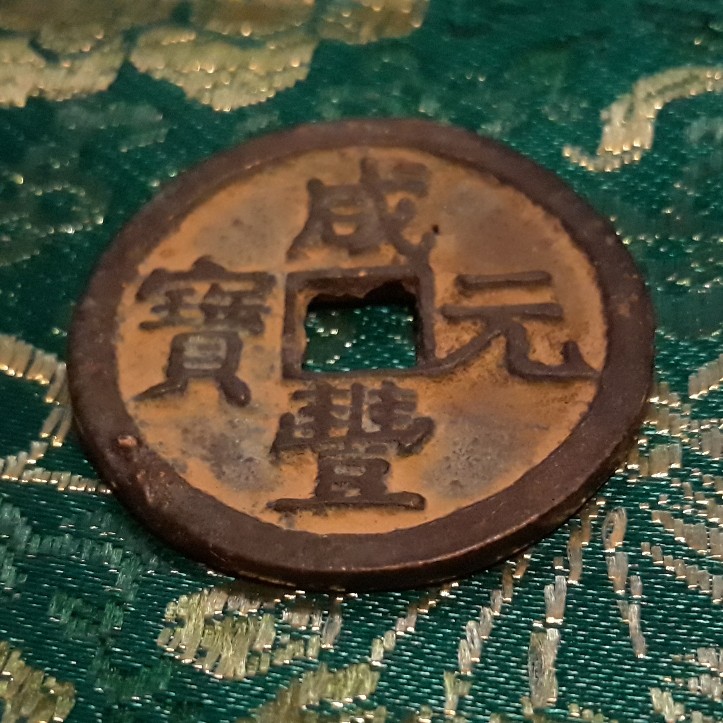
#3: This, too, is a replica of an actual coin, rather than a fantasy or charm. The bottom pic is the obverse, this time: "
xian feng yuan bao" (Universal prosperity unit of currency), top pic:
Boo Chiowan ("Board of Revenue Mint" in Manchurian), and "
fu bai" (luck/fortune 100, in Chinese). The Xianfeng emperor was the Qing Dynasty emperor of China from 1850 to 1861.
Here's the zeno.ru page for these coins. Again, the actual coins are rather scarce, while replicas of them are rather abundant.
Don't say "infinitely" when you mean "very"; otherwise, you'll have no word left when you want to talk about something really infinite. - C. S. Lewis












 Posted 05/11/2018 08:58 am


 to the Community!


