| Author |
 Replies: 5,294 / Views: 290,696 Replies: 5,294 / Views: 290,696 |
|
|
|
Valued Member
Norway
375 Posts |
Thanks for your comments on my coins @tdziemia. I also like your history information around the coins. Have a nice weekend!
|
|
Pillar of the Community
United States
9395 Posts |
1530 -- Kingdom of Poland, 1 groschen:   |
|
Pillar of the Community
United States
1186 Posts |
1530 A-B Hungarian Denar under King John Zapolya. It is an unpublished variation with a curved crest. His normally has the straight side crest. 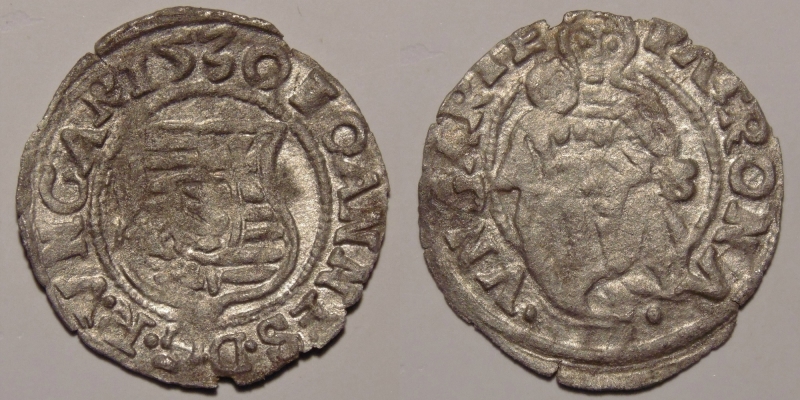 |
|
Moderator
 United States
34562 Posts |
Here is a Prussian Solidus (Thoron mint) dated AD 1529: 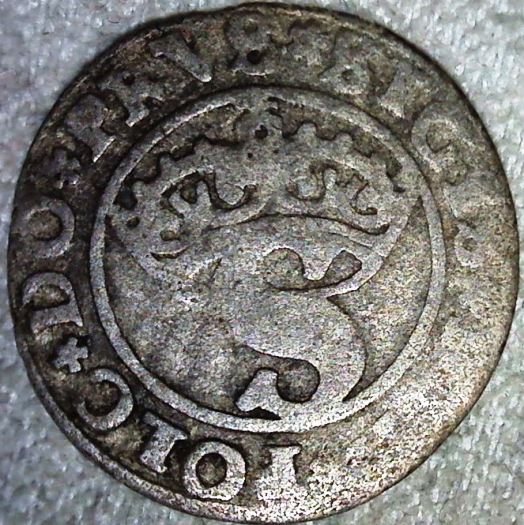 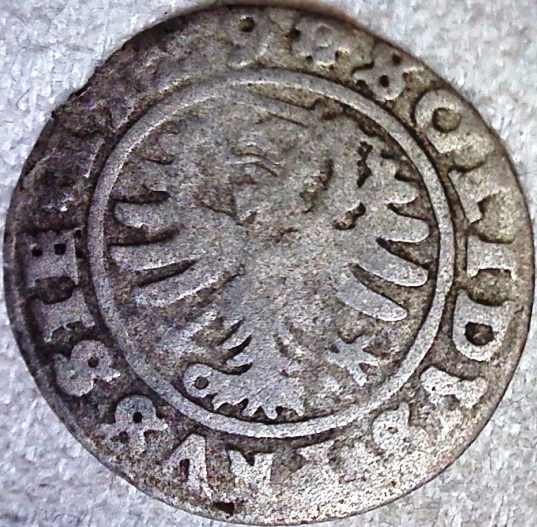 "If you climb a good tree, you get a push."
-----Ghanaian proverb
"The danger we all now face is distinguishing between what is authentic and what is performed."
-----King Adz
|
|
Pillar of the Community
 United States
8056 Posts |
I'll continue the string of Sigismund I coins with this 1529 grosz/groschen from the Krakow mint. The coins we've seen through the 1530s and now into the 1520s bearing Sigismund's name, but also the word PRVS, PRVSS or PRVSSIE are confusing, to say the least. These coins were all minted at the Torun (Thorn) mint, which was a Polish Royal Mint since 1528. Torun was founded by the Teutonic Knights, and hence can be considered Prussian in origin. But, as royal Poland and the Knights waged war through the 15th century, Torun came under Polish control in the 1466 Second Peace of Torun. Through the 1500s, Polish coins minted in Thorn, Elbing and to a lesser extent Gdansk, often retain some reference to Prussia (I think we have a thread on coins of Royal Prussia or West Prussia, which is this same area). In the case of these coins from the Torun mint, the obverse legend is "Sigismund I, King of Poland and Lord of all Prussia" 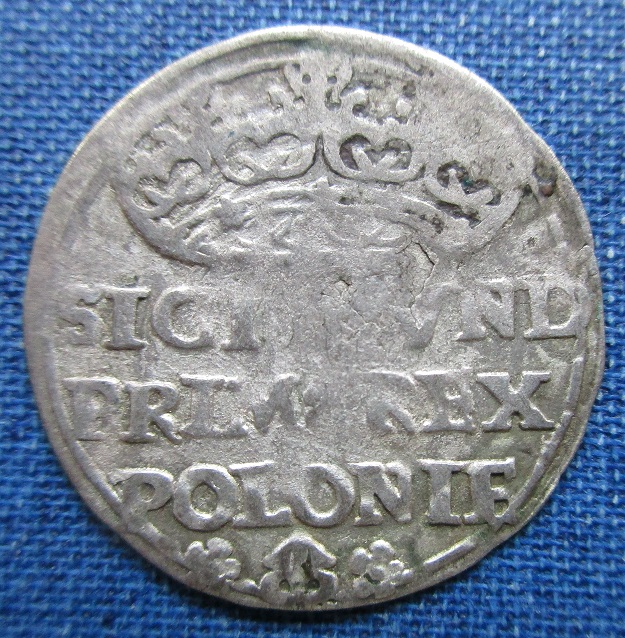 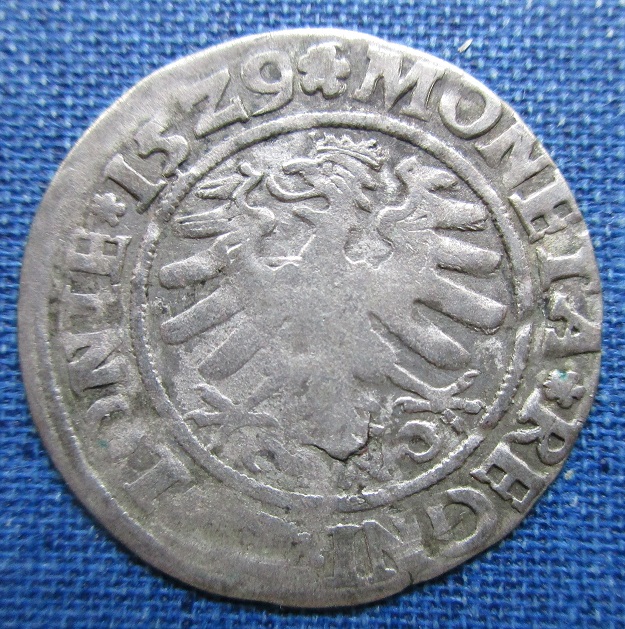 Edited by tdziemia
10/26/2019 09:14 am
|
|
Moderator
United States
34562 Posts |
Yes good history lesson for us all @tdz. In my database, I have that Solidus listed as "Prussia (Polish rule)". Perhaps "Prussia (Polish-controled)" would be more accurate.
"If you climb a good tree, you get a push."
-----Ghanaian proverb
"The danger we all now face is distinguishing between what is authentic and what is performed."
-----King Adz
|
|
Pillar of the Community
United States
8056 Posts |
 I think either way makes sense. I don't have Kopicki, but Gumowski lists under Sigismund I "Crown Mint"(Krakow)," Lithuanian Mint" (Vilnius) and then "Prussian Mint" (Thorun), Danzig Mint and Elbing Mint. Probably each catalog handles it a bit differently  The coins we have seen from the same time period, with Albert's portrait and legend "Albert, Margrave of Brandenburg and Duke of Prussia" would correspond to the Duchy of Prussia, territory not directly under Sigismund's authority, and more clearly "Prussia." Messy to say the least, but I guess there were similar situations many other places in Europe at this time as boundaries shifted first one way, then the next (like 1c5d's account of the prolonged civil war in the Low Countries). Edited by tdziemia
10/26/2019 09:31 am
|
|
Pillar of the Community
United States
9395 Posts |
1529 -- Kingdom of Hungary, 1 denar:   |
|
Pillar of the Community
United States
9395 Posts |
1528 -- Kingdom of hungary, 1 denar:   |
|
Pillar of the Community
United States
8056 Posts |
Kingdom of Poland 1 groat/groschen from the Krakow mint 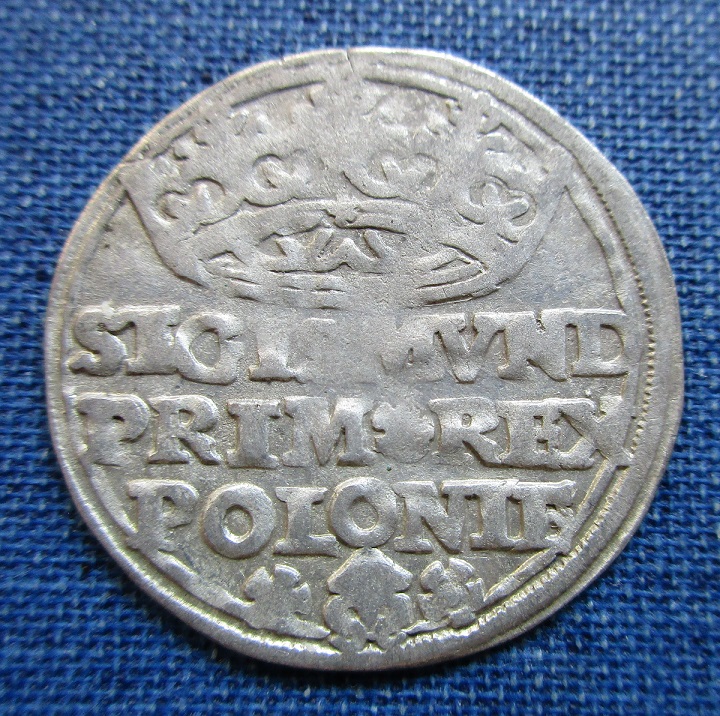 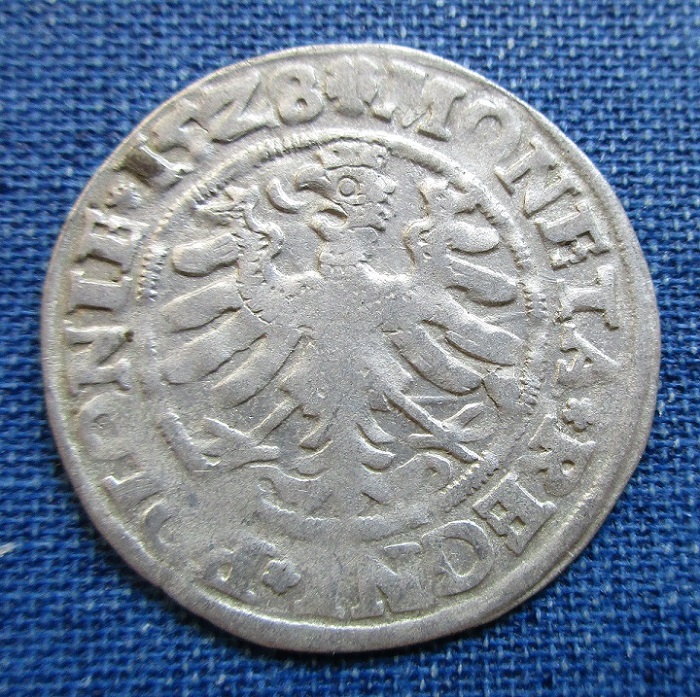 |
|
Moderator
United States
34562 Posts |
Another Hungarian Denar: 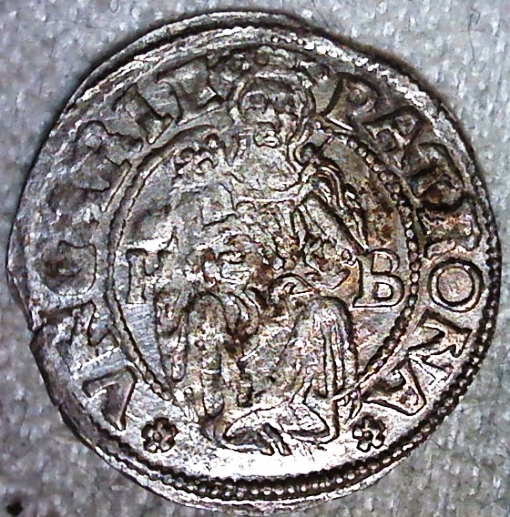 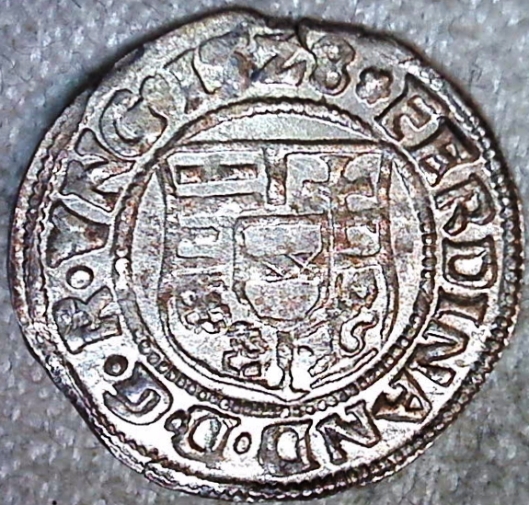 "If you climb a good tree, you get a push."
-----Ghanaian proverb
"The danger we all now face is distinguishing between what is authentic and what is performed."
-----King Adz
|
|
Pillar of the Community
Belgium
2895 Posts |
0,5 batzen 1528 (?) Freestate Kempten MON.NO.CIVITATIS MONETA NOVA CIVITATIS Money of the city CAMPIDONENSIS Kempten Schulten 1591, Nau 62 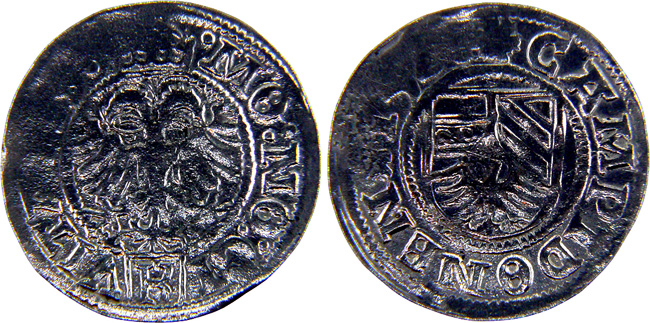 |
|
Pillar of the Community
United States
8056 Posts |
Quote:
Freestate Kempten Nice to see a new place! On the Hungarian denars, I am struck by the apparent differences in craftmanship among mints at this time. Even on such small coins, the denar designs are detailed and appealing, and we see many sharply struck examples. By comparison, the engraver at the Krakow mint has chosen thick, unattractive letters for the obverse, sometimes with imprecise alignment as well. This type was the first coin of such large size minted in Poland for nearly 200 years, so maybe there are issues related to this, but surely he had examples of other contemporary coins to work from |
|
Valued Member
Norway
375 Posts |
I think this is a witten/dreiling 1528 from Mecklenburg-Güstrow 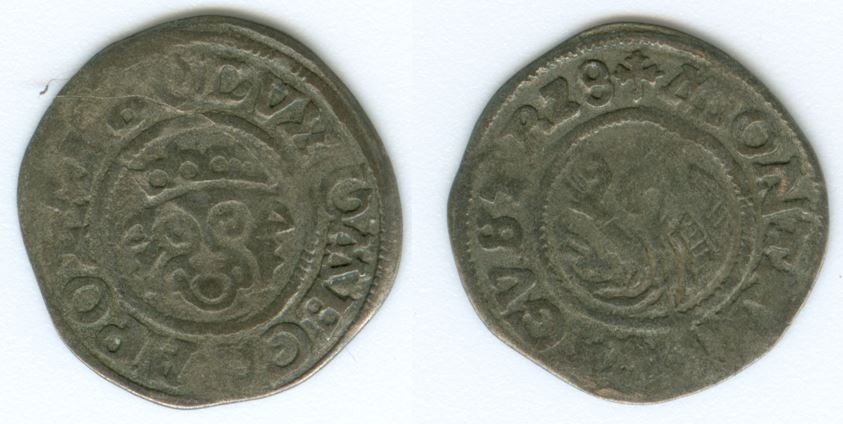 |
|
Pillar of the Community
United States
9395 Posts |
Free City of Nordlingen -- 1/2 batzen, 1527:   |
| |
Replies: 5,294 / Views: 290,696 |







 First Page
 Previous Page


 Posted 10/25/2019 7:40 pm





