| Author |
 Replies: 40 / Views: 11,951 Replies: 40 / Views: 11,951 |
|
|
|
Pillar of the Community
United States
6130 Posts |
Another excellent and informative thread! I don't actively collect these, but I have a handful because sometimes they sell so darn cheap! I'll have to see about getting some images when I can find them again (big backlog of Indian material from the Islamic dynasties through modern).
A question - I have seen these described as 1/5 dirhem coins... any insights from your research on this curious denomination? I have a couple pre-Islamic Sindh coins, all of which are pretty substantially larger.
|
|
Pillar of the Community
 India
1996 Posts |
Thank you Finn235 for your post. You are right in that these Qandhari dirhams actually were one fifth of the actual legal dirham. I have not struck any information on why this nomenclature. Those days, right to strike coins must have been granted to the Abbasid Amirs from the Caliphate. It is my impression that this grant was limited to copper and silver upto one fifth of actual dirham. Because this was prevalent extensively during the Abbasid Amirs' period,Habbarids and later rulers must have followed suite just like Bull and Horseman jitals by the Ghaznavis and Mamluks of Delhi. Regarding the pre-Islamic Sindh coins, I am still a toddler.  |
|
Pillar of the Community
India
1996 Posts |
@:)Finn235
History of Pre-islamic Sindh is very rich and one of the most complex, too much so for me to understand. After the Indus Valley civilisation I know nothing until Alexander the Great. Then the Seleucids came. Scythian rulers followed them. Bactrians also were contesting for this land. There were the Kushanas and the Parthians over here. The Sassanids followed that period until there came the Amirs of the Caliphate from 712.AD. I am uncertain if Kushanshahs of Kabul held this area in between. My area of interest being mainly medieval Islamic coinage of India and the Hindu interlude in Kashmir and Islamic interlude in southern India, I am a bit intimidated to go into pre-Islamic Sindh coinage. Hope someone else will come forward to help you on this. Thank you.
Edited by drnsreedhar
07/29/2018 05:57 am
|
|
Pillar of the Community
India
1996 Posts |
After the Habbarid Amirs, Sindh passed on to the hands of the Ghaznavi rulers. Their coins have been posted in another thread, http://goccf.com/t/315851. When Ghaznavi rule fell to Muhammad bin Sam from Ghur, Sindh also went under their power. Then came the Sindh Sultans. History of Sind sultans1. Nasir ud din Qubacha (1206-1228.AD)Nasir ud din Qubacha who was made Governor of a province to north of Sindh by Muhammad bin Sam after his conquest of the Ghaznavid ruler. When Muhammad died, Qubacha became the master. After death of Qutb ud din Aibak, he threw off allegiance to Delhi and invaded South-wards to annex Sindh. Subsequently he lost Lahore to Iltutmish. By around 1220.AD, Jalal ud din Mangubarni carved out a kingdom. He attacked Qubacha and later, fled to Persia in 1224. Four years later, Iltutmish attacked Qubacha who fled for life, but drowned in the river Indus near Bhakkar. 2. Jalal ud din Mingburnu /Mangubarni (1220-1224.AD)Jalal ud din who fled from Kwarezm when his father lost the empire came to settle in Lahore. He then moved to the south and formed a kingdom of his own. With help from local tribes, he attacked Qubacha and obtained a large booty that he took along when he fled to Persia. 3. Khalif Beg (1224.AD)Khalif who is believed to be an officer with Mingburnu tried to hold on but in vain. 4. Saif ud din Hasan Qurlugh (1239-1249.AD)He was an officer under Jalal ud din Mingburnu. He remained in Ghazna when his master fled to the west. He waited until a chance befell him in the form of political turmoil when Sultana Razia was in power in Delhi. He secured Sindh for his territory and ruled until 1249. He ambitious to capture Multan and died in his attempt to do so in 1249. 5. Nasir ud din Muhammad Qurlugh (1249-1259.AD)He succeeded his father and held Sind until 1259. After this period, Jams (Summas), local tribes and Delhi rulers held Sindh whenever they had a military upper hand. Jams at times were tributaries to Delhi and sometimes independent. Until at last, Akbar the Great annexed Sindh to his empire. Most of these coins have been posted in the "Bull and Horseman" thread. Nasir ud din Qubacha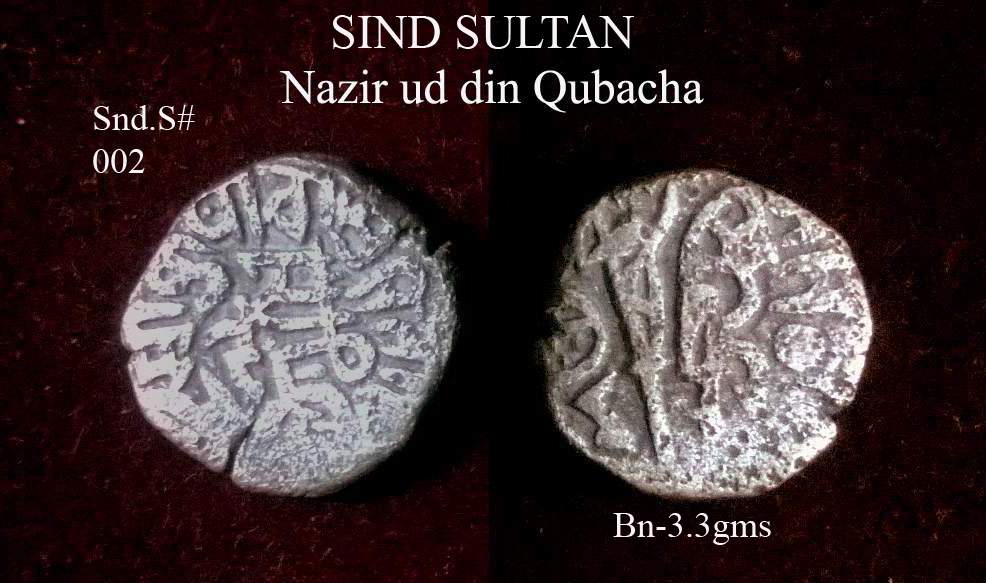 Edited by drnsreedhar
07/29/2018 07:10 am
|
|
Pillar of the Community
India
1996 Posts |
Overlay to the coin above 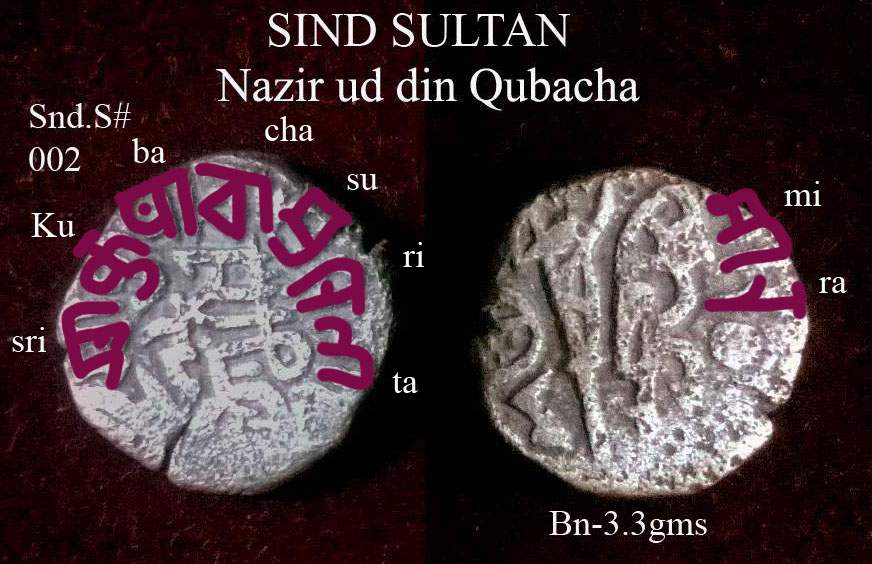 Obv: Recumbent bull facing left. Legend in Sarada script above reading " Sri Kubacha suritana" Rev: Horseman facing right. Sarada script legend "Sri Hamira". |
|
Pillar of the Community
India
1996 Posts |
Another type of Qubacha coin 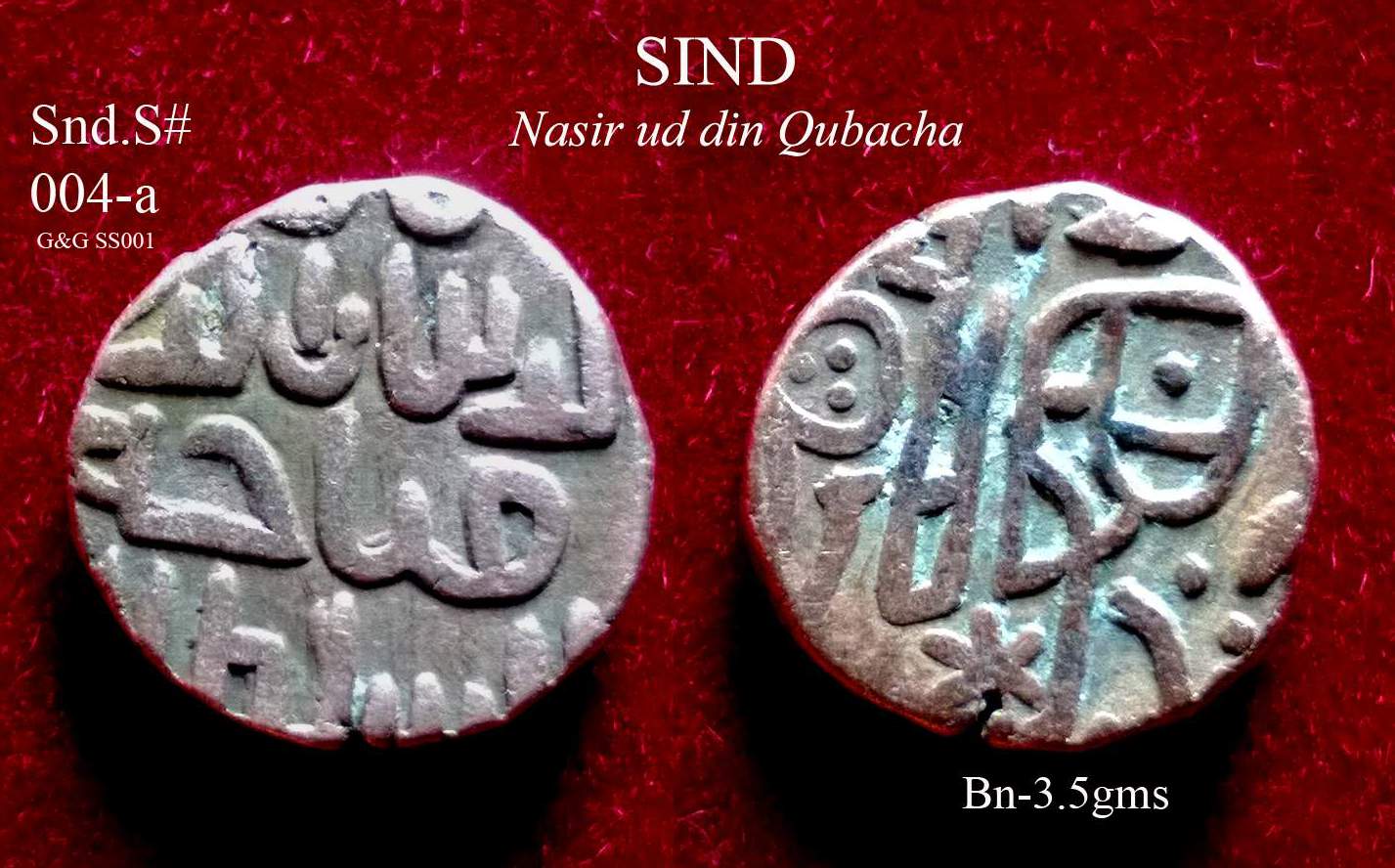 |
|
Pillar of the Community
India
1996 Posts |
Overlay for the coin above 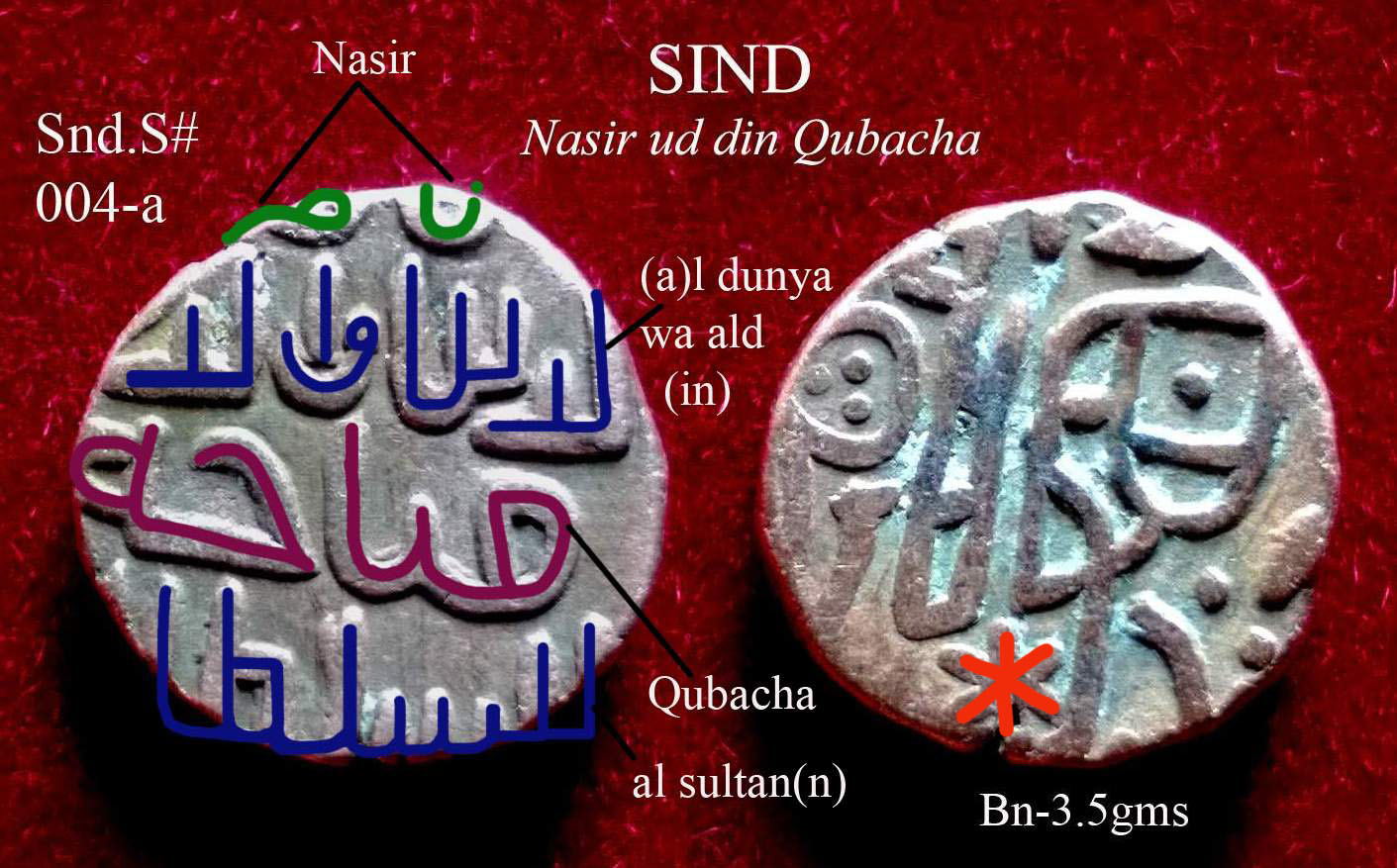 |
|
Pillar of the Community
India
1996 Posts |
Jalal ud din Mingburnu /Mangubarni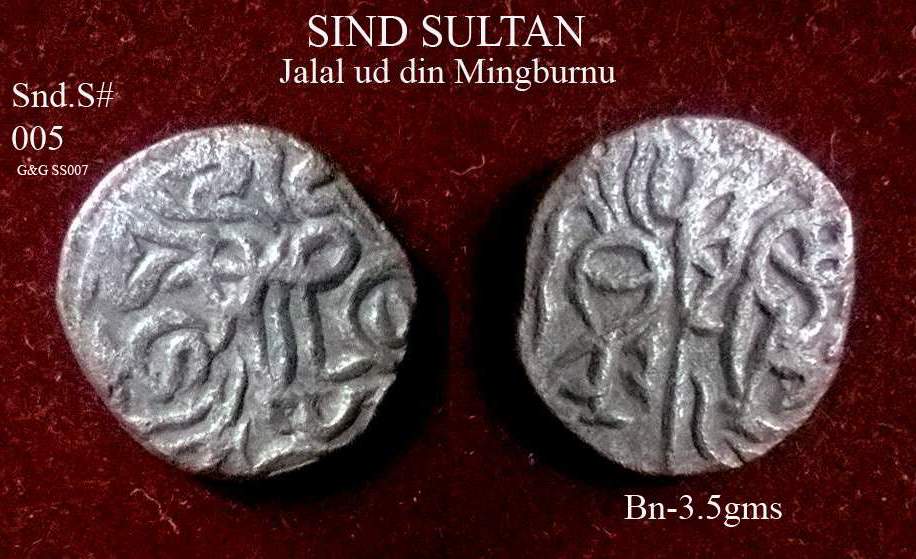
|
|
Pillar of the Community
India
1996 Posts |
The coin has on its obverse a stylised recumbent bull facing left and legend in Sarada script around running "Sri Jalaladina". On its reverse, is a stylised horseman facing right with Sarada writing "Sri Hamir" above (off flan). Please note on the obverse that the curved line that makes the front end of the head of the bull just touches the letter "Ja" as you can make out from the overlay. 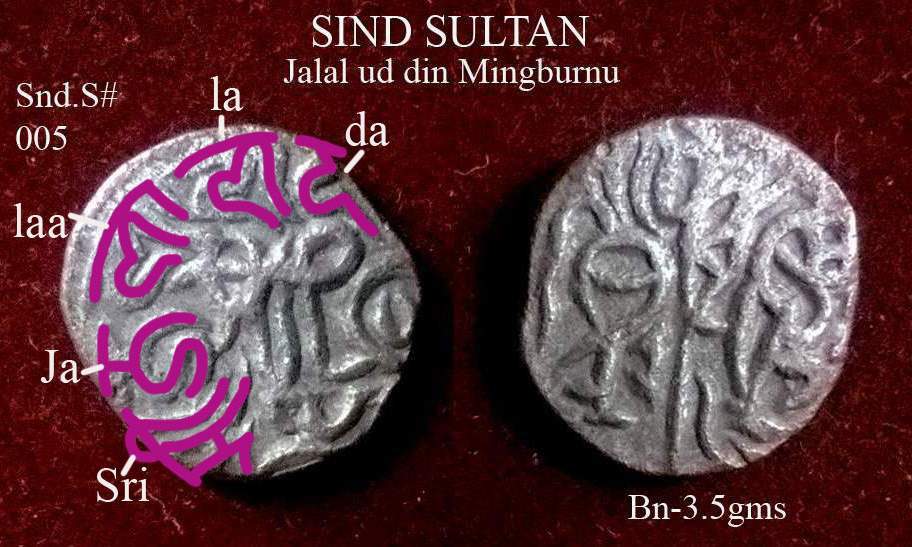 The coins with small triangular to squarish looking head of the bull with a long snout looking like the proboscis of a mosquito are called "Nandana type", because they are believed though not absolutely established, to have been issued from Nandana, a mint located in Punjab North of Sindh. This type coins have been issued by several rulers. Edited by drnsreedhar
08/02/2018 04:31 am
|
|
Pillar of the Community
India
1996 Posts |
Here is a variant to the above coin where the reverse legend can be read. Please note on this one that the curved line forming the front of the head of the bull is long so that it keeps the letters "Ja" and "la" on its either side. 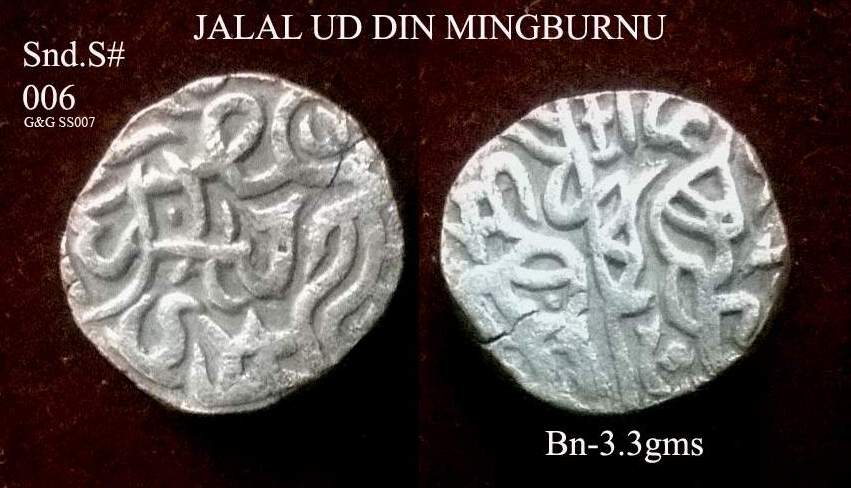 |
|
Pillar of the Community
India
1996 Posts |
Coin No.Snd.S#006 with overlay. 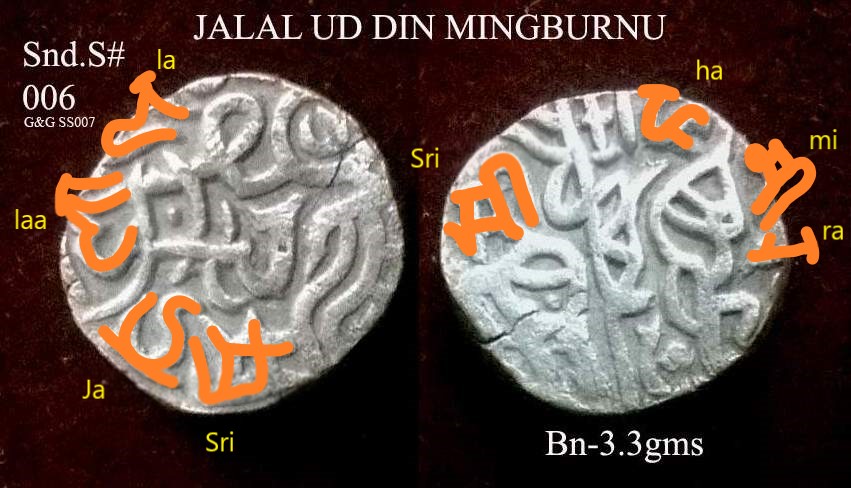 |
|
Pillar of the Community
India
1996 Posts |
Khalif Beg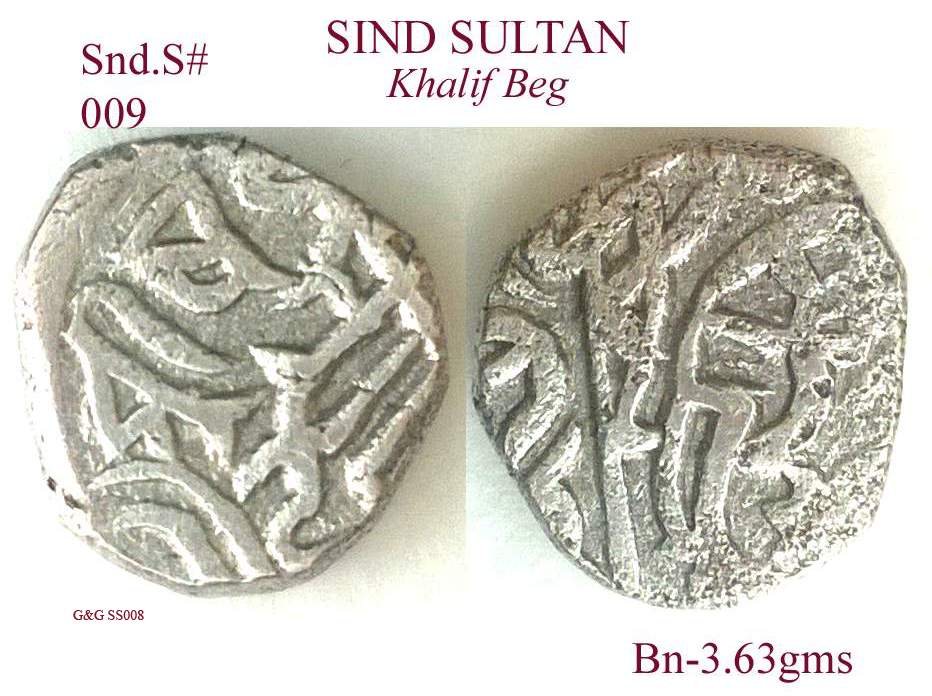
|
|
Pillar of the Community
India
1996 Posts |
Khalif Beg coin's overlay 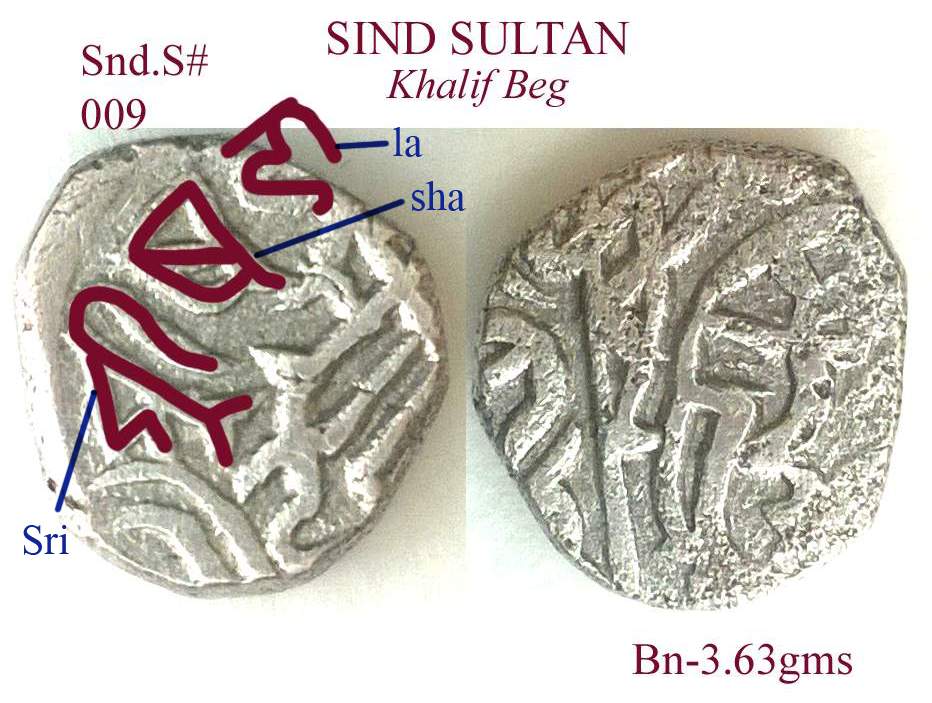 |
|
Pillar of the Community
India
1996 Posts |
Saif ud din Hasan Qurlugh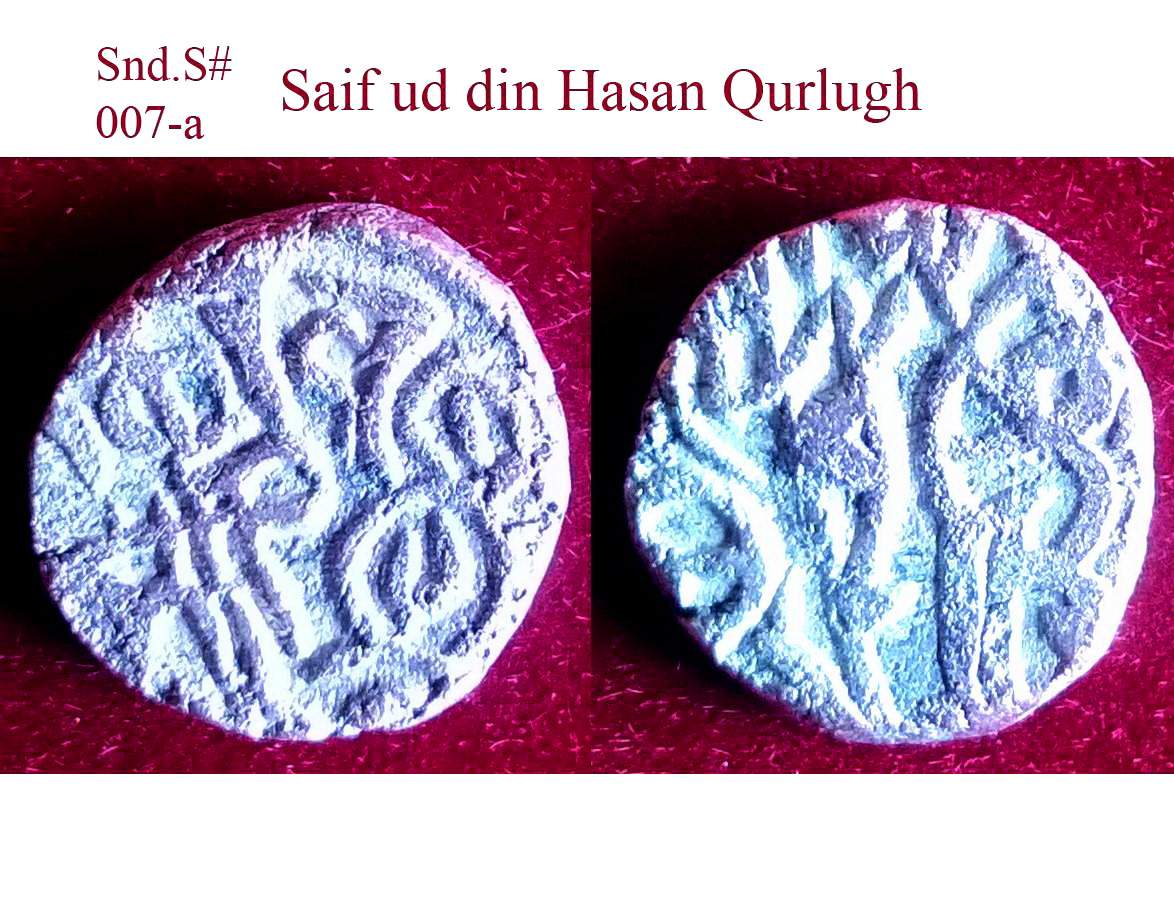 This coin is ref.no.SS-013 of Goron and Goenka. Obv: recumbent bull facing left, "Sri Hasan Kurlaka" in corrupt Nagari above. Rev: Horseman facing right.
|
|
Pillar of the Community
India
1996 Posts |
Kurlagh coin with overlay 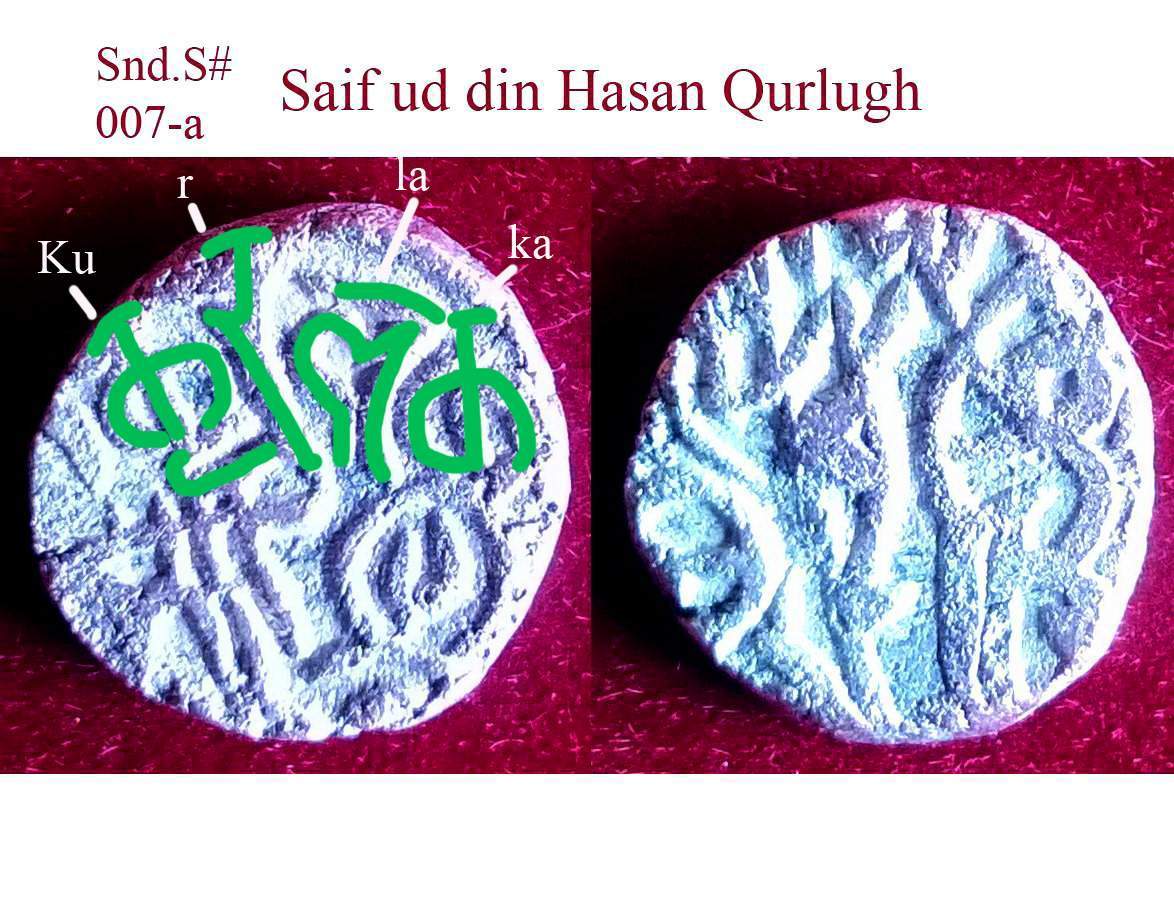 |
| |
Replies: 40 / Views: 11,951 |







 First Page


 Posted 07/27/2018 02:42 am


