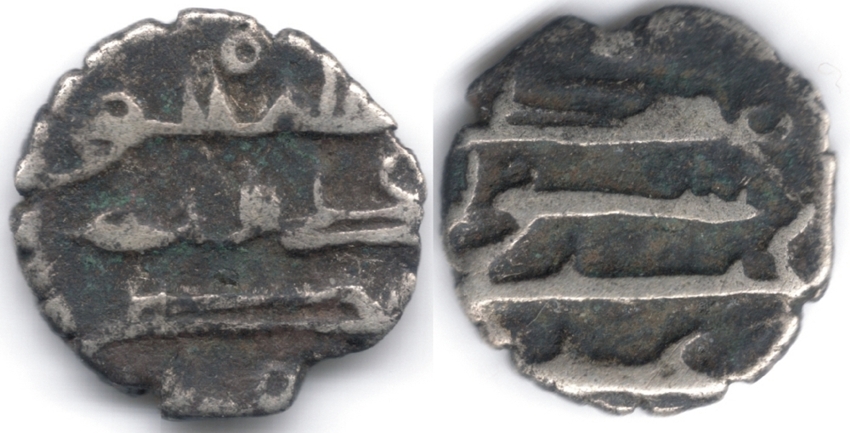
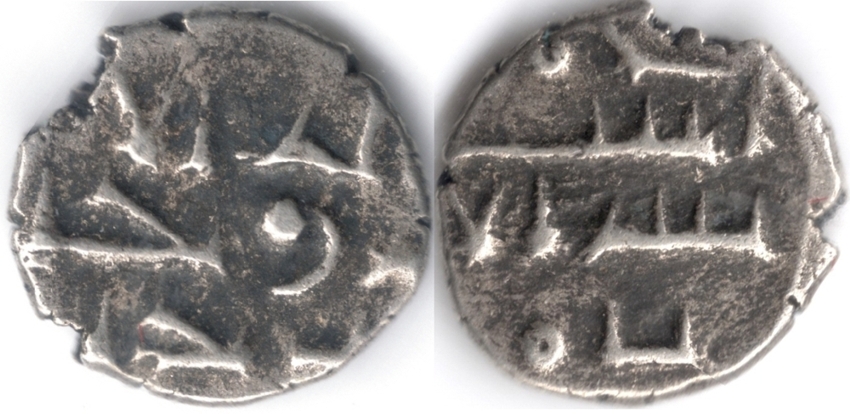
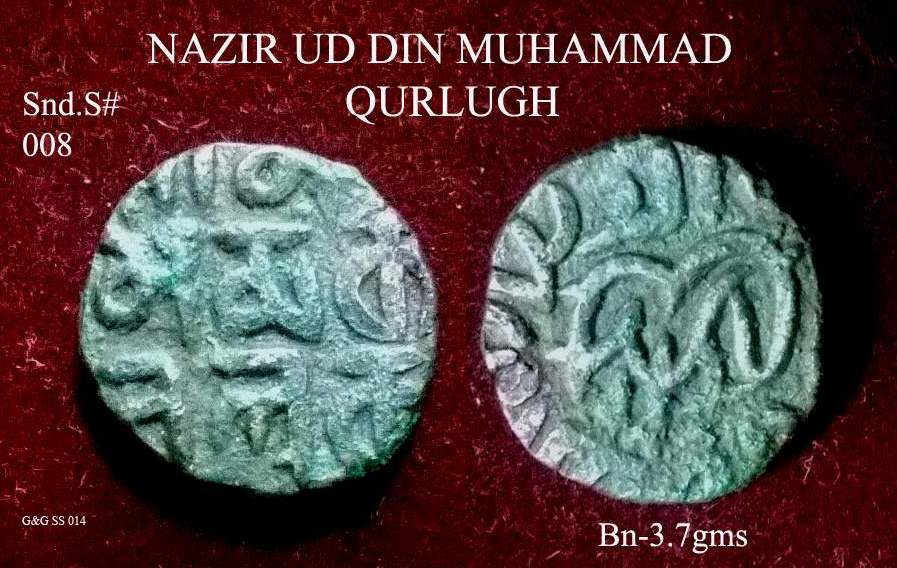
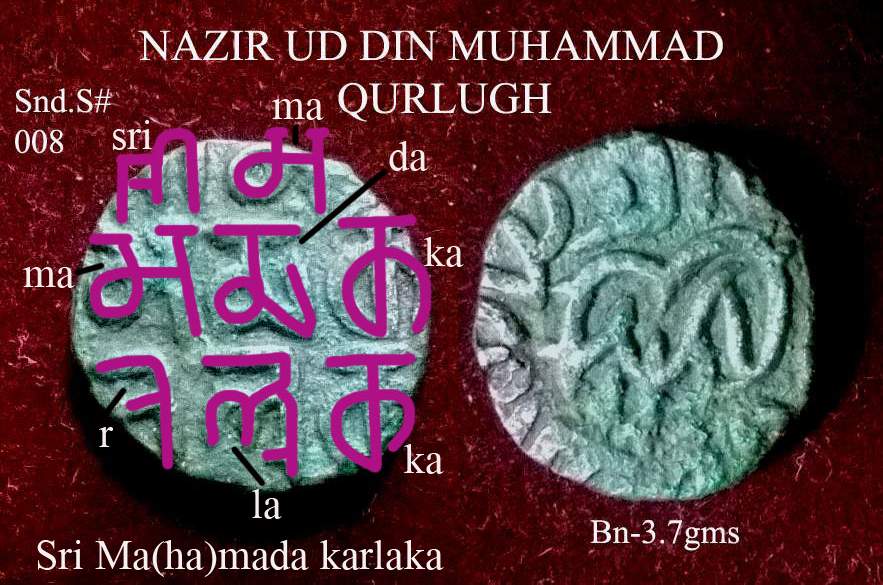
If I can contribute the few pre-Islamic Sindh coins I have:
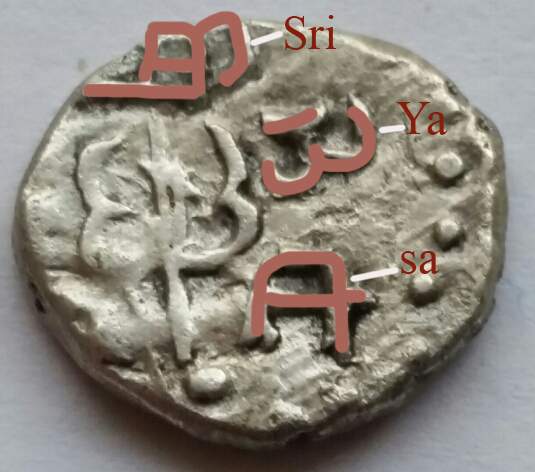
As you had mentioned above, Sindh was rarely if ever an independent entity from the time of the Mauryan dynasty until the collapse of the Gupta in ca. 450-500 AD. The Alchon Huns are believed to be the ones who broke up the Gupta empire, and were the only ones to strike into the heartland, raiding and pillaging as they went. They were beaten by an alliance of Indian states, but a small holdout seems to have established itself in the region from c. 500-600. Attested only through coins, the "Sri Yashaaditya" obols feature a peculiar Hunnic bust, and a reverse motif of either Shiva's Trident, or a Sassanian fire altar (with or without attendants)


This kingdom fizzled out and was replaced with the Kingdom of Sindh, led by Buddhist kings of the Rai dynasty, 524-632 AD. Rai Sahasi died childless, and his kingdom was usurped by his Hindu chamberlain, Chach of Alor, who had long been having an illicit affair with his wife. The Brahmin dynasty ruled until 724, when it was toppled by Muslim invaders.
This coin sometimes attributed to Chach or his successors, "Sri Parakutta" featuring a degenerate bust and a Brahmi legend around a rudimentary fire altar
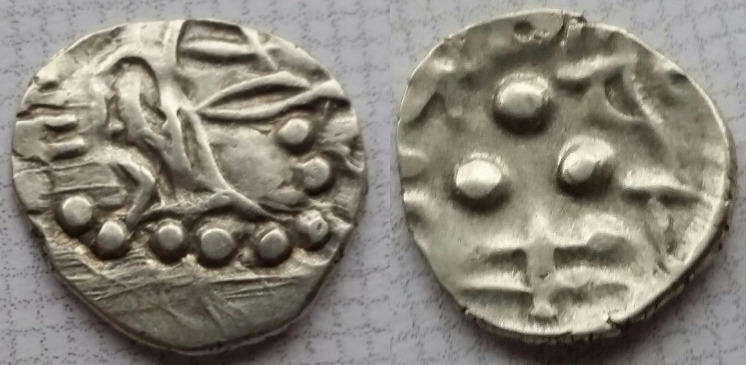
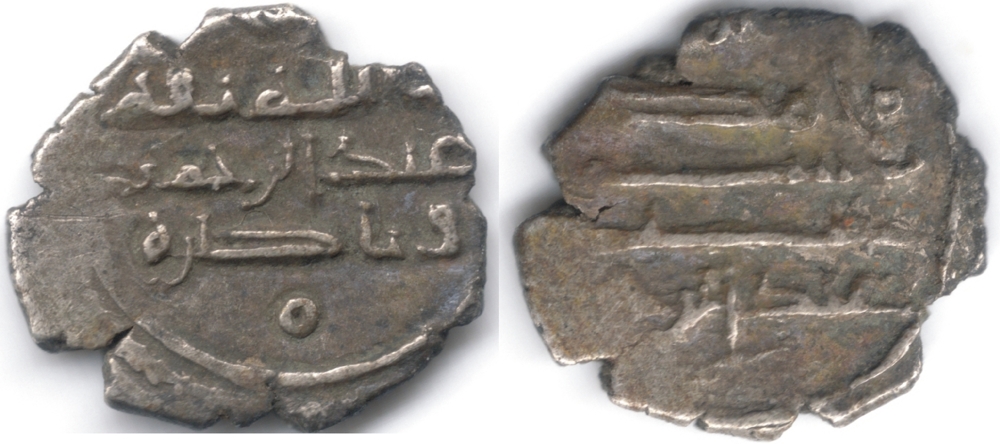
This type was adopted by the earliest Amirs, replacing the bust with an Arabic legend. I have one, but it is still en route from India.
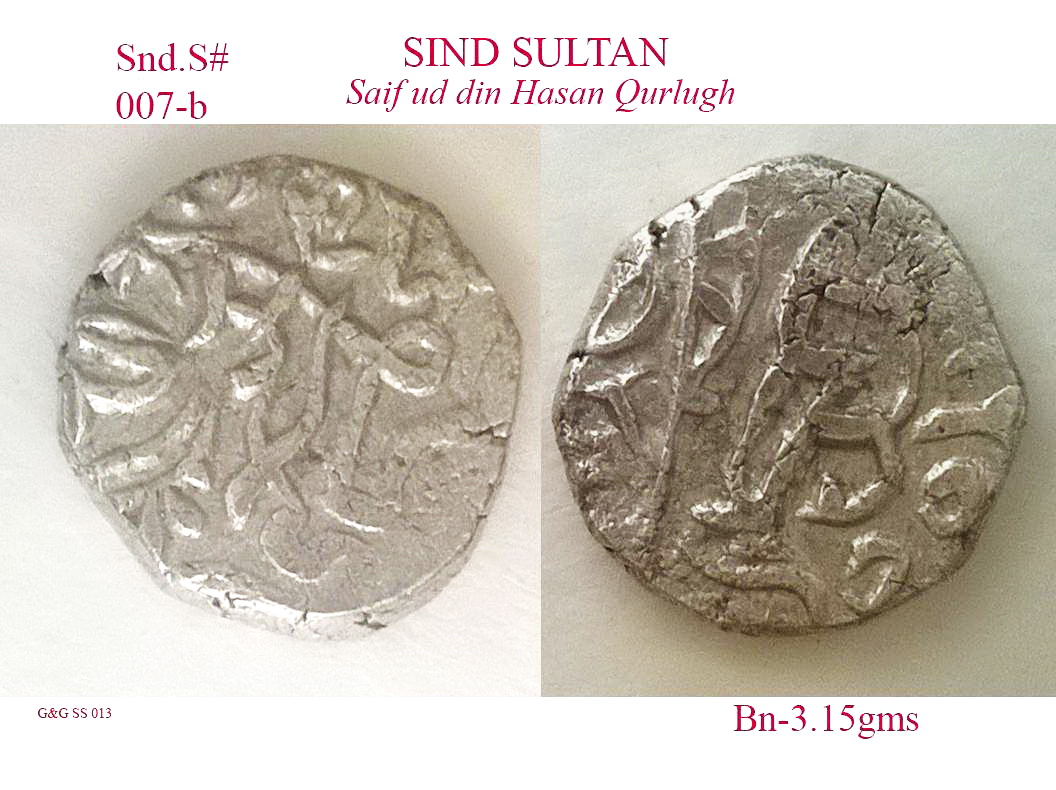
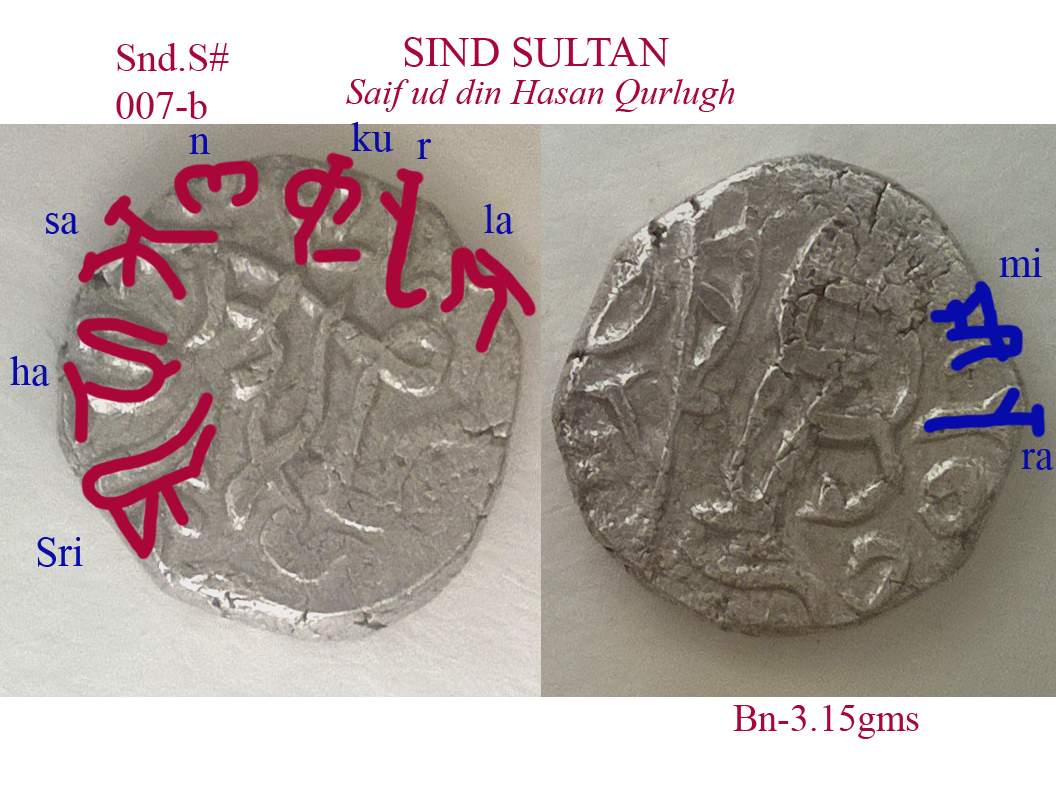
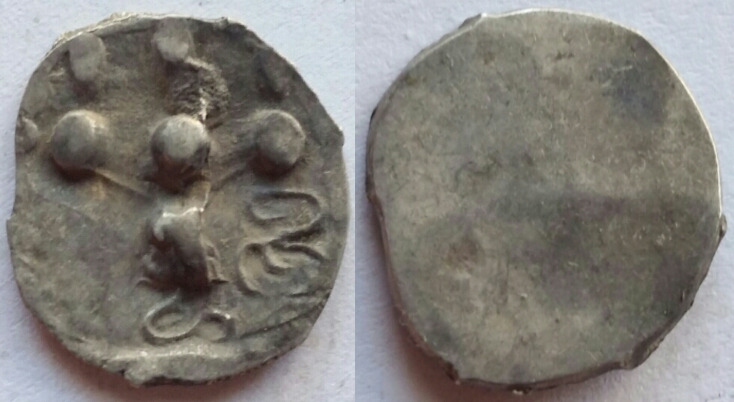
There are also more mysterious silver coins, about 14mm across and uniface, featuring raised bumps and a two or three word legend, this one "Ha Si"








 First Page
 Previous Page


 Posted 08/08/2018 4:02 pm