Hello Everyone!
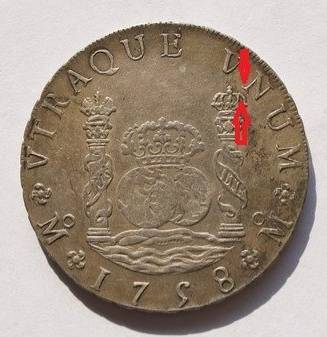
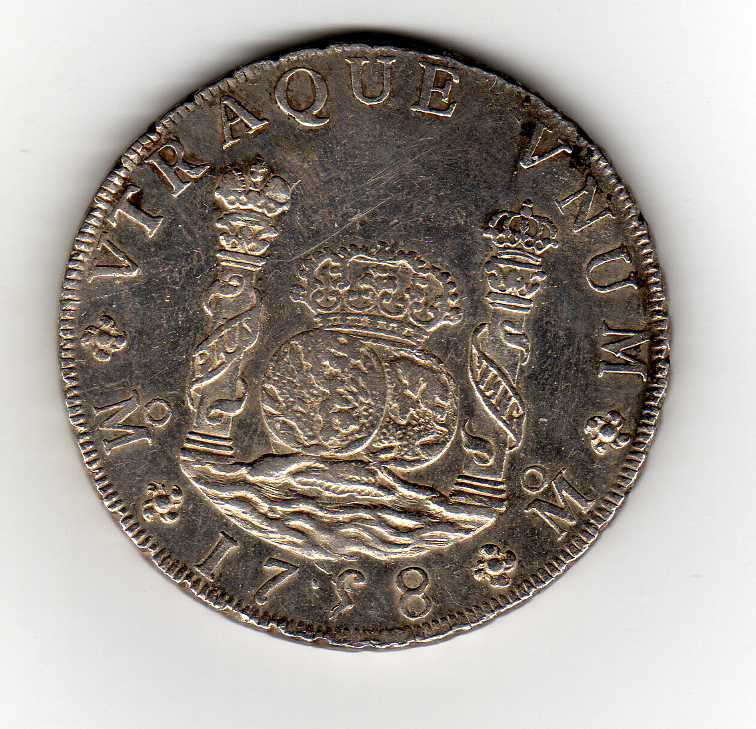
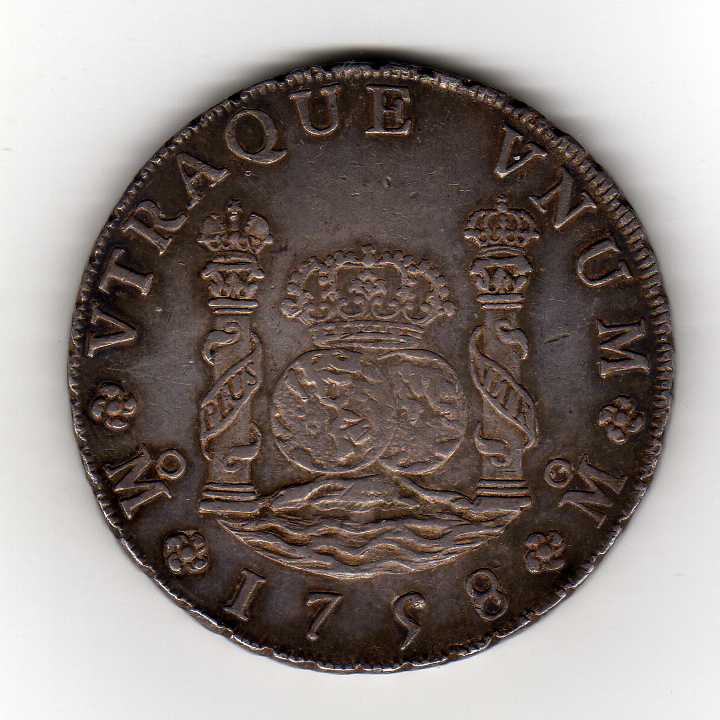
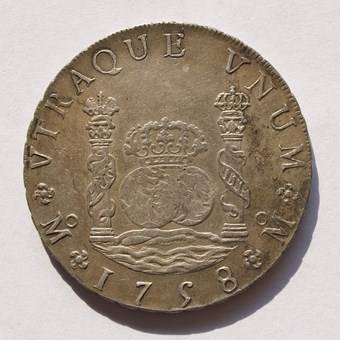
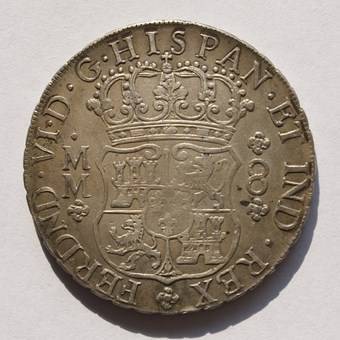
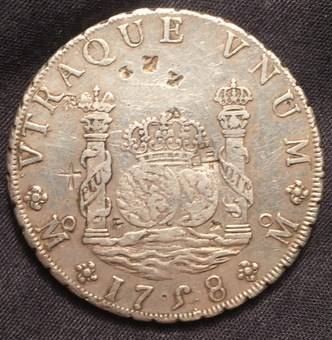
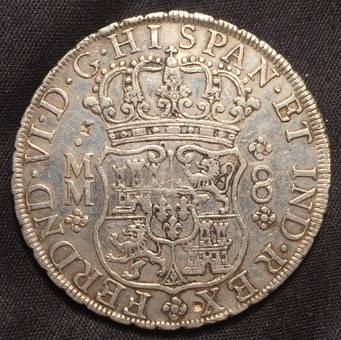
I'm brand new to the community and this is my first post. Like so many others before me, I'd like to request your expertise and assistance in helping me to evaluate a 1758 Pillar Dollar in my possession. Is it genuine?!?
Let me start by saying that I have scoured this forum and have done my best to gather and apply the collective wisdom of experts such as swamperbob, and several other knowledgeable members of this forum.
Here's a quick summary of my own amateur analysis based upon the info I've gathered:
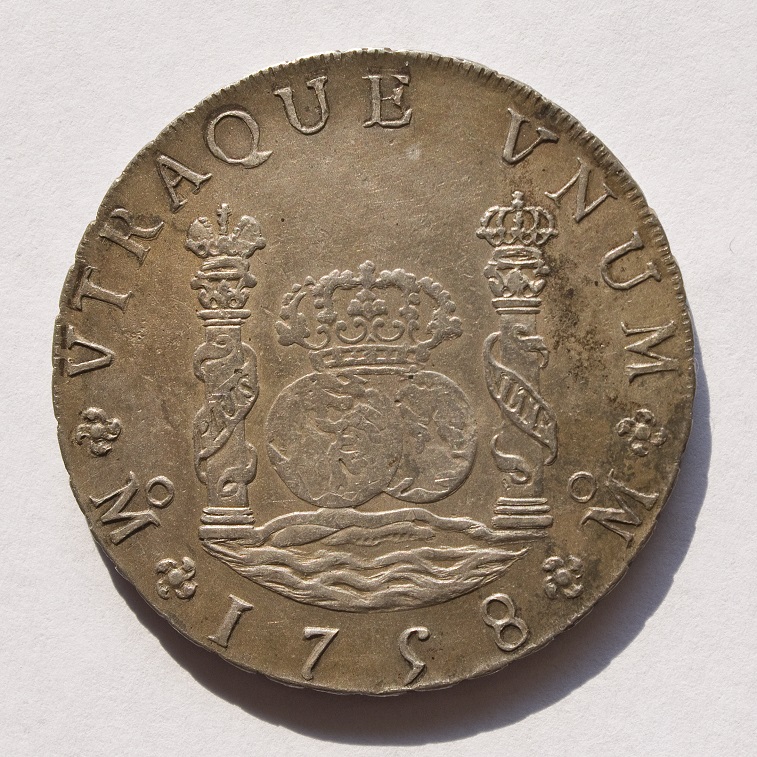
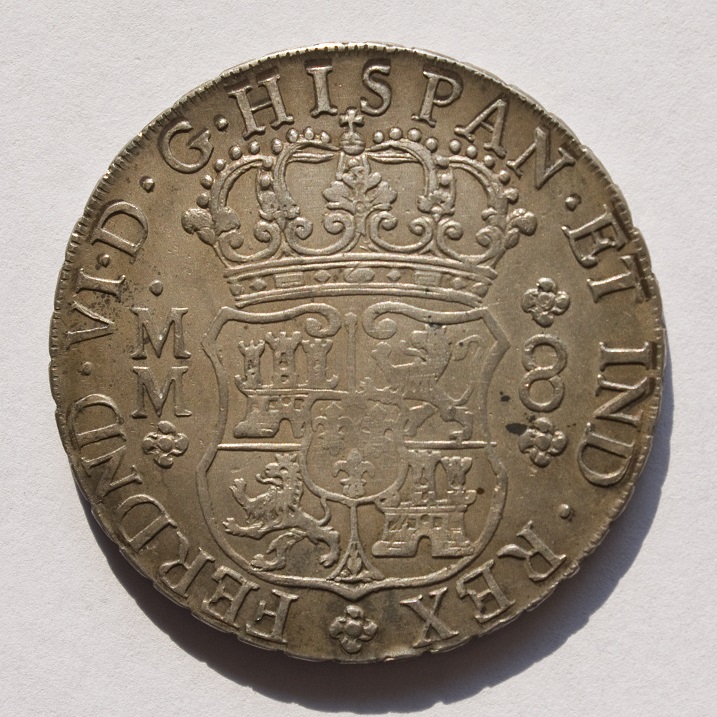
- I do not believe this piece was cast, as I do not see any rough or "textured" fields, "blow-outs", excess metal blobs, file marks, odd lines, cracks, de-laminations, etc. In fact, the letters/numbers appear rather crisply struck w/ their sides seeming to stand up 90 degrees from the field. However, there are a few letters that look suspect to my eye, but I frankly don't know exactly what a proper strike should look like or what imperfections are in the realm of "normal".
- To my amateur eye, the dentils appear to extend to the extreme edge of the available metal, and I do not see dentils being collapsed or distorted like they would be if the edge design was applied AFTER the planchet was struck by the dies. Furthermore, I do not see any evidence of an arc of plain metal which would indicate that the die used was smaller than the planchet.
- While the center of the reverse is a bit weak, I believe swamperbob mentioned that the portrait reales were slightly concave on the reverse to allow stacking, and this could cause the strike of the center of the shield to be a bit weak. I'm "assuming" (uh-oh) this could also be true w/ respect to Pillar Dollars. Not sure about the fleur-de-lis as they are quite worn.
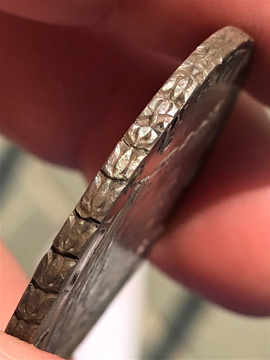
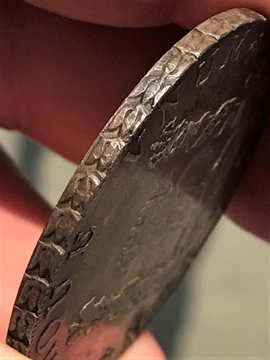
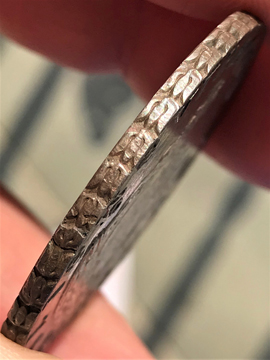
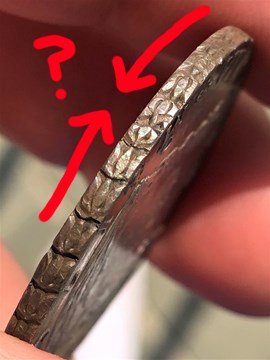
-The edge has a strongly struck lotus blossom pattern which to my eye does not remotely resemble the weak edges, or "squarish" patterns I've seen on some of the modern Chinese copies posted to the forum. Furthermore, the design reverses (which I understand is appropriate for pre-1760 coins from Mexico) and there are two "overlaps" (or in this case transition points), one just beneath the right edge of the "Mo" mintmark on the left, and the other exactly opposite above the right of the "N" of "VNUM". The centerlines of the designs appear to align quite nicely where they intersect.
- The person from whom I obtained this weighed it at 26.9 grams. However, earlier today I took it to a local "gold & silver" shop and they weighed it at 27.1 gram (after the scale settled).
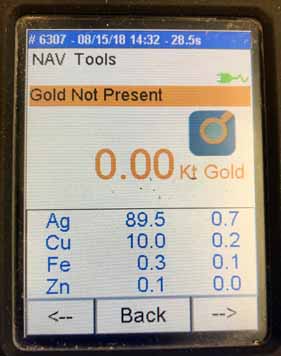
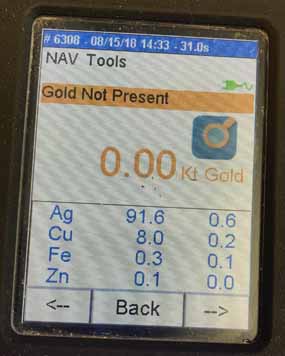
- I was unable to have a specific gravity test done or get an accurate measurement of the diameter; however, it was placed on a $25,000 XRF scanner twice in succession and while the readings agreed w/ respect to the metallurgical contents (Ag, Cu, Fe, & Zn), the measurements came up a bit different each time as shown in the photos. NO GOLD was detected... which concerns me, and I'm afraid the zinc content may also be an issue. I think it may be important to note that same machine later scanned my 1776 portrait 8R (another coin for another time) and it was shown to contain Ag, Cu, Pb, and Au (0.2). Therefore, it would seem that the machine is capable of detecting trace elements of gold... none of which was detected in the 1758 coin.
- Finally, the obverse and reverse are struck in the same direction (not opposite like a modern US coin). That is the design is upright when you flip the coin on it's side.
I'm going to stop now, as I fear my LITTLE knowledge has made me quite dangerous to myself. :-0
Bottom line, I'm suffering from "analysis paralysis" and would GREATLY appreciate it if anyone can assist me in determining if what I have here is genuine or otherwise.
My sincere thanks in advance!
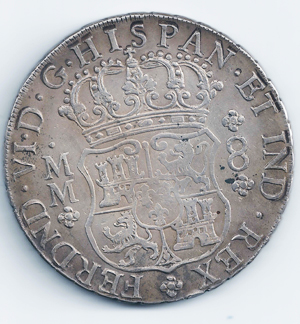
=================================================
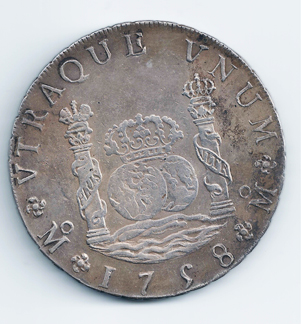
8/16 REVSION: I've added two new photos taken in sunlight. Not the best, but hopefully better than the scans above.
=================================================







 Posted 08/15/2018 11:36 pm



 -
-
 -
- -
-