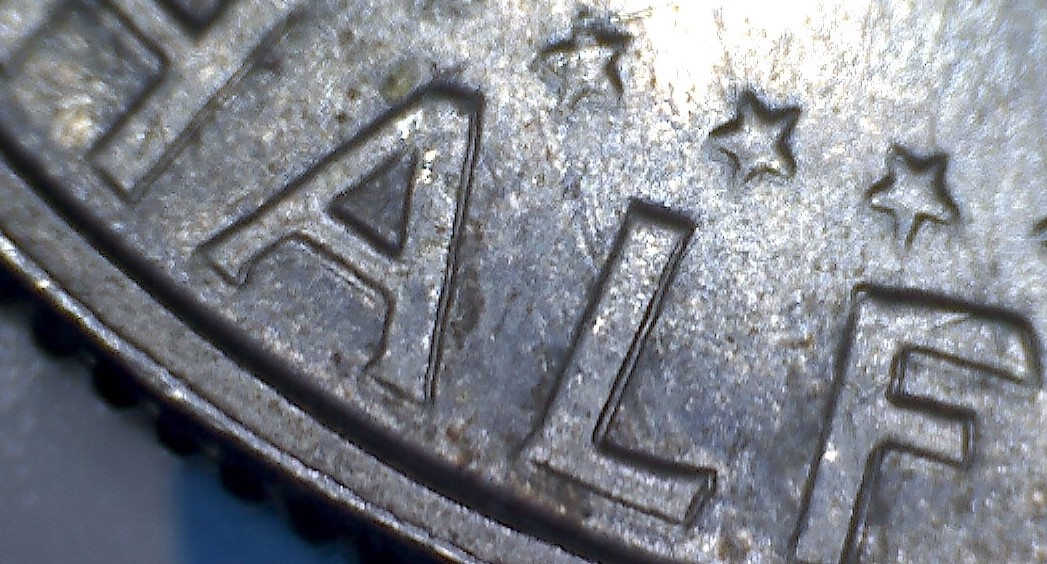
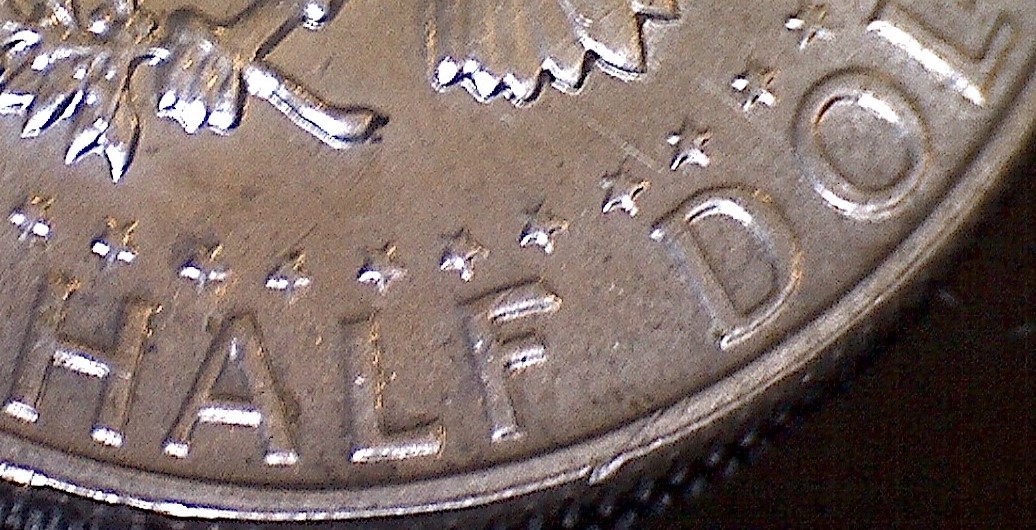
What are we seeing that your not? The Last image the 'ALF' area is showing on the right side of the devices a reduction line of those devices. Note on the left side of the devices? Do you see the contour of the devices? That is the way the normal coin would look like. But after the strike, the machine swung over and damaged the right sides of the devices. Note how they are flat, shelf like, all showing the same color. When a coin is contoured we wee the lighter color fade gradually into dark. (Like the left side of those devices)
Machine Doubling is most often found on the edges of devices because if is damaged by die movement. So if the MD didn't happen, it would be a normal coin. On a doubled die the devices are enlarged, not by the machine, but are doubled on the die. Thus the term doubled die.
Machine Doubling can also happen on doubled dies as well. But here is a visual difference:
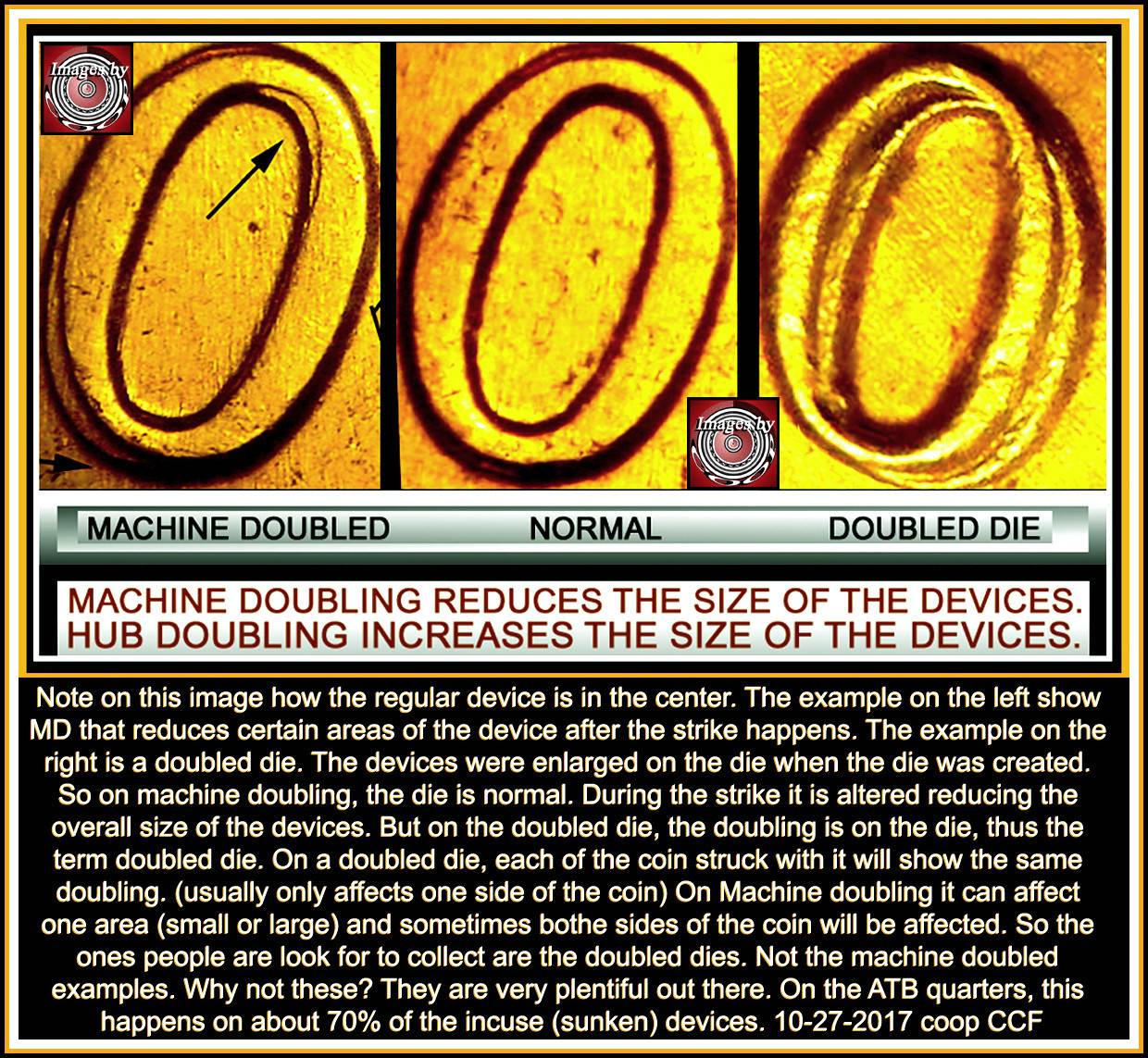
Note the doubled die on the right image? Here is the same devices on a MD example and a
DDR:
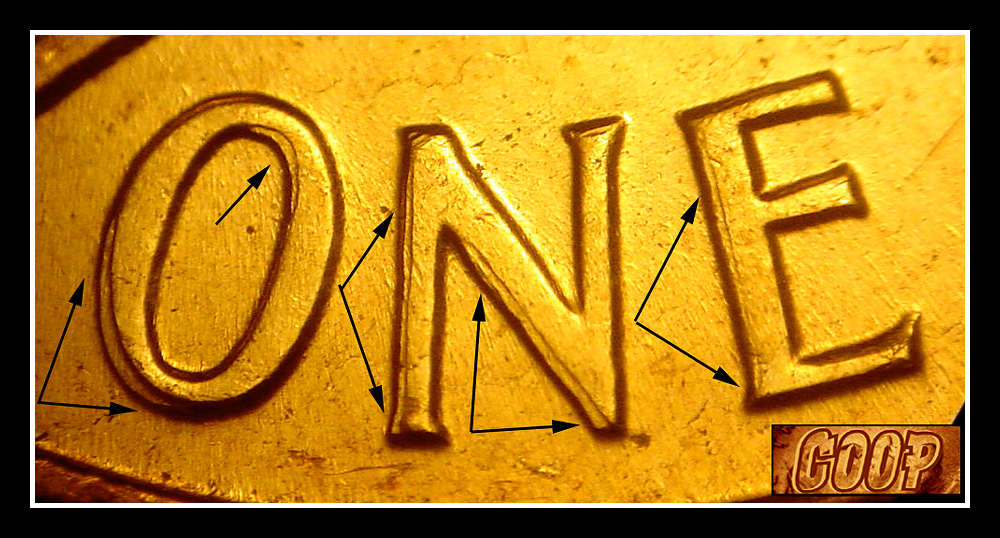
Same coin as the left image.
Here is the
DDR:
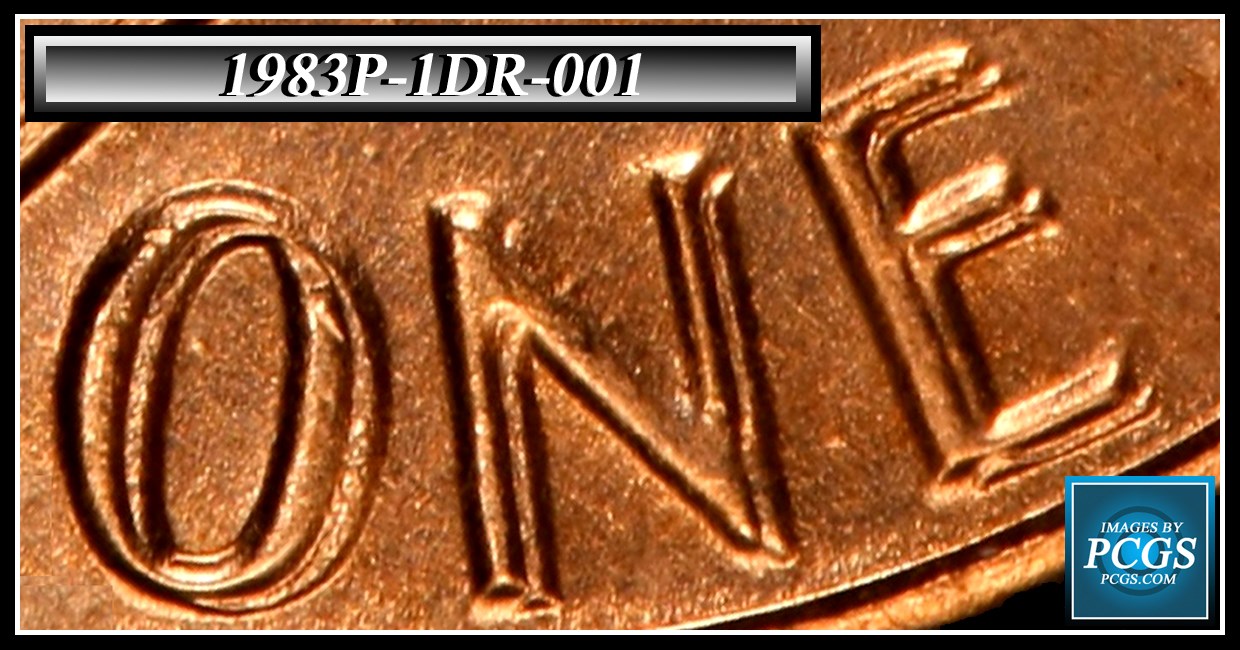
This is the full image of the one on the right side of the image.
So what do we note between the two. The affected areas on the MD example is showing a reduction of the devices and only the edge of the coin is affected by damaging the coin. The last image of the doubled die, is showing doubled devices. Wider than normal. Again this is caused by the die, not from the machine damaging the devices. So how to tell the difference? Look at the center of the devices, not on the edges of the devices. Hope this helps.
CoopHome: MD vs
DDRHere is a Half dollar with a
DDR on DOLLAR:

Slight enlarging of the devices, showing notches on some corners of the devices, but also showing a a spread on the centers of the devices. (Note the arrows on the image.











 Posted 10/02/2018 8:29 pm