| Author |
 Replies: 154 / Views: 24,652 Replies: 154 / Views: 24,652 |
|
|
|
Valued Member
Lithuania
386 Posts |
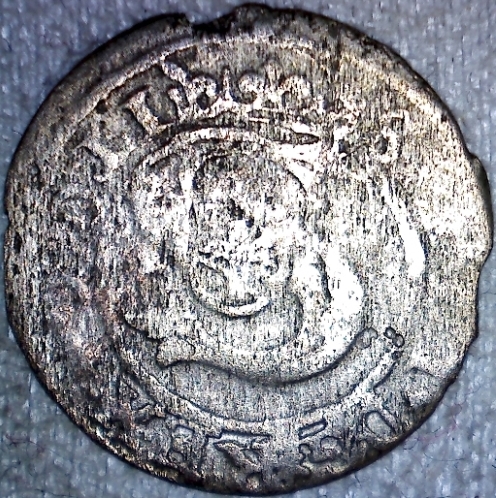
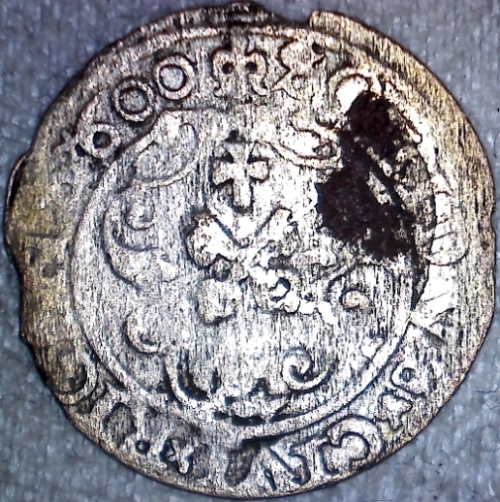
Polish trojak (3 groats) 1622   |
|
Valued Member
Lithuania
386 Posts |
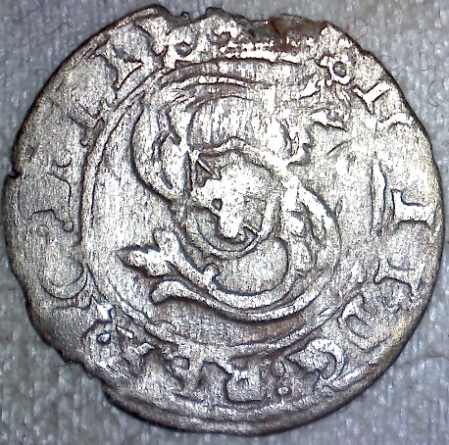
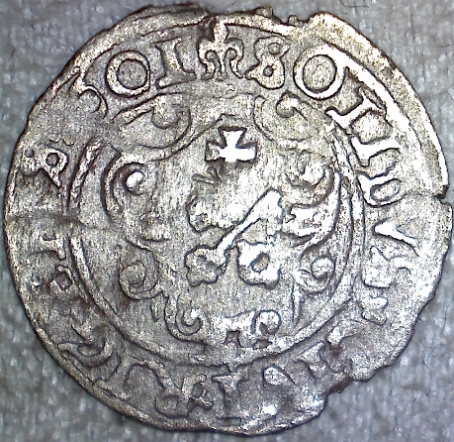
Polish szostak(6 groats) 1624   |
|
Valued Member
Lithuania
386 Posts |
Unpublished in any catalogue Lithuanian shilling 1616 with mistake RX instead of REX.   |
|
Valued Member
Lithuania
386 Posts |
Unpublished in any catalogue Lithuanian groat 1625 with MA instead of MAG   |
|
Valued Member
Lithuania
386 Posts |
Two Lithuanian groats 1626 with different Knights and Wadwiczs on reverse.   |
|
Valued Member
Lithuania
386 Posts |
Lithuanian shilling 1626 and Lithuanian groat 1626 with inverted 2 in dates   Edited by giedrius
11/11/2018 11:09 am
|
|
Valued Member
Lithuania
386 Posts |
Lithuanian groat 1626 with mistake in date 1262 and Lithuanian groat 1627 with mistake GORISS instead of GROSS.   |
|
Pillar of the Community
  United States
8062 Posts |
@spence, the Iger attributions for your Riga trojaks appear to be R.96.1.d and R.98.1.b. It's maybe worth commenting that when the trojak production moves primarily to the Krakow mint starting in 1602, there is more standardization of this type. For example, the 1597 Olkusz trojak shown by @spence has about 20 varieties in Iger. The 1595 Wschowa I posted has about 16. By the time we get to the 1622 Krakow trojak of @giedrius, there is only one main variety and a single rare subtype. @giedrius, thanks for that nice run of denominations and errors/variants. The poltorak was issued for the first time in 1614 (I think you posted a different photo for this?). And that's the first szostak/6 groat we've seen posted here (though the denomination was not new ... they were minted under Zygmunt I and Stefan Bathory). Also, very neat to have some unpublished variants. And to have a dated Polish coin saying 1262 to go with your 1506 glogauer groat  I will add a 5th mint from the 1590s, another 1596 trojak, this time from Lublin. Different on this one is the abbreviation SIG 3 instead of the Roman numeral version SIG III   Edited by tdziemia
11/11/2018 4:51 pm
|
|
Valued Member
Lithuania
386 Posts |
|
|
Pillar of the Community
United States
8062 Posts |
Quote:
@tdziemia one more trojak, like Yours, at auction This one is slightly different. Mine is Iger L.96.5.a with legend REX P M D L. The one at WCN auction has legend REX PO M D L. I got mine at the June PTN auction. They graded it III. So I expect the WCN coin at II+ will sell above the estimate. |
|
Moderator
 United States
34564 Posts |
"If you climb a good tree, you get a push."
-----Ghanaian proverb
"The danger we all now face is distinguishing between what is authentic and what is performed."
-----King Adz
|
|
Valued Member
Lithuania
386 Posts |
Unfortunately, my pictures of Polish poltorak (1.5 groat) 1623 were changed and pictures can not be edited now. I repeat the pictures of Polish poltoraks, with different dates now: 1616, 1622, 1623, 1624 and with two different 2 (2 and Z) on 1627.   |
|
Pillar of the Community
United States
8062 Posts |
Thanks for re-posting the poltorak photo. Nice to see some examples of this new type! My only Livonian issue under SIgismund III is this 1589 trojak. In the period 1580-1599, only the Lithuanian and Livonian trojaks can be easily identified by the reverse inscription. For example, here we see CIVI RIGE (city of Riga) at the bottom of the reverse (with a nasty die crack as well), and on the Lithuanian issues we see MDLIT, MDLITVA or MDL (Grand Duchy of Lithuania). For the mints in Poland proper, there are mintmaster's symbols, rather than letters for the other 6 mints (for example the ring and triangle for Malbork seen upthread). 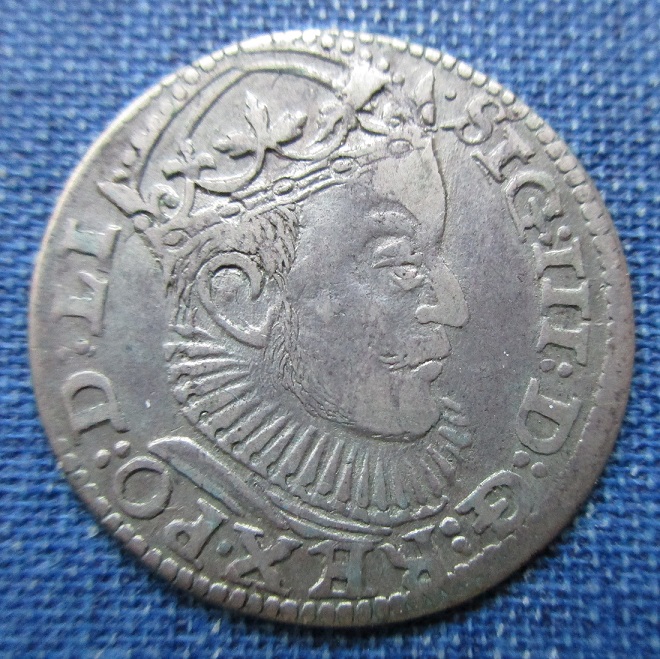 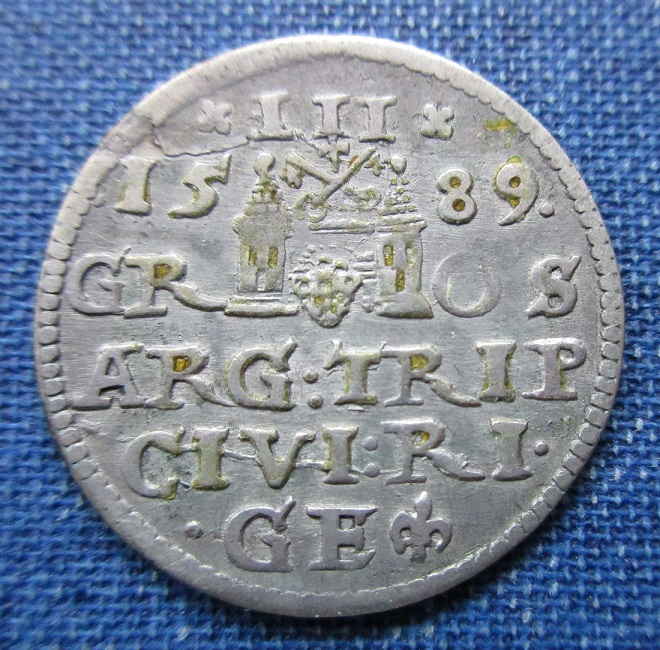 |
|
Valued Member
Lithuania
386 Posts |
@tdziemia, what is Your opinion about this one? Obverse like Riga's 1589 trojak, but reverse absolutely impossible, without Polish Eagle...I think, this is modern fake, but E.Ivanauskas wrote the book about it, and this is unique item, he said....  |
|
Pillar of the Community
United States
8062 Posts |
I do not have very much experience compared to you and others who are writing books, but I would make these observations (for others who are following, in giedrius' photo, the reverse says this is a 1588 trojak of Lithuania, but the obverse portrait matches the one I posted from Livonia/Riga): Obverse1. If it is authentic, then this is a portrait made by the same person making dies in Riga in 1589 not Vilnius. The portrait of Sigismund on Vilnius trojaks in 1589 and 1590 looks like this:  I suppose it is possible the diemaker moved from Vilnius to Riga in the period 1588-1589? But not likely. 2. More common trojaks were made in Olkusz, Poznan and Riga in 1588. All of these types give the king's title as "King of Poland and Grand Duke of Lithuania." However, the coin posted by giedrius has the legend "King of Poland and Duke of Sweden" Reverse:1. The symbol in upper left is a symbol of the Jagiello family, but the symbol next to it is the shield of the (Swedish) Vasa family. Sigismund's mother was Jagiello, but his father was Vasa. I don't think the Jagiello symbol appears on any of his other coins. 2. As pointed out by giedrius, all trojaks from Vilnius, before (1580-86 under Bathory) and after (1589-1608 under Sigismund III) have both the Polish eagle and the Lithuanian rider. From my novice viewpoint, I agree with you, and think fake. Maybe Ivanauskas has some other reasons? Or maybe the die-maker was a Lithuanian nationalist who decided to omit that Sigismund was also Grand Duke of Lithuania on the obverse, and also to omit the Polish eagle reverse, and replace it with a symbol of the (Lithuanian) Jagiello family? And then was banished to Riga for these sins ? Edited by tdziemia
11/12/2018 8:28 pm
|
| |
Replies: 154 / Views: 24,652 |






 First Page


 Posted 11/11/2018 10:43 am