Coin Community Family of Web Sites Join Thousands of Coin, Bullion, & Money Collectors
300,000 items to help build your collection! Specializing in Modern Numismatics Join Thousands of Coin, Bullion, & Money Collectors Vancouvers #1 Coin and Paper Money Dealer Royal Canadian Mint products, Canadian, Polish, American, and world coins and banknotes. Coin, Banknote and Medal Collectors's Online Mall Shop for APMEX Bullion on eBay!


Username:
Password:
Save Password
Forgot your Password?


This page may contain links that result in small commissions to keep this free site up and running.

Welcome Guest! Registering and/or logging in will remove the anchor (bottom) ads. It's Free!

Differentiating Between 'Cleaning' & 'Whizzing'

To participate in the forum you must log in or register.
Author Previous TopicReplies: 5 / Views: 1,885Next Topic  
Pillar of the Community
mdpmedia's Avatar
United States
3546 Posts
 Posted 01/09/2019  03:46 am Show Profile   Bookmark this topic Add mdpmedia to your friends list Get a Link to this Message Number of Subscribers
Please specifically answer as many of the questions below:

1) Is whizzing only done with a high speed mechanical wire brush?

2) How can whizzing be distinguished from die polishing marks?

3) If it is determined that the scratches on a coin are only die polishing striations, can these types of anomalies appear on both the devices 'and' fields simultaneously:

a. or only on the fields?

b) or only on the devices?

4) How can whizzing be distinguished from cleaning if the purpose of the whizzing was the removal of crud vs the creation of a luster/cartwheel effect?

5) Are both cleaning and whizzing justification for a coin to receive a 'details' rating when encapsulated?

If anyone has additional comments pertinent to this thread, please place the comments here.
Pillar of the Community
mdpmedia's Avatar
United States
3546 Posts
 Posted 01/09/2019  04:05 am  Show Profile   Bookmark this reply Add mdpmedia to your friends list Get a Link to this Reply
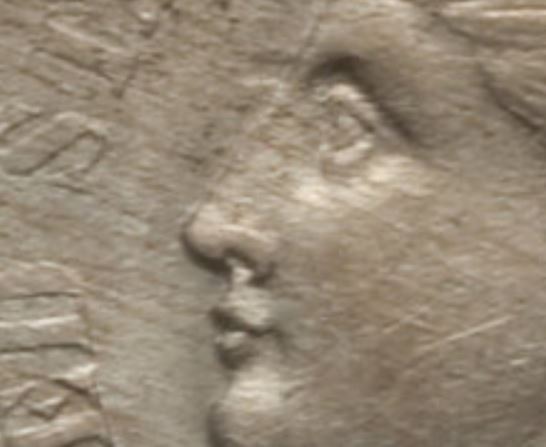
Lets practice on this one; guess how the TPG marked the slab:

Differentiating-Between-'Cleaning'-&-'Whizzing'

Here is the actual coin and auction results:

https://coins.ha.com/itm/three-cent...bnail-071515
Pillar of the Community
Learn More...
Zurie's Avatar
United States
5663 Posts
 Posted 01/09/2019  08:37 am  Show Profile   Check Zurie's eBay Listings Bookmark this reply Add Zurie to your friends list Get a Link to this Reply
Die polishing lines should only be on the fields, and the lines are raised, unlike cleaning hairlines or whizzing. The straight lines on that Three Cent piece cross onto the devices, so not die polishing lines, but they might be planchet striations. They are too linear to be whizzing.
Pillar of the Community
kanga's Avatar
United States
5825 Posts
 Posted 01/09/2019  09:13 am  Show Profile   Bookmark this reply Add kanga to your friends list Get a Link to this Reply

Quote:
Die polishing lines should only be on the fields, and the lines are raised, unlike cleaning hairlines or whizzing. The straight lines on that Three Cent piece cross onto the devices, so not die polishing lines, but they might be planchet striations. They are too linear to be whizzing.

I agree almost completely with this.
My only possible disagreement could be with the last statement.

"Planchet striations" are very possibly the source of the straight lines since this coin:
-- is small and coins struck on thin planchets often do not get fully struck
-- the metal is nickel alloy and the Mint was having difficulties early on getting full strikes on that metal hence "planchet striations" often remained.

Whizzing is one form of cleaning and was often done with a soft polishing wheel. A wire brush would be an extreme case.
The high speed used during whizzing often creates enough heat to melt a thin layer of a coin's surface and move the melted material to the side in the direction of rotation.
But with the nickel alloy that is unlikely.

The answer to 5) is a definite "yes".

CCF Advertiser
Andrew99's Avatar
United States
1533 Posts
 Posted 01/17/2019  12:49 pm  Show Profile   Bookmark this reply Add Andrew99 to your friends list Get a Link to this Reply
If you saw a whizzed coin in person, you would not ask this question. A whizzed coin glows like the heart of a thousand suns. It is so obviously artificial that even if you never saw one, you would recognize it. It looks nothing like a coin with die polish lines or a coin with normal friction hairlines. The luster does not cartwheel like a normal coin but seems to radiate from everywhere.
Valued Member
collectinsince65's Avatar
United States
320 Posts
 Posted 01/17/2019  2:43 pm  Show Profile   Bookmark this reply Add collectinsince65 to your friends list Get a Link to this Reply
I will try to remember to post an image of the whizzed 1915 Lincoln Cent that I unfortunately own. Metal was pushed to the sides of both the obverse and reverse with whatever high speed device that they used.
  Previous TopicReplies: 5 / Views: 1,885Next Topic  

To participate in the forum you must log in or register.


Disclaimer: While a tremendous amount of effort goes into ensuring the accuracy of the information contained in this site, Coin Community assumes no liability for errors. Copyright 2005 - 2026 Coin Community Family- all rights reserved worldwide. Use of any images or content on this website without prior written permission of Coin Community or the original lender is strictly prohibited.
Contact Us  |  Advertise Here  |  Privacy Policy / Terms of Use

Coin Community Forum © 2005 - 2026 Coin Community Forums
It took 0.23 seconds to rattle this change. Forums