Coin Community Family of Web Sites Join Thousands of Coin, Bullion, & Money Collectors
Royal Estate Auctions - $1 Coin AuctionsSpecializing in Modern Numismatics Coin, Banknote and Medal Collectors's Online Mall Join Thousands of Coin, Bullion, & Money Collectors Royal Canadian Mint products, Canadian, Polish, American, and world coins and banknotes. 300,000 items to help build your collection! Vancouvers #1 Coin and Paper Money Dealer


Username:
Password:
Save Password
Forgot your Password?


This page may contain links that result in small commissions to keep this free site up and running.

Welcome Guest! Registering and/or logging in will remove the anchor (bottom) ads. It's Free!

Information An A Seal

To participate in the forum you must log in or register.
Author Previous TopicReplies: 6 / Views: 2,000Next Topic  
New Member

United States
18 Posts
 Posted 08/24/2008  1:28 pm Show Profile   Bookmark this topic Add BioProf to your friends list Get a Link to this Message Number of Subscribers
Hi Guys and Girls.

I'm new here so be gentle.

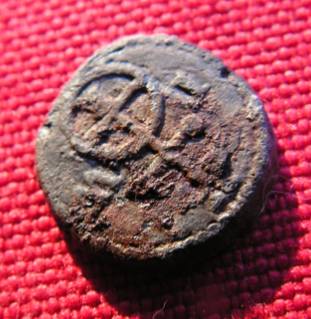
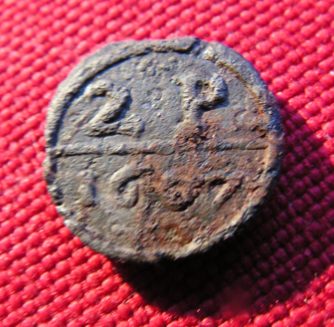
I spend the summer in Amsterdam and try to get out and do a little metal detecting when I can find dirt. Not as easy as you might think. I find a few things here and there. Lots of holy money. Oh, I guess that should be holey (?) money as you can pick it up and see through the holes. Coins from the 17th century just don't do too well here. But lead holds up like a trooper and there is lots of it. Most of it is just lead sheet or strip, but there are a lot of lead seals. I don't know much about them and am hoping someone here has some knowledge and is willing to share.

Any ideas what this might have been used for?

Daryl

Image: Information-An-A-Seal weight2.jpg
36.35 KB

Image: Information-An-A-Seal weight3.jpg
27.17 KB

Moved to Exonumia forum
Edited by Sap
10/07/2008 03:48 am
New Member
United States
18 Posts
 Posted 08/24/2008  2:50 pm  Show Profile   Bookmark this reply Add BioProf to your friends list Get a Link to this Reply
Any idea why the images don't show? I'm new and need some help here if I not doing something right. They are just JPG files.

Thanks,

Daryl
Valued Member
valutarick's Avatar
Netherlands
376 Posts
 Posted 10/06/2008  09:27 am  Show Profile   Bookmark this reply Add valutarick to your friends list Get a Link to this Reply
This is not a genuine Dutch coin. You must search for it in the region of Gdansk/Danzig, because there was a large trade with the Baltic Area in those days.
New Member
United States
18 Posts
 Posted 10/06/2008  09:36 am  Show Profile   Bookmark this reply Add BioProf to your friends list Get a Link to this Reply
Thanks for the information. I know it is not a coin but is a seal used to show that the tax has been paid. Are you saying the seal is from some item imported in to Holland from one of the Baltic States?

Thanks,

Daryl
Valued Member
SPQR's Avatar
United States
327 Posts
 Posted 10/06/2008  09:47 am  Show Profile   Bookmark this reply Add SPQR to your friends list Get a Link to this Reply
Those lead seals turn up in many European port areas. They were attached to things of all types to show that the tax had been paid, as you say. Most just show an amount paid and which country it was paid to, and sometimes a date.
The Mudlarks that dig the Thames in London find these things by the handfuls.
Kind of neat to find something dated in the 1600's though, isn't it?
New Member
United States
18 Posts
 Posted 10/06/2008  2:04 pm  Show Profile   Bookmark this reply Add BioProf to your friends list Get a Link to this Reply
We don't find as many as the Mudlarks (as they are the only group left that can dig more than about 6cm deep in the tidal flat and not be subject to arrest) but most fields we hunt give up a few seals most ever trip. This one was just strange because it had a date and the symbols were not like others I have seen. No city, nothing recognizable.

It may be just my bad memory but it seems that dates didn't appear until around the 16th or 17th century. Most hammered coins I have and other currency items have no numbered dates. So now I have a proof Jeton dated in the 1600's and a dated seal as well. 17th century coins tend to be in pretty rough shape. Just don't hold up well in the fertilizer and they have sunk so deep in pasture land that my DFX with a 12" coil can't find them. Not sure which dates are harder to figure out. The hammered stuff or the Roman stuff. Need more books I guess.

At any rate, much better that home in the US where we get excited by any coin in the 1800's.

Thanks for all the information.

Daryl
Moderator
Learn More...
Sap's Avatar
Australia
16832 Posts
 Posted 10/07/2008  03:50 am  Show Profile   Bookmark this reply Add Sap to your friends list Get a Link to this Reply
There's an Imperial orb on the "obverse", so I'd guess it came from either Germany or Sweden.
Don't say "infinitely" when you mean "very"; otherwise, you'll have no word left when you want to talk about something really infinite. - C. S. Lewis
  Previous TopicReplies: 6 / Views: 2,000Next Topic  

To participate in the forum you must log in or register.


Disclaimer: While a tremendous amount of effort goes into ensuring the accuracy of the information contained in this site, Coin Community assumes no liability for errors. Copyright 2005 - 2026 Coin Community Family- all rights reserved worldwide. Use of any images or content on this website without prior written permission of Coin Community or the original lender is strictly prohibited.
Contact Us  |  Advertise Here  |  Privacy Policy / Terms of Use

Coin Community Forum © 2005 - 2026 Coin Community Forums
It took 0.27 seconds to rattle this change. Forums