| Author |
 Replies: 13 / Views: 2,948 Replies: 13 / Views: 2,948 |
|
|
Valued Member
Canada
325 Posts |
I was at our local coin and stamp club meeting tonight and a friend showed me an unusual five cent he had come across. I took out a magnet and was a bit surprised that it did not stick to the coin. Another member pulled out a scale and we proceeded to weigh the coin.....approximately 3.25 grams. The planchet is thinner than a regular five cent planchet. It also appears to be a bit smaller than a regular five cent coin. 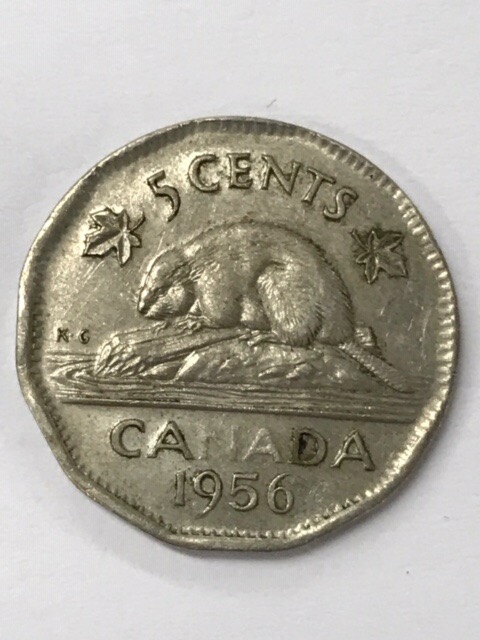 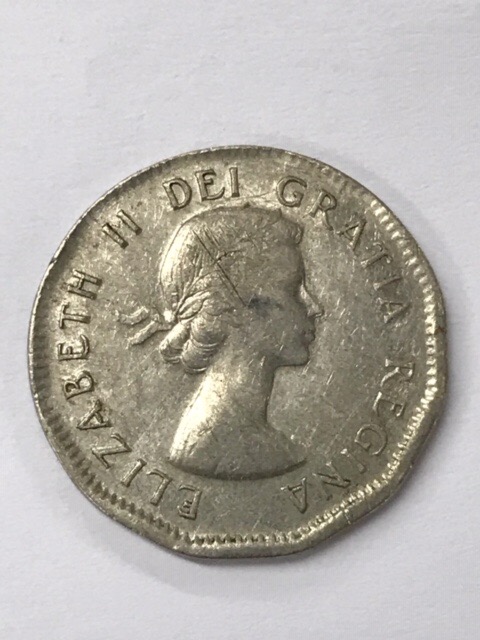 |
|
|
|
Bedrock of the Community
United States
12477 Posts |
Interesting.  In Memory of Crazyb0 12-26-1951 to 7-27-2020
In Memory of Tootallious 3-31-1964 to 4-15-2020
In Memory of T-BOP 10-12-1949 to 1-19-2024
|
|
Pillar of the Community
Canada
1505 Posts |
interesting, too heavy to be a dime, maybe a thin planchette? Not sure about non-magnetic part.
|
|
Valued Member
Canada
128 Posts |
Maybe cupro-nickel planchet similar in weight and thickness of a canadian nickel planchet because the details on both side are very well define. Very cool find.
Edited by Castor sous
05/29/2019 07:22 am
|
|
Valued Member
 Canada
325 Posts |
Thank you for the comments. Normal weight for a five cent coin during this time period was 4.54 grams. I suppose a 1.29 gram variance could be due to a number of factors including PMD. However, the reduced weight combined with the coin being non magnetic has me thinking the coin was struck on a foreign planchet. I am hoping someone with more knowledge of the RCM and the coins it was producing during this time period will be able to provide some further insight. |
|
Bedrock of the Community
United States
94367 Posts |
Wear/PMD would not likely account for that much weight loss. |
|
Pillar of the Community
Canada
1463 Posts |
Should be magnetic so PMD is off the table |
|
Moderator
 Canada
10476 Posts |
The mint was not making coins for foreign countries in 1956... and it sure looks like nickel, I wonder if it was demagnetized.... have you tried with a stronger, rare earth magnet? At first glance, it looks like it was struck on a split planchet...
One option is that the mint sometimes outsourced their 5-cent blanks from the Sherritt Mint in Fort Saskatchewan. Sherritt supplied coin blanks for a number of countries (mostly pure nickel blanks), so it could have come from that? That may require an exhaustive search in the Krause catalogue (1901-2000) for business strike coins weighting 3.75 grams, to figure that out...
"Discovery follows discovery, each both raising and answering questions, each ending a long search, and each providing the new instruments for a new search." -- J. Robert OppenheimerContent of this post is licensed under a Creative Commons Attribution-NonCommercial 3.0 Unported License. See: http://creativecommons.org/licenses...0/deed.en_USMy eBay store
|
|
Valued Member
Canada
325 Posts |
Thank you for the responses. I have contacted the owner and asked him to check the coin with a stronger rare earth magnet. I will let you know what the result is...
|
|
Valued Member
Canada
325 Posts |
Update re magnetic or non magnetic....A strong magnet failed to attract the coin, so it appears that the planchet is non magnetic.
SPP-Ottawa, I am not familiar with the Krause catalog, could you steer me in the right direction? Where can I find one?
Thank you.
Edited by Canada67
05/29/2019 9:58 pm
|
|
Valued Member
Canada
128 Posts |
Edited by Castor sous
05/30/2019 08:02 am
|
|
Valued Member
United States
462 Posts |
Neither one of those examples were struck at the Royal Canadian Mint. The mint didn't even strike coins for Ireland. |
|
Valued Member
United States
55 Posts |
Aside from the weakly struck 'NA,' and the very odd 3rd 'A' in the CANADA on the reverse, the number '5' in the '1959' is wrong. There is too large a gap between the top, and middle.
Edited by mtracy14
07/06/2019 10:36 pm
|
|
Pillar of the Community
Canada
842 Posts |
Hmm ? 3.25 grams and not magnetic. A 1956 copper cent is supposed to be 3.24 gms. Hmm ? If it were mine, I would take a small knife and make the tiniest of scrapes on the edge and see if it's copper underneath. If a cent blank got in a bin of nickel blanks, the metal dust could get electrostatically or chemically attracted to the copper and leave a durable "silvery" coating (like powder-coating auto parts).
|
| |
Replies: 13 / Views: 2,948 |
|






 Posted 05/29/2019 03:31 am





