| Author |
 Replies: 12 / Views: 987 Replies: 12 / Views: 987 |
|
|
Valued Member
United States
405 Posts |
|
|
|
|
Pillar of the Community
United States
5318 Posts |
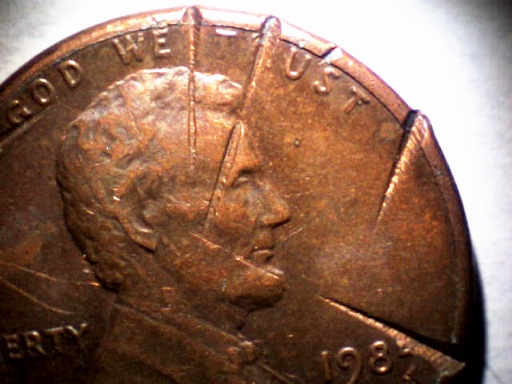
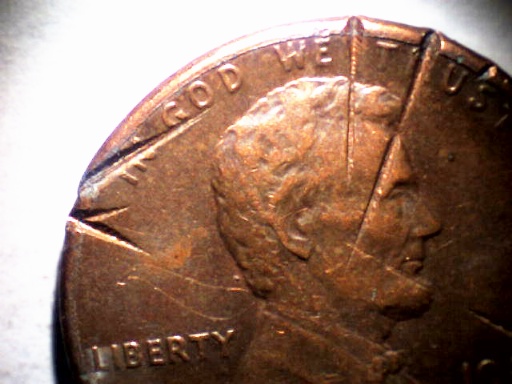
Hmmm...what differences might we see between a planchet damaged pre-strike and post strike?  I'm just curious, because this coin got me thinking. I suppose if the planchet was damaged before it entered the die/collar, we shouldn't see any metal displaced outward beyond the reeded edge: the planchet would expand slightly during strike, but no further than the collar. But, if metal looks squished outside/above the edge, I would suspect it's damage left by a tool post-mint. Thoughts?  |
|
Valued Member
 United States
405 Posts |
I think the biggest factor to distinguish between pre and post strike dmg whic results in a gouge like this is metal displacement. If you see evidence of metal being displaced above the normal height of the field or devices, that would lead you to believe it was post-strike, since pre-strike displaced metal would be redistributed within the normal heights when strike pressure was applied.
|
|
Pillar of the Community
United States
609 Posts |
|
|
Valued Member
United States
405 Posts |
Notice how on your example Wrongalot, the metal bulges out at the rim where those gouges occur? IMO that's indicative of post-strike damage since the collar would prevent that from occuring if it happened during or prior to the strike.
Edited by seattleMD
09/04/2008 3:57 pm
|
|
Pillar of the Community
United States
3507 Posts |
Seattle,
It's post Mint damage. The scissor or cutting plier is the likely suspect. The reasons cited above.
"if the planchet was damaged before it entered the die/collar, we shouldn't see any metal displaced outward beyond the reeded edge (of the dime): the planchet would expand slightly during strike, but no further than the collar. But, if metal looks squished outside/above the edge, I would suspect it's damage left by a tool post-mint."
That Ain't bad:-)
Bill
|
|
Valued Member
United States
405 Posts |
Edited by seattleMD
09/04/2008 5:40 pm
|
|
Valued Member
United States
405 Posts |
A couple other things I notice..
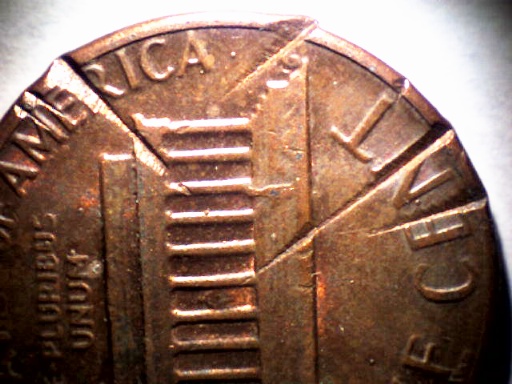
1. The metal along the edge of gouge that runs through the 'E' of DIME on the reverse has the look of sheared metal and not metal that has flowed, which I think rules out a struck-through, as the gouges on my struck-through examples demonstrate smooth walls. Even through this points further towards post-strike damage by way of some sort of metal cutting instrument, I don't believe it rules out this effect pre-existing on the blank.
2. If you look at the metal inside of the gouge that runs through the same 'E' of DIME, you'll also notice that the contour of the letter's device remains inside the gouge. This same effect is present within the 'A' on 'AMERICA' on the confirmed struck-through rim burr Nickel example. Would you have this effect present if this was a result of post-strike instrument damage?
|
|
Pillar of the Community
United States
3507 Posts |
The rim burr is a completely different looking issue.
If you are asking about the dime and I want to make that clear, it was cut with a plier. There is no doubt about it. The edge is crimped if you look at it directly head on.
The marks are directly opposite each other on the two sides of the coin, and the shape of the cuts is identical. There is no other way for the coin to have been damaged other than with a cutting tool.
I think we need a mantra based upon a post I made that was based in part on a statement made by Chuck at one point. "You're looking too hard".
After I've seen and cut many coins, you just know what they look like.
If it looks like a cutting plier, quacks like a cutting plier, and walks like a cutting plier. It's a cutting plier:-) There is nothing more complicated than that going on with this coin.
Thanks,
Bill
|
|
Pillar of the Community
United States
3507 Posts |
And it has counting machine damage on the obverse as well.
|
|
Valued Member
United States
405 Posts |
I looked at it again extensively under the microscope at home and I guess I do see a slight bulge on the rim around the gouge, so I guess given all the other evidence pointing towards the use of cutting tool, I guess I have to submit. darn you for always being right Bill.
|
|
Pillar of the Community
United States
869 Posts |
Looks like a dull cutting tool. Mashing the letters down into the cuts.
|
|
Pillar of the Community
United States
3507 Posts |
Hey Seattle,
Not always:-) Almost always:-)
When I'm guessing though, I'll say so:-)
This one didn't require any guessing:-)
While learning what many of these anomalies are, some of us reproduce them as experiments to see if our thoughts coincide with what we see on a coin. I've abused many a coin in my day to check these concepts out. After awhile you just know what you are looking at and you don't have to cut up coins anymore:-)
99.9% of the time if a damage can be duplicated outside the Mint then that is probably where it happened.
Mint errors have to be a result of the minting process and the errors that truly are have recognizable characteristics. By the same token, coins damaged outside the Mint also have characteristics that are easily recognizable.
Thanks,
Bill
Edited by foundinrolls
09/05/2008 5:21 pm
|
| |
Replies: 12 / Views: 987 |
|








 Posted 09/04/2008 3:12 pm