First Page


 Posted 07/14/2019 10:36 pm


Would you be willing to post two more photos:
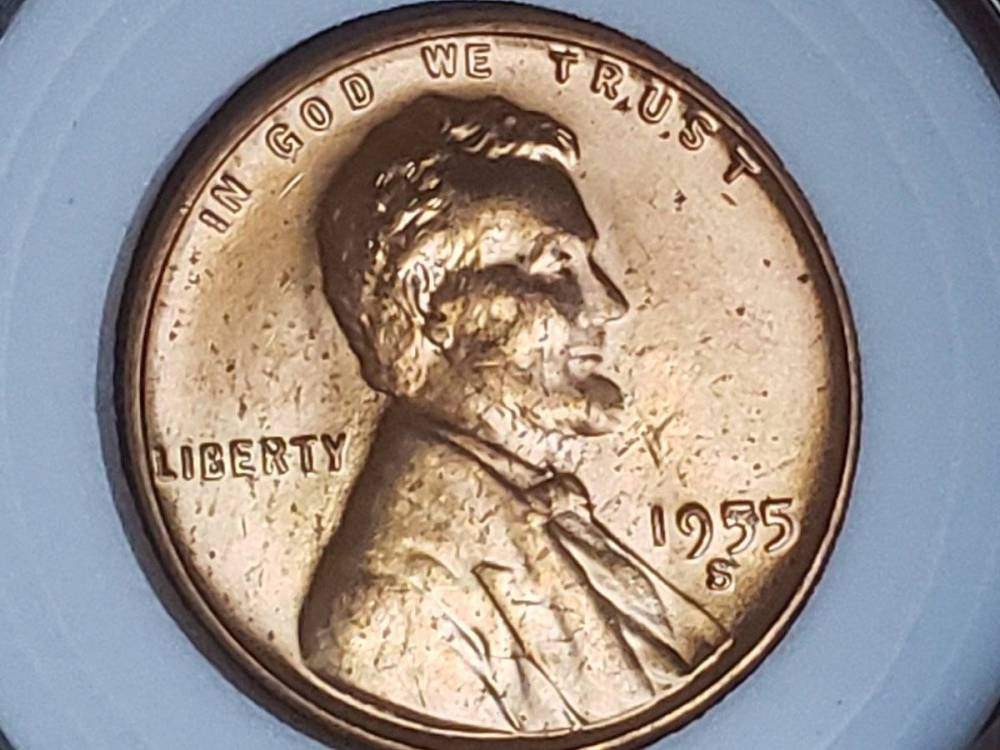
 complete obverse (to help determine die state)
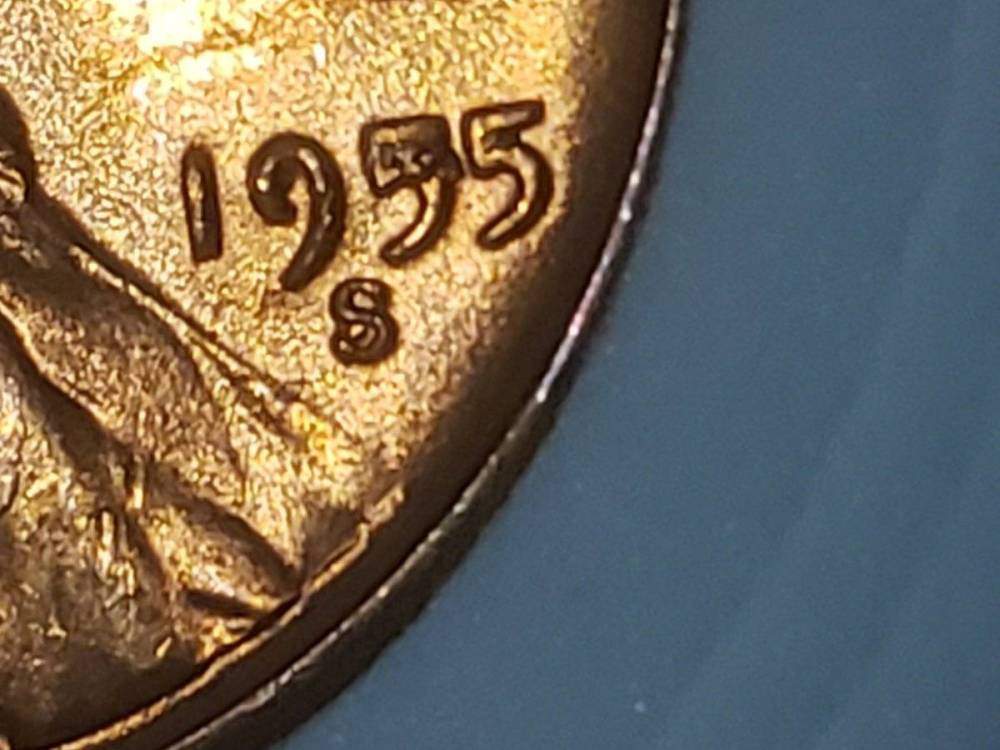
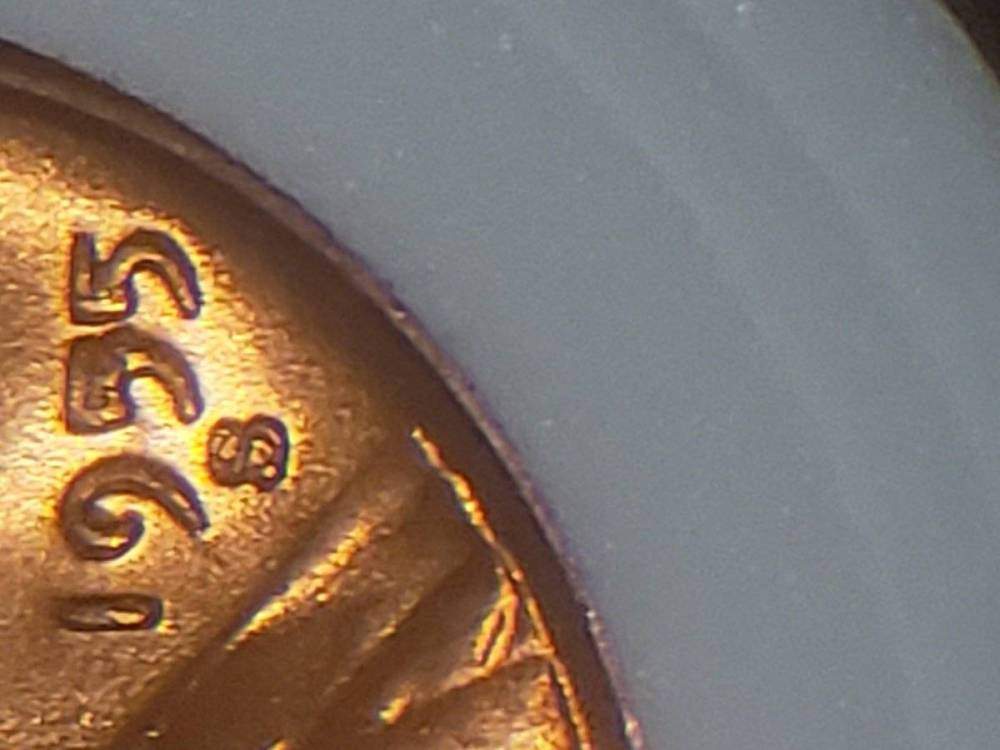
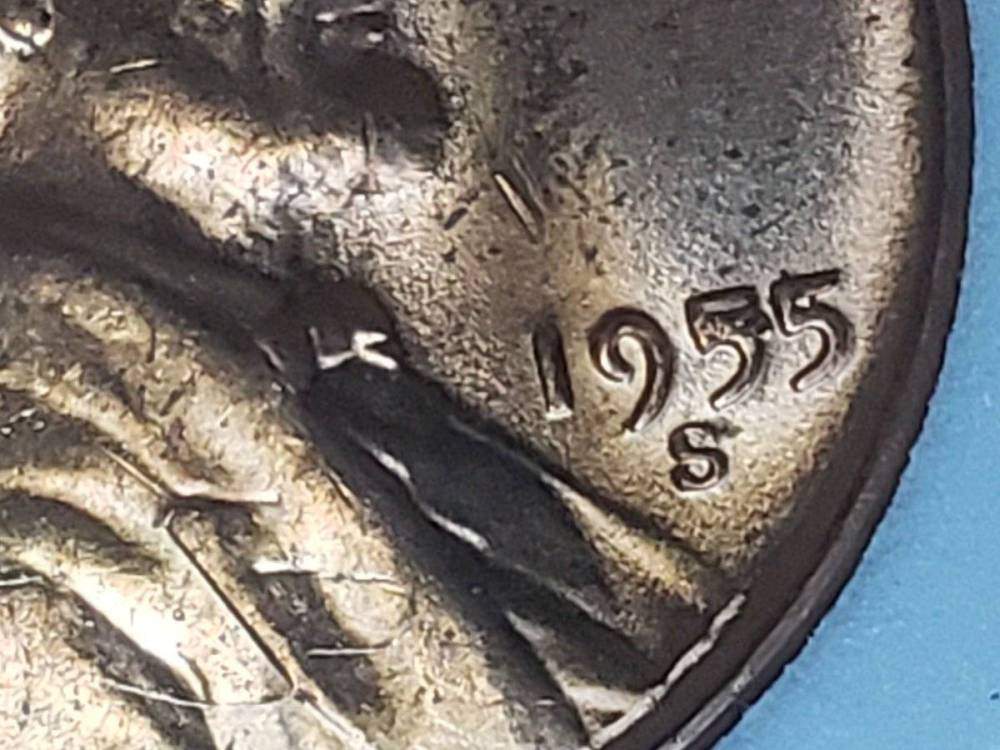
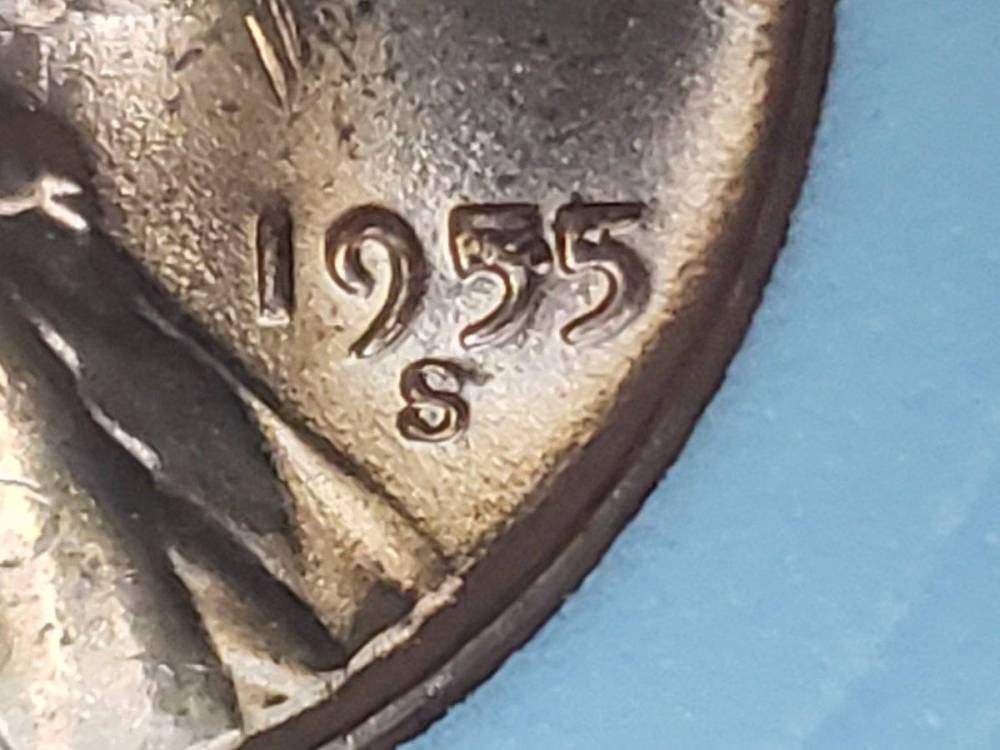
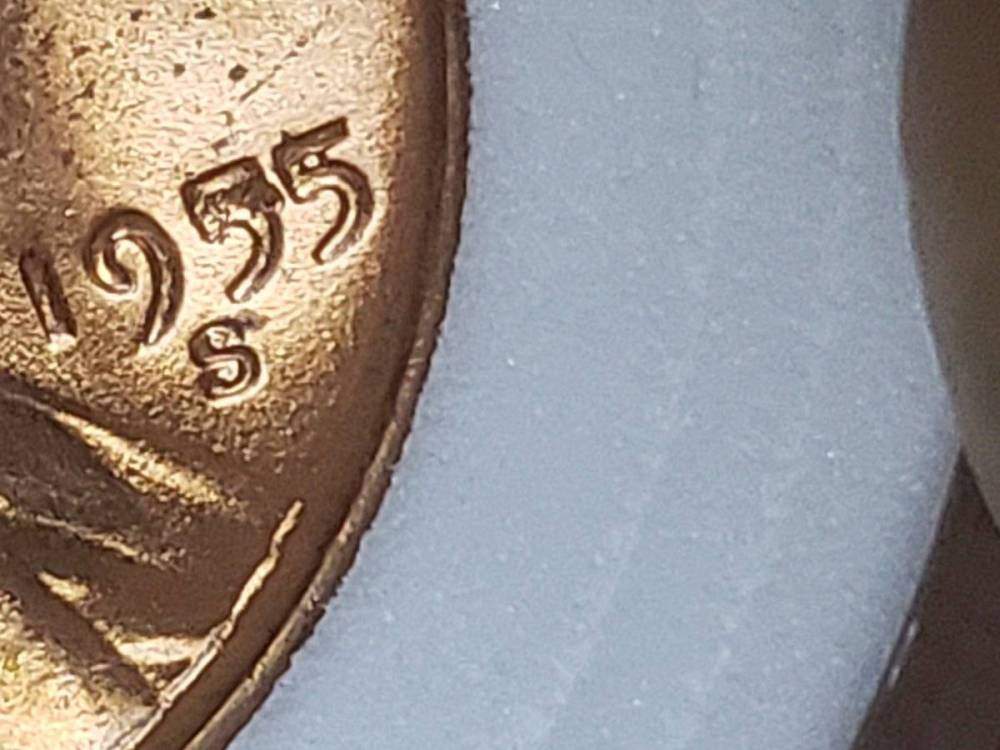
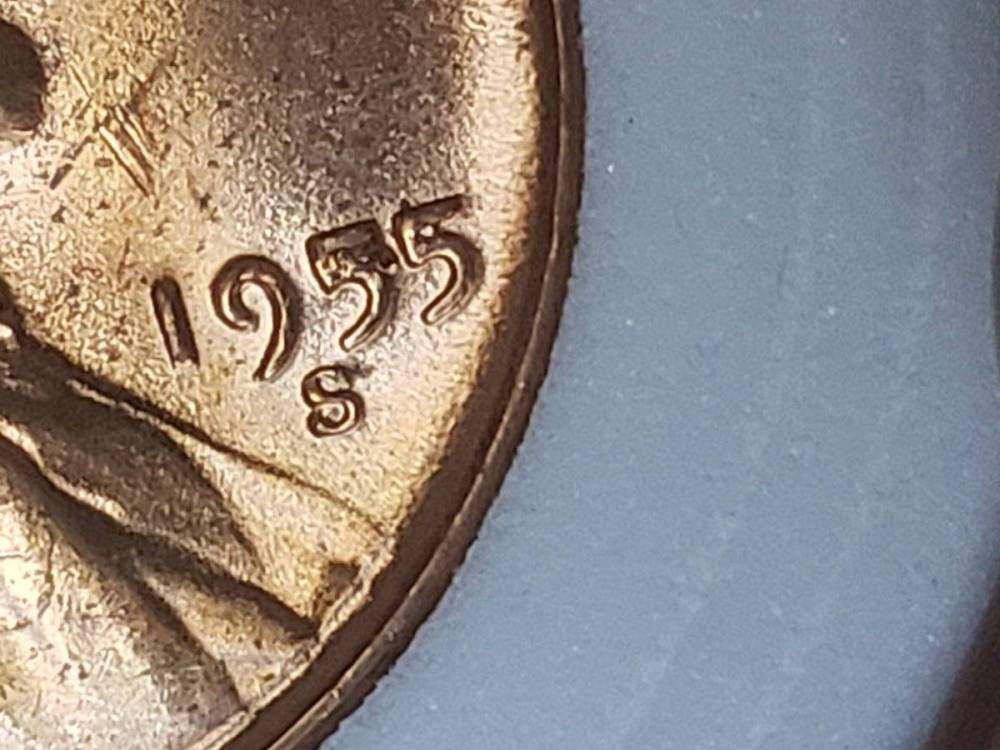
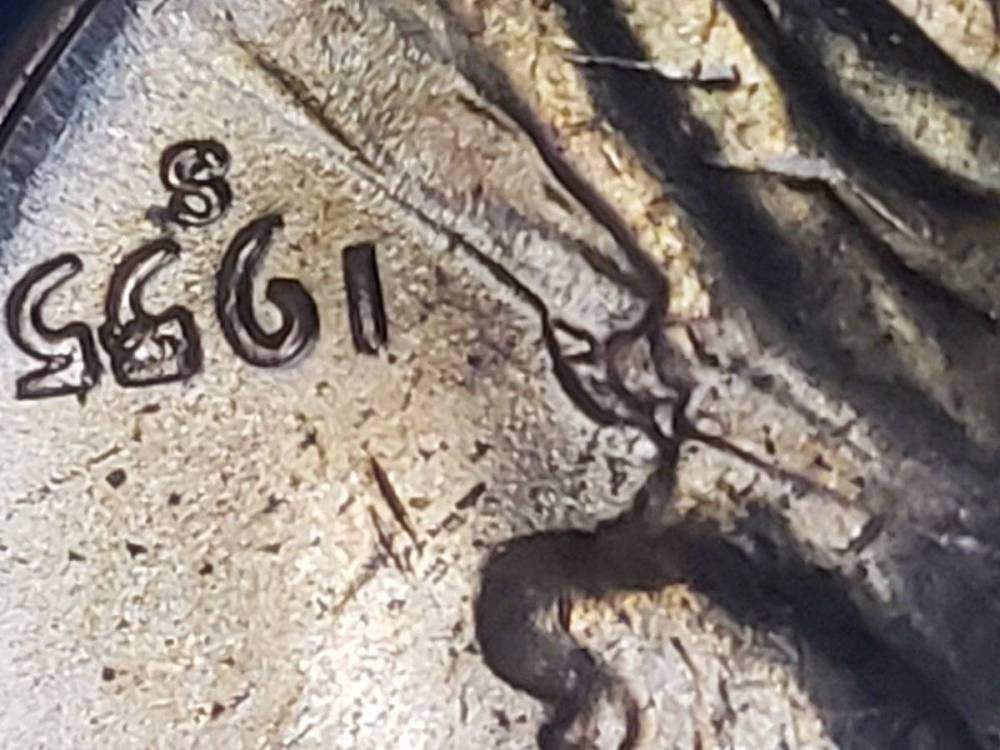
high resolution closeup of the date and mm (to help with my curiosity, described below)
I enlarged and enhanced your date and mm. There are three things that interest me, all marked below.

My request is completely geeky, but I sure would appreciate your help.
1. There appears to be a weak die crack extending from the first "5" to the top of the mint mark.
2. There is either a die chip or discoloration between the first "5" and the top of the mint mark.
3. There is a die chip inside the bottom curl of the mint mark.
Here's what interests me about these. There are several known interior die breaks (IDBs) involving dates and mint marks on later wheat cents and some Memorial cents. All seem to involve curved numbers in the dates and all but one involve mint marked coins. From a completely geeky perspective, I have a theory that addition of the cold-punched mint mark in close proximity to a curved design element created a stress point leading to die failure, resulting in the IDBs. If your coin shows that type of surface spalling, it might be an early example of what eventually could have become an IDB.
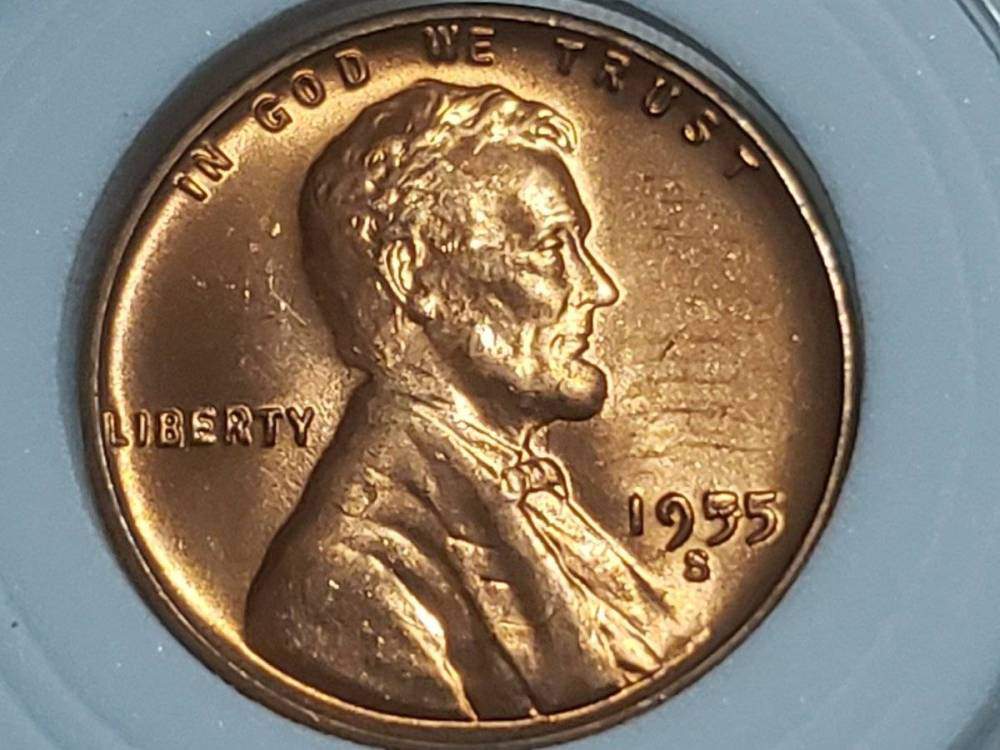
Your coin is a definite keeper. It illustrates many things about the minting process in the high production years of the 1950s and about what dies went through during this time.
Thank you for sharing it with us (and for indulging my curiosity)!
complete obverse (to help determine die state)high resolution closeup of the date and mm (to help with my curiosity, described below)I enlarged and enhanced your date and mm. There are three things that interest me, all marked below.
My request is completely geeky, but I sure would appreciate your help.
1. There appears to be a weak die crack extending from the first "5" to the top of the mint mark.
2. There is either a die chip or discoloration between the first "5" and the top of the mint mark.
3. There is a die chip inside the bottom curl of the mint mark.
Here's what interests me about these. There are several known interior die breaks (IDBs) involving dates and mint marks on later wheat cents and some Memorial cents. All seem to involve curved numbers in the dates and all but one involve mint marked coins. From a completely geeky perspective, I have a theory that addition of the cold-punched mint mark in close proximity to a curved design element created a stress point leading to die failure, resulting in the IDBs. If your coin shows that type of surface spalling, it might be an early example of what eventually could have become an IDB.
Your coin is a definite keeper. It illustrates many things about the minting process in the high production years of the 1950s and about what dies went through during this time.
Thank you for sharing it with us (and for indulging my curiosity)!