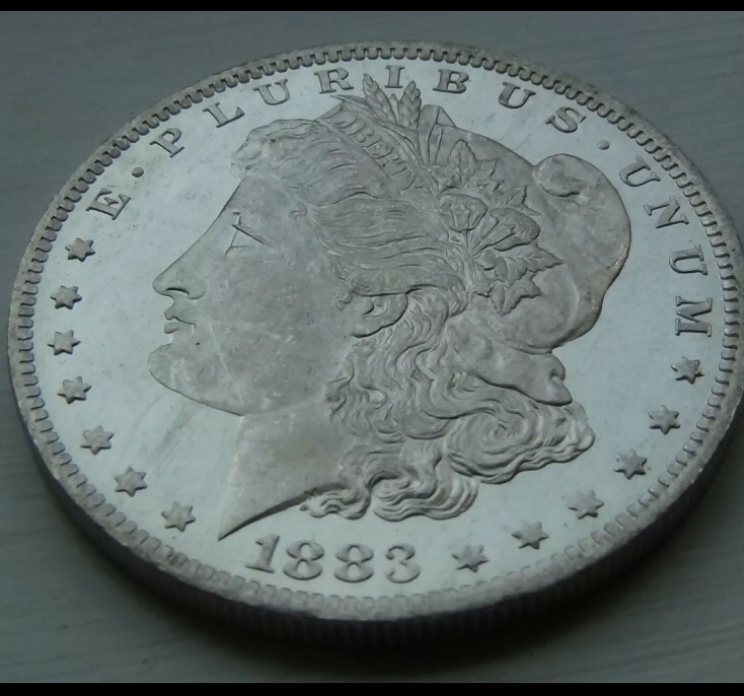
@Flyingfire00, I think you have what is known as a "prooflike"
Morgan dollar there.
They are so named because they resemble Proof strikes, but they were minted as business strikes.
When new dies were being put into service, their surfaces were usually polished ("basined"), free of cracks/damage, and not yet scratched, pitted, or worn due to striking coins.
Sometimes the employees at the various Mints would even give the dies a bit of extra "love" and do an almost Proof-level of polishing and cleaning.
But, unlike Proof issues, they were only struck once before the next planchet in line came into place. The first number of coins struck with those beautiful dies often had cameo contrast and reflective, mirror-like surfaces. As each coin was struck thereafter, the surfaces got a little bit duller and a little bit more worn, until the dies reached the end of their life, when they would sometimes have cracks, chips, heavy wear, repaired cracks and clash marks, etc -- the coins from those dies reflecting their condition.
At various times and Mints, for various reasons (ranging from working conditions, to apathy, to dissatisfaction, or whatever) the Mint employees would do exactly the opposite and pay absolutely no attention to the dies, resulting in coins with terrible strikes, misalignment, extensive clashing, dull surfaces, and so on.
The Proof Morgans were a bit different. They were struck only at Philadelphia (allegedly*) and unlike Prooflike and Deep Mirror Prooflike business strikes they did in fact have a more squared-off rim and highly reflective surfaces but did not (usually) have noticeable cameo contrast. In addition, both the way Proofs were handled after striking and the attitudes of the Mint, the Treasury, and collectors regarding cleaning coins was much different than it is today -- unsold Proof coins might occasionally be wiped or polished by employees to keep them looking shiny, or stored in conditions where they developed deep toning, or allowed to contact other coins and acquire scratches and nicks.
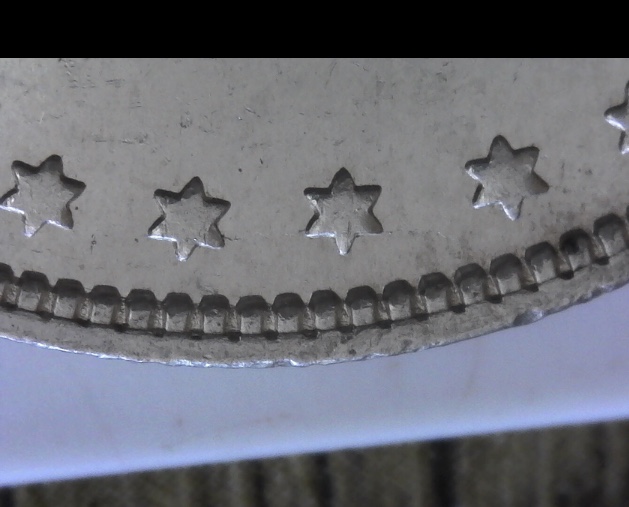
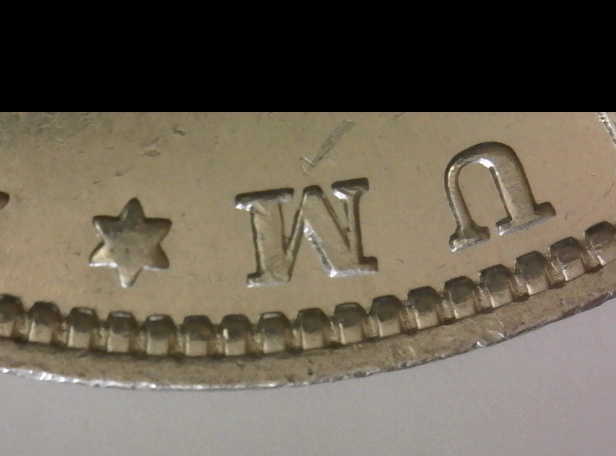
Without seeing the reverse, the obverse of your coin displays all of the characteristics of a very early die state business strike -- normal rims, decent strike, reflective fields with some cameo contrast -- but does not have the razor-sharp strike or well-defined squared-off rims of a Proof Morgan. If you look at the denticles on your coin, you will notice that they are flat with regard to the rim; on Proof strikes, the rim is usually slightly but noticeably above the denticles, resulting in a visible circumferential "line" between the rim and the bases of the denticles. In addition, many of the Proof Morgans have distinct die markers and areas of overpolishing that are not present in these photos.
As I mentioned, many genuine 1883 Proof strikes show signs of cleaning, wipes, or mishandling, not maliciously, but due to the prevalent attitude of those parties involved. A little over 1,000 (!) 1883-dated Proof
Morgan dollars were struck. The issues of the 1883 branch mints (O, CC in particular) are often found with Prooflike strikes and mirrored fields with some cameo contrast, and they are a nice (and much more affordable) way to get the look of a Proof Morgan without spending 10 times the money.
If you can obtain photos of the reverse, please post them here, or feel free to ask if you have further questions. I am attaching a photo (from PCGS) showing the rim detail of a Proof 1883 Morgan.

Member
ANA - EAC - TNA - SSDC - CCT #890
"Most of the things worth doing in the world had been declared impossible before they were done." -- Louis D. Brandeis









 Posted 08/17/2019 09:29 am







 to the Community, GodlessWanderer!


