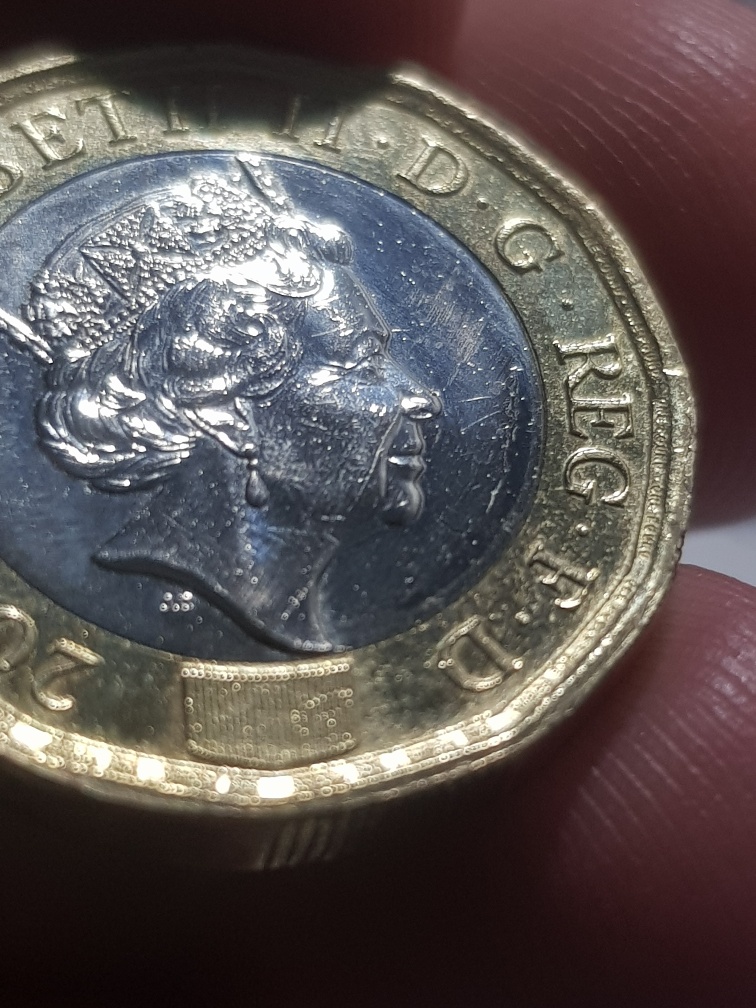
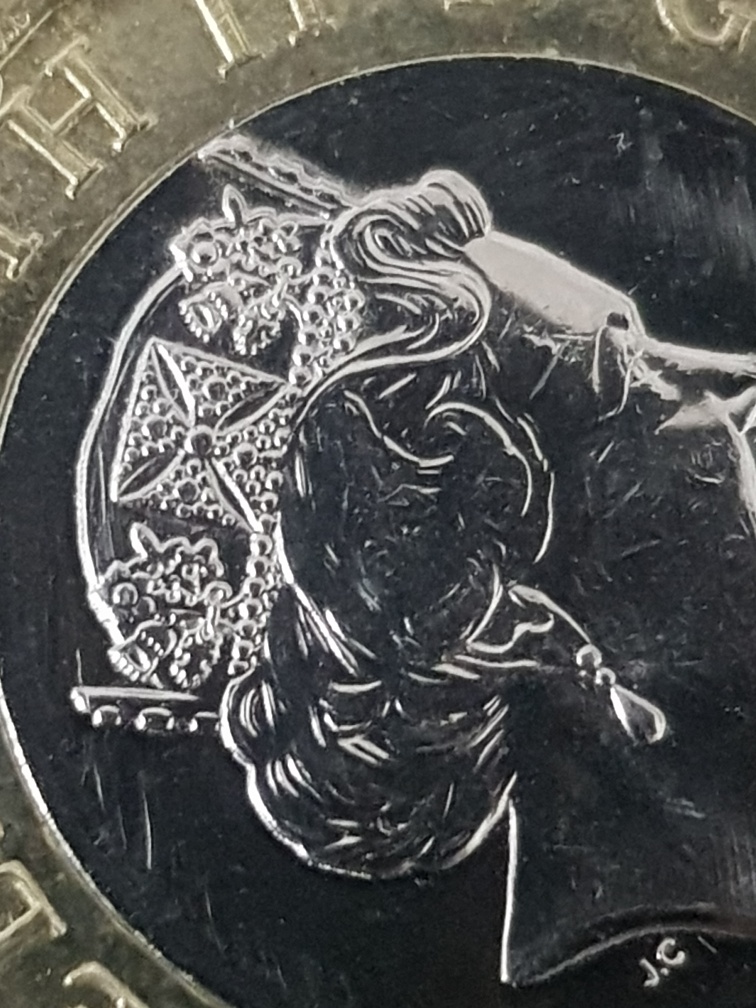
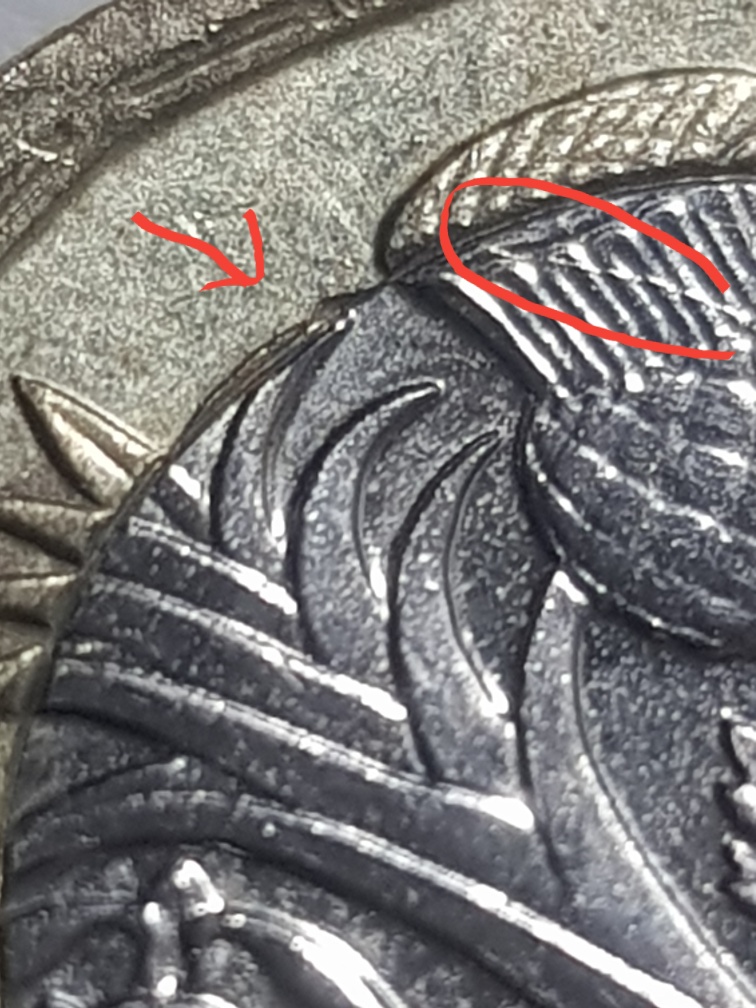
I can't see anything to get excited about there. The two marks you highlighted, if they are proud of the surface they may be evidence of a scratch on the die, but if incuse would be
PMD.
The Royal Mint had to produce an enormous number of £1 coins in 2016 to cater for the withdrawal of the old type. As a result the quality control took a back seat I fear and there are numerous faults. One colector did a careful examination of just 60 odd 2016 £1s and came up with 32 different "errors", so around half the coins you look at could be tagged with some sort of quality control issue. (That doesn't stop people on
ebay trying to flog them at a premium!)
There are only two definite variations/errors I believe are worth looking for:
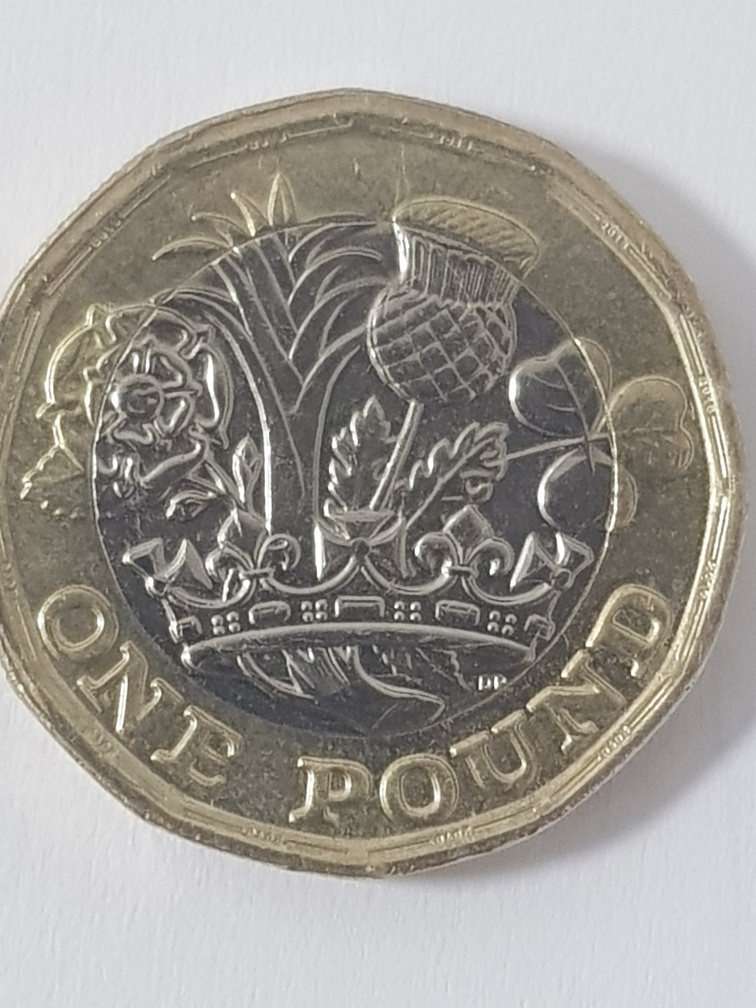
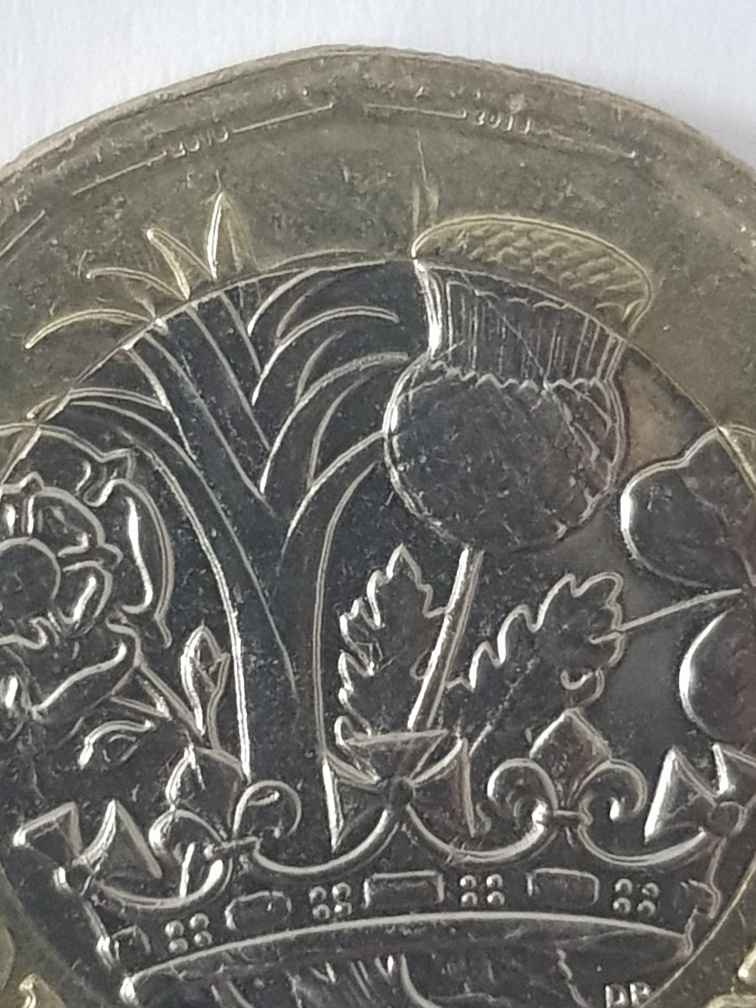
1. There are some coins in 2016 where the microdate (in the rim on the reverse) differs to the main date on the obverse. This is a clear die mismatch, but very difficult to spot without a powerful loupe.
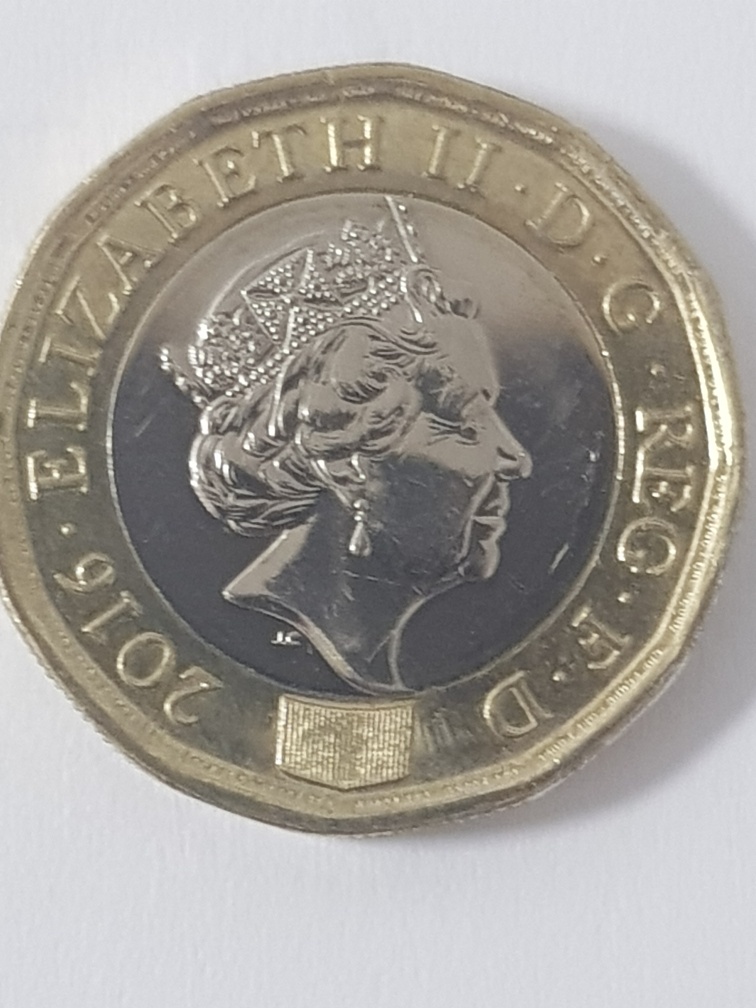
2. The "leftie" coins. With a correct coin, if you hold it obverse facing you, the milled section on the edge should be to the right of the centr line of the bust. Some were made with this to the left - a mistake in setting up the machine as obverse, reverse and edge were all created in a single strike. Having said that, around 5% of 2016 £1s have this, so still not really rare.(Total mintage just under 650 million, so estimated 32 million lefties!)












 Posted 09/11/2019 09:42 am


