| Author |
 Replies: 31 / Views: 2,650 Replies: 31 / Views: 2,650 |
|
|
|
Moderator
 United States
56855 Posts |
Thank you spruett001. John1  |
|
Pillar of the Community
United States
5898 Posts |
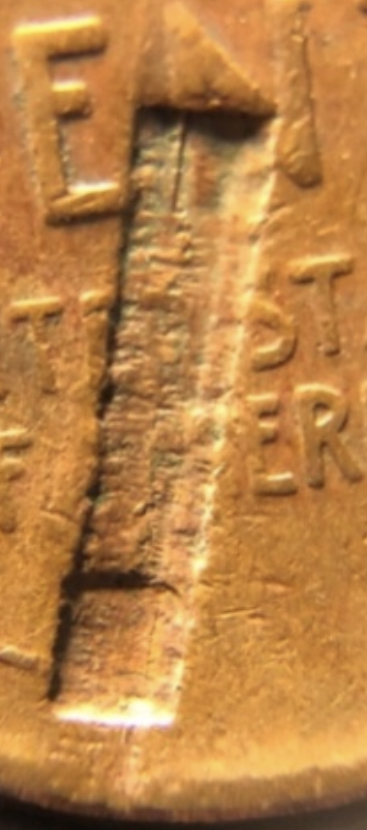
Wouldn't the weight help with an answer, as large as the depression is?
Underweight and this would be peeled lamination (delamination).
Overweight (or close to normal) and it would be a struck through.
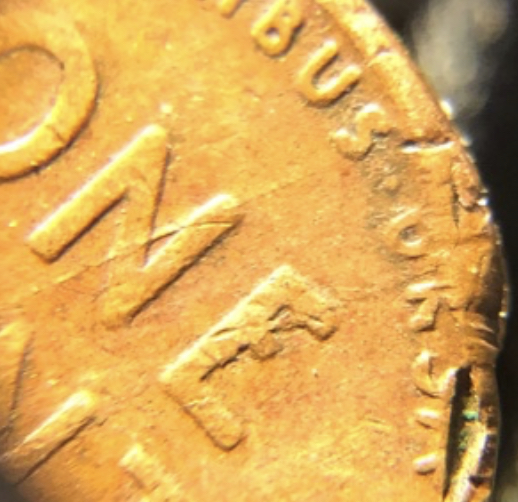
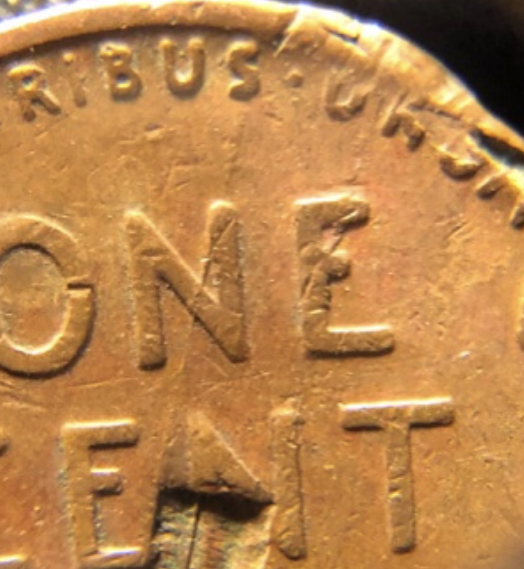
I've considered these to be peeled lamination based on the "rumpled" floor of the depression as well as the outline of the remaining metal through the N of CENT. But a struck through "copper fragment" that bonded with the planchet might produce the same effects, which is why the weight is important IMHO.
Words of encouragement are one of the major food groups.
We need to consume them regularly to thrive and grow.
|
|
Pillar of the Community
 United States
768 Posts |
Will get a weight ASAP.....be advised there is a portion of the coin missing from a suspected ragged clip so that will effect weight! Stand by for weight.......
|
|
Bedrock of the Community
United States
12477 Posts |
Standing by.  In Memory of Crazyb0 12-26-1951 to 7-27-2020
In Memory of Tootallious 3-31-1964 to 4-15-2020
In Memory of T-BOP 10-12-1949 to 1-19-2024
|
|
Moderator
United States
56855 Posts |
Sitting and waiting now John1 |
|
Pillar of the Community
United States
768 Posts |
 Coin weight was 2.97! Thanks all for your determination if it's a DELAM/LAM or Strike through with ragged clip? So could the piece missing from the clip weigh .14? Edited by Sarge50
09/17/2019 11:45 am
|
|
Pillar of the Community
United States
768 Posts |
|
|
Pillar of the Community
United States
2376 Posts |
Sarge. There are three dies used to produce a coin. The hammer die , the anvil die and the collar.
The hammer die forces the planchet against and into the anvil die which produces the outward flow of coin metal that the collar contains to form the edge. One of the ways to attribute damage to a coin is to ask yourself if there is coin metal protruding into a area where the die would not have let it go. The anomaly on the edge of the coin is damage because it showes metal forced above the plane of the coins field that the die would not have allowed at the time of strike.
The weight of the coin is luckily not needed in this instance to prove a delamination issue as missing metal at the edge complicates the matter. The lines that run parallel to the missing metal in the lam are an indication of the poor mixture of metals that composed the planchet. They are toned parts of the original planchet and would not be the result of a strike through. That they run perpendicular to the striations in the lam is to be expected and reinforce the attribution of delamination.
Edited by stoneman227
09/17/2019 1:45 pm
|
|
Pillar of the Community
United States
768 Posts |
stoneman227.......I so much appreciate your expert analysis but I was asked to weigh it and post that data and I did that even though I to thought It would weigh less with the clip piece missing and thought that would definitely make it weigh underweight! I think I read you do not think it is a strike through but more likely a de-lamination Error even though their is no damage to the obverse? I did not know there were 3 dies involved that are used to make a coin, thank for the information I am absorbing like a sponge! Lastly, is their a demand for delamination coins or are their collectors of such errors?
Edited by Sarge50
09/17/2019 5:05 pm
|
|
Pillar of the Community
United States
5898 Posts |
Thanks Sarge for weighing the coin and Stoneman for that clear analysis.
The lighter weight adds more evidence to it being a lamination for those that were in the struck through camp.
Words of encouragement are one of the major food groups.
We need to consume them regularly to thrive and grow.
|
|
Pillar of the Community
United States
2376 Posts |
Sarge , damage doesn't necessarily have to be present ( and more often than not it isn't)for a coin to delaminate. A nice unusual lam can tickle the fancy of error collectors and bring a premium. This split before strike cent and the split after strike Buffalo nickel beside it are examples that would bring a premium.  This cent lam and its bark would bring a premium together  Unusual pieces always garner interest |
|
Bedrock of the Community
United States
62064 Posts |
Was the weight normal? If so, I see a folded piece of debris struck on the reverse. If it is a bit under, then a split off debris with on rim and a peeled off folded debris issue. Laminations are often un mixed debris rolled on to the stock material. After the blanks are cut, the upset process loosens the rolled in debris and after striking, it falls off the coin. This looks like it happened to this coin with also a folded over struck through debris that also fell off the coin. If the weight is normal, then the break away on the rim, was struck back on to the coin. If a bit light then the coin is two errors as I mentioned. The debris could also be a folded piece of cardboard? But weight would tell us more.
|
|
Pillar of the Community
United States
5898 Posts |
Sarge said the weight was 2.97 grams.
Words of encouragement are one of the major food groups.
We need to consume them regularly to thrive and grow.
|
|
Bedrock of the Community
United States
62064 Posts |
Sounds like the suggestion I made. Struck through a debris item and lamination on the edge. Both peeled off after the strike. looking at the edge again, I noticed the edge looks like damage because the metal was pushed aside. So you do have a struck through debris error on the coin. (I ruled out lamination, because no ghost devices appear on that area, also the fold over area on the lower part.
Edited by coop
09/19/2019 01:20 am
|
|
Pillar of the Community
United States
2376 Posts |
I guess that I'll politely disagree and just leave it at that.
|
| |
Replies: 31 / Views: 2,650 |








 First Page


 Posted 09/16/2019 05:06 am