Coin Community Family of Web Sites Join Thousands of Coin, Bullion, & Money Collectors
Vancouvers #1 Coin and Paper Money Dealer Specializing in Modern Numismatics 300,000 items to help build your collection! Royal Canadian Mint products, Canadian, Polish, American, and world coins and banknotes. Shop for APMEX Bullion on eBay!Join Thousands of Coin, Bullion, & Money Collectors Coin, Banknote and Medal Collectors's Online Mall


Username:
Password:
Save Password
Forgot your Password?


This page may contain links that result in small commissions to keep this free site up and running.

Welcome Guest! Registering and/or logging in will remove the anchor (bottom) ads. It's Free!

Best Method To Differentiate Between A Proof And A DCAM

To participate in the forum you must log in or register.
Author Previous TopicReplies: 6 / Views: 5,151Next Topic  
Pillar of the Community
mdpmedia's Avatar
United States
3546 Posts
 Posted 09/28/2019  8:44 pm Show Profile   Bookmark this topic Add mdpmedia to your friends list Get a Link to this Message Number of Subscribers
With respect to modern variety coins I assume that in general the DCAM is darker but there must be more precise ways and quicker ones to use while in a fast paced auction.

Please opine on these as well as any other types of proofs worth mentioning.
Bedrock of the Community
coop's Avatar
United States
62064 Posts
 Posted 09/28/2019  8:54 pm  Show Profile   Bookmark this reply Add coop to your friends list Get a Link to this Reply
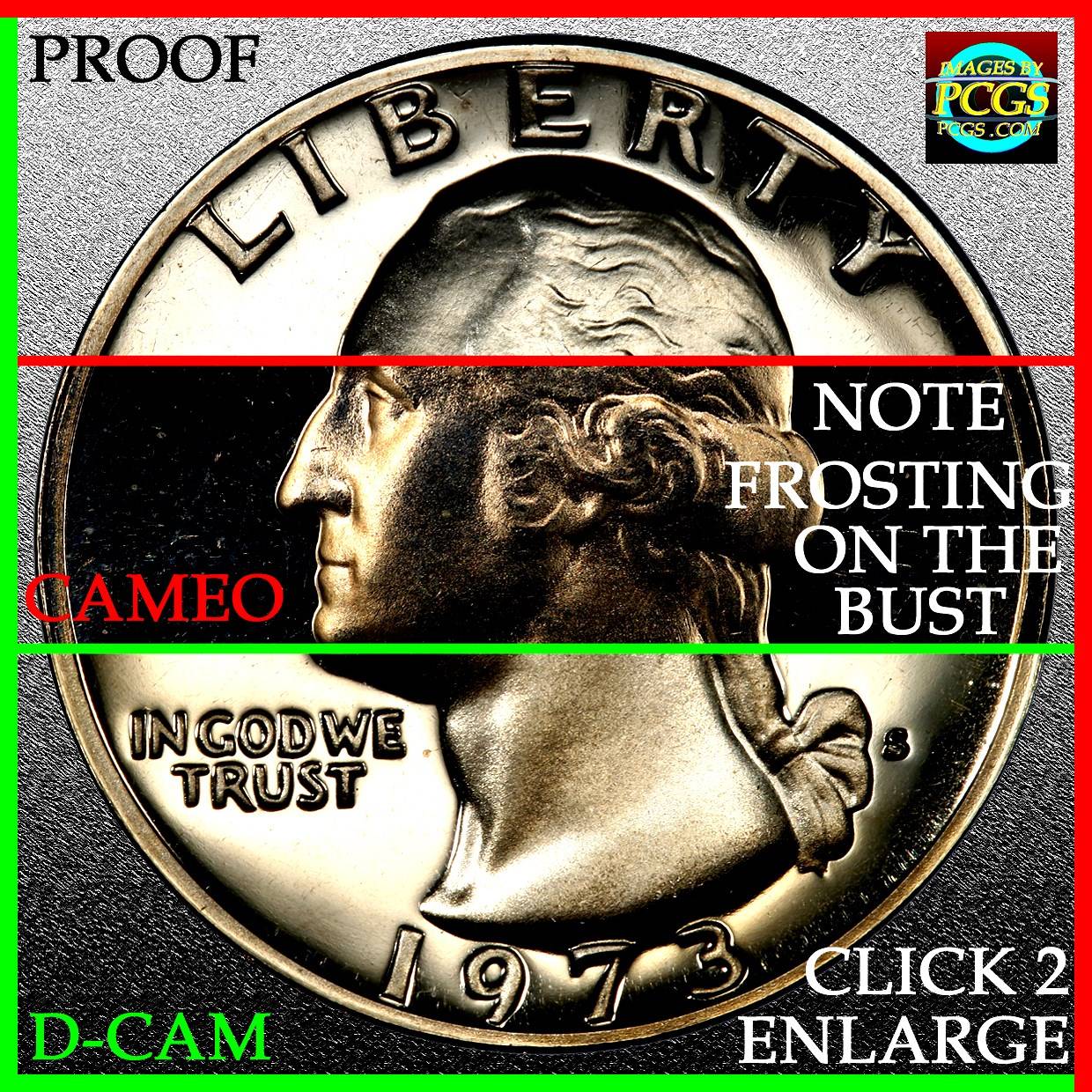
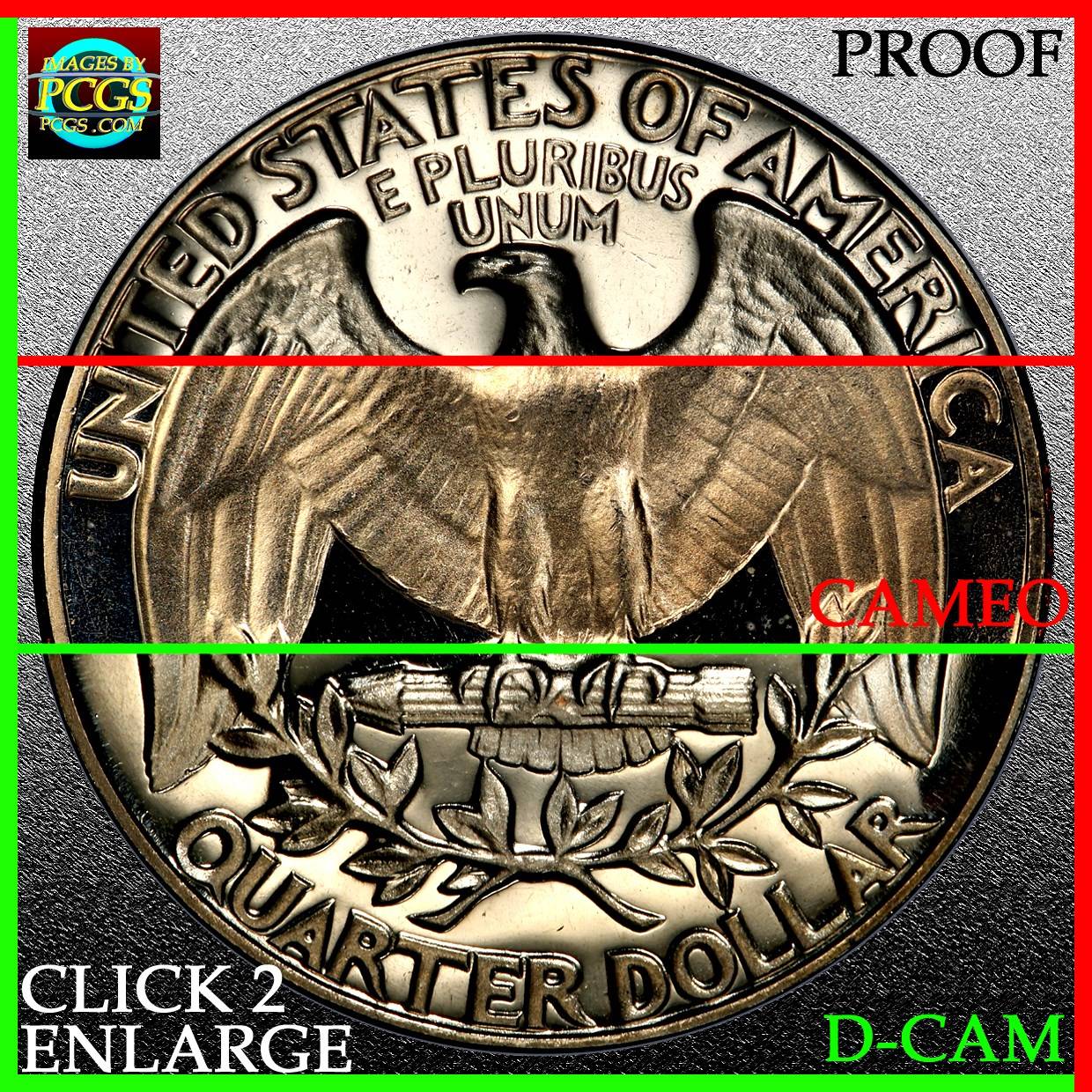
The frosting on the designs are different:
Best-Method-To-Differentiate-Between-A-Proof-And-A-DCAM
The reverse looks too weak on this lower coin to be a d-cam to me. But PCGS called it that.
D-Cams are stronger. What creates these. When the die is fresh, it will strike more D-Cams. As the frosting wears off the die, then they are Cameos. Eventually the cameo goes away and then they are normal proofs. On the over coins, they didn't refresh the frosting. On the newer coin (Post 1980?) they did touch up the dies. I prefer the Proofs from the 1950-1970 coins. The new frosting looks is not my favorites.

Probably the best way is to down load images from PCGS coinfacts page of the coins you are comparing it with to see what is different between a normal/cameo/Dcam looks like side by side. The more your eye studies it, the more you will know what to look for.
Edited by coop
09/28/2019 9:04 pm
Valued Member
United States
176 Posts
 Posted 09/28/2019  11:59 pm  Show Profile   Bookmark this reply Add examiner to your friends list Get a Link to this Reply
Why do cameos appear black in the field?
Pillar of the Community
mdpmedia's Avatar
United States
3546 Posts
 Posted 09/29/2019  03:17 am  Show Profile   Bookmark this reply Add mdpmedia to your friends list Get a Link to this Reply

Quote:
...cameos appear black in the field


I am pretty sure that it has something to do with the deviation of the initial refractivity originating from the index lighting. I am not aware of the actual reason this occurs unless the field curvature becomes more or less concave or convex. But if this happens to be accurate, what actually initiates the change in the field's form?

Another one with more experience in these matters should be able to provide a more definitive response.
Pillar of the Community
United States
1543 Posts
 Posted 09/29/2019  05:01 am  Show Profile   Bookmark this reply Add Gincoin43 to your friends list Get a Link to this Reply
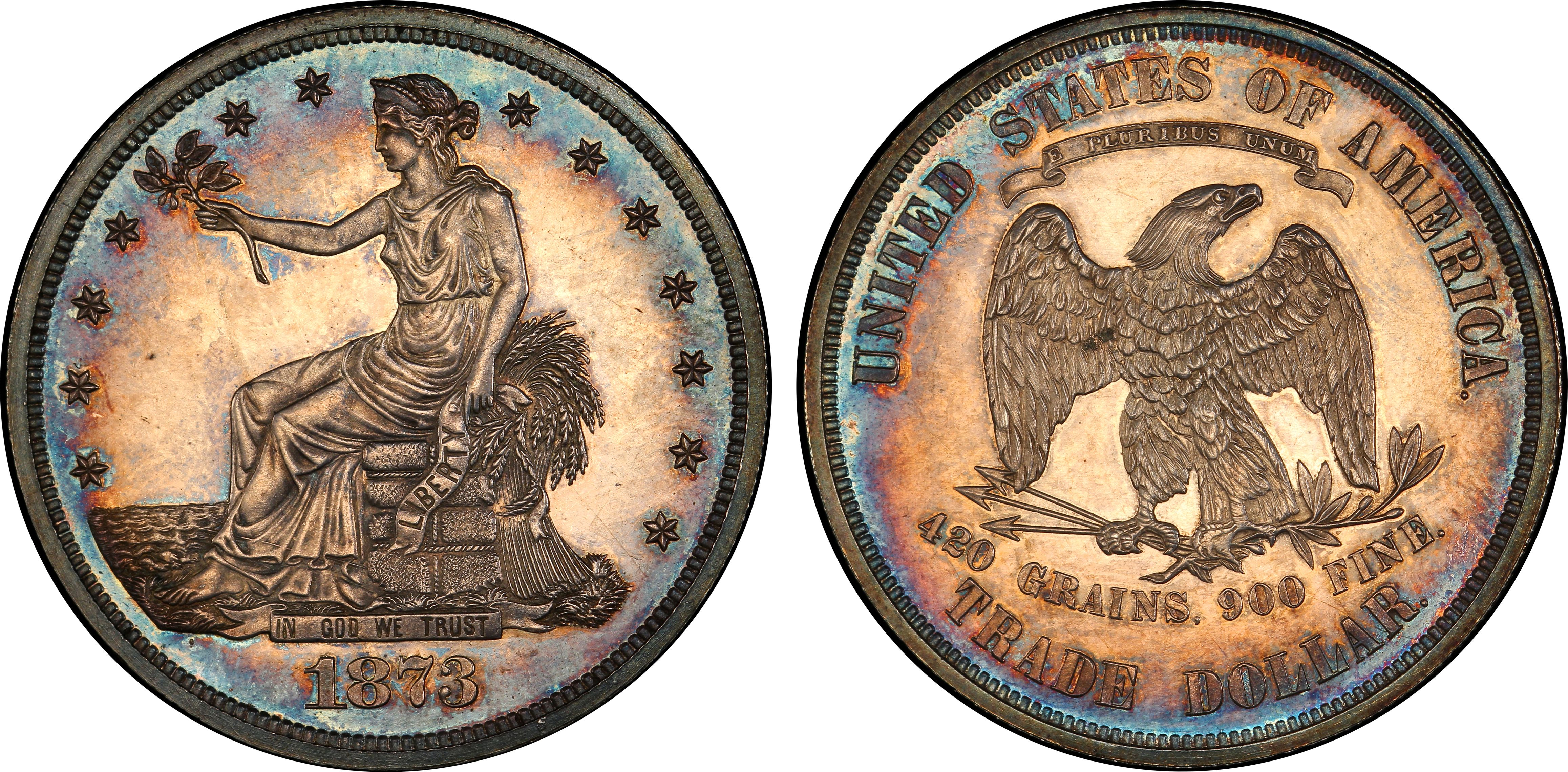
To my knowledge Deep Cameo(DCAM) and Cameo(Cam) are both descriptions of the appearance of coins. Proof refers to the process in which the coin was made and has nothing to do with the condition. I believe they treat modern proof coins with chemicals to achieve the frosted look, but in older proof coins(I'm not sure of when 1960's?) the frosting was not intentional, making DCAM examples much more valuable. The completely frosted devices with a strong contrast to the field is considered DCAM, Coins where the contrast is not as strong or the frosting is weak are CAM. Cameo literally is the amount of contrast and can describe coins that are not proofs if rarely. I borrowed this definition of proof from Wikipedia.

Quote:
Proof coinage refers to special early samples of a coin issue, historically made for checking the dies and for archival purposes, but nowadays often struck in greater numbers specially for coin collectors (numismatists)

Pillar of the Community
United States
1543 Posts
 Posted 09/29/2019  05:18 am  Show Profile   Bookmark this reply Add Gincoin43 to your friends list Get a Link to this Reply

Quote:
Why do cameos appear black in the field?

It doesn't have to be black just contrast. Look at this beautiful Trade dollar Best-Method-To-Differentiate-Between-A-Proof-And-A-DCAM
Bedrock of the Community
Conder101's Avatar
United States
17884 Posts
 Posted 09/29/2019  11:25 am  Show Profile   Bookmark this reply Add Conder101 to your friends list Get a Link to this Reply

Quote:
Why do cameos appear black in the field?

It has to do with the lighting and angle of incidence equals angle of reflection.

Say you are taking a picture of a proof that is laying flat on a table and you have the camera directly above it shooting straight down. And your light is coming in from 3:00 at a 40 degree angle above the horizontal. The light that hits the mirror finish fields will reflect off toward 9:00 once again at a 40 degree angle above the horizontal. (Angle of incidence equals angle of reflection) But the camera is at 90 degrees so VERY LITTLE of the light that hits the fields is reflected up into the camera. (a little reaches the camera because the field isn't perfectly smooth so a little gets scattered upward) The light that hits the rough surfaces of the frosted devices though is scattered in all different directions and lot more of it gets scattered up into the lens. The large difference in the amount of light results in the large "black fields and white devices" contrast you see. As you raise the lighting angle toward the 90 degree point more and more of the light hitting the fields gets reflected into the camera and the black and white contrast disappears,
  Previous TopicReplies: 6 / Views: 5,151Next Topic  

To participate in the forum you must log in or register.


Disclaimer: While a tremendous amount of effort goes into ensuring the accuracy of the information contained in this site, Coin Community assumes no liability for errors. Copyright 2005 - 2026 Coin Community Family- all rights reserved worldwide. Use of any images or content on this website without prior written permission of Coin Community or the original lender is strictly prohibited.
Contact Us  |  Advertise Here  |  Privacy Policy / Terms of Use

Coin Community Forum © 2005 - 2026 Coin Community Forums
It took 0.27 seconds to rattle this change. Forums