| Author |
 Replies: 14 / Views: 7,587 Replies: 14 / Views: 7,587 |
|
|
Bedrock of the Community
United States
79510 Posts |
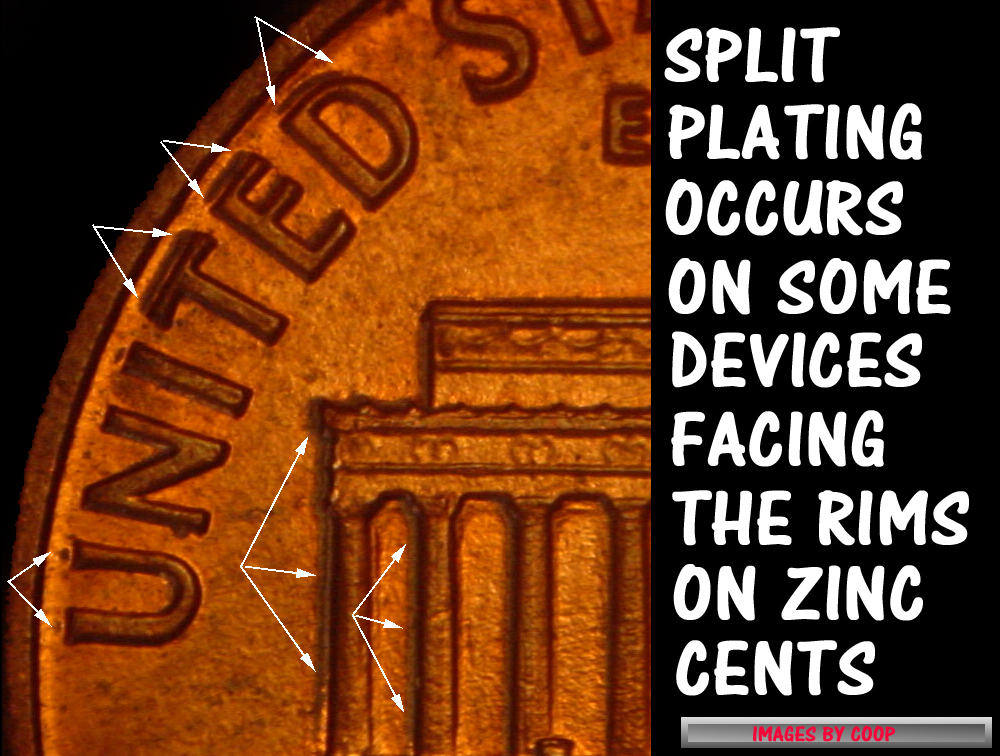
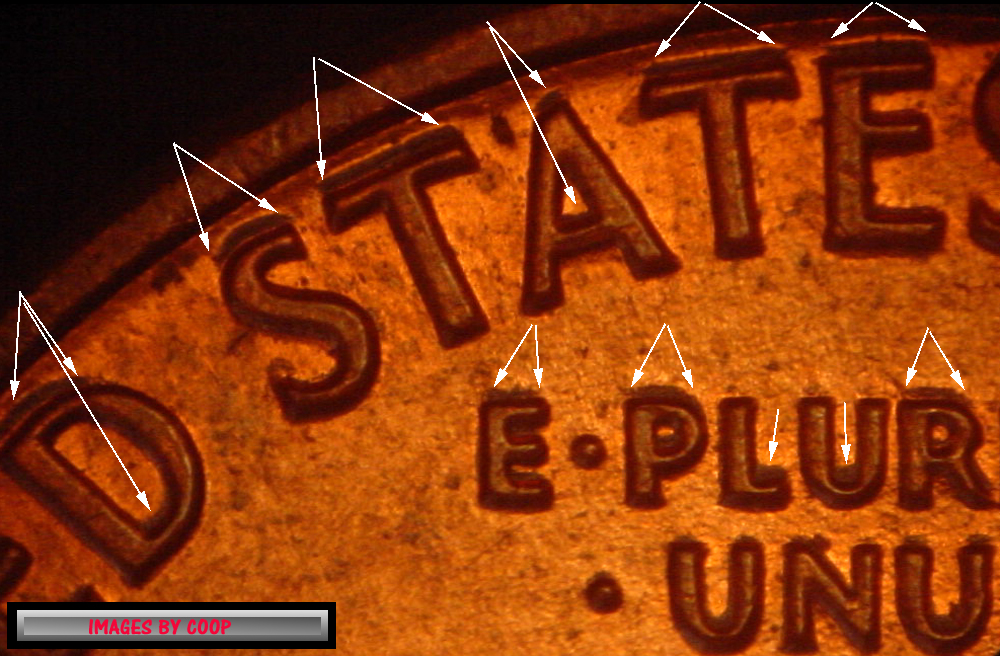
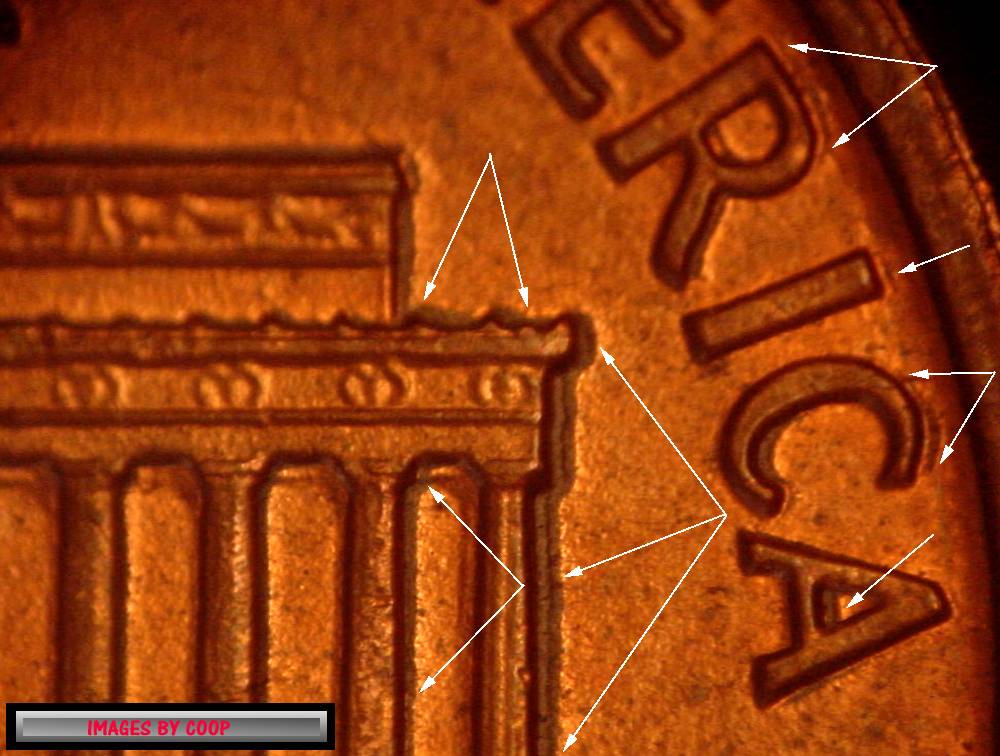
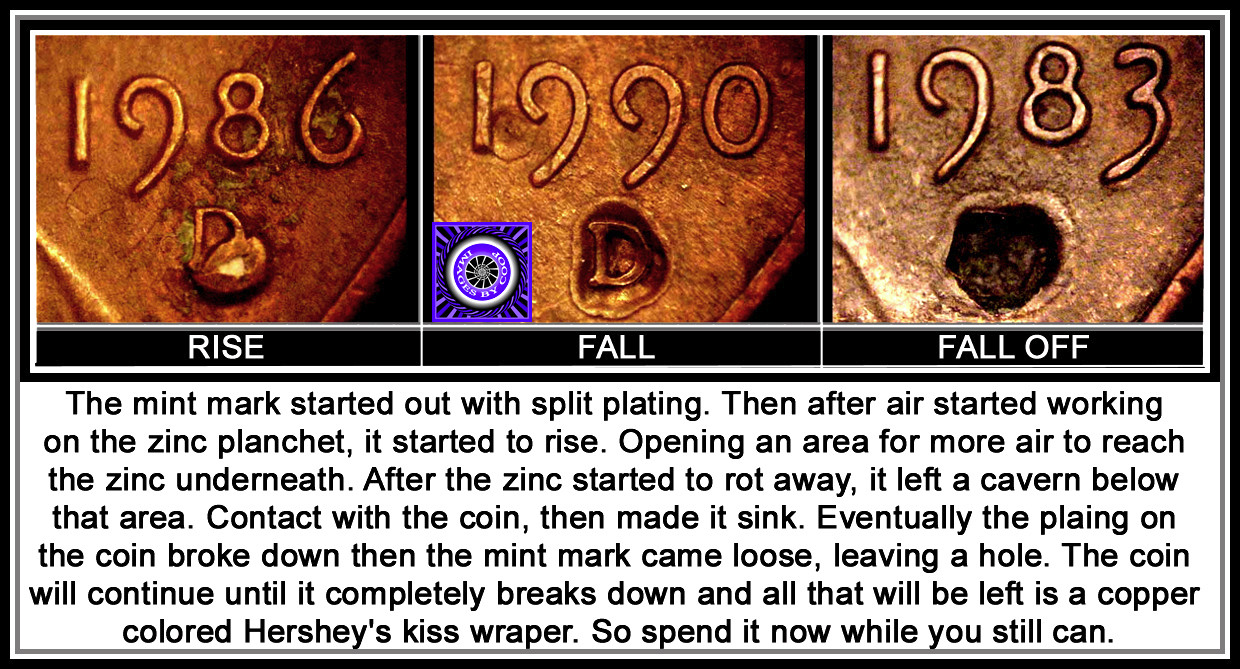
This tutorial is going to be talking about Split Plate Doubling in depth, and how it happens. Here we go. Ever since the U.S. Mint switched over to Copper plated zinc planchets, this common awful problem started to happen a lot. Sometimes when the Copper plated zinc planchets are struck, the thin Copper plating overstretches and causes the thin plating to split, exposing the underlying zinc core (the shiny silver areas). Because of this issue happening, zinc rot can occur and eat away at the zinc core, if the coin is exposed to the air in the environment long enough. This issue unfortunately causes a lot of the newer Lincoln Cents to get destroyed. Anyways, let's get back to my tutorial.  Common areas to see Split Plate Doubling is the motto, "LIBERTY", profile, and the date on the obverse. On the reverse, the most common areas to see this, is "OF AMERICA", the left and right areas of the memorial bays, and the "FG" initials. This seems to happen a lot on the Off Center struck Lincoln Cents and Broadstruck Cents. Anyways, I hope this helps. Tell me what you think everybody. Did I do a good job explaining this, or does it need improvement?    Errers and Varietys.
|
|
|
|
Pillar of the Community
United States
1161 Posts |
Excellent job ENV, this will be helpful for those just coming in to coin collecting and spring Errers and Varietys so they can understand what they are looking at. Thanks for taking the time to write and illustrate it!  Edited by CoinTheTerm
10/09/2019 11:23 pm
|
|
Bedrock of the Community
 United States
79510 Posts |
You're very welcome CoinTheTerm and thank you for commenting! I appreciate it! Just wanted to do a quick, but thorough tutorial, since it's been a while since I made one. I will continue to make more tutorials in the future.
Errers and Varietys.
|
|
Valued Member
United States
72 Posts |
|
|
Bedrock of the Community
United States
79510 Posts |
Thank you JTAC! I made this thread mostly intended for the starters.
Errers and Varietys.
|
|
New Member
United States
3 Posts |
 So would this be an example of split plate doubling? Thank You! I am trying to learn as much as I can! Darren |
|
Bedrock of the Community
United States
10635 Posts |
Yes, it is split plating.   to the CCF! |
|
Bedrock of the Community
United States
62064 Posts |
|
|
New Member
United States
18 Posts |
Is there any value to split plate doubling on Lincoln cents?
|
|
Bedrock of the Community
United States
62064 Posts |
No. It is the start of the count down as the exposure to oxygen, starts zinc rot.
|
|
New Member
United States
18 Posts |
Thank you for the quick reply
|
|
Pillar of the Community
United States
1667 Posts |
Nice job overall. I'd like to add something I spent time researching though. "Zinc Rot".... Ok, zinc exposed to air will dust over with a thin layer of zinc oxide and that is the end of the metal sacrifice as long as the light dust layer doesn't get removed from touching or rubbing in which case it dusts over again, the caveat is, it has to be kept dry. "Zinc rot" is actually caused by a galvanic reaction between the copper, the zinc and moisture. The crack in the Copper plating (split plating) can allow moisture to get between the two metals. Then you have two dissimilar metals with an electrolyte (the water) in place between them to create a tiny galvanic cell which will cause rapid oxidization of the zinc and crystallization of the zinc oxide and form crystalline zinc oxide. Barring this addition of moisture, between copper and zinc creating a galvanic reaction, the exposed zinc can last forever with very minimal loss of metal to oxidization. people have this misconception about zinc rot because of the common name for it, like it's some sort of unstoppable disease that will eat away the coin in short order. It is in fact, completely controllable, just as controllable as toning on any coin. This coin below has heavy split plating, the reverse moreso than the obverse, I've had it for 28 years it's no worse for the wear than it was when I started taking care of it and kept it away from moisture or excessive touching.   cents with split plating are totally manageable, and as I understand it the TPGs do not detract for split plating because it is "as minted", realistically speaking you aren't going to find a post-1982 cent that's offcenter or broadstruck that's free of split plating. However if it's had moisture exposure and a galvanic reaction, it's going to get pegged as corroded. Edited by Big-Kingdom
05/06/2021 3:30 pm
|
|
Bedrock of the Community
United States
62064 Posts |
|
|
Bedrock of the Community
United States
94367 Posts |
Thanks Dr. coop! |
|
Pillar of the Community
United States
2752 Posts |
The proper term is "split plating doubling". There is no "plate" involved.
Error coin writer and researcher.
|
| |
Replies: 14 / Views: 7,587 |
|










 Posted 10/09/2019 11:27 pm