| Author |
 Replies: 16 / Views: 2,562 Replies: 16 / Views: 2,562 |
|
Valued Member
Nauru
65 Posts |
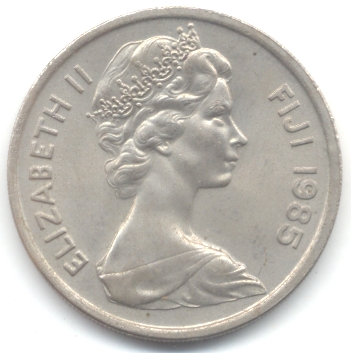
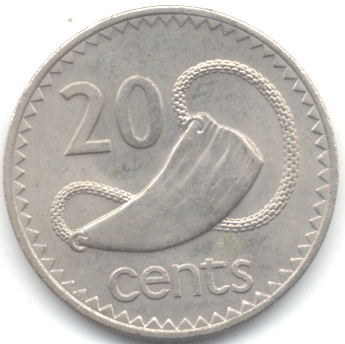
Can anyone advise me on how to identify whether a coin is fake or not? Do you use a magnet and anything else please? Hi once again. I have two coins that have attracted a magnet when putting to them. The images are below- Image:  Fijicoinobv.jpg Fijicoinobv.jpg79.58 KB Image: Fijicoinrev.jpg81.04 KB  http://www.coincommunity.com/forum/...ncoinobv.jpg target _blank rel nofollow Francoinobv.jpg /a br / 88.21 nbsp KB" border="0" style='cursor:default' onClick='doimage(this,event)'> http://www.coincommunity.com/forum/...ncoinrev.jpg target _blank rel nofollow Francoinrev.jpg /a br / 91.93 nbsp KB" border="0" style='cursor:default' onClick='doimage(this,event)'> Edited by Davidson
09/29/2008 9:28 pm
|
|
|
|
Rest in Peace
United States
9104 Posts |
There are thousands of ways a coin can be fake. We would need specific information.
|
|
New Member
United States
9 Posts |
Well I'm still learning to ropes when it comes to coin collecting, but I remember someone on this site wanted advice on a coin. Most of the people said it was fake and not to buy it. It had cast marks on the edge of the coin. Think of like a dish soap bottle where two halves were welded together and theres a line. Thats what it looked like. In additon, I've heard of people shaving the "s" mintmark off of 1928 Peace dollars to make them worth more |
|
Moderator
 Australia
16956 Posts |
The best way to spot a fake is to become very, very familiar with the genuine. Often, an expert in a particular coin series won't even know at first what's tipped them off that there's something wrong with a coin; it's become instinctive for them. I've often seen this amongst ancients collectors. Still, there are some very general guidelines that might be of assistance. Appearance - the clumsiest, easiest to spot fakes are the ones that just plain "look wrong". These kinds of fakes normally aren't made to fool an expert collector, they're made to fool tourists or made as contemporary counterfeits, designed to go into circulation. Example: this Chinese-made fake looks wrong, wrong, wrong!. Colour - "gold" coins that look brassy or coppery, "silver" coins that the silver appears to be rubbing off of in places... such things are normally easy to spot when you're looking at the coin in your hand, but a picture on the Internet can be deceptive - poor lighting can make genuine coins look wrongly coloured, and photo-editing can make a fake look more realistic. Signs of Casting - the easiest way to make a fake coin is to make a mould (using a real coin as the source of the mould) and pour in some molten metal. Such coins have three distinctive features that declare their fakeness: - a seam somewhere around the edge where the two halves of the mould were joined together. - somewhat grainy, bubbly appearance, caused by tiny air bubbles getting trapped on the surface of the mould when the metal is poured in. - When molten metal solidifies and cools, it shrinks slightly, so a cast copy will always be slightly smaller than the coin the mould came from. Weight - the weights of all precious metal coins (and a few of the base-metal ones) are recorded in the Krause catalogue (or on the NumisMaster website. Gold is a very dense metal, and it's difficult to make a fake gold coin that's the correct size and weight, without making it out of gold. Silver is easier to get the weight right, but most counterfeiters don't bother. A balance that's accurate to 2 decimal places (0.01 grams) is a very useful tool to help spot fakes. A Magnet - limited usefulness in fake-spotting, because very few fake coins are made of iron or steel, and very few genuine coins that are supposed to be iron or steel are worth counterfeiting. It's still a useful tool for a collector to have in their toolkit, just not so helpful in spotting fakes. Odour - This can be surprisingly helpful. Fake coins often have some kind of goo painted onto them to make them "look old", and the smell gives it away. I once bought a cast fake "ancient Jewish coin" - they'd done a fairly good job of hiding the telltale signs of casting, but you could still smell the plasticine they'd used to make the mould out of. Some people can even tell the difference between metals just by their smell; if you have this gift, use it. Don't say "infinitely" when you mean "very"; otherwise, you'll have no word left when you want to talk about something really infinite. - C. S. Lewis
Edited by Sap
09/26/2008 05:43 am
|
|
Valued Member
United States
135 Posts |
Sound - Though many would disagree there's always the "drop test". This works especially well on silver. Drop the coin on a hard surface and listen to the sound it makes. Silver rings; base metals clunk, clank, tink etc.
|
|
Pillar of the Community
United Kingdom
2217 Posts |
Then pick up your coin and examine any scratches that may have occurred. Particularly effective on high-value silver coins :P
|
|
Valued Member
United States
372 Posts |
Experience. That is one key thing. Read books, that helps. If you can find known fakes for cheap, keep a library of them. That's what I'm doing.
Mike
|
|
Valued Member
United States
311 Posts |
A couple additions to the list:
A lot of silver coins are counterfeited using a zinc-based alloy that gives them a dull, grayish appearance like pewter or lead.
Watch out for coins where the devices have very little detail, as though badly worn, yet still have very high relief.
A lot of U.S. coins have the word LIBERTY engraved in a scroll, shield, or other device. This sort of engraved text is technically challenging to reproduce in a die, and will often result in fakes having letters that are uneven or generally less precise than the genuine article.
|
|
Pillar of the Community
United States
936 Posts |
By the stamp on the back that says "copy", lol!!
|
|
Pillar of the Community
Australia
2830 Posts |
G'day,
a magnet will reveal coins made of iron or steel ...
AND coins with a high nickel content.
I don't mind picking up forgeries, if they're not too expensive. It's just another "variety" to me: I put them next to the real thing, and invite anyone interested to pick the real one.
that said, the highest-quality forgery in my possession, a 1937 Australian Crown, weighs in 10 grams light, and is magnetic.
For me, the first sign of a fake is poor quality of the design elements. There are some very crappy forgeries about, and no country allows its coinage to dip so low.
When examining a coin that I am not familiar with, the next test is weight. You need scales that read in increments of 0.1 gram. And you'll need to know what the correct weight is. It doesn't matter how good it looks, if it's the wrong weight, then it's not right.
Because I don't carry scales around with me, I do the magnet test fairly early. Most mints don't like using magnetic silver. Again, you have to have some idea what you are looking for: some coins are made of iron, steel, or nickel, and they ought to be magnetic. That makes for a good party trick ...
Peter
|
|
Pillar of the Community
United States
2589 Posts |
composistion is also another test, silver coins have a distinct ring when dropped. Fakes are often made out of base metal and will have a dull thud sound to them. This was one of the preliminary tests the fellow who found the silver 1972 over date used to determine whether it was real or not.
|
|
Rest in Peace
United States
2668 Posts |
The plating can be peeled off and they are chocolate inside.  |
|
Bedrock of the Community
United States
20753 Posts |
Quote:
The plating can be peeled off and they are chocolate inside.
I've never found one yet though that has the dark chocolate. Only the normal, every day stuff. I've always liked the subject of fake coins. I always remember a dealer that purchased a 1916D Mercury dime from someone that he knew real well. He sent it in for grading and it came back in a body bag as a counterfeit. He was so sure it was real he sent it to another TPGS and it came back in a slab and graded and real. Anther dealer at a coin show showed me a 1909S VDB Cent that was supposed to be a fake. He told me it was noted as a fake by two different TPGS's. He then said he showed it to about 20 other dealers at the show and all said it was the real thing. I've seen many fakes that looked real and many real ones that appeared to be fakes. Quote:
By the stamp on the back that says "copy", lol The problem with that is so few look at the back of a coin.  And I always thought the tell tale sign of a copy or fake was the little letters that said "Made in China" |
|
Rest in Peace
United States
9104 Posts |
Those are probably magnetic nickel/steel. I don't think either of them is worth faking.
|
|
Rest in Peace
United States
9104 Posts |
Go to the liberry and look them up. The Standard Catalog of World Coins will tell you what they're made from.
|
|
Moderator
Australia
16956 Posts |
According to the Krause catalogue, Fiji switched from cupronickel (non-magnetic) to plated steel (magnetic) in 1990, so a 1985 Fiji 20¢ shouldn't stick to a magnet. Not sure what's happening there; you might want to double-check that it is actually that exact same coin and not a different Fiji 20¢ that sticks. If it is actually a magnetic 1985 20¢, I'd suspect a mint error rather than a fake - as biggfredd said, these coins aren't particularly scarce as collectables, and aren't really worth counterfeiting to that high quality as a circulating forgery. I just checked my Fiji coins with a magnet, and only the post-1990 ones stuck; my 1985 20¢ did not.
The New Caledonian coin is made of pure nickel which, like iron, is magnetic. Everything's perfectly normal there.
Don't say "infinitely" when you mean "very"; otherwise, you'll have no word left when you want to talk about something really infinite. - C. S. Lewis
|
| |
Replies: 16 / Views: 2,562 |








 Fijicoinobv.jpg
 Fijicoinrev.jpg

 Posted 09/26/2008 12:56 am


