| Author |
 Replies: 46 / Views: 7,576 Replies: 46 / Views: 7,576 |
|
|
|
Valued Member
Russian Federation
172 Posts |
Cropped image loose resolution of the subject as you can see with mint marks on Cent. You've got 500x500 instead 1600x1600. Ray, do you see some probs with Dof at f2.8 at M0.6 on mine? 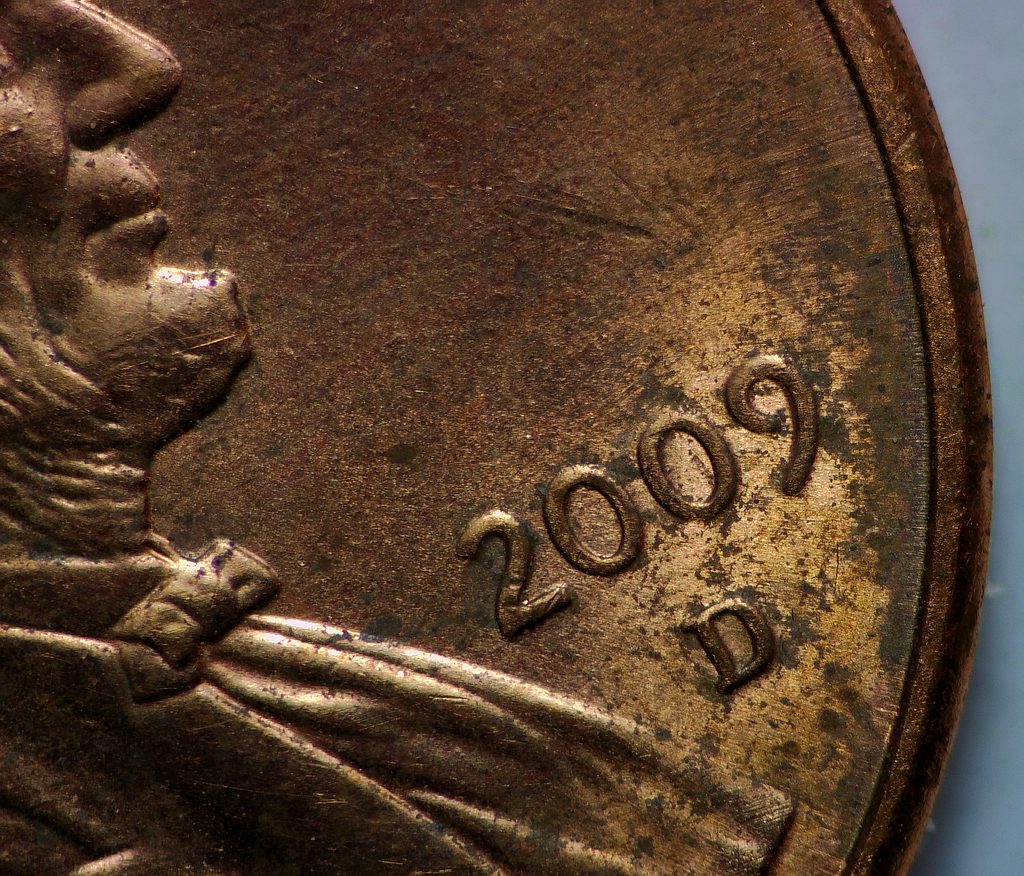 |
|
Pillar of the Community
United States
9395 Posts |
Quote:
To fully resolve 0.8um pixels, you need a lens with at least f1.2 that is diffraction-limited at that aperture. Do these exist? I don't know. Aren't there two ways of looking at optimum pixel size? 1 - Make each pixel as sharp as possible. This means having pixels large enough to not show any diffraction fuzziness. Pixel-peepes would be happy. 2 - Capture all the details in the image formed by your lens. This means having pixels small enough to oversample the lens image by 2x or 3x the diffraction limit. (The 2x or 3x comes from (planetary) astrophotography). Pixel-peeping would show a fuzzy (but very large) image. A few years ago, some macro lens tests were done at 1.0x here at CCF, using a 24MP canon T6D. It looked like almost all the tested lenses outresolved the sensors by about a factor of two. 100MP+ APS-C sensors would not be too much to optimize case (2) above. (250MP+ for full frame) Edited by pepactonius
11/12/2019 10:57 pm
|
|
Valued Member
Russian Federation
172 Posts |
Want to add that diffraction is not the main problem for macro. Let me to citate of Rik's from Macrophotography calculation about pixel size at 1:1 Quote:
For 550 nm green light and effective f/9, the cutoff frequency nu_0 is 1/(0.55*9) = 0.202 cycles/micron, or 4.95 microns per cycle. Minimum Nyquist sampling is then 2.475 microns per pixel. So, yep, even without worrying about Bayer, your 4.3 micron pixels are not nearly fine enough.
Meanwhile the FHD sensor at 1.34 microns per pixel, again ignoring Bayer, is giving about 3.7 pixels per cycle. That's enough to give quite good sampling. |
|
Pillar of the Community
United States
9395 Posts |
With 1.34 micron pixels, a full-frame sensor would be about 27000 x 18000, or about 500MP. Maybe it's a good thing that Seagate is forecasting 50TB HDDs by 2026.
Of course, we'll still be downsizing these images from 500MB to 0.5MB for uploading here.
|
|
Valued Member
Russian Federation
172 Posts |
Yes. Very huge files. And lens price as Hubble ))
The good reason to have small sensor with small pixels and just stitch frames if we need huge pic.
|
|
Pillar of the Community
 United States
4051 Posts |
Quote:
Ray, do you see some probs with Dof at f2.8 at M0.6 on mine? No, not really. But there should be. DOF at m=0.6 and f2.8 is ~130um, and a Lincoln Cent is ~260um from lowest field (under Lincoln's chin) to the high point of the bowtie. You should have needed to do at least a 2 image stack to get both the lowest and highest point in focus. Why are they both in focus? Quote:
Aren't there two ways of looking at optimum pixel size?
1 - Make each pixel as sharp as possible. This means having pixels large enough to not show any diffraction fuzziness. Pixel-peepes would be happy.
2 - Capture all the details in the image formed by your lens. This means having pixels small enough to oversample the lens image by 2x or 3x the diffraction limit. (The 2x or 3x comes from (planetary) astrophotography). Pixel-peeping would show a fuzzy (but very large) image.
A few years ago, some macro lens tests were done at 1.0x here at CCF, using a 24MP canon T6D. It looked like almost all the tested lenses outresolved the sensors by about a factor of two. 100MP+ APS-C sensors would not be too much to optimize case (2) above. (250MP+ for full frame) Agreed. I'm not in the over-sample camp. My goals have always been to have the best possible 100% pixel view images. At some point the image needs to be viewed, and no one wants to look at something blurry, even if it comes with a long explanation as to why it's actually a better image since it contains more information. Edited to add: long ago I finalized my procedure for macro, and it has been working well for me doing high resolution images. It's not perfect, and I'm still moving forward with trying to do better, but it's the best I can do with currently available equipment (cameras or lenses). I suppose I should document this in a separate thread. Contact me for photographic equipment or visit my home page at: http://macrocoins.comEdited by rmpsrpms
11/13/2019 12:15 pm
|
|
Pillar of the Community
United States
4051 Posts |
Let's bring this back to the OP's questions. Webs, have you come up with any questions about the <$400 setup or anything else related to your goals?
|
|
Valued Member
Russian Federation
172 Posts |
f2.8 - nominal. Effective is ~4.5 or may be some simplification in calc. It was one frame.
|
|
Pillar of the Community
United States
4051 Posts |
|
|
Valued Member
 United States
88 Posts |
Ray, I am still working at picking my jaw off the floor after all of these technical discussions. I have never taken pictures by having a camera where I made all of these manual settings. I had an ebay business for several years and sold collectibles -- many comics, Star Wars items, high end paperweights, vintage sci-fi fantasy & horror magazines......but no coins. I spent a good deal of time experimenting to get the pictures I wanted. Once I had the setup, I used it for everything. From digital camera on a tripod to exactly where to have the architect light, and positioning a navy clue pillow case as a background. While I am sure it would leave something to be desired for coins, in my "unbiased" opinion, for what I was photographing, they were the bet pix on ebay. But I see the exchange here of you & Walk (Justwalking) & Pep (pepactonus) and it leaves me dizzy. Ironic that you would ask the question within the last day, because I was just going to ask all of you if all of your discussion was going to tweak the $400 recommendation at all. Because of financial obligations here at the end of the year, and because I will be restarting the prior ebay selling for a period of 4-6 months starting January, I may not put this setup together until April or so. But....the camera I have back then died, and I have to decide on whether to buy what I had then (newer version) or buy the camera I will also use with this setup. I will probably go with this one if I have it all decided upon by January. |
|
Pillar of the Community
United States
4051 Posts |
The <$400 setup is still what I recommend to folks. There is no better system for the money, especially since if you're just doing full coins, the actual price is now <$200. The major limitation of the system is the tripod, so figuring out something there is worth the effort.
|
|
Valued Member
Russian Federation
172 Posts |
Well, Ray For what reason to look at sharp pixels at 100% that contains very little info about subject due to insufficient sampling? Let me show for others readers simple pic. 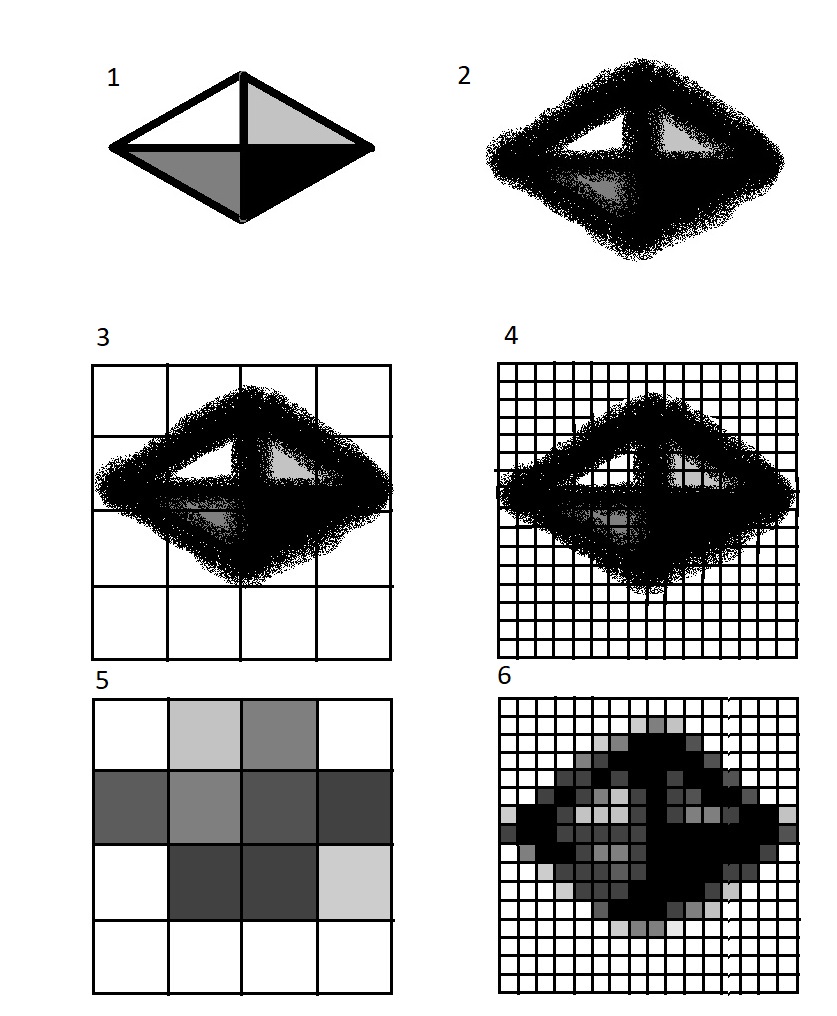 Let's the pic1 show real subject abot 0,02mm in long Ideal lens project it 1:1 with fuziness due to diffraction on pic2. Pic3 and pic4 shows this projection on sensor with 5um and 1,25um pixels pitch. And output simplified results are on pic5 and 6. Well, diffraction is not limited factor for 5um pixels. They are sharp as razor. But... there nothing info about subject. Almost all is lost. And you gave another sample (same magnification with same lens on different pitch size sensors). Do you want to say that at 100% crop your first pic looks better, when the second is far from DLA and more fuzzy, but with more detail? I'm sorry for taking your pics without permission HRT2I  FHD16MP 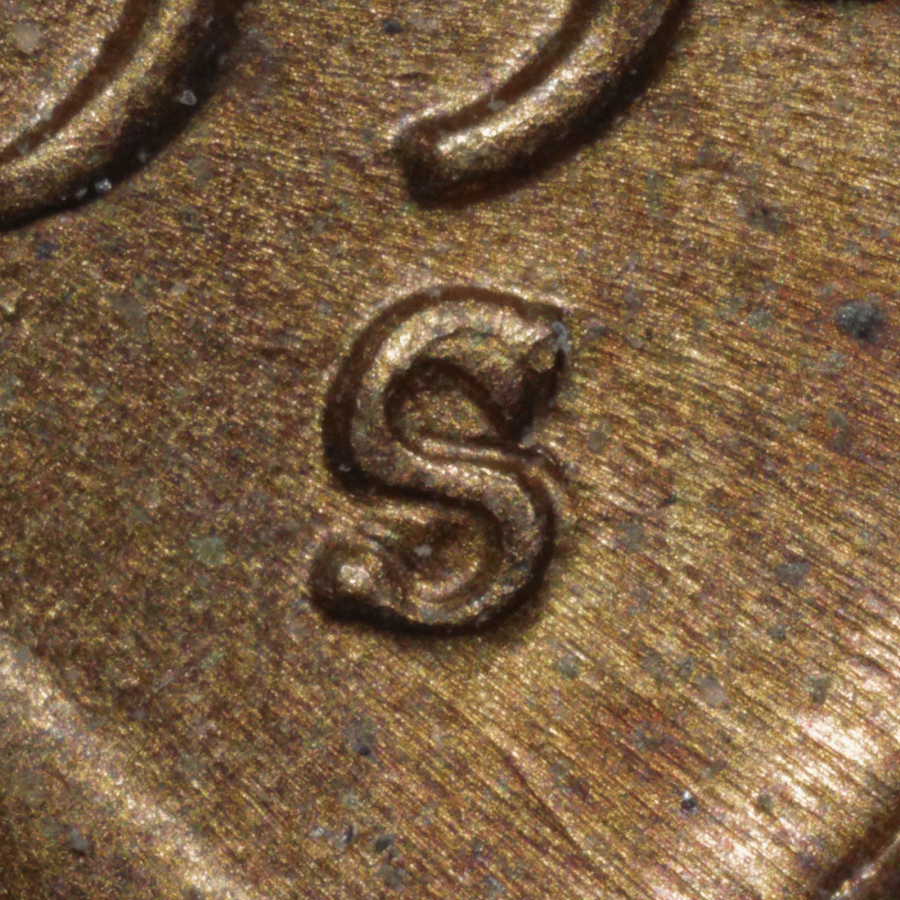 Edited by Justwalking
11/13/2019 1:21 pm
|
|
Pillar of the Community
United States
4051 Posts |
It's best to quote where those images came from so folks can read the full context: https://www.photomacrography.net/fo....php?t=39872In this case the HRT2i image has been up-sampled, which causes increased blur, while the FHD image was down-sampled, which reduces blur. Indeed what you are showing follows with the argument that over-sampling produces a more detailed image, and I'm not arguing with that at all. The problem with the above comparison is that the overall images they were taken from have very different FOVs. The magnification is the same, with same lens and aperture setting, but because the FHD has a much smaller sensor, it has a much smaller FOV. If I were to take an image of the same area with the HRT2i, and then downsample it similar to the FHD, I'd get a similar amount of detail. Doing that, I expect the HRT2i would win the comparison, which is why I continue to use it rather than the FHD. The advantage of the FHD is that the lower magnification to produce the same FOV also gives a larger DOF, which is advantageous. That would potentially make someone want to use the FHD instead of an APS-C or FF camera, but so far I have not found the image quality to support that move. |
|
Valued Member
Russian Federation
172 Posts |
Quote:
If I were to take an image of the same area with the HRT2i, and then downsample it similar to the FHD, I'd get a similar amount of detail. Think is not so easy. You can't stay at same resolution and same magnification at one time with FF compared to 2/3" sensor. You must shrink the pic across sensor and take big magnification then lost DoF very fast and increase diffraction or take just crop and lost resolution (on same resolution sensor). In other side you can also take shot of the whole coin on FHD with large FoV but with less magnification that is also give you large DoF and with same final resolution of 16MP. |
|
Pillar of the Community
United States
4051 Posts |
Quote:
Think is not so easy.
You can't stay at same resolution and same magnification at one time with FF compared to 2/3" sensor. You must shrink the pic across sensor and take big magnification then lost DoF very fast and increase diffraction or take just crop and lost resolution (on same resolution sensor).
In other side you can also take shot of the whole coin on FHD with large FoV but with less magnification that is also give you large DoF and with same final resolution of 16MP. Agreed, not so easy, but I think the conclusion is still correct. I spent a fair amount of time trying to make the FHD work across a wide range of coin photography tasks: full coin images from Dimes to Dollars; variety detail shots; and stack and stitch. Unfortunately it fell short in each area, and also was not tetherable in Live View (at full resolution), or for image transfers, or for external triggering. It did indeed prove the point of oversampling but functionality was far inferior to the Canon cameras. |
| |
Replies: 46 / Views: 7,576 |








 First Page


 Posted 11/12/2019 10:56 pm


