|
This page may contain links that result in small commissions to keep this free site up and running.

Welcome Guest! Registering and/or logging in will remove the anchor (bottom) ads. It's Free!
To participate in the forum you must log in or register. | Author |
 Replies: 8 / Views: 7,031 Replies: 8 / Views: 7,031 |
|
|
Pillar of the Community
United Kingdom
1168 Posts |
A few years ago I bought some heavily encrusted coins, as I thought it would be interesting to see a coin appear that hadn't been seen for centuries. I tried distilled water, which didn't seem to do anything, and didn't remove any of the crust. I then tried virgin olive oil, but that was very messy. One coin has been in the olive oil for years, and the crust is still thick, and only breaks away a very small piece at a time. The Licinius I coin below was cleaned using electrolysis. The obverse is actually better than the picture shows.   The obverse did start to clean quickly using this method, but the reverse had a persistent crust that didn't want to shift. The group I was in at the time encouraged more and more cleaning, and the obverse started to pit and turn blackish. (It had been in remarkably good condition up till then.) The large crust on the reverse then broke away in one piece, leaving a horrible scar. Would the damage on the reverse have been caused by the electrolysis, or is this a case of the "bronze disease" I have been reading about? I am glad that this community frowns on the electrolysis method, as it can easily ruin what might turn out to be a decent coin. How do I clean off a concrete like crust without destroying what is underneath? Thanks, Jim |
|
|
|
Bedrock of the Community
Australia
21789 Posts |
My experience with olive oil and LRB crusties is a little disappointing. A soak for a week did help in removing encrustations, but the coin was left almost jet black in color.
Sometimes when removing an encrustation some of the coin comes away with it.
It really a lottery, sometimes you can improve a coin, sometimes the result is an abject failure. For this reason only clean coins that otherwise have very little numismatic value to begin with.
Most ancient coins need some sort of cleaning after 2,000 or so years in the ground. Most ancient coins when first appearing on the market have been professionally cleaned. The professionals also have their failures - they take the risk- and that risk is factored into to the price.
The museum professionals use a wide range of coin cleaning techniques. Most of these techniques can be found with a patient Google search. The decision to use a selected technique that suits a particular coin will be based on long years of experience.
|
|
Pillar of the Community
United States
3495 Posts |
The problems you are having have less to do with the methods you employ than the subjects you are using
Bronze over time develops a 'patina'
This is desirable and more or less protects the bronze from exposure to air and water
Under the right conditions it can leave anything from olive green (very desirable) a mottled black brown and green or even a jet black surface
Under less than ideal conditions (particularly damp or wet ground) the patina gets thicker and thicker until nearly the entire fabric of the coin has been replaced by a corroded and coarse type of rust like oxidation
This coin above has lost most of its bronze content
If you put it on a gram scale it would be fairly light weight
Further cleaning will only remove the details as the metal surface is so far down that very little will be saved
Some coins can be conserved ie improved
And some cannot
|
|
Pillar of the Community
United States
636 Posts |
I agree with the previous comments. As a chemist with some experience in metal cleaning, I don't consider either distilled water or olive oil very promising for removing encrustations from coins. Using an ultrasonic bath with water and detergent sometimes helps, as does mild electrolysis and scrubbing, or very careful picking under a microscope. If there appears to be an organic (carbon-containing) soil on the coin, such as tape residue, ink, oil etc., then soaking in a solvent such as acetone or alcohol might help. In general, if the metal is deeply oxidized it will not be possible to restore the surface.
Edited by Seeker55
12/10/2019 5:44 pm
|
|
Pillar of the Community
United States
3495 Posts |
You know it might be an illusion .......
But I would swear I can see the face of Valerian in the wounded area of the reverse
It might have been overstruck
The bronzes of Valerian and Gallienus were almost completely made of recycled metal
The quality tended to abysmal
That might account in part for the poor condition of the coin
|
|
Pillar of the Community
 United States
8047 Posts |
Very timely to see this thread... I recently purchased this coin for next to nothing, thinking that once I had it I would get advice here. It's 1500 years younger than the coin that started the thread, and the surface isn't really "encrusted." But the green patina is uneven, which bugs me a bit (I am assuming it's a patina, and not something else), and there is obviously a coin with pretty nice details under there. It also occurs to me from the corrosion on the high points of the obverse that the surface below the patina might be uglier than the patina itself. Opinions? 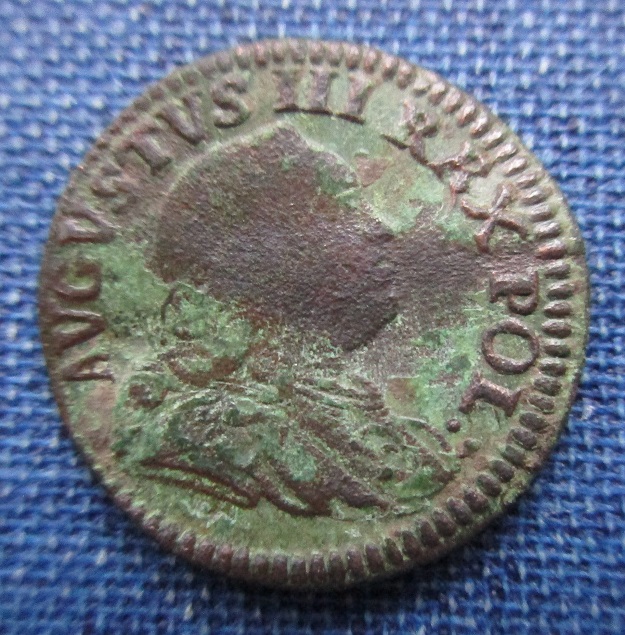 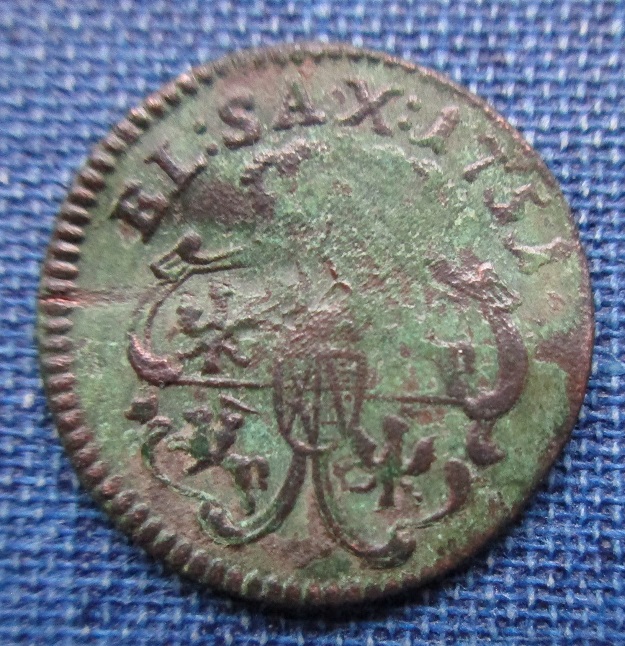 |
|
Pillar of the Community
 United Kingdom
1168 Posts |
Thanks for the replies, they all have valid points. I've had some coins that were only 15mm in diameter, but nearly 5mm or 6mm thick with crust. Maybe I've been unlucky with some of them, with the crust being really hard, and almost welded to the coin. There doesn't seem to be any one correct way to clean encrusted coins. I'm thinking of removing the outer layer mechanically, then a mild electrolysis, and finish in water or olive oil. Unfortunately, before starting cleaning, it is impossible to tell what is underneath if anything.  It is interesting about the face of Valerian in the wounded area of the reverse FVRIVS RVFVS. Perhaps the overstrike was responsible for the fault? I'd be tempted to leave your coin as it is Tdziemia, as it is not unattractive as it is. |
|
Pillar of the Community
United States
1122 Posts |
You can try short bursts of straight up vinegar for about 15min - 30min intervals. Then brush with a tooshbrush and toothpaste and/or baking soda. Cut the toothbrush bristles down with a scissor to make them a litter more harsh. You are taking a chance with vinegar of stripping the patina. I've had quite a few stripped of patina and had to darken the coin to make it somewhat presentable again. I've also had just as much success. Over cleaned 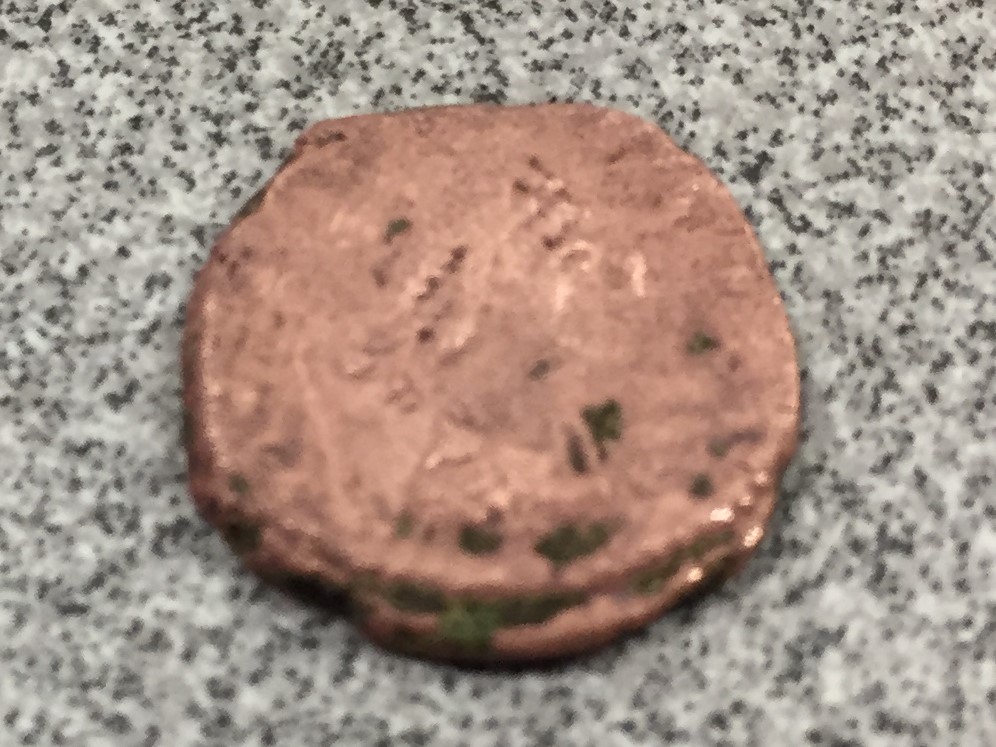 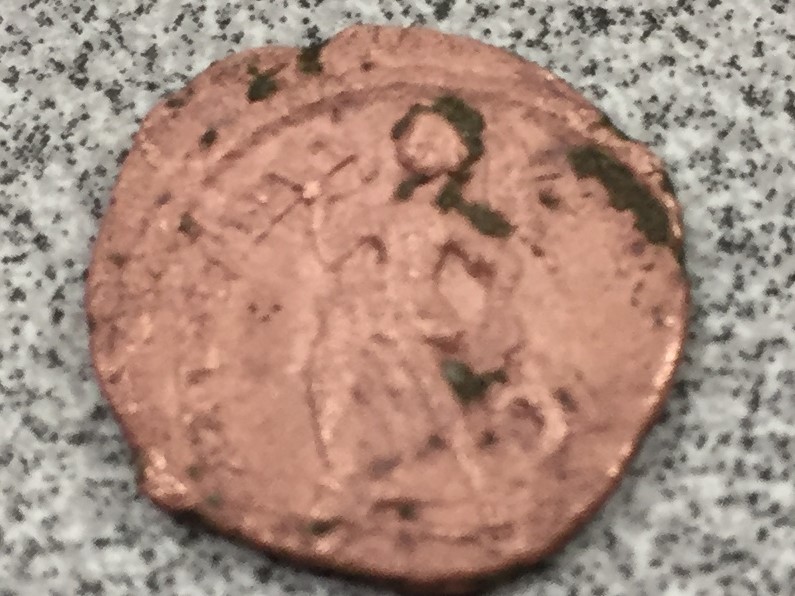 Darkened 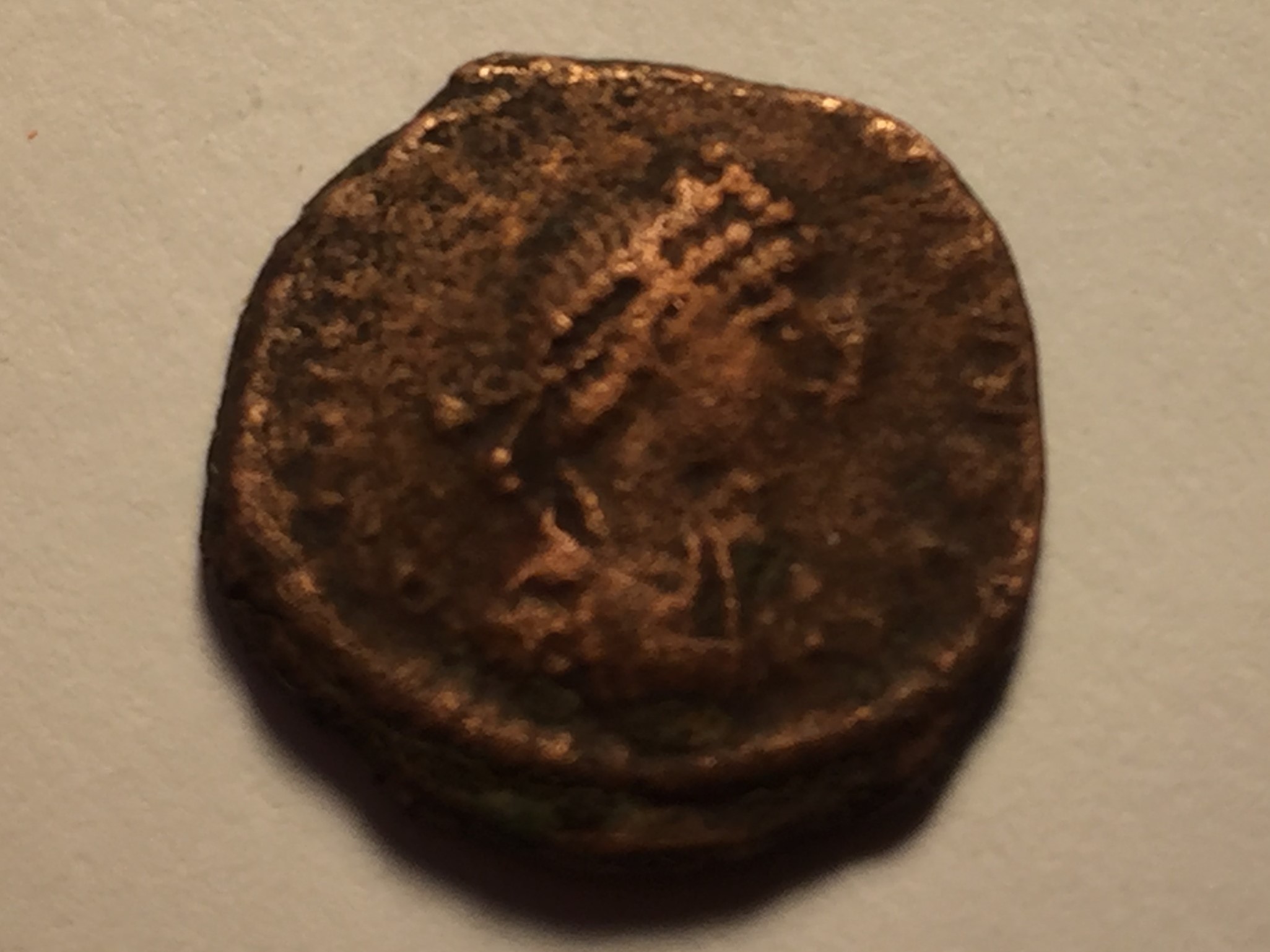 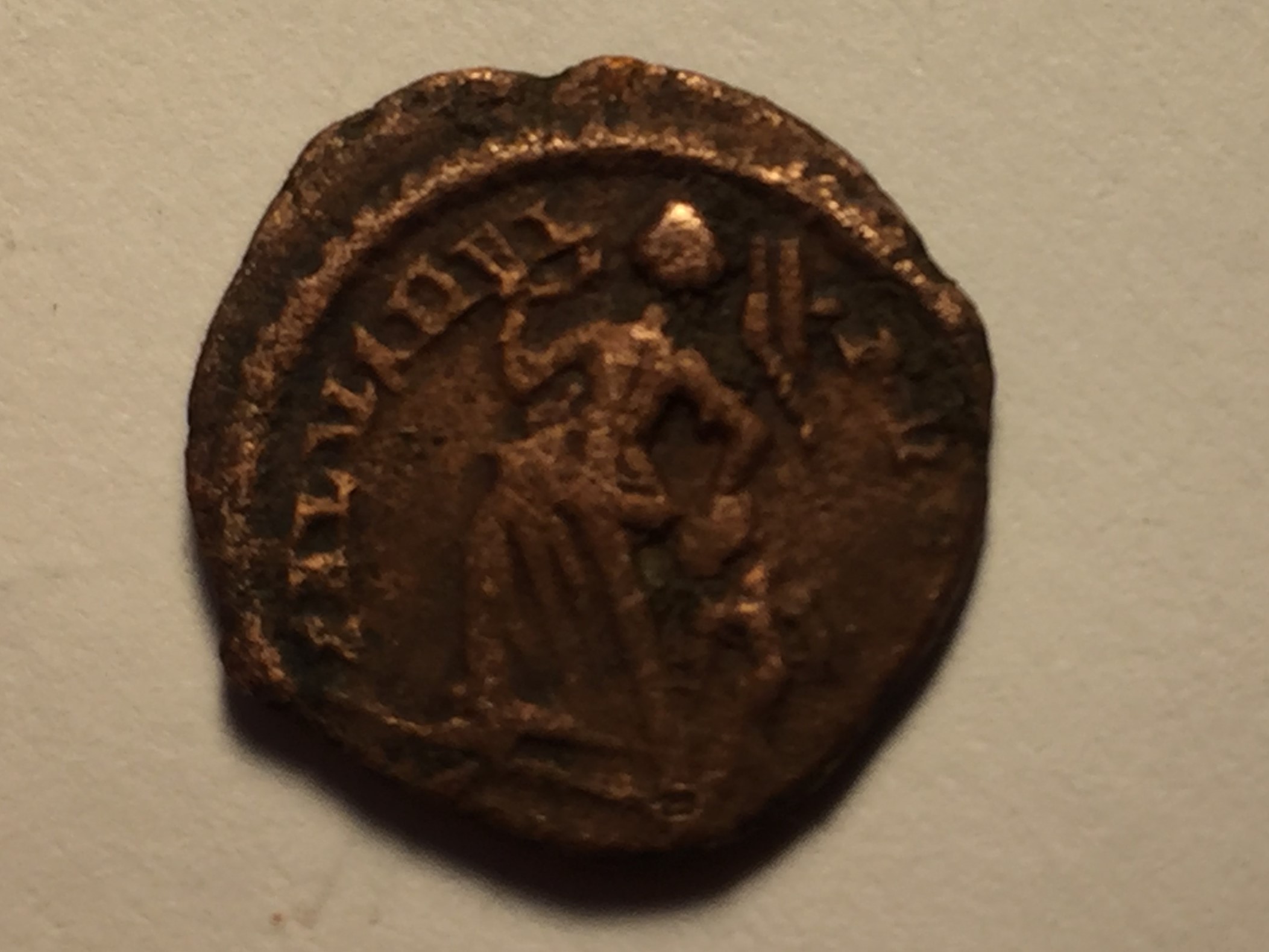 |
|
Pillar of the Community
United States
8047 Posts |
Thanks for the responses @Novicius and @travelcoin. Quote:
it is not unattractive as it is. Yes, I am OK with doing nothing. Mostly it is the obv that bugs me, as there is a dark (unpatinated streak) running across the coin (I fear I'll only make it worse if I experiment). The reverse is more well behaved, with the devices mostly poking above the patination, which I find reasonably attractive. A quick comment on oil and vinegar (sounds like a salad dressing ad  ). @Seeker55 said this: Quote:
I don't consider either distilled water or olive oil very promising for removing encrustations from coins Olive oil is a long chain fatty acid, and as such, should have some similar properties to acetic acid, though much milder in effect because it is (a) less concentrated in acidic groups, and (b) less soluble in water. So I have always imagined, without actually seeing a scientific study on it, that it makes sense to use it as a very mild reducing agent for copper corrosion products (i.e. it would act much slower than acetic acid which in turn would act much slower than hydrochloric acid). I know we have other chemists out here, so all viewpoints welcome. |
| |
Replies: 8 / Views: 7,031 |
|
To participate in the forum you must log in or register.
 
- How Dan O'dowd Built One Of The World's Greatest Ancient Coin Collections
- Top Coin Collecting Stories For The Week Of September 18, 2026
- 1949 Lincoln 1c Damaged 4?
- Help With Identification Please.
- 1969-S Lincoln Cent Machine Doubling Or Double Die Obverse
- 1999 Lincoln Cent - Die Clash
- 1809 Half Cent For Grading
- 1987 - D Lincoln Cent Grade Check
- 1987- D Lhc Possible RPM Or DDO In Date
- You Know What I Want That Final Number To Be
- Bronze Coin To Id. Greek Or Roman?
- A Ridiculously Badly Written Computer Aided Book, Coin Collecting Bible, 2024
- Liberty Head 10/11 Stars Obverse With A Sick Looking Eagle On The Reverse Holed 0.59g 13.06mm
- The Tyrant Collector - PCGS Youtube Interview
- Counterfeit Detection: ANA Video - Introduction, With Brian Silliman And Jim Robinson Ep. 1
- Counterfeit Detection: ANA Video - Mistakes, Risk Factors, And Counterfeits & Alterations, Ep. 2
- Counterfeit Detection: ANA Video - Pimples And Pits, Looking At Cast Counterfeits, Ep. 4
- Counterfeit Detection: ANA Video - What Year Is That Cent? Key Date Coins, Ep. 5
- Counterfeit Detection: ANA Video - Diagnostics Of The 3, 5, And 10 Cent Coins, Ep. 6
- Counterfeit Detection: ANA Video, Counterfeit Quarter Dollar Diagnostics, Ep. 7
Disclaimer: While a tremendous amount of effort goes into ensuring the accuracy of the information contained in this site, Coin Community assumes no liability for errors. Copyright 2005 - 2026 Coin Community Family- all rights reserved worldwide. Use of any images or content on this website without prior written permission of Coin Community or the original lender is strictly prohibited.
Contact Us | Advertise Here | Privacy Policy / Terms of Use
|
| Coin Community Forum |
© 2005 - 2026 Coin Community Forums |
| It took 0.28 seconds to rattle this change. |
 |
|
| |
| |







 Posted 12/10/2019 3:14 pm


