| Author |
 Replies: 7 / Views: 1,992 Replies: 7 / Views: 1,992 |
|
|
New Member
United States
18 Posts |
Edited by Nick_E
12/18/2019 3:30 pm
|
|
|
|
Pillar of the Community
United States
7067 Posts |
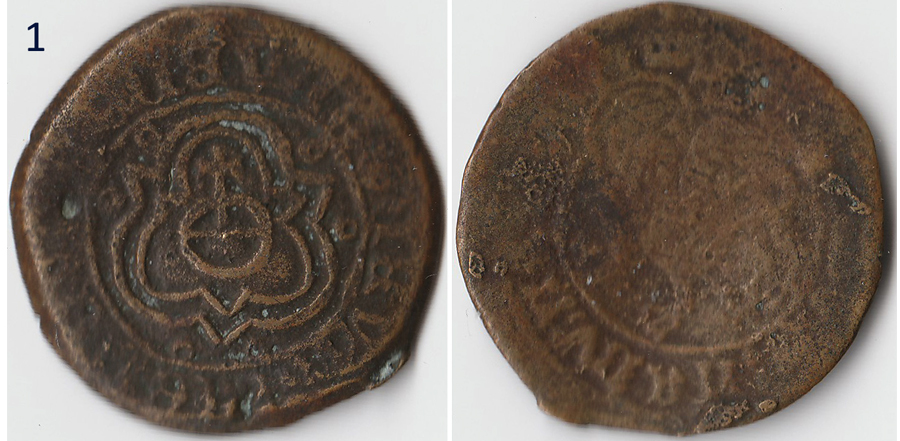
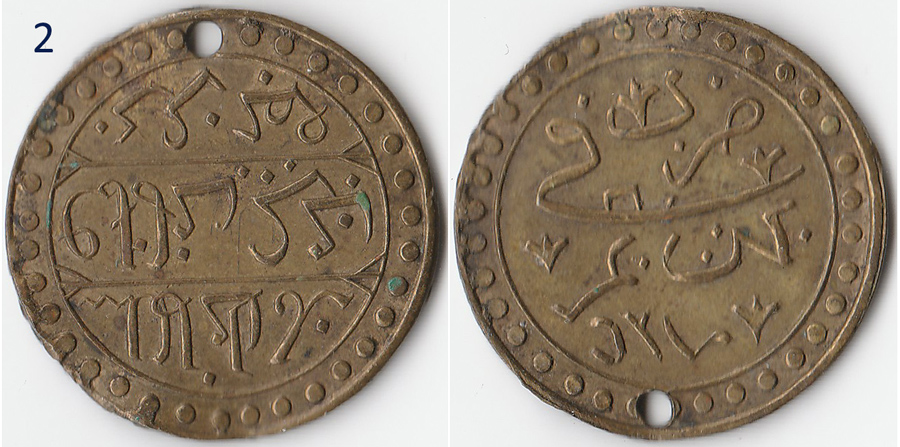
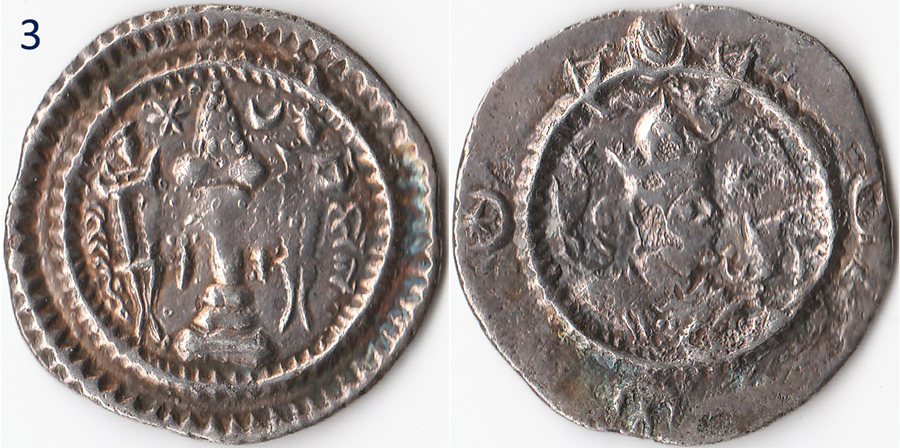
Best to post one or two at a time. But to get the ball rolling, #1 appears to be Nuremberg jeton with lion of St. Mark; #3 is likely as Sasanian drachm, maybe Kavad I (best to post that one in the ancients/medieval section). I wonder if #2 is a so-called "belly dancer" token - others will know for sure. Kushanshah will probably be able to ID the Islamic one at the bottom.
|
|
Pillar of the Community
Russian Federation
5186 Posts |
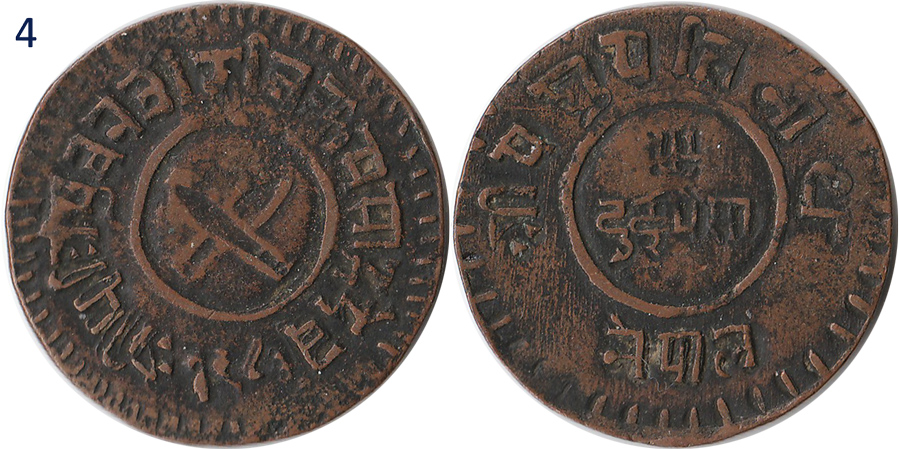
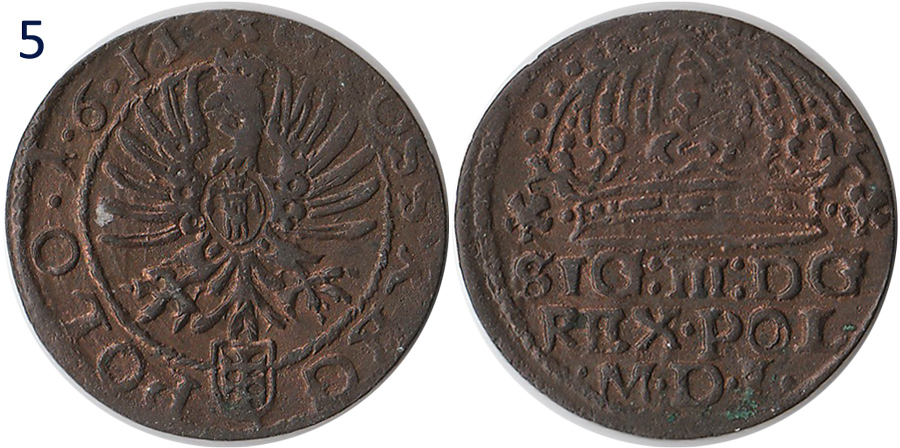
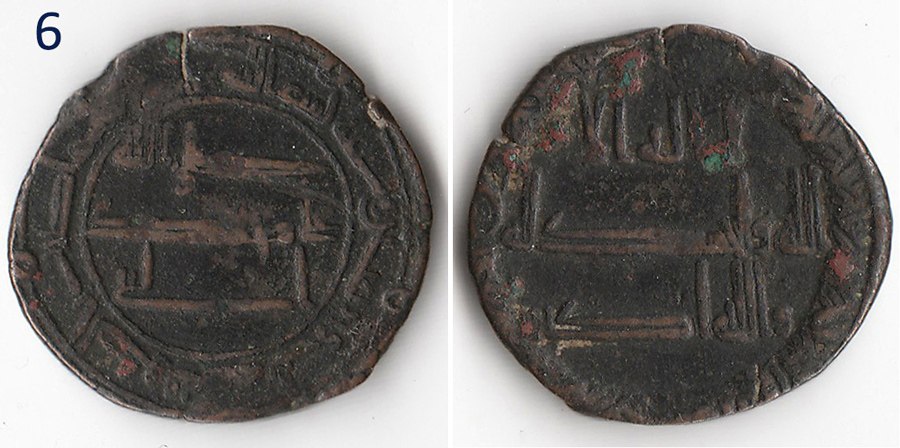
Agree that #1 is probably a Nuremberg jeton, #3 is Sassanian, #6 is relatively early Islamic (7th-10th century or thereabouts). No comment on #2. #4 is Nepal, first half of 20th century. Not sure of the date or denomination. #5 is purporting to be a Polish-Lithuanian grosz from 1611 (Kopicki 798), but it's not supposed to be red like that. Could it be a Suceava counterfeit? |
|
Pillar of the Community
United Kingdom
2490 Posts |
No 2, although frequently listed as "belly money" is probably one of a series of six propaganda medals issued by the French in North Africa in 1857 after the defeat of Emir Abdul Kader.
|
|
Moderator
 United States
23731 Posts |
Nice mix of medieval and modern coins. The Sasanian coin appears to be Kavad I from his 2nd reign 498-531.
|
|
Moderator
Australia
17031 Posts |
Quote:
No 2, although frequently listed as "belly money" is probably one of a series of six propaganda medals issued by the French in North Africa in 1857 after the defeat of Emir Abdul Kader. Although the "belly dancer coins" often imitate this design, the imitation is even cruder and less legible than the originals. Here's an original bronze medal of 1857; here's another similar one eBay. The date "1857", in Arabic numerals, is clearly readable. On the OP's coin #2, this "date" has degenerated into a bunch of squiggles only vaguely resembling numerals. It also appears to be brass rather than bronze, and has a hole at the top (which it was presumably manufactured with) for hanging. Don't say "infinitely" when you mean "very"; otherwise, you'll have no word left when you want to talk about something really infinite. - C. S. Lewis
|
|
Pillar of the Community
 United States
8076 Posts |
Quote:
#5 is purporting to be a Polish-Lithuanian grosz from 1611 (Kopicki 798), but it's not supposed to be red like that. Could it be a Suceava counterfeit? I checked against mine, and am 95% sure it is real, and probably deeply tarnished/toned. |
|
Pillar of the Community
United States
1554 Posts |
#6 is an 'Abbasid fals struck at al-Kufa in Iraq in the year AH 143 (AD 760). Although coins from al-Kufa of a slightly later date are quite common, earlier dates such as this are not.
The inscriptions on #2 are jibberish. Rather than imitating the 1857 propaganda medal, I will suggest that both the propaganda medal and item #2 imitate the same Ottoman prototype, thus their superficial similarity. The hole suggests a decorative purpose.
Edited by Kushanshah
12/21/2019 12:51 am
|
| |
Replies: 7 / Views: 1,992 |
|








 Posted 12/18/2019 4:19 pm


