| Author |
 Replies: 10 / Views: 3,161 Replies: 10 / Views: 3,161 |
|
|
Pillar of the Community
 United States
8056 Posts |
The political and numismatic history of Livonia -- more or less current Latvia and Estonia -- was both rich and complicated in the early modern era. I know there are collectors here who have more coins from this part of the world than I do, so please correct me if I get anything wrong. In late medieval times (14th/15th c.) this area consisted of a confederation of bishoprics (e.g., Courland,Dorpat) and free Hanseatic cities (Riga, Reval = Tallinn) loosely controlled by the Livonian Order, an autonomous branch of the Teutonic Knights. As the area grew wealthy from the Baltic grain trade, it became a target of its more powerful neighbors, especially Russia, which lacked a Baltic port. In 1558, Tsar Ivan IV (the Terrible) invaded, and the Livonian Order, unable to defend itself, disbanded (1561) under its last master, ceding Courland & Semigallia to Poland, Livonia (including Riga) to Lithuania, and Estonia (already partially occupied by Ivan) to Sweden. Between the mid-1570s and 1583, Ivan first makes further territorial gains, but then is driven out of Courland and Livonia by Stefan Bathory of the Polish-Lithuanian Conmmonwealth and out of Estonia by Sweden. Numismatically at this time, we have: Duchy of Livonia issues (1570-73) bearing a sword-wielding griffin of Livonia obverse, and Polish-Lithuanian symbols reverse https://en.numista.com/catalogue/du...vonia-1.html City of Riga issues (1561-79) bearing a castle obverse, and the crossed keys symbolic of episcopal cities reverse https://en.numista.com/catalogue/fr..._riga-1.html Duchy of Courland & Semigallia issues 1575-1577 bearing Courland motifs (lion) on one side, and Polish-Lithuanian on the other https://en.numista.com/catalogue/courland-1.htmlThis 2 denar Duchy of Courland & Semigallia coin minted in Mittau (today Jelgava), Kopicki 4004, is a numismatic departure from what comes both before and after. The obverse has the crowned monogram (SB) of Stefan Bathory, King of the Poland-Lithuania Commonwealth, and the reverse has the pogon (knight on horseback) which is the symbol of Lithuania. So the coin only has symbols of Poland-Lithuania: 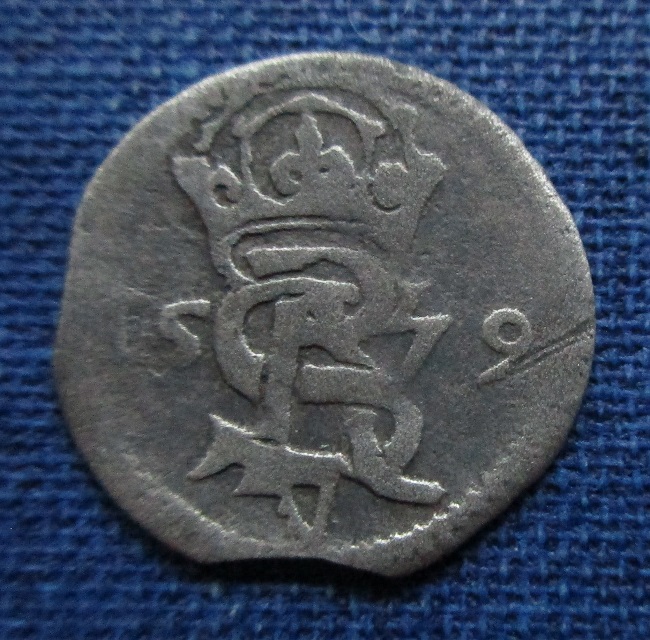 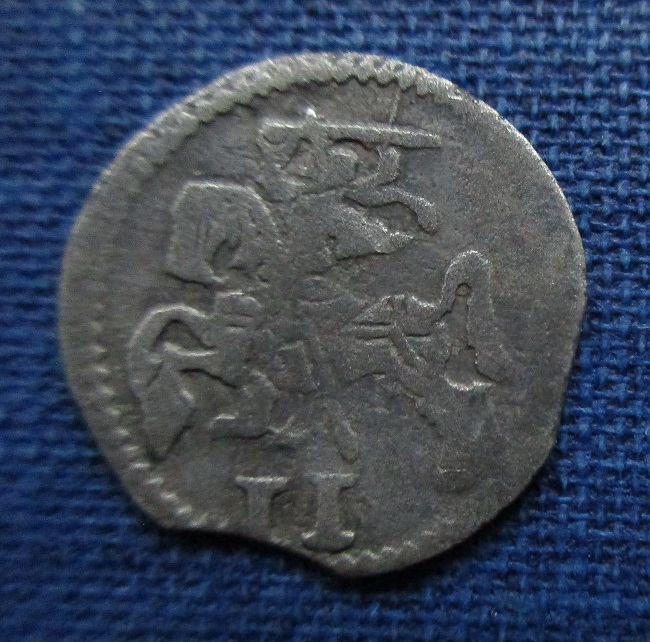 The coin looks like a continuation of the Lithuania 2 denar coin minted at Vilnius under Bathory's predecessor, Sigismund August until 1570. 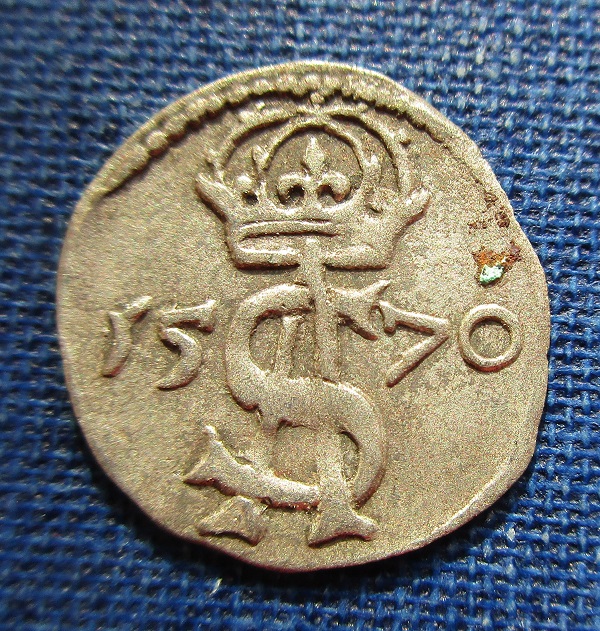 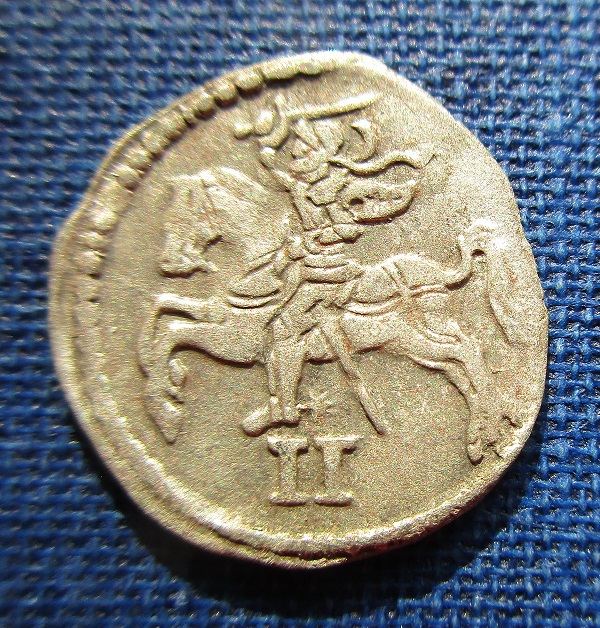 But it is a coin of Courland, with no symbolic references to this region. Starting in 1581, Riga begins minting coins (groats and 3 groschen) with Bathory's image obverse, but it retains the castle device typical of Riga reverse. If anyone knows more of this brief (2 year) 2 denar issue, it would be interesting. *** Moved by Staff to a more appropriate forum. ***Edited by tdziemia
01/03/2020 5:27 pm
|
|
|
|
Moderator
 United States
34563 Posts |
@tdz this is an informative write-up on an interesting short series. Those monograms are great--I wish someone would create a numismatic database of them to help with coin identification.
"If you climb a good tree, you get a push."
-----Ghanaian proverb
"The danger we all now face is distinguishing between what is authentic and what is performed."
-----King Adz
|
|
Pillar of the Community
 United States
8056 Posts |
Thanks. The more coins I run across from this area, the more I learn about the convoluted political history. I remember that in the How Far Back thread, a number of world coin collectors (certainly @j1m, and maybe you?) have 17th century coins from the Swedish occupations of the same areas (Livonia, and Riga), also with monograms (Gustavus Adolphus, Christina, CHarles Gustav). Indeed a database would be a great tool. Did I remember that on the thread about a new coin identification App, someone mentioned there are a lot of monograms. I also think my ancient Craig catalog has a list in the front of the book, though that covers a fairly narrow date range.  |
|
Moderator
United States
23731 Posts |
Interesting coins and informative write up. I don't have any coins from this region which I really should have being that my family hails from that part of the world.
|
|
Pillar of the Community
Sweden
2124 Posts |
Interesting and informative.  I don't collect coins from the Swedish occupations (or dependencies as they are called in Swedish history writing...  ) myself, but many Swedish collectors do, and there are some Internet pages about this. In Swedish though, but Google translate gives reasonably understandable results - in case they can be of some use, here are two: http://www.home.neab.net/gandalf/co...possessions/https://ingemars.se/besittning.htmAn Internet search for the Swedish term "svenska besittningsmynt" (= "Swedish dependency coins") may give more information. |
|
Pillar of the Community
United States
8056 Posts |
Thank you for the references @erafjel. I have some coins from the Swedish occupations/dependency of Elbing 1628-35, so I will take a look.
What struck me about the coin I posted is that there are no symbols of Courland on it. For the Swedish occupations/dependencies (Livonia, Riga, also ELbing in Poland 1628-35 and 1656-58), we almost always see reference to the place of issue: SOLIDVS LIVONIAE and the griffon on Livonian schillings, or SOLIDVS CIVI RIG and the crossed keys for Riga schillings. Of course this coin is very small, with no legends, but I might have expected the lion of Courland in place of the Lithuanian knight on the reverse.
I think in 1578-79 it was still unclear whether Courland would belong to Poland-Lithuania or Russia (the peace was only concluded in 1582), so maybe the coin is showing athe citizens' preference?
|
|
Pillar of the Community
United States
2643 Posts |
Here's a 16th century coin from Swedish Reval (John III). Hope you don't mind the addition. 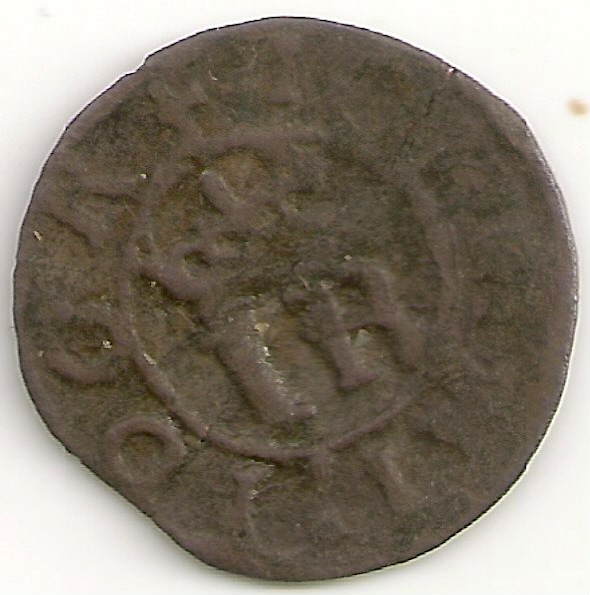 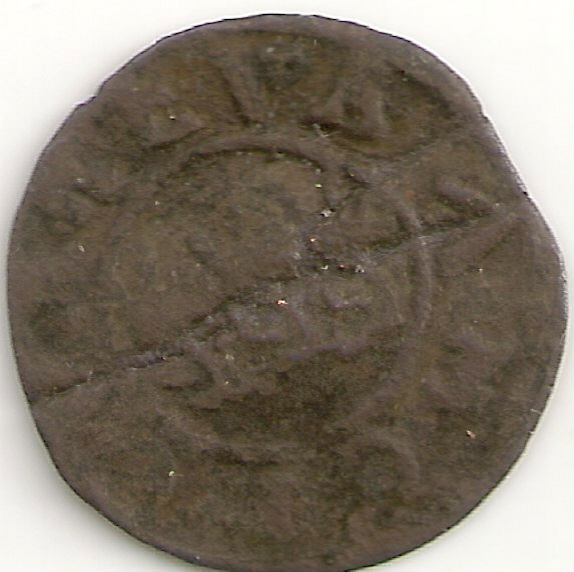 |
|
Moderator
United States
34563 Posts |
Quote:
Did I remember that on the thread about a new coin identification App, someone mentioned there are a lot of monograms. True, but the AI just isn't quite there yet, when I use this app on your first coin, the result is at least pretty close: Polish Denar from AD 1506-1548. The second coin is a big airball--the top hit is a Prussian 3 Pfennige from 1797. "If you climb a good tree, you get a push."
-----Ghanaian proverb
"The danger we all now face is distinguishing between what is authentic and what is performed."
-----King Adz
|
|
Pillar of the Community
United States
8056 Posts |
Quote:
Here's a 16th century coin from Swedish Reval (John III). Hope you don't mind the addition.
Great add, @arkie. According to numista the coin dates to 1570, which puts it very close in time to the coin that started the thread, i.e. in this period where Sweden and the Poland-Lithuania COmmonwealth are both fighting Ivan for these parts of the Eastern Baltic area. If I undersatnd correctly, Reval is at the northern edge of these lands, whereas COurland is at the south. Like most of the other coins, this one retains its mention of the place where it is issued (Reval) despite the occupation, whereas mine does not. |
|
Valued Member
Lithuania
386 Posts |
|
|
Pillar of the Community
United States
8056 Posts |
Thanks for the link @giedrius. I wasn't sure about the mark under the large SB monogram, so that's helpful to know it's Gotthard Kettler (previously DUke of Courland & Semigallis, and in 1579. Kettler was the last Master of the Livonian Order (1559-61), and thereafter (1562-87) the Duke of Courland & Semigallia, as vassal of first Lithuania (until 1569) and then the Poland-Lithuania COmmonwealth. The 1578 with the Kettler arms is Kop.4003(R5) and this 1579 is Kop.4004(R4). Despite the R4, it is not an especially valuable coin, except in very high grade. Recent sales in the WCN archive (and mine from a Latvian seller on ebay) were in the $25-45 range. |
| |
Replies: 10 / Views: 3,161 |
|








 Posted 01/03/2020 11:15 pm


