












 Posted 01/05/2020 07:40 am


Very true, yet there's a slight chance it may be the NSF version that's considered quite valuable 🤷 #127996;#8205;#9792;#65039;
According to:
http://www.saskatooncoinclub.ca/art...rieties.html
1953 Varieties
Variety 1: NSF-Far (No Shoulder Fold, Far Leaf)
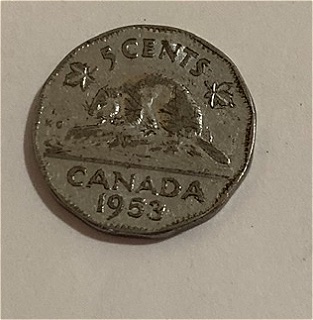
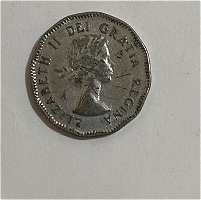
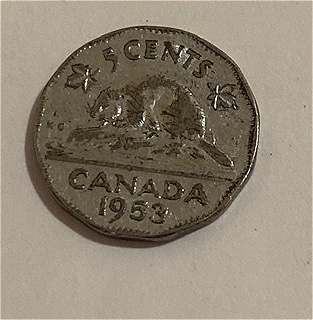
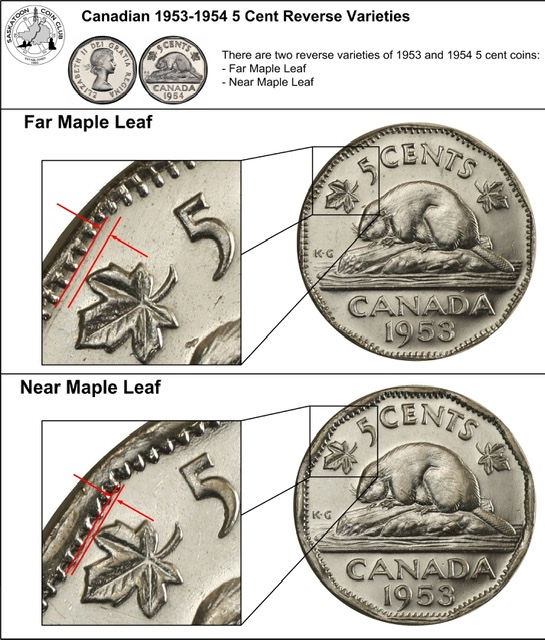
When the first coins of Elizabeth appeared in 1953, it was noticed that her shoulder appeared to be bare. This resulted from the fold of cloth on her shoulder being too weakly engraved into the dies to strike up well with only traces or none visible on most coins. These are known as the no-shoulder-strap or no-shoulder fold variety, usually abbreviated as NSS or NSF, but the best way to identify them is by "I"'s in the obverse inscription which have a distinct flare at both the top and bottom. There is also a slightly wider (than on the later type) gap between the small maples leaf's to the upper right and left and the denticles around the rim, which is why these are known as the "far leaf" variety, although the entire design is slightly smaller and the date is also further from the rim.
Variety 2: SF-Near (Shoulder Fold, Near Leaf)
To correct the bare shouldered look, part way through 1953 new dies were prepared with a deeper shoulder fold that struck up better and at the same time the shape of the "I"'s in the inscription were changed to straighter without that distinct flare. These are known as the shoulder-strap (abbreviated SS) or shoulder-fold (SF) variety. On the reverse the entire design was made slightly larger resulting in a smaller gap between the maples leaves and the denticles (they nearly touch the denticles) so this is known as the "near leaf" variety", although because the design is bigger the date is also closer to the rim.
1953 Mule Varieties
Due to incorrect die pairing a small number of 1953 five cent coins exist as either "SF far leaf" or "NSF near leaf" varieties, commonly called the SF mule and NSF mule.
Variety 3: SF-Far (Shoulder Fold, Far Leaf) - "Mule" Error
Variety 4: NSF-Near (No Shoulder Fold, Near Leaf) "Mule" Error. This mule variety is much rarer than the SF-Far one.
According to:
http://www.saskatooncoinclub.ca/art...rieties.html
1953 Varieties
Variety 1: NSF-Far (No Shoulder Fold, Far Leaf)
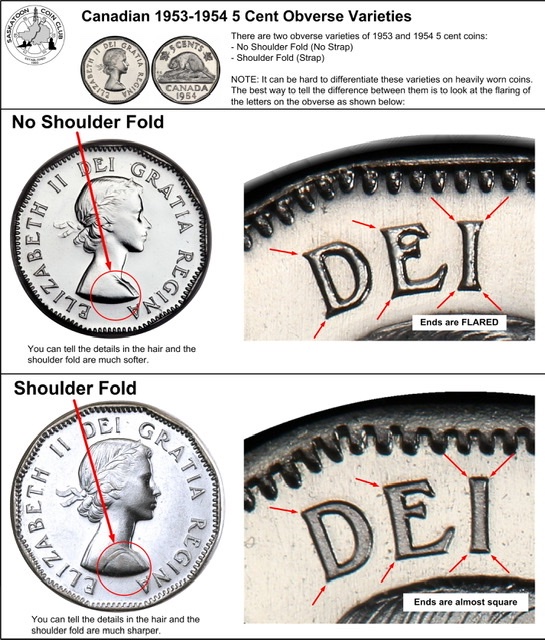
When the first coins of Elizabeth appeared in 1953, it was noticed that her shoulder appeared to be bare. This resulted from the fold of cloth on her shoulder being too weakly engraved into the dies to strike up well with only traces or none visible on most coins. These are known as the no-shoulder-strap or no-shoulder fold variety, usually abbreviated as NSS or NSF, but the best way to identify them is by "I"'s in the obverse inscription which have a distinct flare at both the top and bottom. There is also a slightly wider (than on the later type) gap between the small maples leaf's to the upper right and left and the denticles around the rim, which is why these are known as the "far leaf" variety, although the entire design is slightly smaller and the date is also further from the rim.
Variety 2: SF-Near (Shoulder Fold, Near Leaf)
To correct the bare shouldered look, part way through 1953 new dies were prepared with a deeper shoulder fold that struck up better and at the same time the shape of the "I"'s in the inscription were changed to straighter without that distinct flare. These are known as the shoulder-strap (abbreviated SS) or shoulder-fold (SF) variety. On the reverse the entire design was made slightly larger resulting in a smaller gap between the maples leaves and the denticles (they nearly touch the denticles) so this is known as the "near leaf" variety", although because the design is bigger the date is also closer to the rim.
1953 Mule Varieties
Due to incorrect die pairing a small number of 1953 five cent coins exist as either "SF far leaf" or "NSF near leaf" varieties, commonly called the SF mule and NSF mule.
Variety 3: SF-Far (Shoulder Fold, Far Leaf) - "Mule" Error
Variety 4: NSF-Near (No Shoulder Fold, Near Leaf) "Mule" Error. This mule variety is much rarer than the SF-Far one.


 to the Community!


