| Author |
 Replies: 8 / Views: 1,078 Replies: 8 / Views: 1,078 |
|
|
Pillar of the Community
United States
3552 Posts |
I've shot this MM from various angles and the perceived doubling seems to remain constant: What would this be classified as and how would I determine its value since neither PCGS nor NGC have anything referring to it? 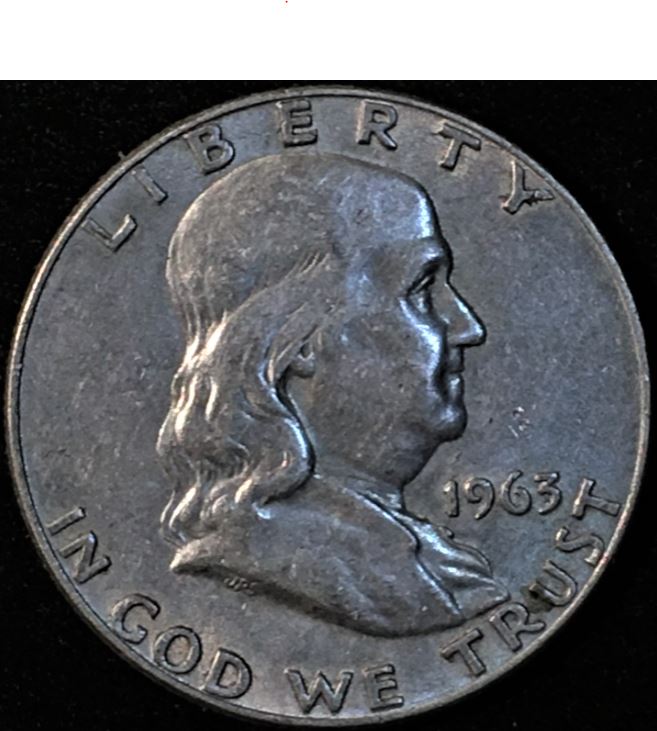 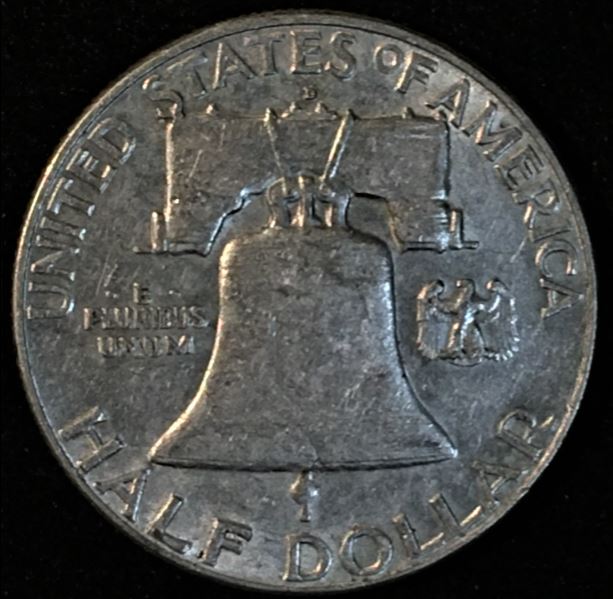 |
|
|
|
Pillar of the Community
 United States
3552 Posts |
Here's a close-up using some different color shades at distinct lighting angles. In person the doubling is more prominent at the bottom of the D towards the bell. 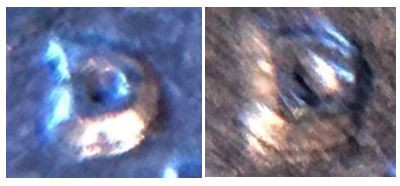 |
|
Valued Member
United States
452 Posts |
Needs a bit better focus on the close-ups I think. Hard to identify the specific defect as is. Could we also get close-up of the RIB in E Pluribus Unum?
Edited by durkastani
04/11/2020 02:04 am
|
|
Pillar of the Community
United States
3552 Posts |
This different light I found helped to clarify what appears to be at least three layers of the MM. The other shot's purpose was to drill into the center's shape etc. I hope these are now better to assist in figuring this one out. 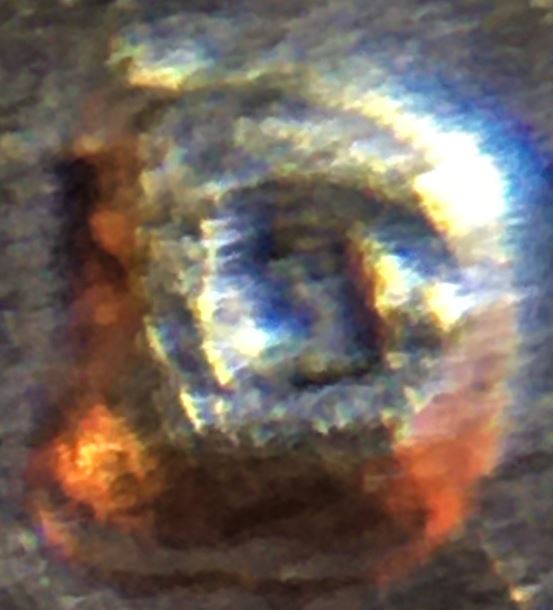 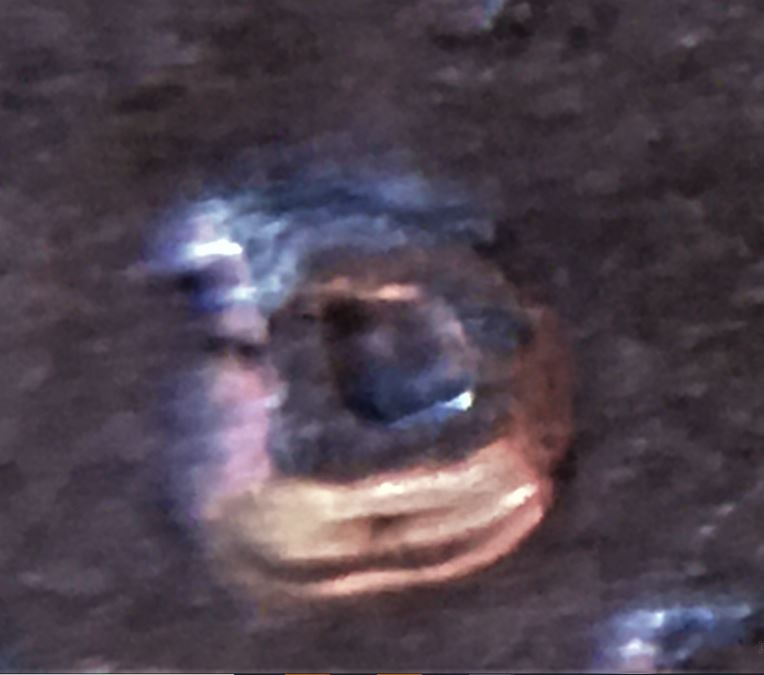 |
|
Pillar of the Community
United States
3552 Posts |
I forgot the RIB: 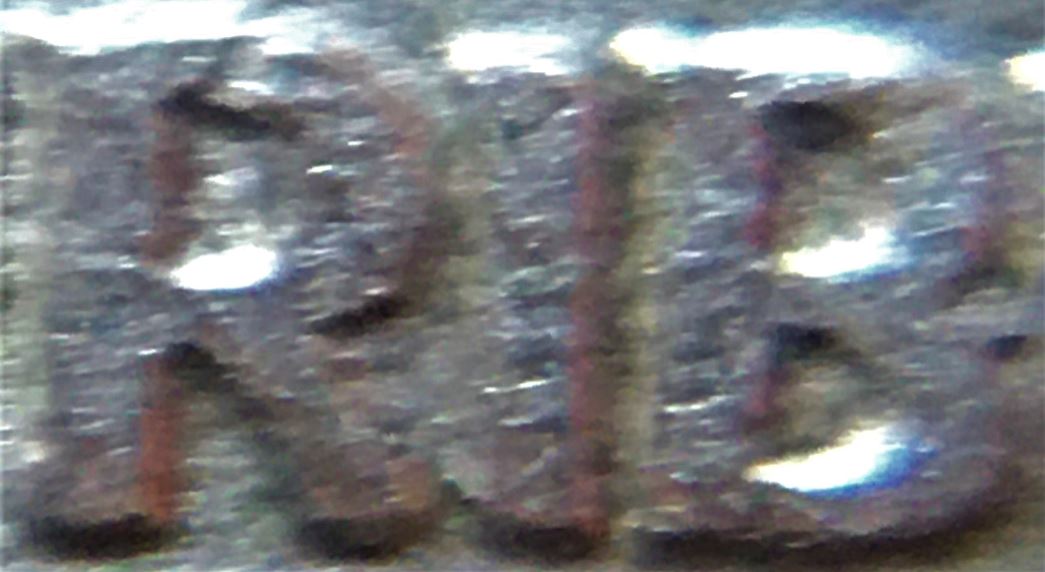 |
|
Bedrock of the Community
United States
62064 Posts |
|
|
Pillar of the Community
United States
3552 Posts |
Quote:
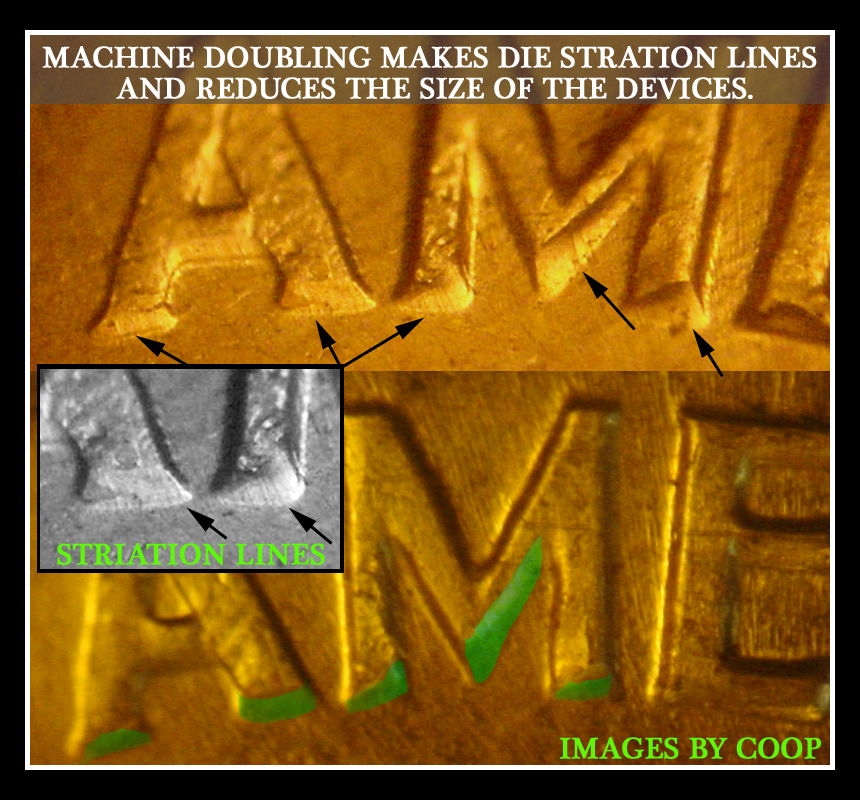
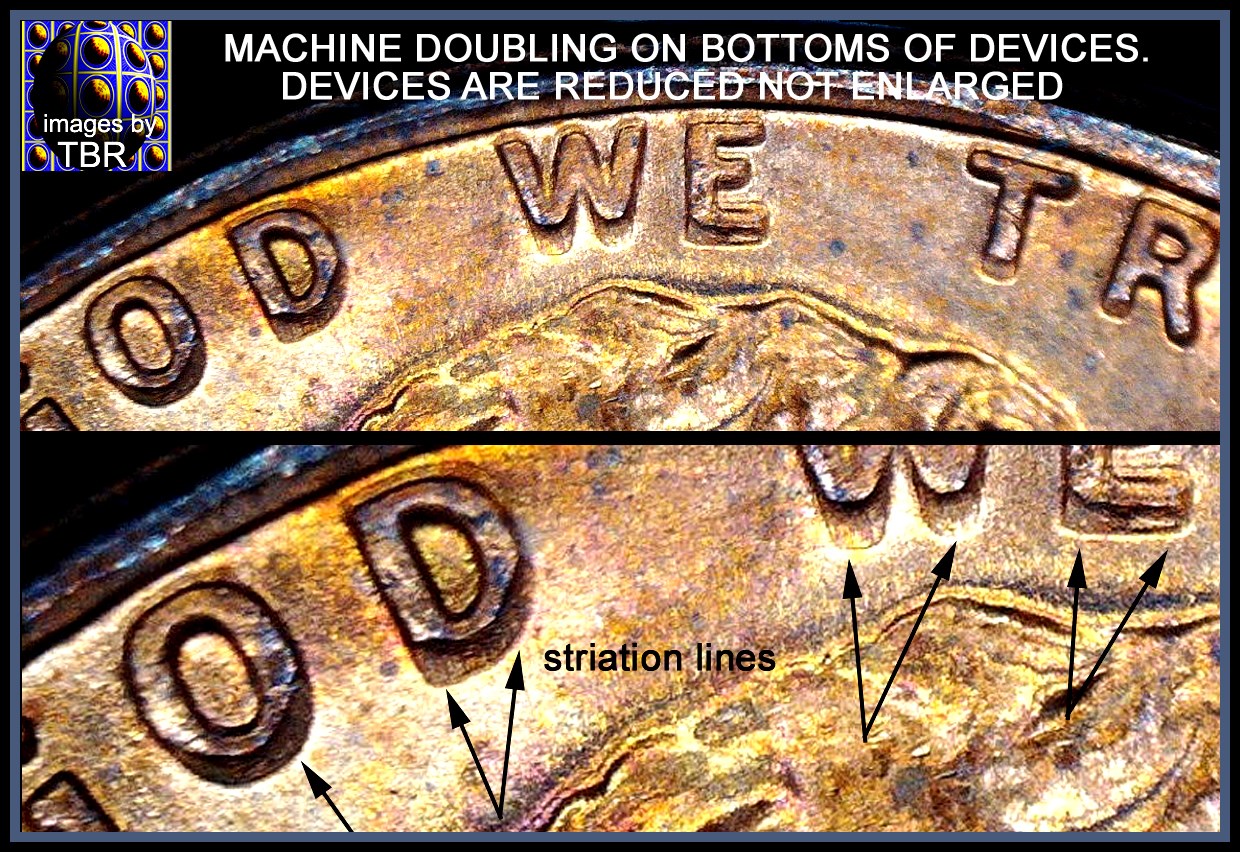
On a RPM, the devices will be enlarged, not engraved on the devices. @coop Then I'd assume that the RPM would 'never' have striation lines. Is that correct? But there's one problem for me unless I am missing it from inexperience in interpreting these photos. Generally my photo equipment cannot drill down to obtain things like the required tiny granularity to catch these fine striation lines. Are you saying that in this case my photos were good enough to show these lines since these photos are still pretty blurry? |
|
Bedrock of the Community
United States
62064 Posts |
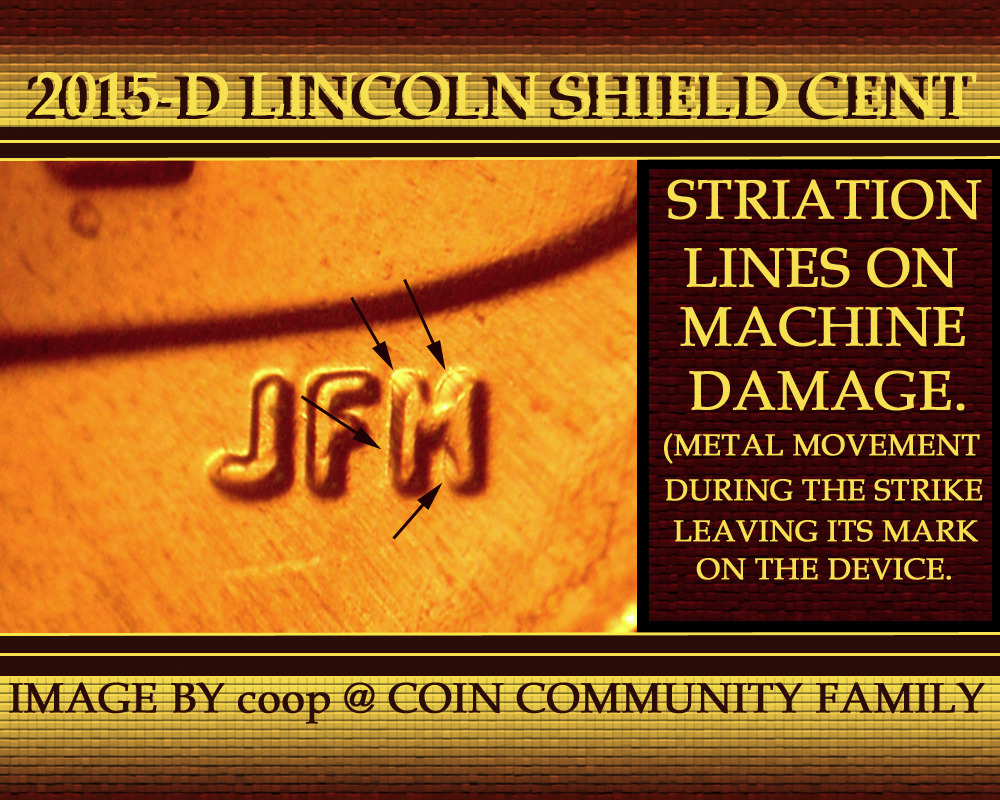
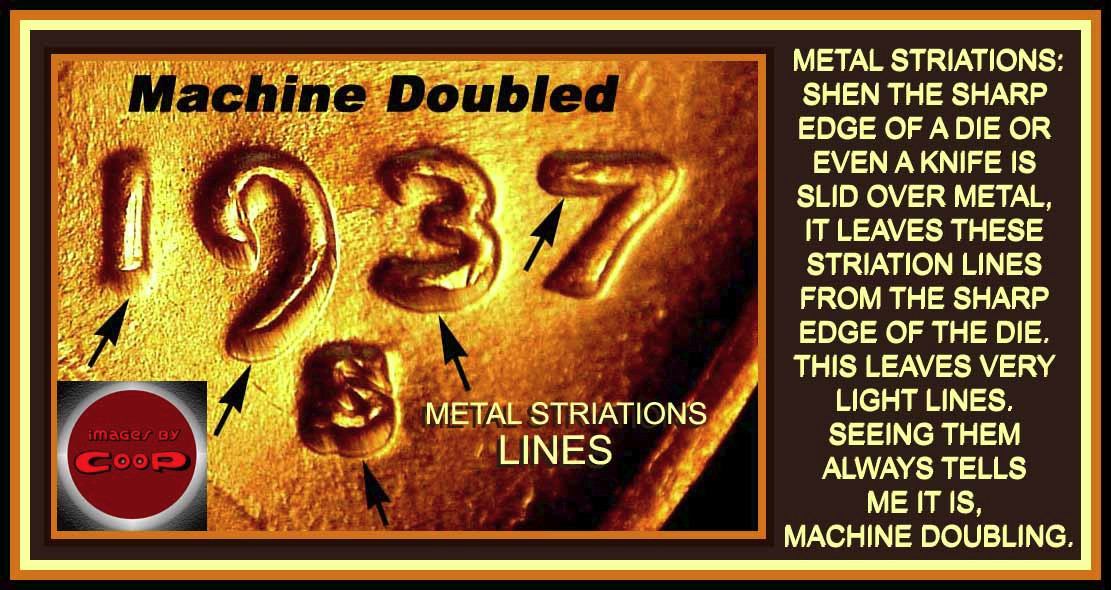
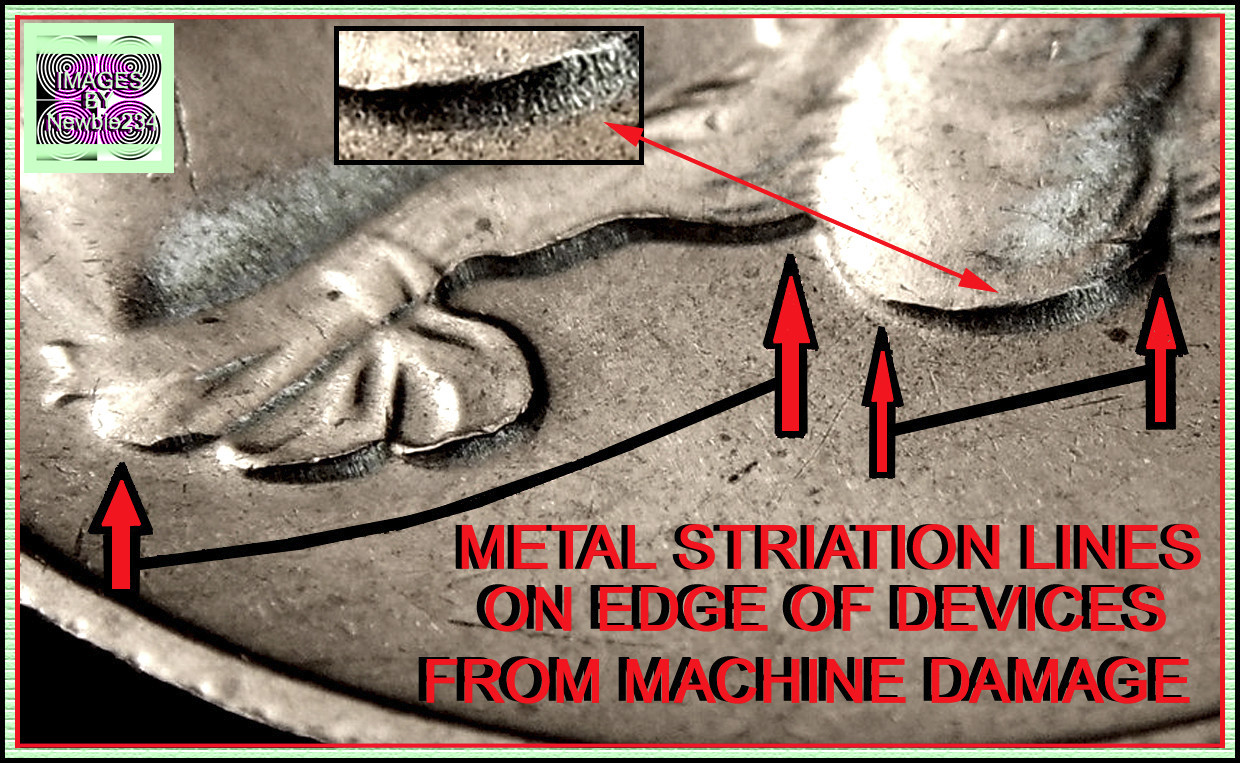
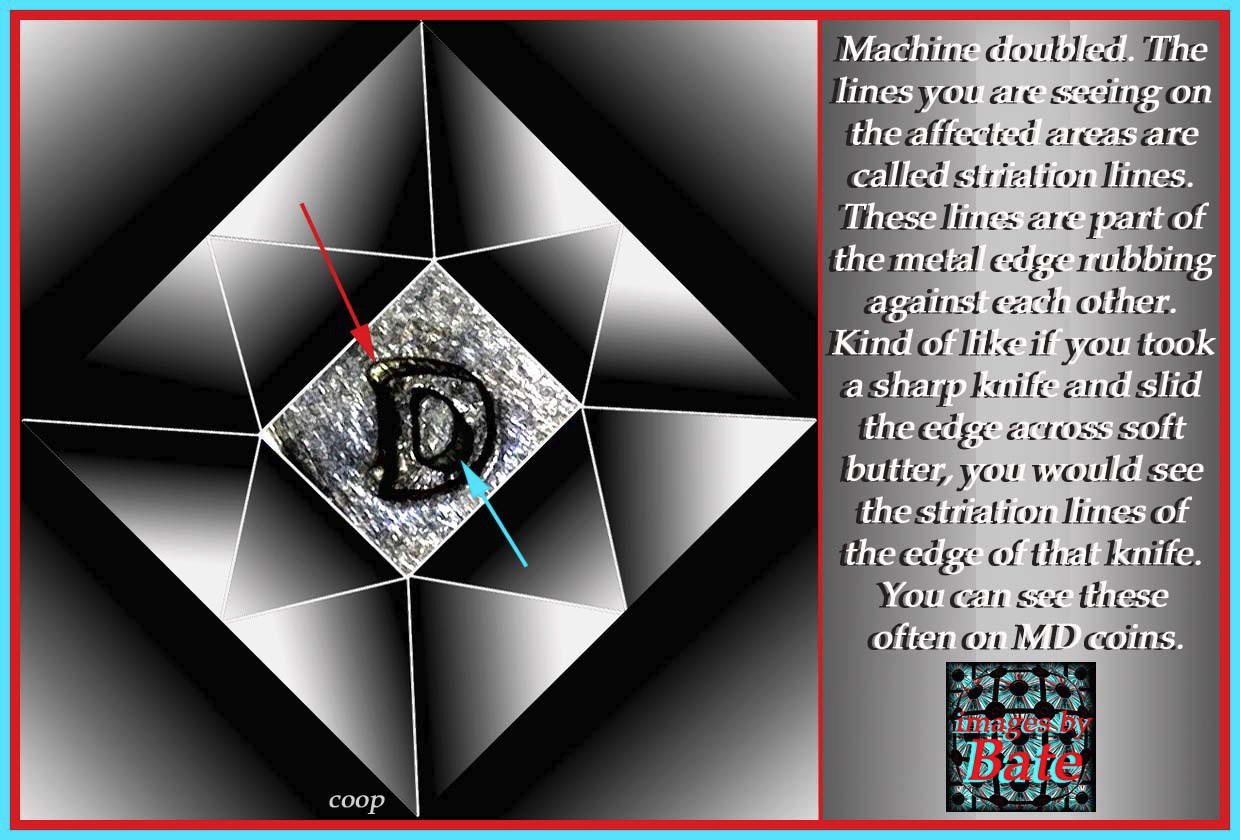
Anything is possible. With Machine Doubling you can have MD on the varieties as well. But basically the answer is no. Striation lines are on the sharp edge of metal. When it moves across a surface you will see the striation lines even on a knifes edge. Take a soft stick of butter and pull the edge across the butter and you will see the striation lines on the soft butter. It is even used to determine a knife in a crime, with the striation lines on the edge. 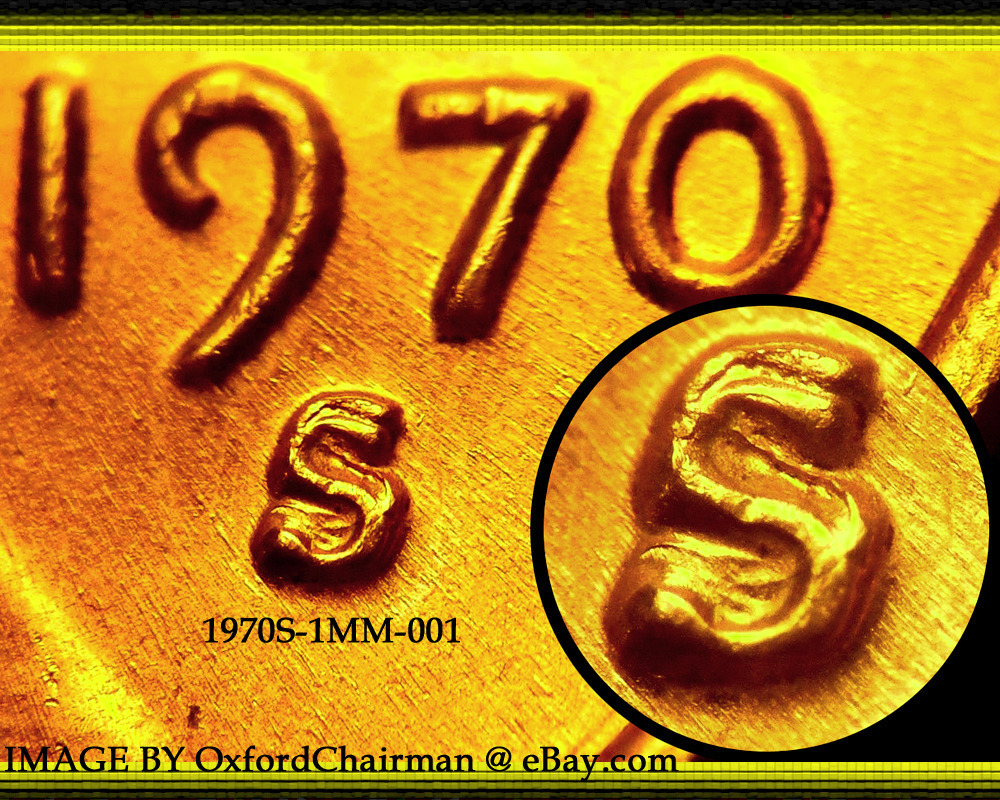 Note on the enlarged image, you don't see striation lines as the metal didn't move from Machine Doubling. You see contoured edges on all sides. Machine Doubling removes the contour. So on this coin, the MD didn't cause the RPM, it was on the die. |
|
Valued Member
United States
452 Posts |
Truthfully, these additional pictures aren't very helpful. They are very out of focus. A super close-up picture that is blurry is still a blurry picture.
|
| |
Replies: 8 / Views: 1,078 |
|








 Posted 04/11/2020 01:58 am