Due to the pandemic I haven't been buying many coins lately..
I do hope everyone is keeping safe

This coin was a gift from Finn235 a while back (Thanks Steve!) and not being my collecting area found the attribution and historical research very interesting and thought I'd share it....
This small bronze coin was minted under the Zealot faction in Judea (Mint city unknown) during the First Jewish revolt against Rome 66-73 CE and was only minted for two years 67-68 and 68-69 AD. It was produced as a type of war propaganda using the symbols of an Amphora and Grape vine signifying prosperity and abundance and a Paleo-Hebrew script aimed to strengthen the claim of the Zealots to have an independent country of their own, Judea.
First Jewish Revolt against Rome, 66 - 73 CE - Bronze Prutah Masada Coin 17mm/2.85gr.
Obverse..Vine leaf with small branch and tendril, surrounded by the inscription "Harut Zion"-('freedom of Zion').
Reverse..Amphora with wide rim, fluted belly and two handles, Paleo-Hebrew inscription 'year two' 67 CE.
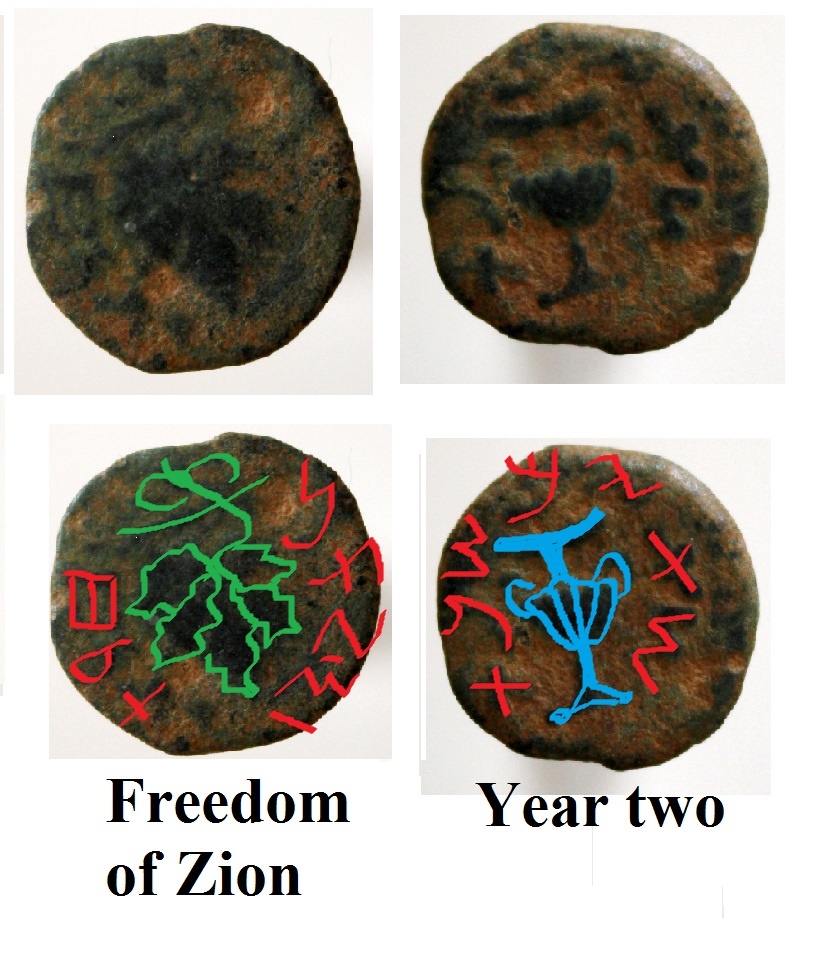
An unassuming coin which has taught me so much about the Roman occupation in one of its Eastern Provinces....
There is a great deal of detailed information for those interested in this conflict so I've just tried to simplify the main events..Please be gentle with my literary skills.....Hope you enjoy the ride.....
It all starts here in first century AD Judea....
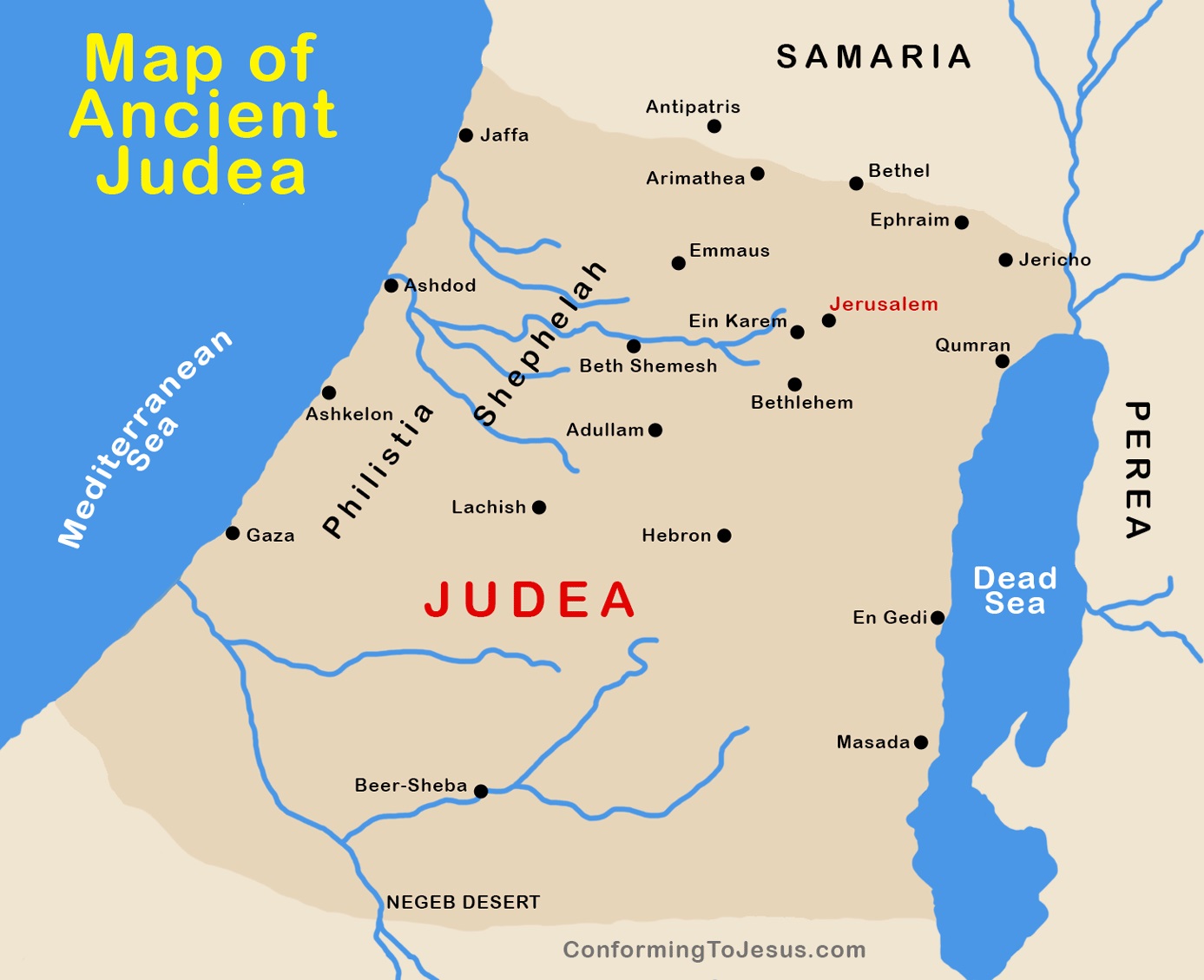
The unrest and discontent of the Jews had been increasing in Judea for years due to heavy taxes enforced on the local Jewish community by the then Emperor Nero. Protests against the taxation coupled with attacks and indiscriminate killings of Roman citizens by Jews was escalating. In retaliation the Roman Governor Gessius Florus ransacked the 'Second Temple', a Jewish holy temple, and arrested numerous senior Jewish dignitaries. This was the trigger and in AD 66 the 'First Jewish Revolt' began fronted by different Jewish factions such as the Zealots, Idumeans and Sicarii. They overran the Roman Garrison in Jerusalem causing the King, Herod Agrippa II (a Roman sympathiser), and all other Roman officials to leave, those who hadn't been killed.
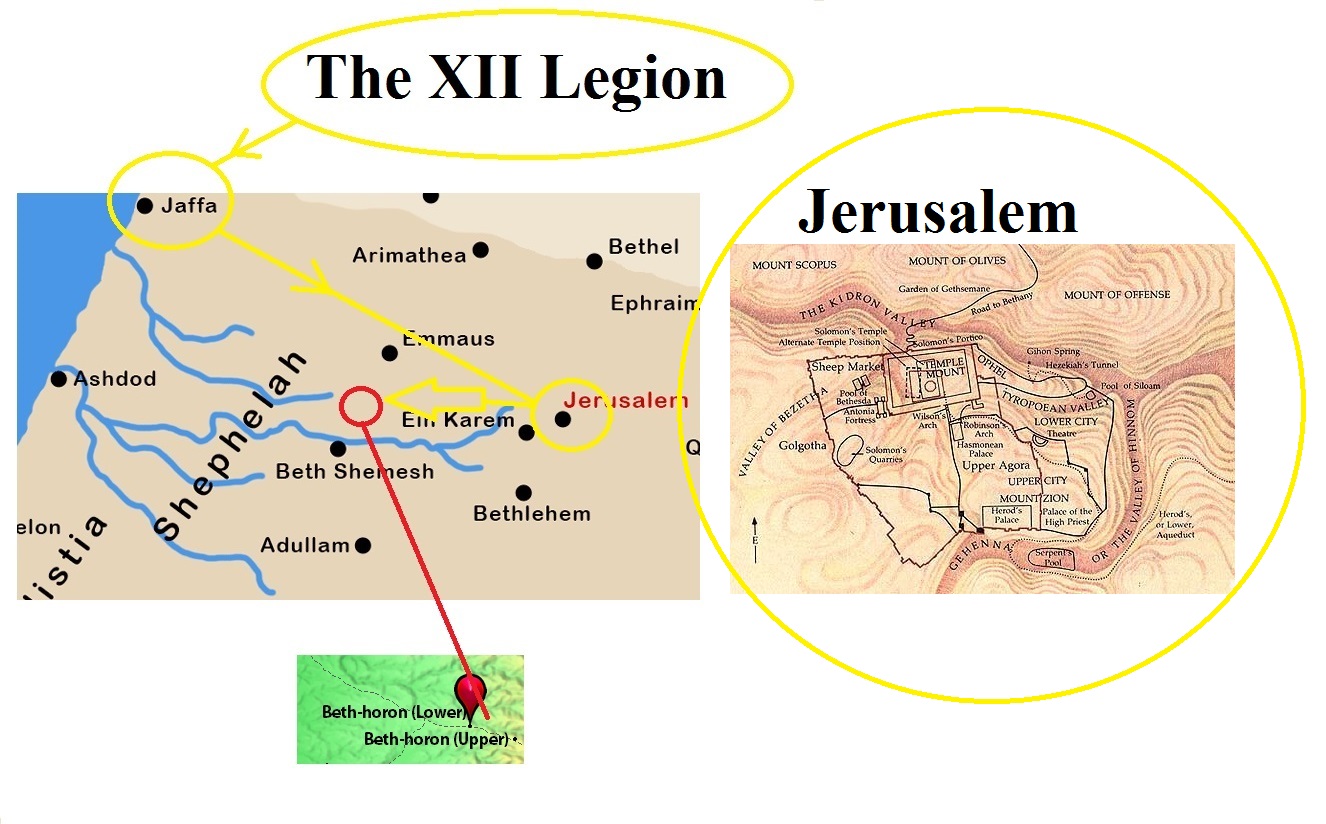
The Legate of Syria 'Cestius Gallus', on hearing of the rebellion, marched out of Ptolemais in mid October with the 'XII Legion Fulminata' plus auxilliaries and allies. On their way to Jerusalem they destroyed Chabulon, burning it to the ground, and the coastal city of Joppa (Jaffa) massacaring 8400 citizens. They then turned to Jerusalem and on arrival took control of Bezetha in the Jezreel Valley and commenced a siege of Temple Mount. The Romans set up camp just outside the Upper City in the vicinity of the Royal Palace and for five days attacked the walls deeply undermining a section that was now on the verge of collapsing and also setting fire to the Temple Gate. All seemed to be going well when suddenly on Nov 23rd Cestius ordered a withdrawal.....There are different versions as to why he did this but it was probably the Romans' inability to force a decisive engagement mixed with low moral and hunger due to insufficient food lines caused by the nonstop ambushing by the rebels also Cestius' uncertainty as to the reliability of his own troops...
They began their retreat heading West to the coast where they would holdup and wait for reinforcements, but as they reached the pass at 'Beth Horon' were attacked by a large number of rebels and completely routed, some 6000 Roman soldiers were killed and the 'Aquila' taken, Cestius escaped with a small number of soldiers and is said to have committed suicide soon after due to the shame of the defeat.
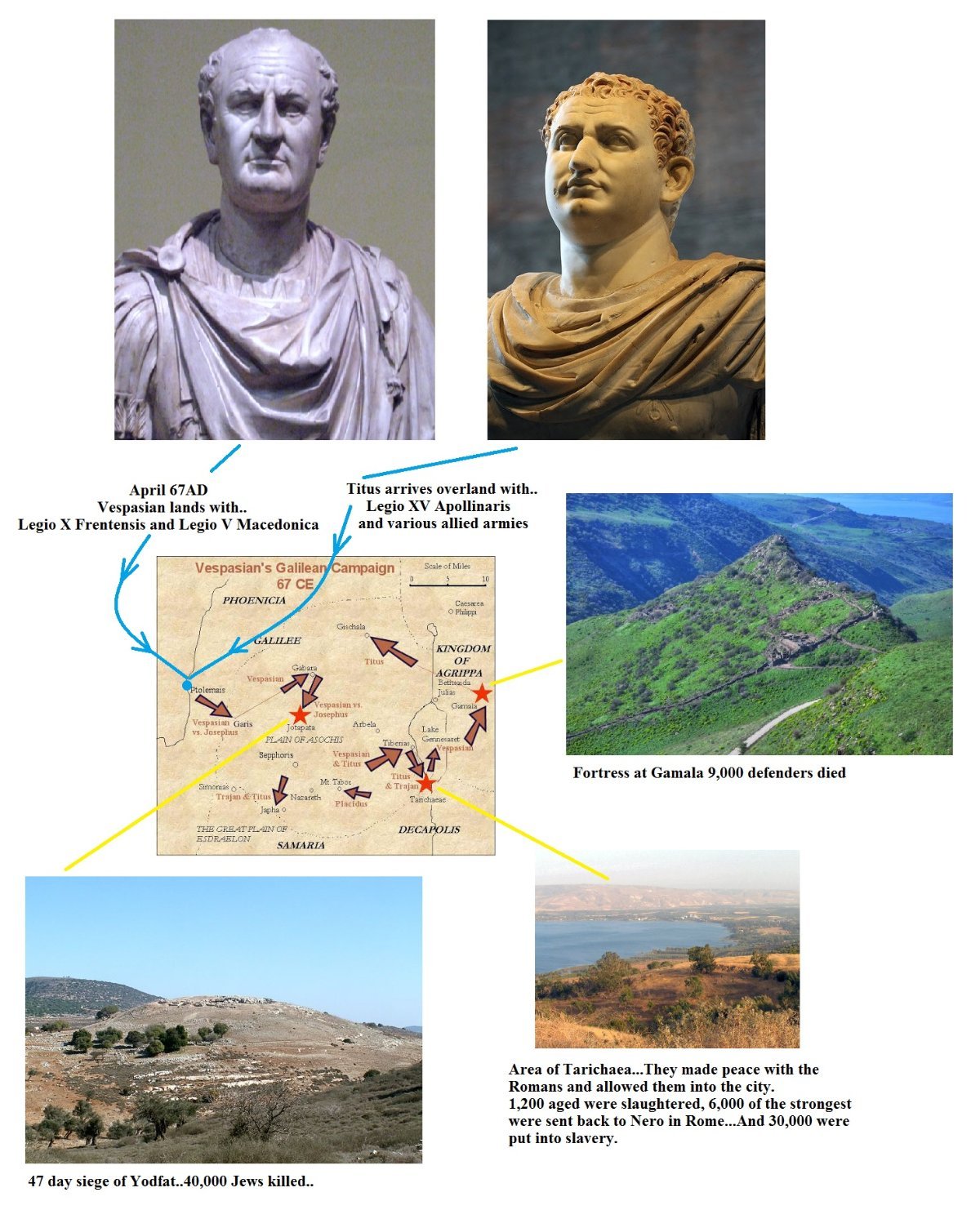
The Roman defeat at Beth Horon increased the support of Jewish Zealots across the Judean province this in turn forced the Roman Emperor Nero to send a large Roman force headed by his general Vespasian (the future Emperor) to quell the revolt. Vespasian landed at Ptolemais in April 67AD along with 'Legio X Frentensis' and 'Legio V Macedonica' here he was met by his son Titus (another future Emperor) who had arrived from Alexandria with 'Legio XV Apollinaris' along with local allied armies including that of King Agrippa II in all totalling around 60,000 troops..Vespasian started the campaign by first re-taking control of Galilee, some towns surrendering without a fight and others fighting to the bitter end. Thousands of displaced Zealots escaped south heading for Jerusalem.....By the end of 67AD Galilee was back under Roman control and is estimated that more than 100,000 Jews had been killed or sold into slavery.
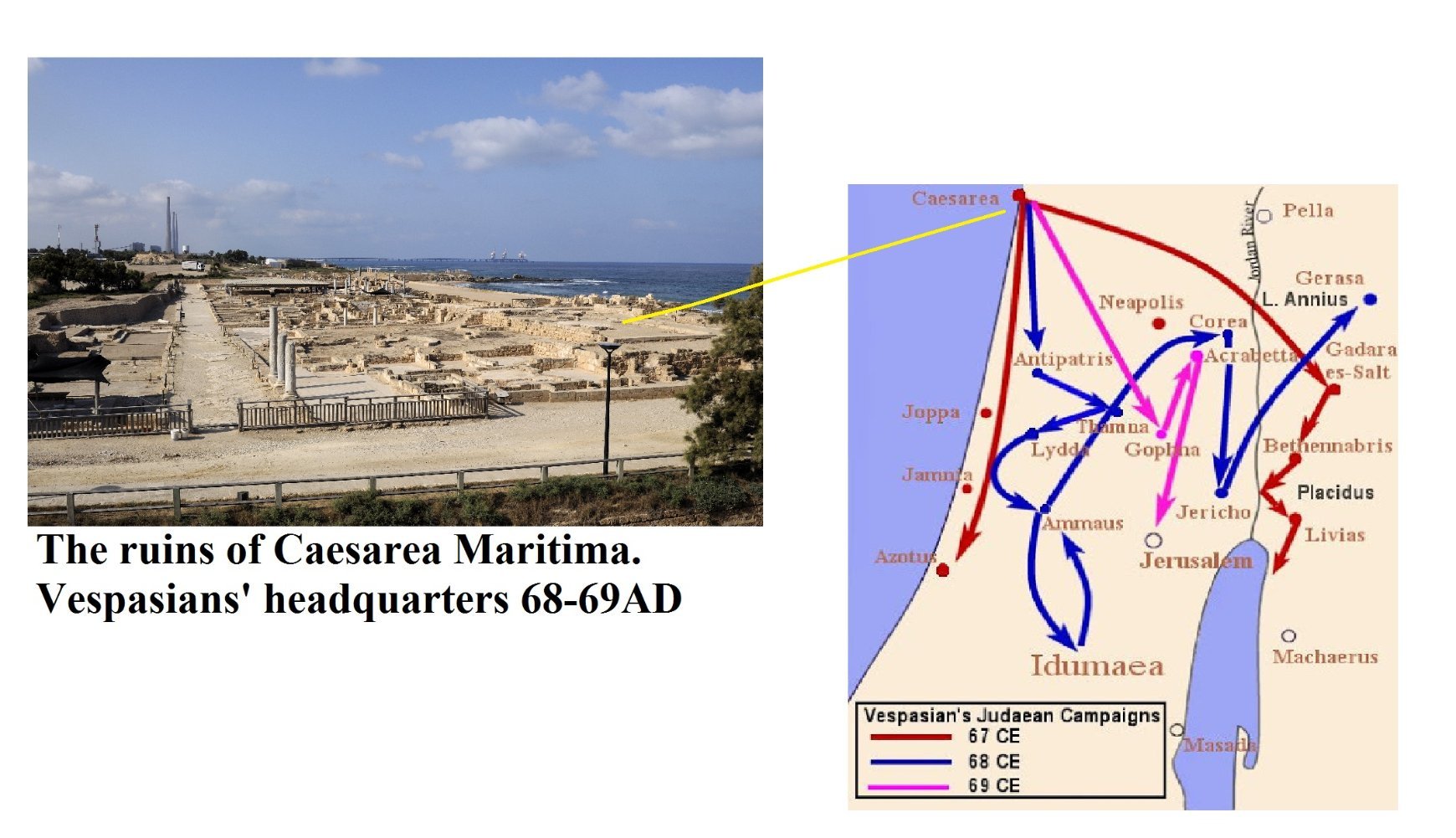
In early 68AD with the Northern areas subdued and under Roman control Vespasian set up a new headquarters at Caesarea Maritima and gradually started to retake rebel areas along the coastline and inland without confronting the large rebel forces of Jerusalem. In 68-69AD Vespasian had re-taken East and West Judea, Idumaea and Peraea leaving just a few rebel strongholds the main cities being Herodium, Machaerus, Masada and of course Jerusalem. In 69AD Vespasian was called to Rome to be appointed Emperor (The year of the 4 Emperors, but that's another story) and left his son Titus in charge of finishing the job...
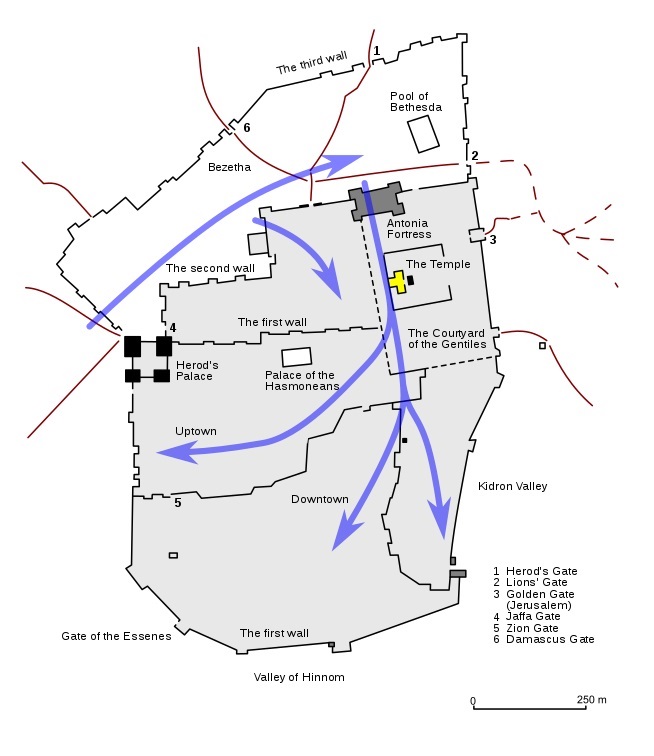
With the departure of Vespasian, Titus and his second in command Tiberius Julius Alexander planned and prepared for their assault of Jerusalem. The siege began on the 14th April 70AD and lasted approximately 4 months ending in August 70AD. Beginning 3 days before passover was probably a tactical move on behalf of Titus as he knew the city would be full with hundreds of thousands of civilian worshippers who had arrived for the celebrations and would be trapped inside the city draining the food and water reserves. The initial breakthrough came in May as the third wall was breached and soon after the second wall fell too. It was only a matter of time now as the food was running short, there was internal fighting between the Jewish factions, and people were scared and panic was rife. When the Romans broke through the internal first and last wall they flooded into the city killing anything that moved. It is said that up to 1 million civilians died and 97,000 were enslaved...
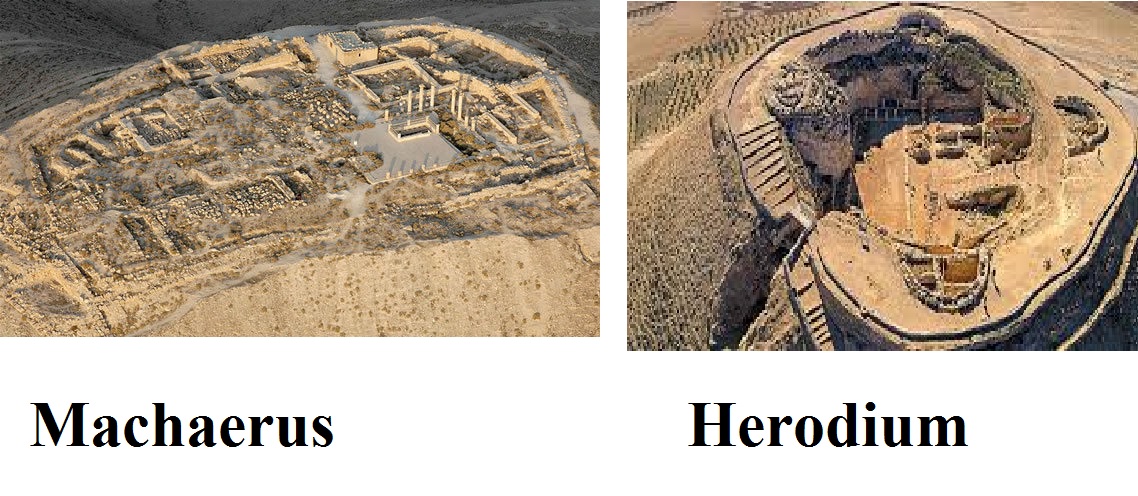
After the long siege and capture of Jerusalem the last few rebel strongholds were targeted. Vespasian appointed Lucilius Bassus as Legatus of the Ludaea Province and ordered him to destroy the final rebel strongholds which he obligingly did ..Firstly Herodium in AD71 was taken and then Machaerus in AD72 where the rebel forces surrendered before the fight and the city was demolished (literally). The last fortification of the rebels was at Masada but on route Lucius Bassus fell ill and died a new Legatus was appointed by the name of Lucius Flavius Silva......
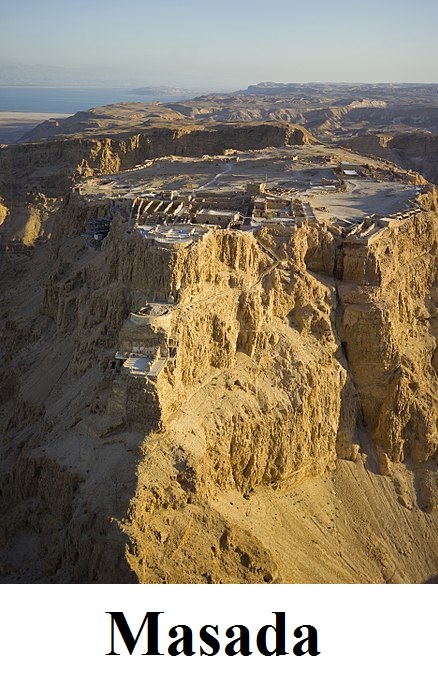
'Masada the last stand'(But an eerie ending!) an almost impenetrable fortress where the Roman garrison had been massacred in 66AD by a splinter group of the Zealots the 'Sicarii'. The Sicarii were about a thousand strong including women and children. The Roman Legion X Frentensis led by Lucius Flavius Silva reached Masada in early Spring 73AD and quickly built a circumvallation wall and then continued to construct a 375ft high assault ramp (the Roman engineers were pretty amazing!). This allowed a huge siege tower with battering ram to breach the wall after a siege of approx 2-3 months....When entering the city the Romans found that the Sicarii had committed suicide or killed each other and had burnt down all the buildings except for the food store..Only 2 women and 5 children were found alive......................
Was this the 'END' no just the beginning!
Hope I haven't bored you too much....It's just that I had time over Easter to follow this up and with the confinement here in Spain thought it was an ideal opportunity to work on something I love..HISTORY!...
As I said before don't be too hard on my writing skills, it's been a long time....
Take care all......Paul





 Posted 04/13/2020 6:00 pm





