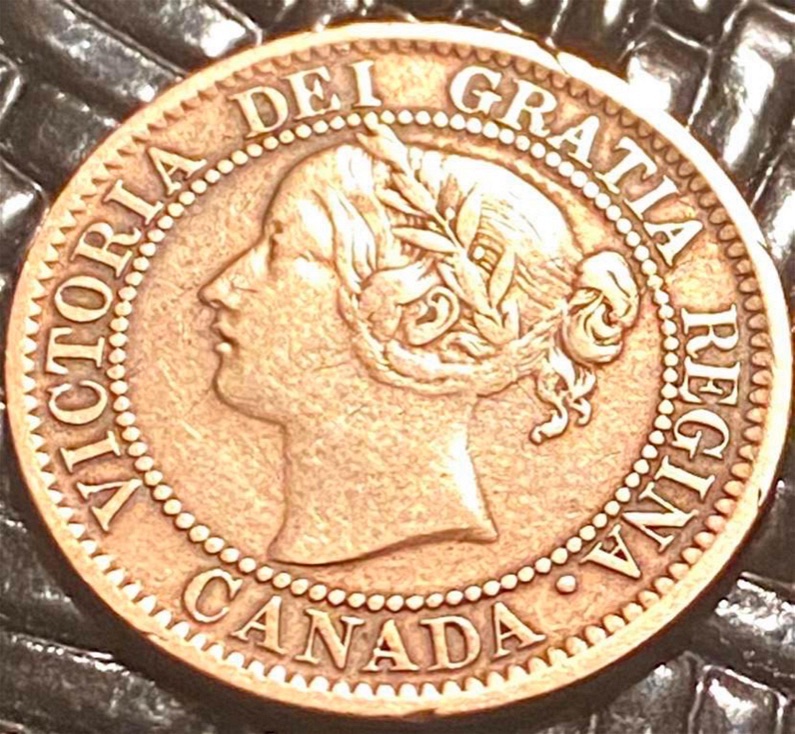
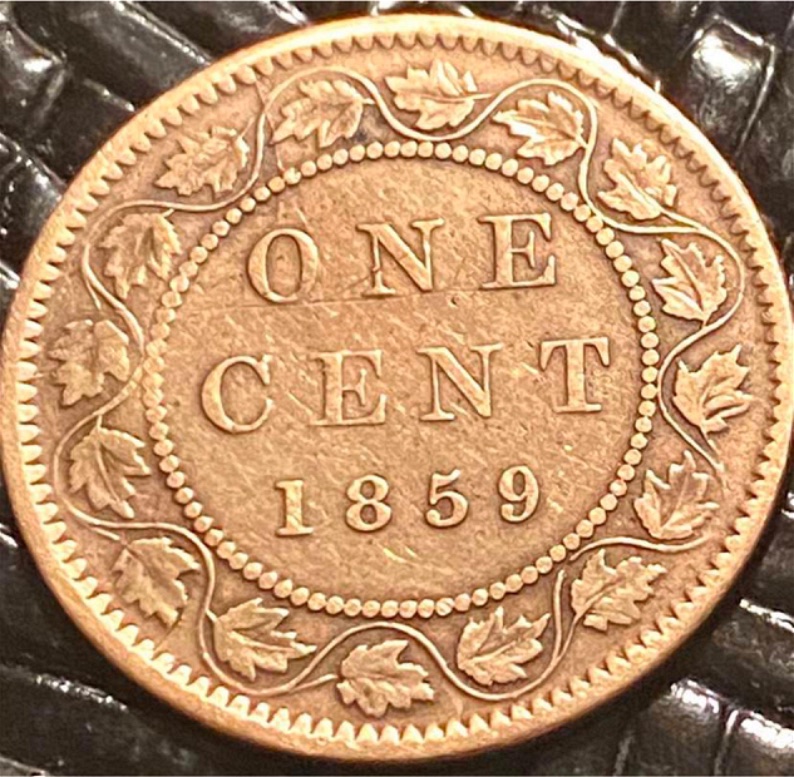
ALL 1898 & 58 cents have a vine break at 7, except for three 1858 dies made before the hub broke off there .. all '58 & '59 dies then had a break at 7, getting a little wider as the mintage year went on as more dies were made. The small, thin, clean break of your coin makes it struck with a die made very early in the mintage year. It was the bulk purchase of the planchets to be used that delineates how any "brass" cents came to be. It was, and almost all agree, that they came from improper mixing of the alloy in the crucible when the "ingots" were poured. When the ingots were flattened into sheets by rollers, the sheets may have had small portions where there was less copper and more zinc in that area. When the planchets were then punched from the sheets, a small number of "brass" alloy planchets went into the huge piles of items to be sent to the mint
The 1858's & '59 dies were 1/3 thinner than all bronze cents that were struck in later years, so your "metal detector" would have set off a different signal just because it was a larger metallic object. You mention no date doubling, which has nothing to do with the planchet alloy. There were 10 million 58's & 59's struck and many, but not all, coins had doubled digits. Some dies may have struck only a few hundred coins and some may have struck close to 100,000, so guess the number of dies used that could have doublings or repunches.
The only way to find out what the alloy of your coin would be by using a professional quality XRF, which will tell you exactly what it is. Your coin has been heavily cleaned with modern chemical cleaners so it appears yellowish. You will not be able to use "specific gravity" tests unless the physical mass or size differences is taken into consideration due to actual wear of the coin. The atomic weights of Copper, Zinc and Tin are very close together in something as small as a coin to be measured.
I suggest that try to get ahold of the March 2012 CN Journal where there is an article that 4 of us (one who HAD a brass cent)wrote describing the 1859 brass cent where 500-600 1859's were put under an XRF to see what specific alloys were found in the coins. The title of the paper was "1859 Cent: Modern Science Addresses a Classic Numismatic Question". Copper ranged from 90.96% to 95.98%. Zinc was from 0.32 to 1.85 and tin from 2.87 to 6.29. None of the coins were found to be even close to qualifying for the scores of brass compositions that make up the definition of "brass". The Metals classified as "brass" run from 67-85 copper and 33-15 zinc. The Canadian planchets (from England) were supposed to be 95 Cu, 4 Sn, and 1 Zn. For our study and experiment, we would have considered any coin found less than 90 Cu and appropriate levels of Zn & Sn.... but none were found then or with the 100 or so additional that we tested after the paper was written.
If the co-author of the paper agrees, MAYBE we can post the study here, but I seriously doubt it because it's owned by the
RCNA now. Here on CCF, there have been scores of threads started about the "discovery" of another brass cent by collectors and none turned out to be. Maybe yours is a true on, but only an XRF is going to tell you what is what.
Edited by okiecoiner
05/30/2020 09:21 am








 Posted 05/29/2020 10:44 pm





 to CCF.


