| Author |
 Replies: 8 / Views: 1,774 Replies: 8 / Views: 1,774 |
|
|
Valued Member
Singapore
104 Posts |
Hi! I'd appreciate if anybody here can help me figure out the meaning of the letter "G" below the number 50 of this Pfennig dated 1968... Thanks in advance!  Image: Image:  Image000.jpg Image000.jpg67.92 KB Image: Image002.jpg15.55 KB Edited by Sap
11/12/2008 01:16 am
|
|
|
|
Pillar of the Community
 United States
5953 Posts |
mintmarks, A = Berlin, D = Munich, F = Stuttgart, G = Karlsruhe, J = Hamburg.
|
|
Valued Member
 Singapore
104 Posts |
thank you very much! that's interesting to know... appreciate the reply :)
|
|
Valued Member
Australia
432 Posts |
All German coins (even the Euro's) have mintmarks on them, to identify which mint they were minted at. Depending upon the era and area, you may have between ONE mint (A-Berlin in the DDR after 1953), 4 at the time of your coin in West Germany (D-Munich, F-Stuttgart, G-Karlsruhe, J-Hamburg)... Third Reich (from 1938 on) had 7 mints (A, D, F, G, J plus B-Wien(Vienna) and E-Muldenhuetten). Go back into and before the Kaiserrecih era and you can start to add Hannover(B), Frankfurt(C), Dresden(E), Darmstadt(H) and Tabora(T) in Deutsche Ost-Afrika during WW1... German Mints are almost as facinating as the coin they produced and the plethora of changes twists and turns it took! :) |
|
Pillar of the Community
Germany
1238 Posts |
Have no idea why we need to have our (DE) coins made by four different mints, at five different locations.  But that's the way it is. Heck, nowadays euro coins are produced at fifteen places ... Christian |
|
Valued Member
Singapore
104 Posts |
interesting! maybe they're producing so many :)
|
|
Valued Member
Australia
432 Posts |
Chrisild, doesn't it have something to do with costs and quantities? There is no one German Mint big enough to produce the required quantity of coins; and I've heard something about how mints mints can produce cheaper than other?
I dunno, Euro-Germany isn't my area!
Maybe it jsut so they can make 5 different mint sets and etc each year!
|
|
Pillar of the Community
Germany
1238 Posts |
Not sure either, but this has recently come up again with the discussions about the Belgian Mint (the mint in Brussels will probably be closed in Dec-2009): Some euro countries have all their coinage made "at home", others do not have "their own" mints and just order their coins elsewhere, and some (Ireland and Malta for example) are sort of in between. Guess it would be easy to reduce the number of mints (and minting locations) in Germany. But since the mints here are state operations, not federal institutions, none is expected to be closed any time soon. Except, maybe, one day, the one that this very coin is from - Karlsruhe. After all, the Baden-Württemberg mint is the only one that has two minting facilities. But yes, being able to issue all those different mint sets sure is a good argument.  Christian |
|
Valued Member
Australia
432 Posts |
And of course, the German Mints have always been involved in minting for other countries (like you say about countries 'outsourcing' their Euro's), be it Euro or Other... As for Karlsruhe, it is the smallest of the German Mints too. Still, it would be a loss to see all the mints close and be combined into one (much like the Reichsmuenzstaette plan in 1935, which gave birth to the Molkenmarkt complex). Here in Australia, we lost most of our mints in the mid 1960's (If I remember, we still had Perth, Sydney and Melbourne operating; Brisbane and Adelaide had already closed?), with the majority of coin production centralised to a very boring mint in Canberra; excess production was outsourced to Perth Mint (seems to operate in semi-government, semi-private way), as well as London and others. |
| |
Replies: 8 / Views: 1,774 |
|







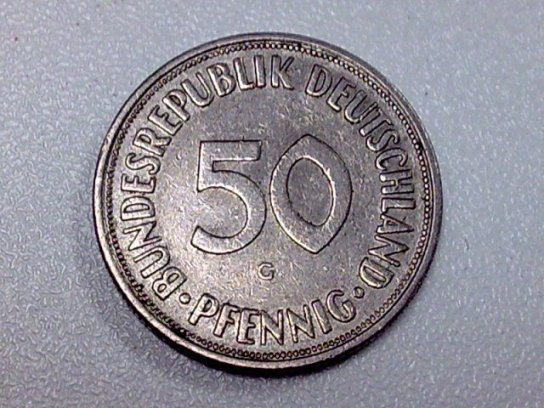 Image000.jpg
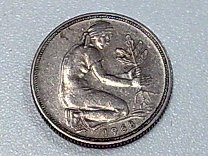 Image002.jpg

 Posted 11/12/2008 02:56 am





